





Why Network Cameras Outperform USB Cameras in Wireless Video Transmission
When designing a wireless video transmission system, one of the most common decisions involves choosing between USB cameras and network (IP) cameras. While USB cameras appear to be cheaper and easier to deploy, they often fall short in efficiency, stability, and overall performance. This article explains the technical differences and why most professional wireless video transmitters and receivers prefer cameras with built-in hardware encoders.
Table of Contents
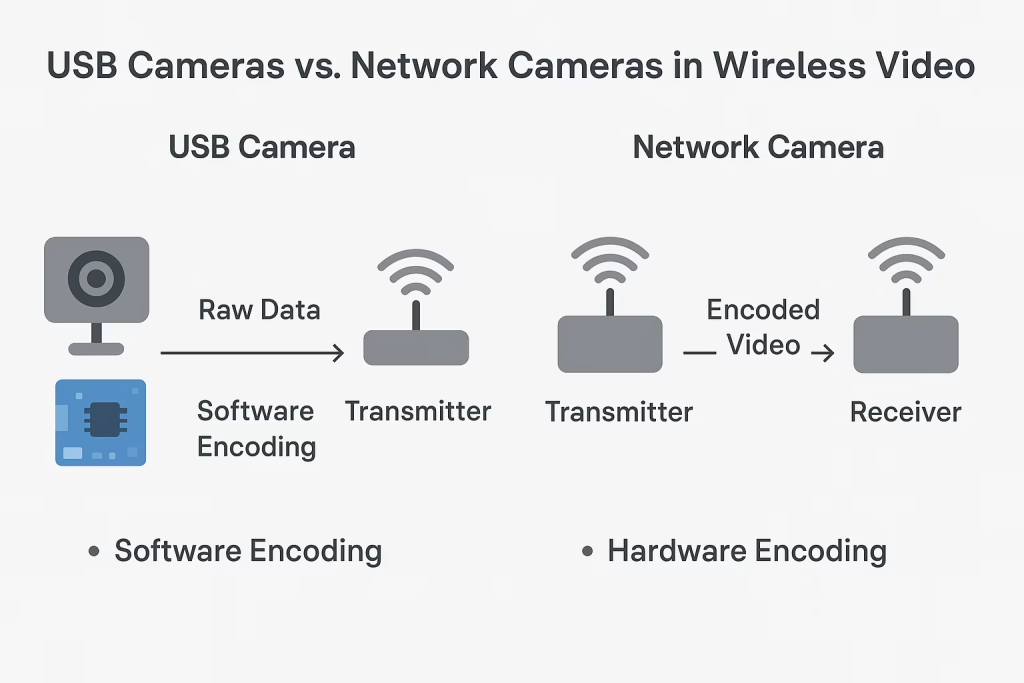
USB Cameras Transmit Raw Data
USB cameras typically send uncompressed raw video data directly to a connected computer or single-board computer, such as a Raspberry Pi or “Blueberry board.” This raw data requires real-time software compression on the host device before it can be transmitted over a wireless link.
While this approach may seem straightforward, it places a heavy computational burden on the CPU or GPU of the host device. High-resolution video in particular can cause noticeable delays, increased power consumption, and system instability. In short, the USB camera itself does not reduce data size; all compression work falls on the connected computer.
Network Cameras Feature Built-In Hardware Encoding
Network cameras, also known as IP cameras, include internal hardware encoding boards that compress video in real time using standards like H.264 or H.265. This hardware-based compression allows the camera to control the output bitrate efficiently, ensuring a smooth, stable video stream without relying on external computing resources.
Because the compression is handled internally, network cameras produce a stable, consistent video stream that is much easier to transmit over wireless links. They also maintain better video quality while controlling bandwidth usage, which is critical for professional applications such as drones, industrial monitoring, or mobile surveillance systems.
Efficiency and Stability Comparison
When comparing the two approaches in a wireless video system:
- CPU Load and Latency:
USB cameras rely on software encoding, which consumes significant CPU resources and can introduce latency, especially at higher resolutions. Network cameras offload encoding to dedicated hardware, reducing system load and minimizing delay. - Transmission Stability:
Software encoding on small boards can be unstable under high load or extended operation. Hardware-encoded streams from network cameras maintain consistent bitrate and quality over time. - Bitrate Control and Quality:
Network cameras can implement precise bitrate control (constant or variable) to match network conditions. USB cameras’ software compression may fluctuate, resulting in variable quality or dropped frames. - System Cost Considerations:
While USB cameras themselves are inexpensive, they require an additional host board for encoding, and the hidden costs—delays, power consumption, complexity—can outweigh initial savings. Network cameras may cost slightly more upfront, but they simplify the system, reduce latency, and improve reliability.
Practical Recommendation
For professional wireless video transmission systems, including drones, vehicle-mounted solutions, and industrial monitoring, network cameras are generally the more efficient and reliable choice. USB cameras may be suitable for short-range, low-cost experimental setups, but their limitations in latency, power consumption, and system stability make them less ideal for long-term or mission-critical applications.
Conclusion
While a USB camera connected to a single-board computer may seem like a cost-saving solution, the real efficiency, stability, and quality advantages lie with network cameras featuring hardware encoding. Wireless video transmitters and receivers are optimized for these hardware-encoded streams, ensuring low-latency, smooth, and high-quality video transmission.
FAQ
Q1: Can a USB camera ever match a network camera in wireless transmission?
A1: Only in very low-resolution, short-distance, or experimental setups. High-resolution or long-distance transmission requires hardware encoding to reduce latency and ensure stability.
Q2: Is the customer’s choice of USB purely cost-driven?
A2: Usually, yes. USB cameras are cheaper upfront, but the hidden costs of CPU load, latency, and system complexity often outweigh the initial savings.
Q3: Why do wireless video systems prefer hardware encoding?
A3: Hardware encoding allows consistent bitrate control, reduced latency, lower CPU load, and higher transmission stability, which are critical for professional applications.
Wireless Video Transmission


Wireless Video Transmission
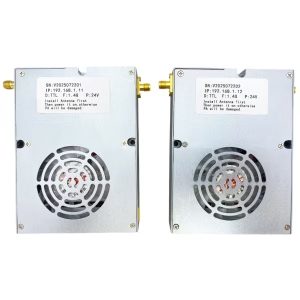
IP Mesh 100Mbps wireless video data transceiver 2X5W PA 16 hop


Wireless Video Transmission
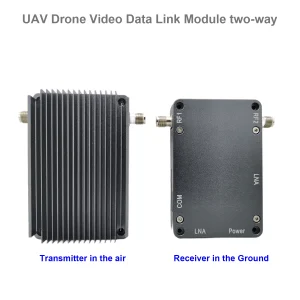
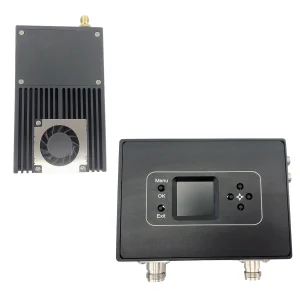
1740-1840Mhz 2WPA 30KM long range drone video transmitter and receiver with Sbus TTL
Bidirectional Two-Ways

Wireless Video Transmission
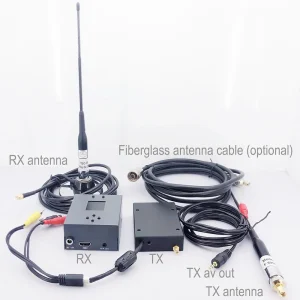
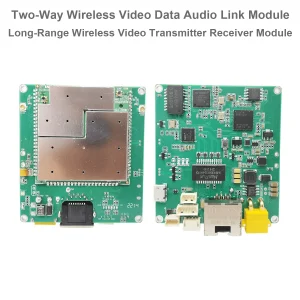
long range wireless video data transmitter and receiver for drone UAV robot


Bidirectional Two-Ways
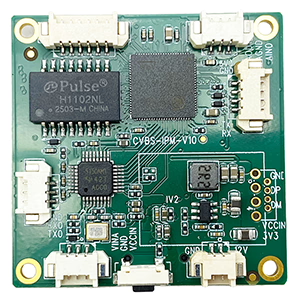
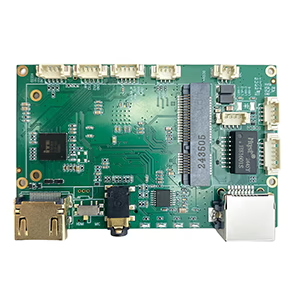
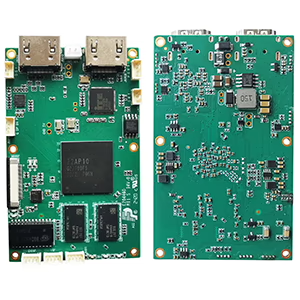
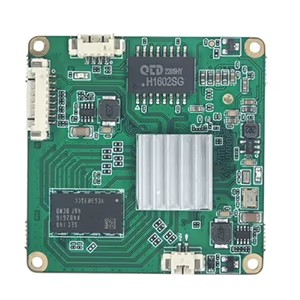
Encoder Modules Boards
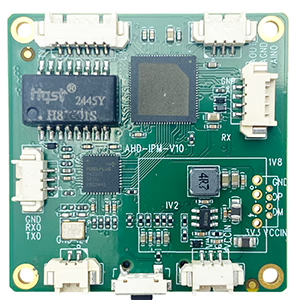
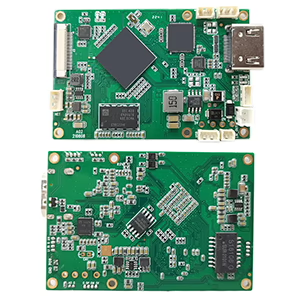
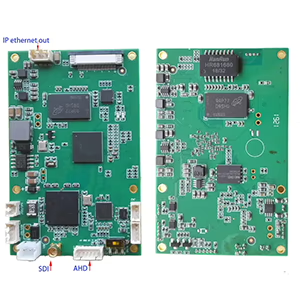
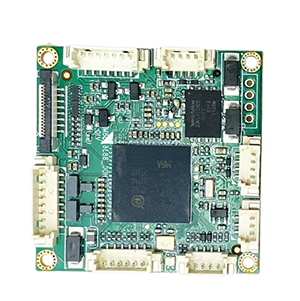
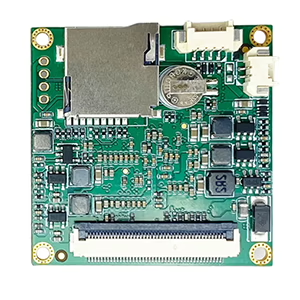
Decoder Modules Boards
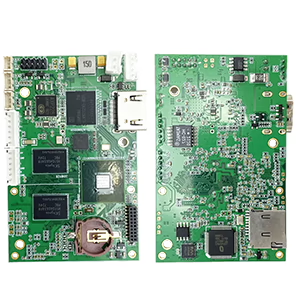
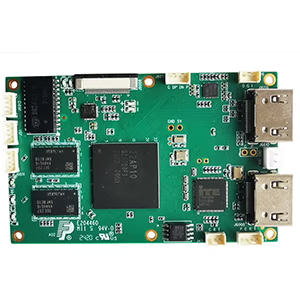
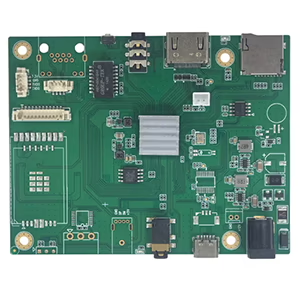
Available for Customization
New Encoder Products
| No. | Product Name | Configuration | Key Features | Status |
|---|---|---|---|---|
| 1 | Dual-Channel USB UVC Visible Light Video Encoder | 2× USB input | Supports dual USB camera video encoding, and RTSP streaming; local CVBS/HDMI output; switchable display modes | Mass Production |
| 2 | Dual-Channel Encoder (1× USB Visible Light + 1× USB Thermal Imaging camera) | 2× USB input | Supports dual USB camera (visible + thermal) capture, encoding, and RTSP streaming; local CVBS/HDMI output; switchable display modes | Mass Production |
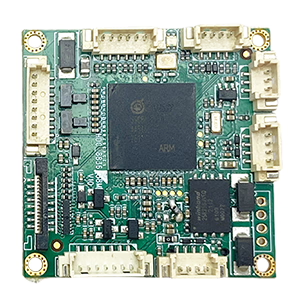
| 3 | RTSP Decoder HDMI/CVBS Display Module | HDMI + CVBS output | Supports up to 4×1080P@30fps RTSP stream decoding; Support video streaming protocol forwarding; HDMI/CVBS output display | Sample Available |
| 4 | RTSP Decoder HDMI/CVBS Display Module with 4.3"/5" LCD | HDMI output + LCD screen | Supports up to 4×1080P@30fps RTSP stream decoding; protocol forwarding; HDMI/CVBS output display | Debugging |
| 5 | Dual-Channel Encoder (1× USB Visible Light + 1× CVBS Analog) | 1× CVBS + 1× USB UVC input | Dual video (USB + CVBS), encoding and RTSP streaming; local CVBS/HDMI output; switchable display modes | Debugging |
| 6 | Dual-Channel Encoder (1× USB UVC + 1× AHD Analog) | 1× AHD + 1× USB UVC input | Dual video capture (USB + AHD), encoding and RTSP streaming; local CVBS/HDMI output; switchable display modes | Debugging |
| 7 | Dual-Channel Encoder (1× CVBS + 1× AHD Analog Video) | CVBS + AHD 2 video input | Dual analog video capture, encoding and RTSP streaming; local CVBS/HDMI output; switchable display modes | Debugging |
| 8 | Dual-Channel Encoder (1× CMOS Camera + 1× USB Thermal Imaging camera) | 1× USB interface | Supports CMOS + USB thermal camera capture, encoding and RTSP streaming; local CVBS/HDMI output; switchable display modes | Mass Production |
For customized video input/output conversion solutions not listed in our products, please contact us for OEM/ODM support. We can develop tailored products based on your requirements.
Ask A Question
Thank you for your response. ✨