


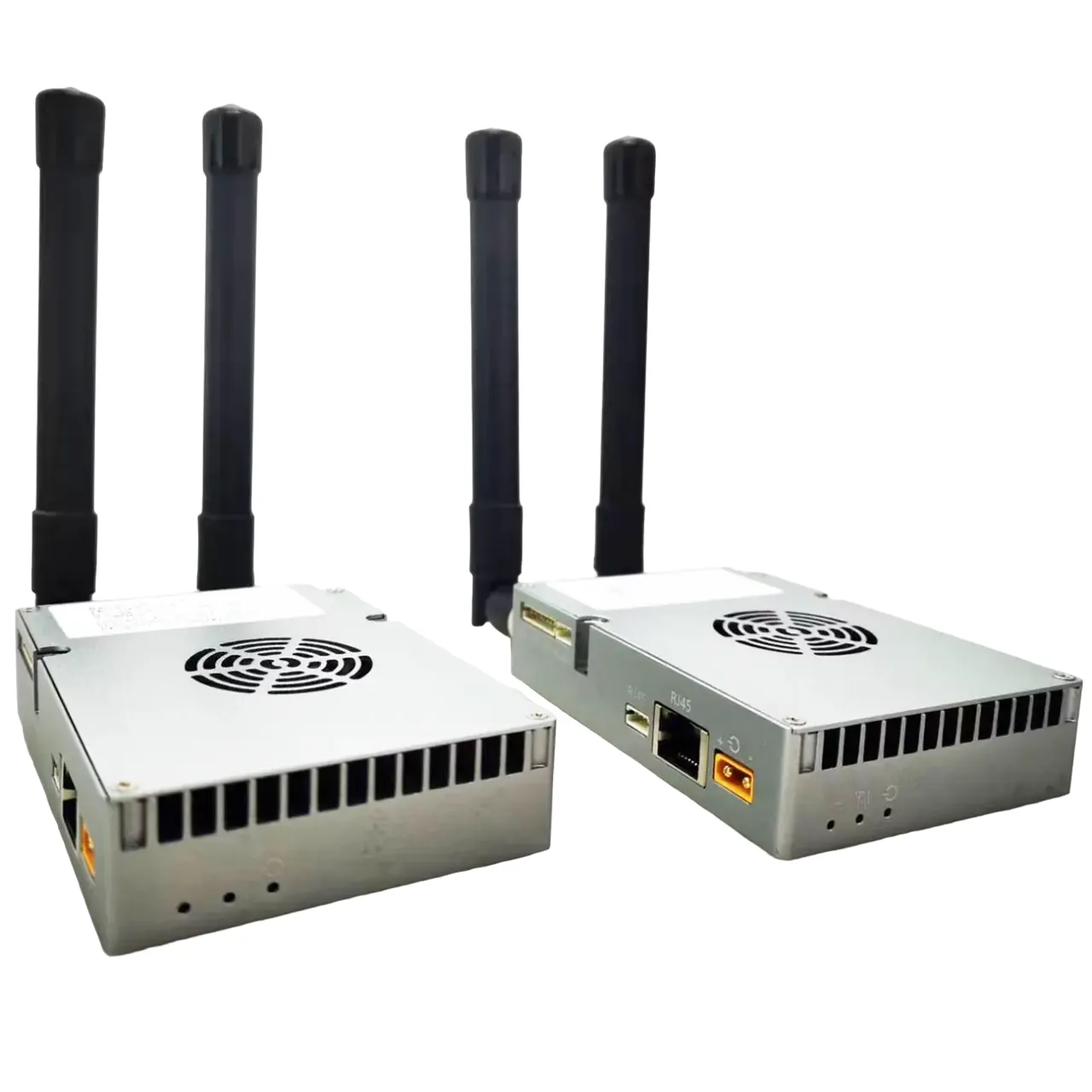
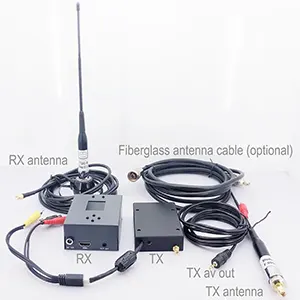


Frequency UP Down Converter
What is RF Downconverters exactly?
RF downconverters are integrated assemblies that convert a high-frequency RF signal to a lower-frequency IF signal. In wireless video transmission transmitter and receiver systems, point-to-point radio communication, and other applications, RF downconverters are widely used. A frequency down converter receives an RF signal, which is then mixed with a LO (Local Oscillator) signal to produce an output IF (Intermediate Frequency) signal. For example, 2.4G frequency input and conversion to 600Mhz, 1.3G-1.4G RF frequency input conversion to 300Mhz-400Mhz frequency, and lower 1000Mhz.
Frequency Down Converter, also named frequency mixer.
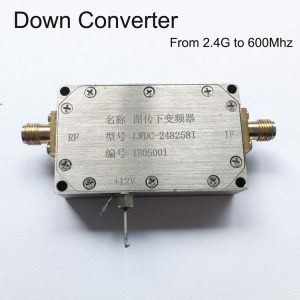
BDC Block Down Converter
$199.00

BDC Block Down Converter
3200-3800MHz to 200-800MHz COFDM Down Converter BDC – RF Frequency Shifter
$495.00
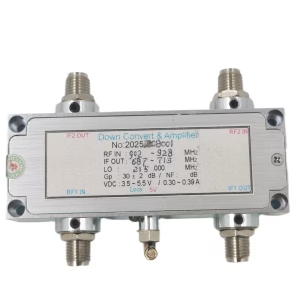
BDC Block Down Converter
$350.00
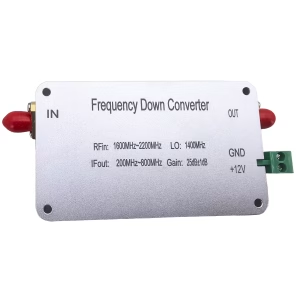
BDC Block Down Converter
1600-2200 MHz frequency down converter to 200-800 MHz mixer BDC
$450.00
BDC Block Down Converter
Original price was: $1,500.00.$450.00Current price is: $450.00.

BDC Block Down Converter
Original price was: $999.00.$790.00Current price is: $790.00.
BDC Block Down Converter
Frequency 2100-2500Mhz down to 350-750Mhz COFDM RF Down Converter BDC
Original price was: $999.00.$790.00Current price is: $790.00.

Frequency UP Down Converter
200W Ku Band Block Up Converter BUC 1-2G to 10.7-12.7GHz for Satellite Uplink
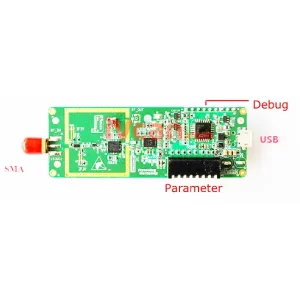
BDC Block Down Converter
Frequency Down Converter 2.4G to 250Mhz DVB-T COFDM Digital HDTV RF Microwave Module Board
$690.00
An RF (Radio Frequency) downconverter is a device or circuit used to convert a high-frequency RF signal to a lower intermediate frequency (IF) or baseband for easier processing. This is a critical component in many communication systems, radar, and signal processing applications.
Key Components of an RF Downconverter:
- RF Input Stage:
- Receives the incoming high-frequency RF signal.
- May include filters to select the desired frequency band and reject unwanted signals.
- Local Oscillator (LO):
- Generates a stable signal at a specific frequency to mix with the RF signal.
- The LO frequency is chosen to produce the desired IF signal after mixing.
- Mixer:
- Combines the RF signal with the LO signal.
- Outputs two frequencies: the sum and difference of the RF and LO frequencies.
- Typically, a filter selects the desired IF frequency (usually the difference frequency).
- IF Amplifier:
- Amplifies the downconverted IF signal for further processing.
- May also include additional filtering to improve signal quality.
- Output Filter:
- Removes any unwanted harmonics or spurious signals from the mixer output.
- Ensures a clean IF signal.
Applications:
- Communications: Used in receivers for mobile phones, satellite communication, and Wi-Fi systems to process signals for demodulation.
- Radar Systems: Converts high-frequency radar echoes to lower frequencies for easier analysis.
- Test Equipment: Part of spectrum analyzers or oscilloscopes for RF signal measurement.
- Broadcasting: Used in TV and radio receivers for demodulating broadcast signals.
Types of RF Downconverters:
- Direct Downconversion:
- Converts RF directly to baseband without an intermediate frequency.
- Simpler architecture but may have issues like DC offset and IQ imbalance.
- Heterodyne Downconversion:
- Uses one or more intermediate frequencies.
- Provides better selectivity and image rejection but is more complex.
- Wideband Downconversion:
- Supports a wide range of RF frequencies.
- Often used in spectrum monitoring applications.
Design Considerations:
- Frequency Range: The operational RF and IF frequency ranges.
- Noise Figure: Low noise is crucial for high sensitivity in receivers.
- Linearity: Essential to minimize distortion and intermodulation products.
- Image Rejection: Ensures that unwanted mirrored frequencies are suppressed.
- Power Consumption: Important for battery-operated devices.