






Table of Contents
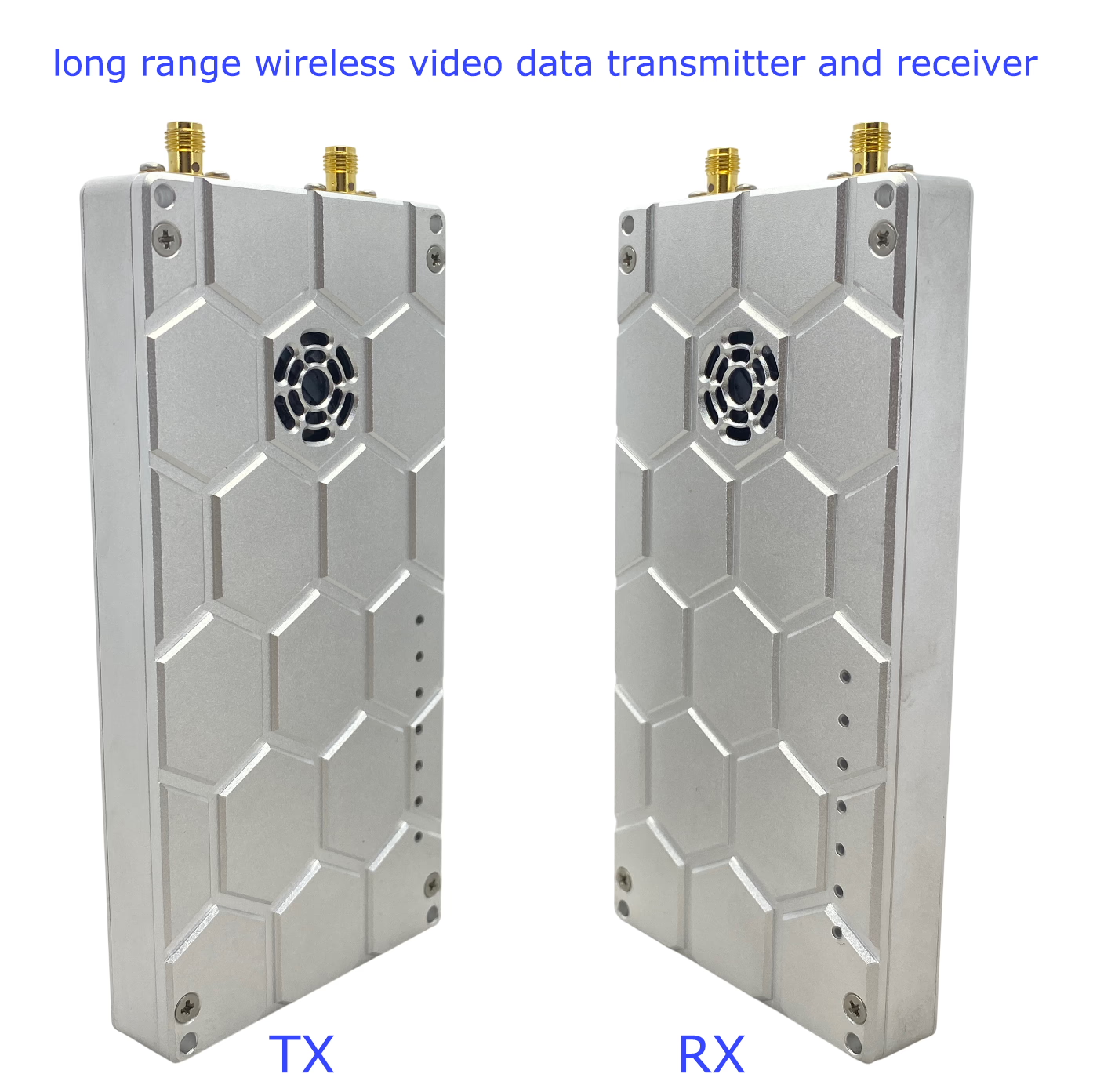
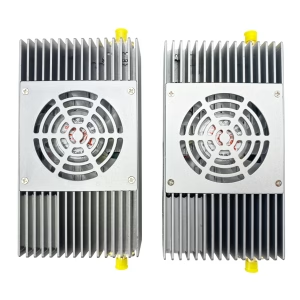
long range wireless video data transmitter and receiver for drone UAV robot
Frequency
Optional Frequency:600Mhz, 800Mhz, 1.4GHz, 1.7Ghz, 2.1-2.3GHz (2180-2300MHz), 2.4GHz
Optional Data Ports: TTL, RS232, Sbus, RS485
Bandwidth and BitRates
At setting of bandwidth 20MHz, Data transmission rate: 26Mbps.
At setting of bandwidth 10MHz, Data transmission rate: 17Mbps. Better link stability
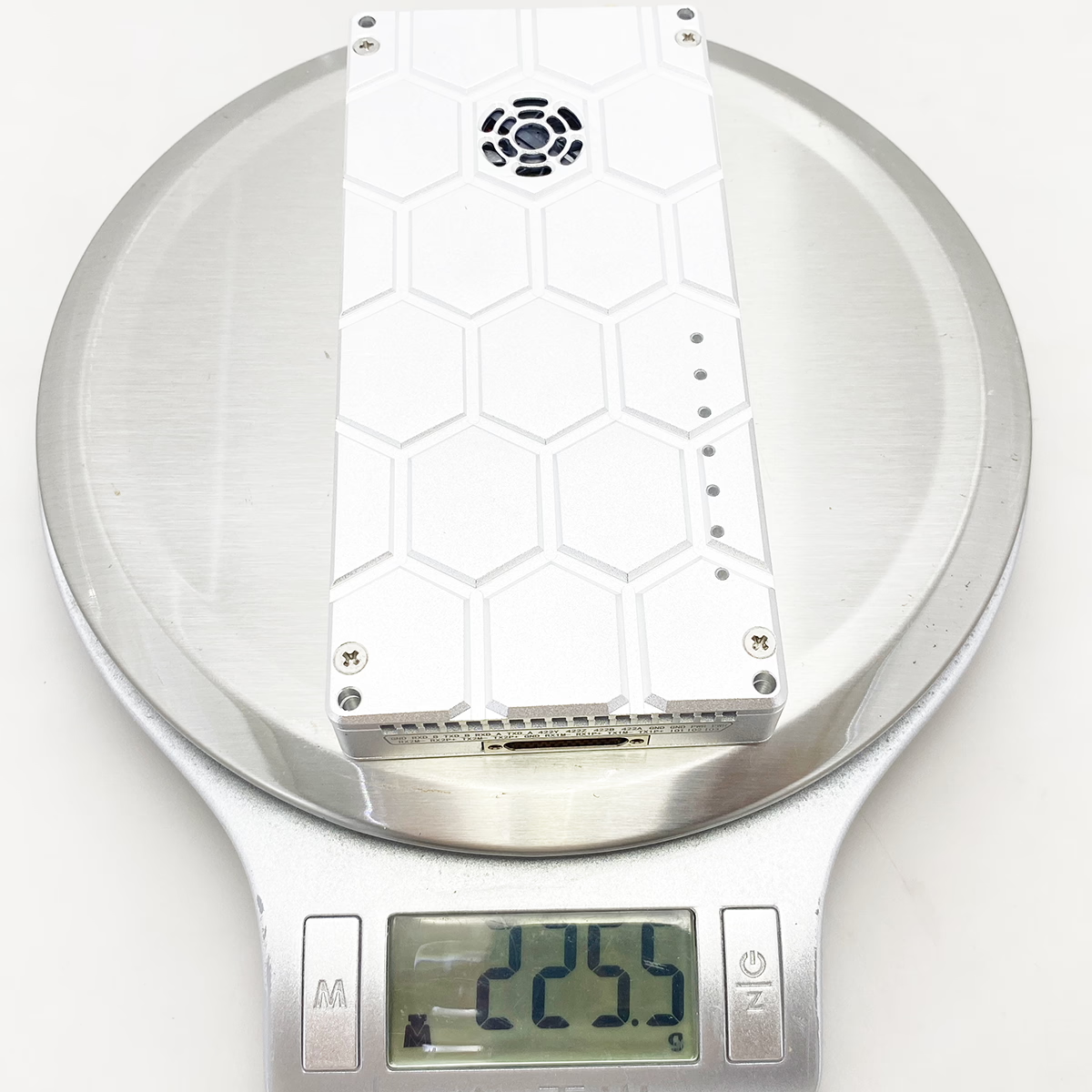
Weight
FAQ
Q: Can I save the wireless video data transceiver’s log for later analysis?
A: The wireless link status is currently shown in real time. We plan to develop host computer software for saving and playing. It’s only available for Windows OS. It has recording and playback capabilities. It will take approximately one month to use.
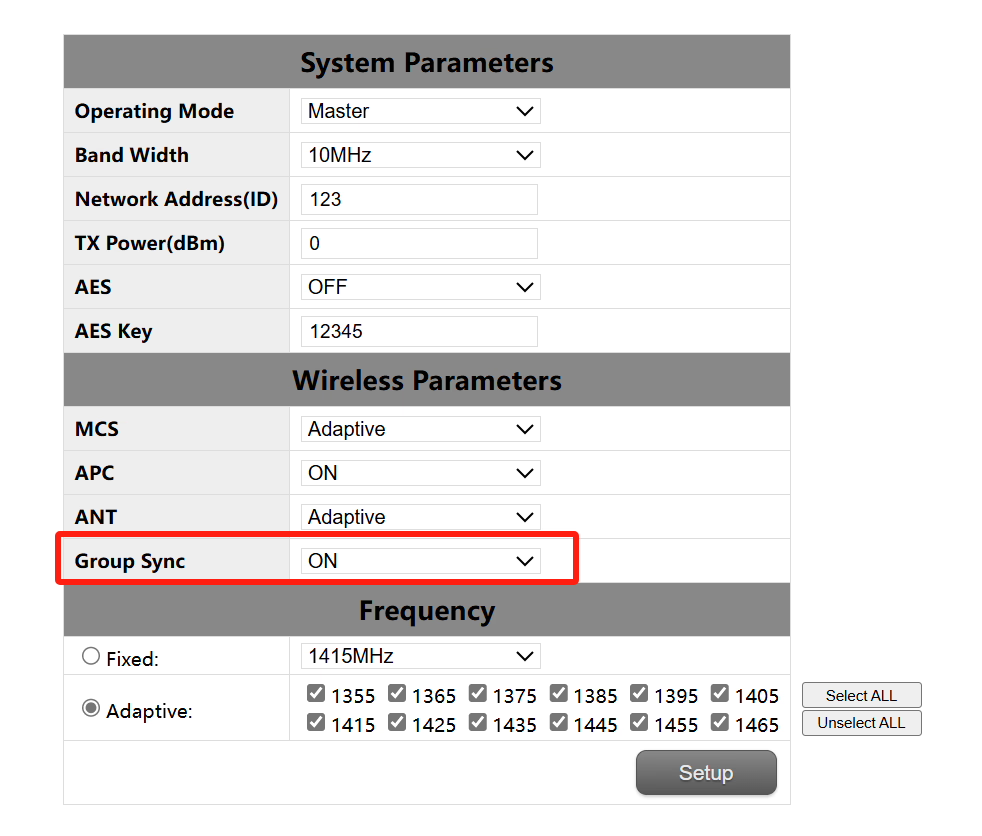
Q: The camera feed is very pixelated and laggy, do you have a suggestion?
A: Please make sure that Group Sync setting is ON.
Q: My camera’s set to 4096Kbps, but the air unit shows 9353 Kbps. Why the discrepancy?
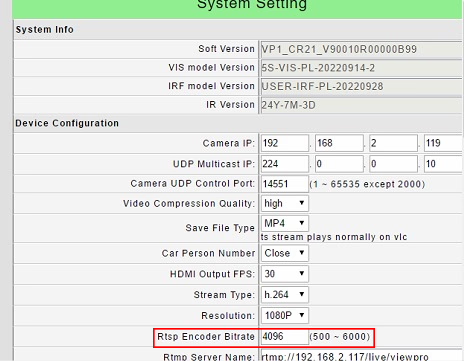
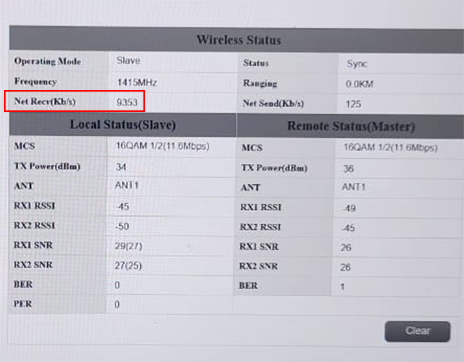
A: Please check if the ground receiver is connected to two computers or two RTSP players. If so, the air receiver’s bitrate is twice that of the camera’s RTSP setting.
Q: Can I use multiple frequency bands (1.7 GHz, 2.1 GHz, and 2.4 GHz) at the same time with 2W RF power?
A: No. Each system operates on a single frequency band only.
The available frequency options are 1.7 GHz, 2.1 GHz, or 2.4 GHz, but you must select only one band per device set. These frequencies are not designed to be used simultaneously within the same unit.
Q: How do ANT1 and ANT2 work? Is the system 1T2R or 2T2R?
A: This system is designed as a 2T2R (2 Transmit, 2 Receive) antenna architecture. Both ANT1 and ANT2 are capable of transmitting and receiving, but the system uses selective transmission control rather than transmitting from both antennas simultaneously at all times. During operation, the system will automatically select the optimal antenna for transmission and reception based on real-time conditions. This intelligent switching helps maintain the most stable and reliable link.
For example:
- If one antenna is partially blocked or obstructed, the system will switch to the other antenna
- If one antenna is not connected properly, the system continues operating using the available antenna
- In ground setups where one antenna is a directional panel antenna, the system can dynamically choose the best-performing path
- It also helps optimize performance in changing environments or complex RF conditions
This adaptive antenna selection improves overall signal stability, anti-interference capability, and link reliability, especially in long-range or challenging operating scenarios.



iVcan.com –
I have been using this long-range wireless video data transmitter and receiver for my drone and UAV projects, and it has performed exceptionally well. The ability to customize the working frequency allows me to optimize the system for different environments and avoid interference. The data port flexibility is excellent, supporting TTL for precise flight control and SBus for seamless integration with the ground receiver’s remote control. The video and data transmission remain stable and clear over long distances, which is crucial for professional drone operations. Installation was straightforward, and the unit feels robust and reliable. Overall, this system has significantly enhanced my UAV control and video monitoring capabilities.