


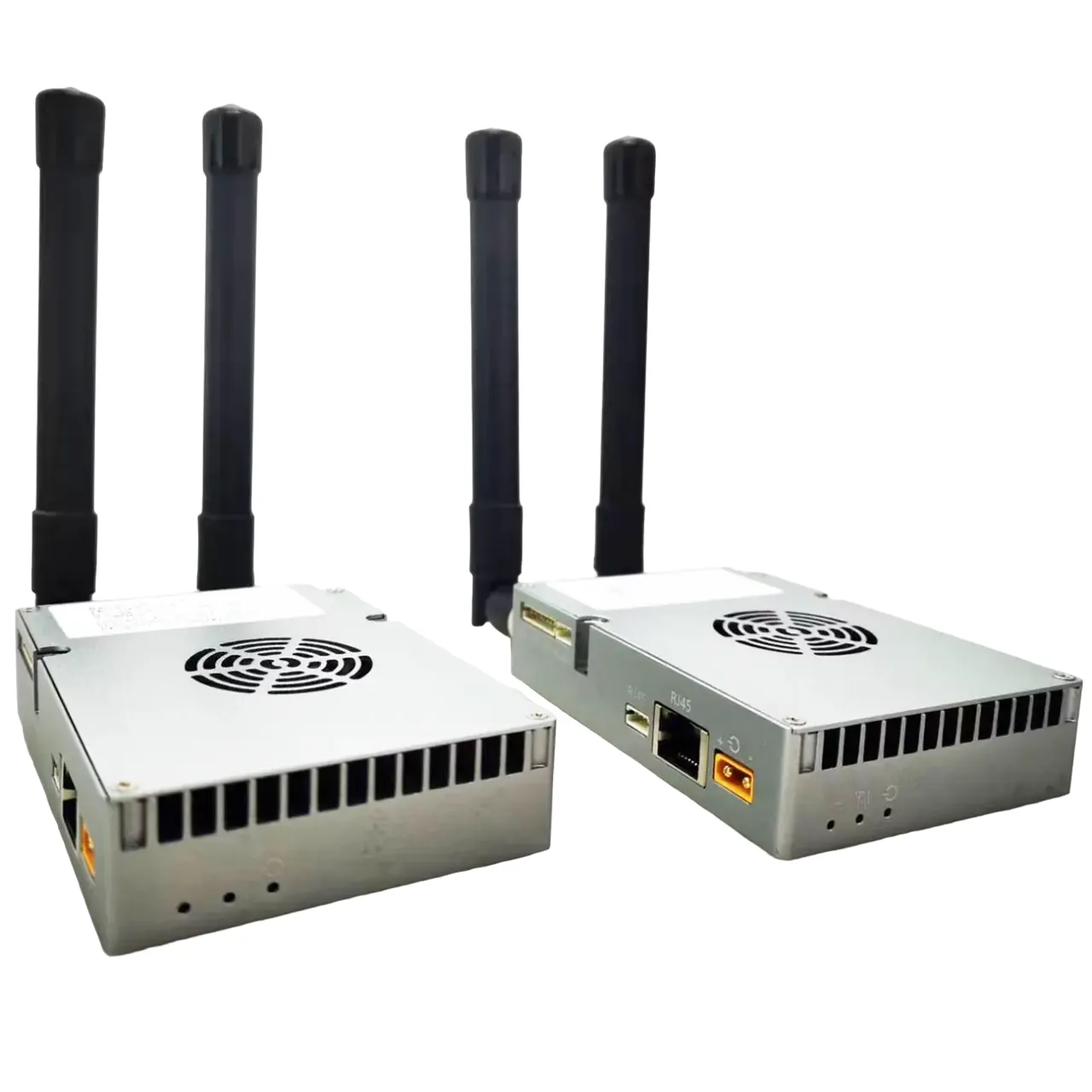
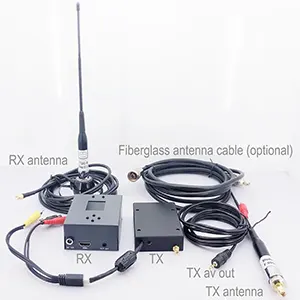


Today, a customer reported that our drone transmitter and receiver had a problem. There are three data interfaces reserved on the TX900: D1 TTL, D2 Sbus, and D3 RS232. After connecting the telemetry data to D1, the video delay becomes very large. He asked us how to solve it.

Here is his problem description: When I connect the telemetry data to the air unit that effect video and found some delay in video. Just the telemetry data caused such a problem without telemetry, there is not any issue. Without telemetry data, there is no such problem with telemetry in a short distance such problem occurred.
Our TX900 drone transmitter and receiver can be customized with three telemetry data interface types to suit your needs: TTL, RS232, and SBUS interfaces.
Our TX900 is a two-way transmission. Uploading data and downloading video do not affect each other. However, the video stream is larger than the data stream. Please look at the settings here. Have you changed them? Default Setting is 1D4U.

D1 is the transparent serial port of the TX900’s core modem. There is a known problem that if the amount of data on D1 is too large, it may affect the wireless link. The performance is that the wireless link may be temporarily disconnected and then reconnected. It is not clear whether the customer encountered this problem.
Here is the test video from the client.
The buyer also confirmed that the tx900 network type is point to point, only one transmitter and one receiver, no repeater. From the buyer’s video does not seem to be a problem caused by D1. What kind of camera is connected to the customer’s front end? A webcam or an encoder board? The buyer replied that he used a SIYI ZR30 camera.
Table of Contents
Troubleshooting.
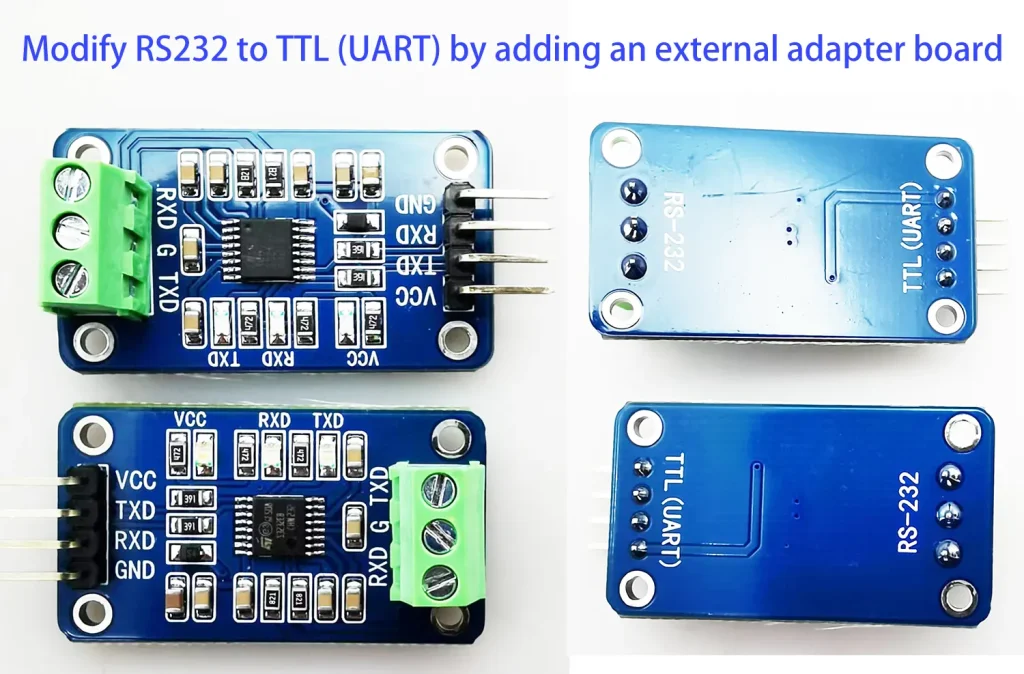
If D1 TTL is connected, if the amount of data is too large, it may affect the drone wireless video transmitter and receiver link, because D1 is the transparent serial port of the wireless link. Try to change your flight controller to connect via D3 RS323. (maybe you also need to use TTL to RS232 converter board on the transmitter and receiver side).
With video freeze, check whether there is bit error rate, wireless parameters reported by the central node and access node.
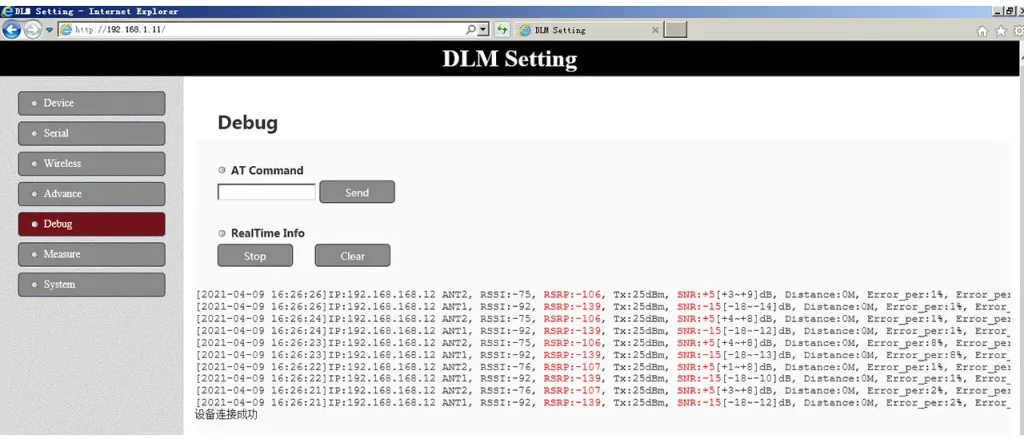
Stop transmitting the video when the video freezes, and use the measure function of the web UI to test whether 100% transmission can be achieved by sending 4~8Mbps data packets from the access node to the central node.
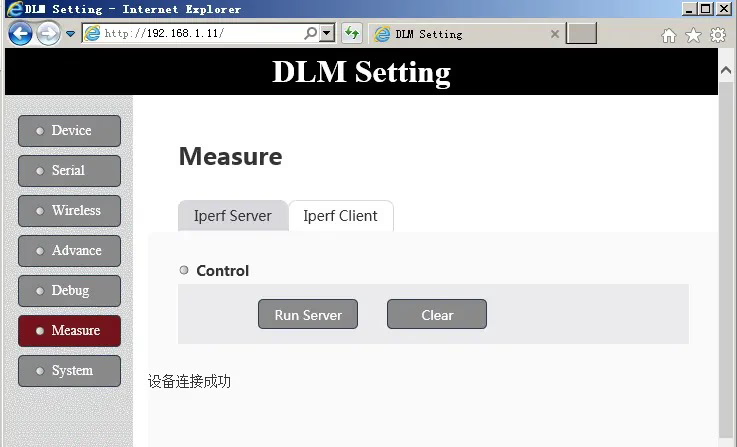
Our engineer thinks the stuck problem in the customer’s video has nothing to do with the D1 transparent transmission telemetry data. It should be caused by the long distance, the low wireless air interface rate, and the queuing effect of the video stream. To verify this speculation, there are two methods:
- The customer can not receive the telemetry data (or the telemetry data goes through a separate digital transmission link) for comparative testing
- Send us the SIYI gimbal camera video encoding settings used by the customer to see if there is any possibility of optimization (I communicated with SIYI ago and found that they did not open some advanced settings of the encoding, which would affect the smoothness and real-time performance of the video)
Data Interface Type of Drone Transmitter and Receiver
Our TX900 drone transmitter and receiver can be customized with three telemetry data interface types to suit your needs: TTL, RS232, and SBUS interfaces because of their compatibility, protocol characteristics, and specific application needs. Here’s a detailed analysis of the reasons behind this design choice.
1. Universality of TTL Interfaces
- Direct Hardware Compatibility: TTL levels (3.3V/5V) match the GPIO levels of mainstream microcontrollers (like STM32), allowing for direct connections to sensors (e.g., GPS, optical flow modules) and debugging tools without the need for level shifting.
- Resource Expansion: Flight controllers typically feature multiple TTL serial ports (e.g., PIXHAWK supports up to five), enabling parallel connections to telemetry, drone transmitter and receiver modules, and other peripherals.
- Debugging Convenience: UART interfaces facilitate firmware flashing and log output, simplifying the development process.
2. Specific Use Cases for RS232 Interfaces
- Long-Distance Communication: RS232’s ±12V signaling provides strong noise immunity, making it suitable for long range wireless drone transmitter and receiver transmission over distances greater than 10 kilometers (e.g., communication between industrial drones and ground stations).
- Legacy Compatibility: Some older devices or remote control receivers may use RS232 interfaces, requiring level-shifting chips (like MAX232) for connection to flight controllers.
- Level Shifting Expansion: External circuits can convert TTL signals to RS232, allowing compatibility with a broader range of devices (such as certain SBUS receivers).
3. Advantages of SBUS Interfaces
- Efficient Channel Transmission: SBUS is a serial protocol that supports 16 proportional channels plus 2 digital channels, meeting the multi-parameter control needs of drones (e.g., servos and camera adjustments).
- Bus-style Connection: By using a hub, multiple devices can be connected through a single line, reducing wiring complexity.
- Hardware Optimization: While based on TTL signaling, SBUS uses inverted logic (low signal represents “1”) and operates at a baud rate of 100Kbps, requiring inversion circuits (like transistors) for compatibility.
Interface Comparison and Technological Trends
| Interface Type | Core Advantages | Typical Use Cases | Hardware Implementation Challenges |
|---|---|---|---|
| TTL | Direct compatibility with microcontrollers; low latency | Sensor connections; firmware debugging | Short transmission distance |
| RS232 | Strong noise immunity; supports long-distance communication | Industrial control; legacy device compatibility | Requires level-shifting chips |
| SBUS | Multi-channel transmission; bus-style expansion | Remote control signals; multi-device control | Needs inverted logic circuits or dedicated decoding chips |
Technological Evolution Directions:
- Interface Multiplexing: Newer flight controllers are increasingly using UART multiplexing to support SBUS protocols, reducing the number of physical interfaces required.
- Wireless Alternatives: Technologies like 2.4GHz/5.8GHz telemetry are gradually replacing RS232 for long-distance communication (e.g., TAISYNC PD21A devices).
- Integrated Designs: Innovations such as those in patent CN216848552U demonstrate how priority logic can allow multiple remote controls to operate a single drone, reducing hardware complexity.
In summary, the coexistence of TTL, RS232, and SBUS interfaces reflects a balance in flight controller design regarding compatibility, functional expansion, and protocol efficiency. TTL meets basic communication needs, RS232 caters to specific scenarios, while SBUS has emerged as a standard option in remote control applications due to its efficient protocol.
Ask A Question
Thank you for your response. ✨