






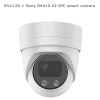
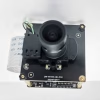

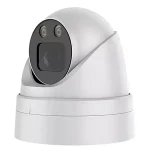
As the RV1126 chip has been discontinued, we recommend IPC2188 as a replacement solution.
Please click the link below for more details: Learn more about IPC2188
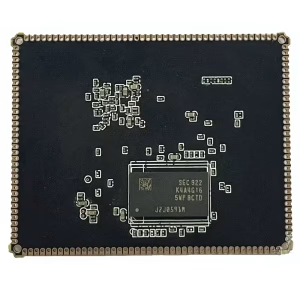
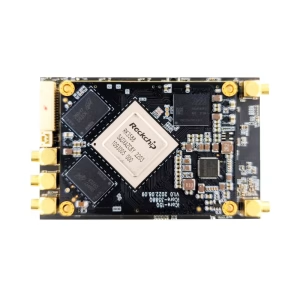
Rockchip RV1126 core board IPC AI development module Artificial Intelligence PCBA circuit pinout customized ODM IP ethernet output RSTP H264/265
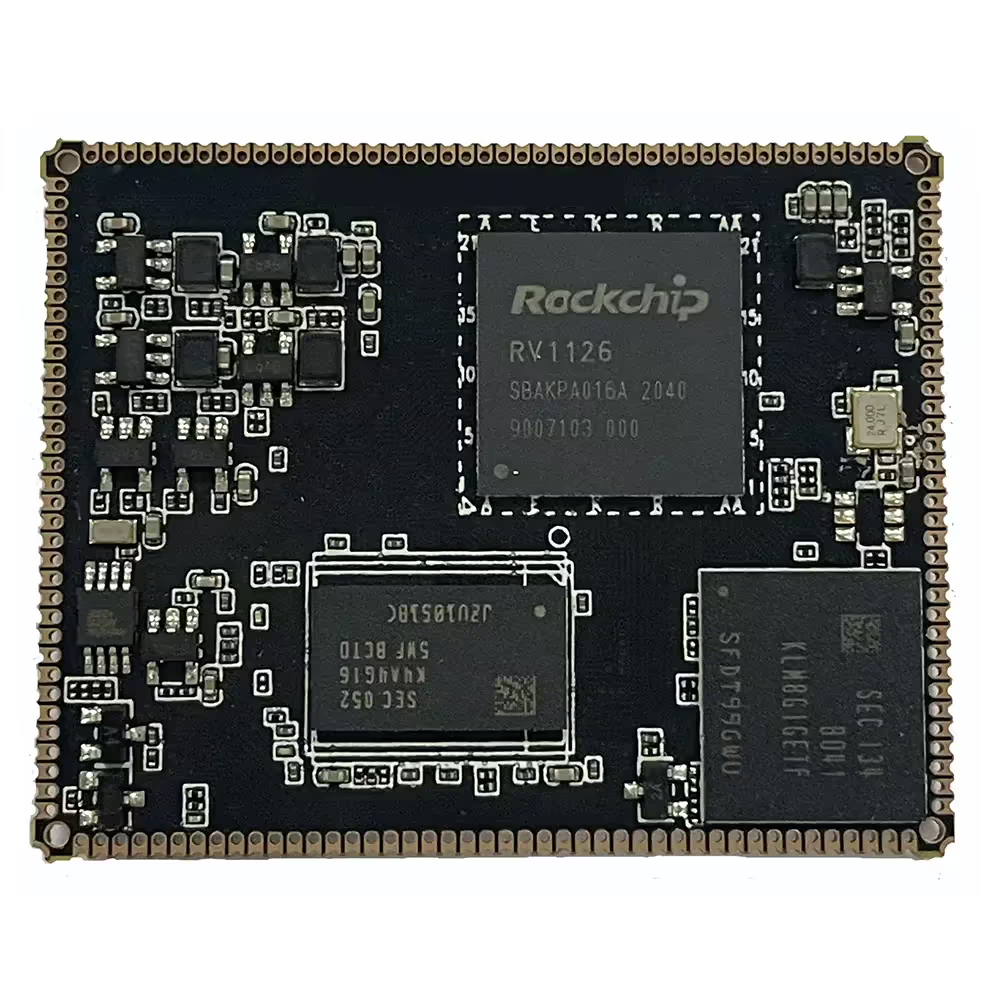
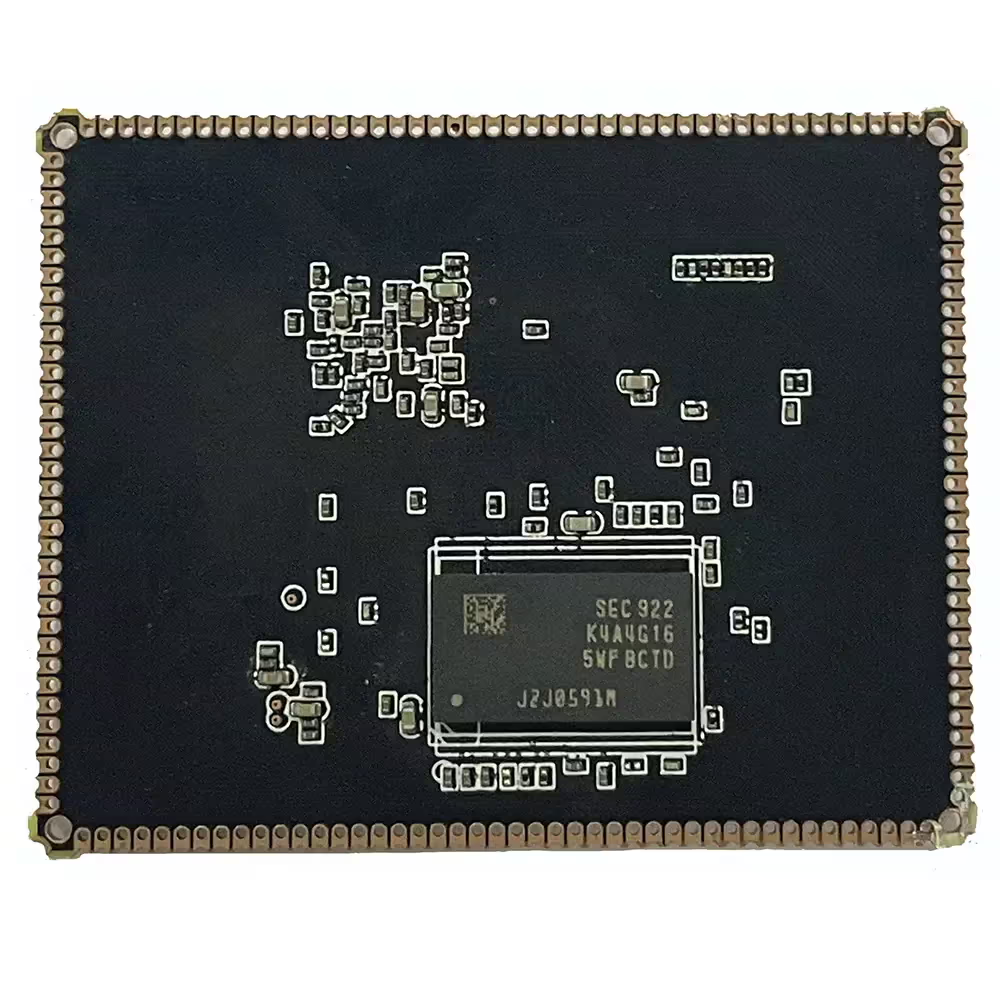
Feature:

Specification
CPU
• ARM Cortex-A7 1.5GHz 32-bit core which integrates NEON and FPU. There is a 32KB I-cache and 32KB D-cache for each core and a 512KB unified L2 cache.
• RSIC-V 400MHz
NPU
• 2Tops, support INT8/ INT16
Memory
• 32bit DDR4 1G
• Support eMMC 8G
• Support fast booting
Display
• MIPI-DSI/RGB interface, up to 1080P60fps
2D Graphics Engine
• Support rotation, x-mirror, y-mirror
• Support alpha blending
• Support scale-down/up
Multi-Media
• 14M ISP 2.0 with 3F HDR(Line-based/Frame- based/DCG)
• Support 2*MIPI CSI /LVDS/sub-LVDS
• DVP interface with BT.656/BT.1120
• 4K H.264/H.265 30fps video encoder
• 3840 x 2160@30 fps+720p@30 fps encoding
• 4K H.264/H.265 30fps video decoder
• 3840 x 2160@30 encoding + 3840 x2160 @30fps decoding
External interface
• RGMII interface with TSO network acceleration
• USB 2.0 OTG and USB 2.0 • Dual SDIO 3.0 interface for Wi-Fi and SD card
• 8ch I2S with TDM/PDM, 2ch I2S
Availability
• 2020 Q4
• SMIC 14nm, QFN 156 1.0

| SOC | RV1126, RV1109 |
| RAM | 32-bit, 512MB*2 |
| ROM | 8GB EMMC |
| NPU | 0TOPS, support RKNNAI frame |
| USB interface | Two USBs, one independent OTG, one independent HOST |
| UART serial port | 6 TTL3.3V level, one of which is Debug |
| GPIO Interface | 102 GPIOs (Note: there is a multiplexing function, please check the pin definition in this specification> |
| PWM interface | 5-way PWM has 3.3V/1.8V levels respectively (please check the pin definition in this specification) |
| MIPI DSI shows | 1 channel Maximum 1920×1080 60fps |
| CAN | 1 channel |
| RGB display | 1 channel RGB 888 display interface, maximum 1920×1080 |
| DVP camera interface | 1 channel 16-bit parallel DVP camera interface |
| MIPI camera interface | 2 channels MIPI CSI RAW data camera interface (one channel 4K/30) |
| Voice output | 1 channel Left and right channel output |
| voice input | 1 PDM digital silicon microphone input, 1 analog LANE_IN input or I2S |
| SDIO interface | 2 SDIO interfaces, one TF card, the other can be connected to WIFI |
| ADC interface | 6 ADC interface |
| I2C interface | 4 I2C interface |
| SPI Interface | 2-way SPI interface |
| Ethernet | – one-way RGMII PHY interface, Gigabit Ethernet |
| system upgrade | supports local USB upgrade |
| Size | 38*48mm |
| PCB layers | FR4-6 layers |
| Working range | -10℃-7o℃ |
As an RV1126 Rockchip core board circuit supplier, we also offer to pin out customized second development layout design produce services and products.
This AI artificial intelligence core module is an AI intelligent module designed based on Rockchip RV1126 high-performance AI processor, quad-core RV1126 ARM Cortex-A7@1.5GHz 32-bit core, integrated NEON, and FPU. Each core has a 32KB l-cache and 32KB D-cache and 512KB unified L2 cache. Built-in NPU supports INT8/INT16 mixed operation, computing power up to 2TOPS Built-in RISC-V architecture MCU; supports Linux4.19 operating system, the network model has strong compatibility, supports a series of deep learning such as TensorFlow / MXNet / PyTorch! Caffe framework that is easy to convert. Super performance, fast system startup, and high stability.
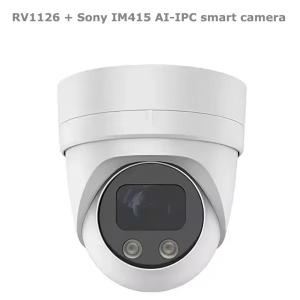
Can be adapted to different face recognition algorithms, suitable for embedding in various AI vision products, widely used in binocular face recognition panel machines, AI binocular cameras, smart communities, smart doorbells, smart access control/cat’s eye, face payment, Related industries related to intelligent upgrades such as driving recorders, game interaction, and webcasting.
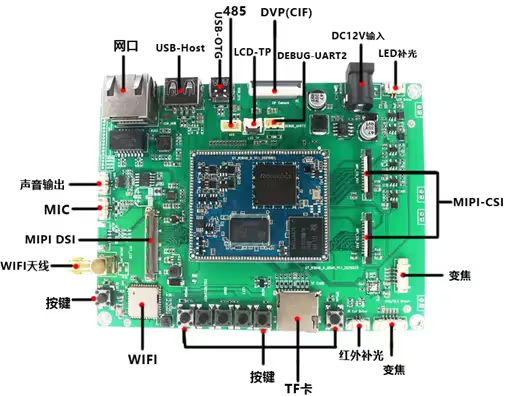
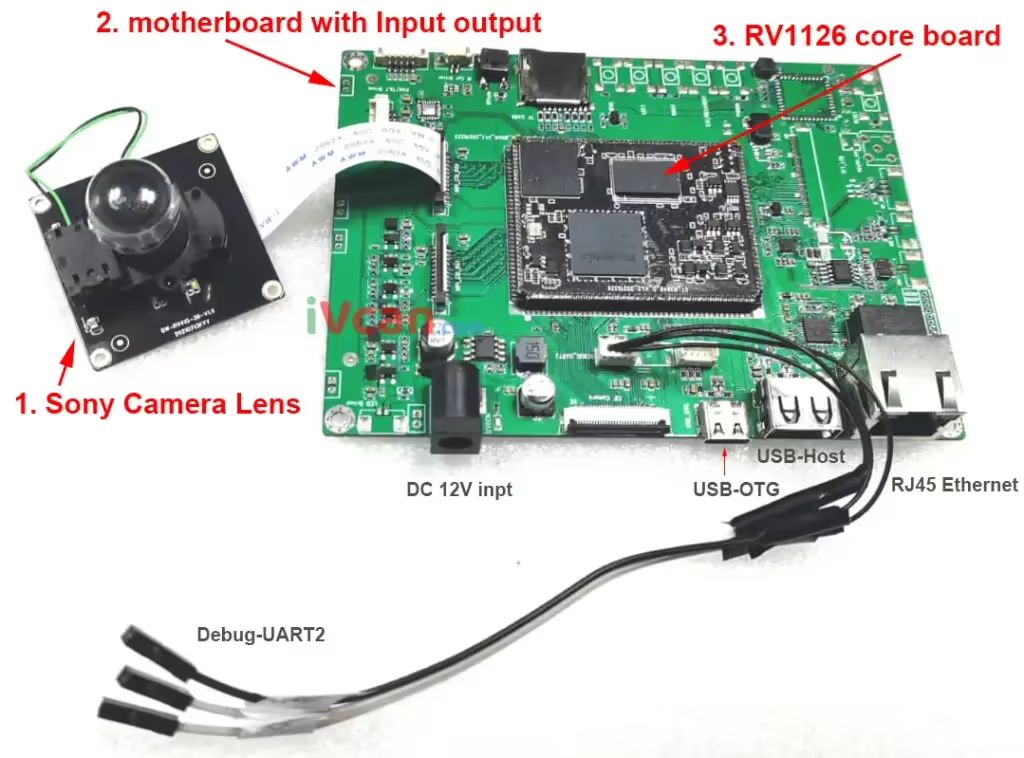


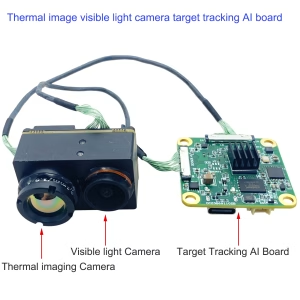


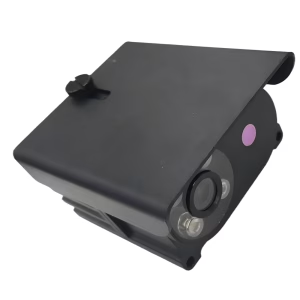
iVcan.com –
This RV1126 core board is an embedded developer’s dream come true! We deployed a factory defect detection system in just 3 weeks—thanks to the blazing 2TOPS NPU that runs complex YOLOv5 models at 15fps with near-zero latency. The SDK’s TensorFlow/MegEngine support slashed our development time, while the industrial temp range (-40°C to 85°C) survived furnace-side testing. I/O flexibility (MIPI, USB3.0, Ethernet) let us integrate thermal cameras and sensors effortlessly. For under $50, it outperforms $200 rivals in power efficiency and real-time inference. Perfect for smart retail, rugged robotics, or safety-critical vision systems!