

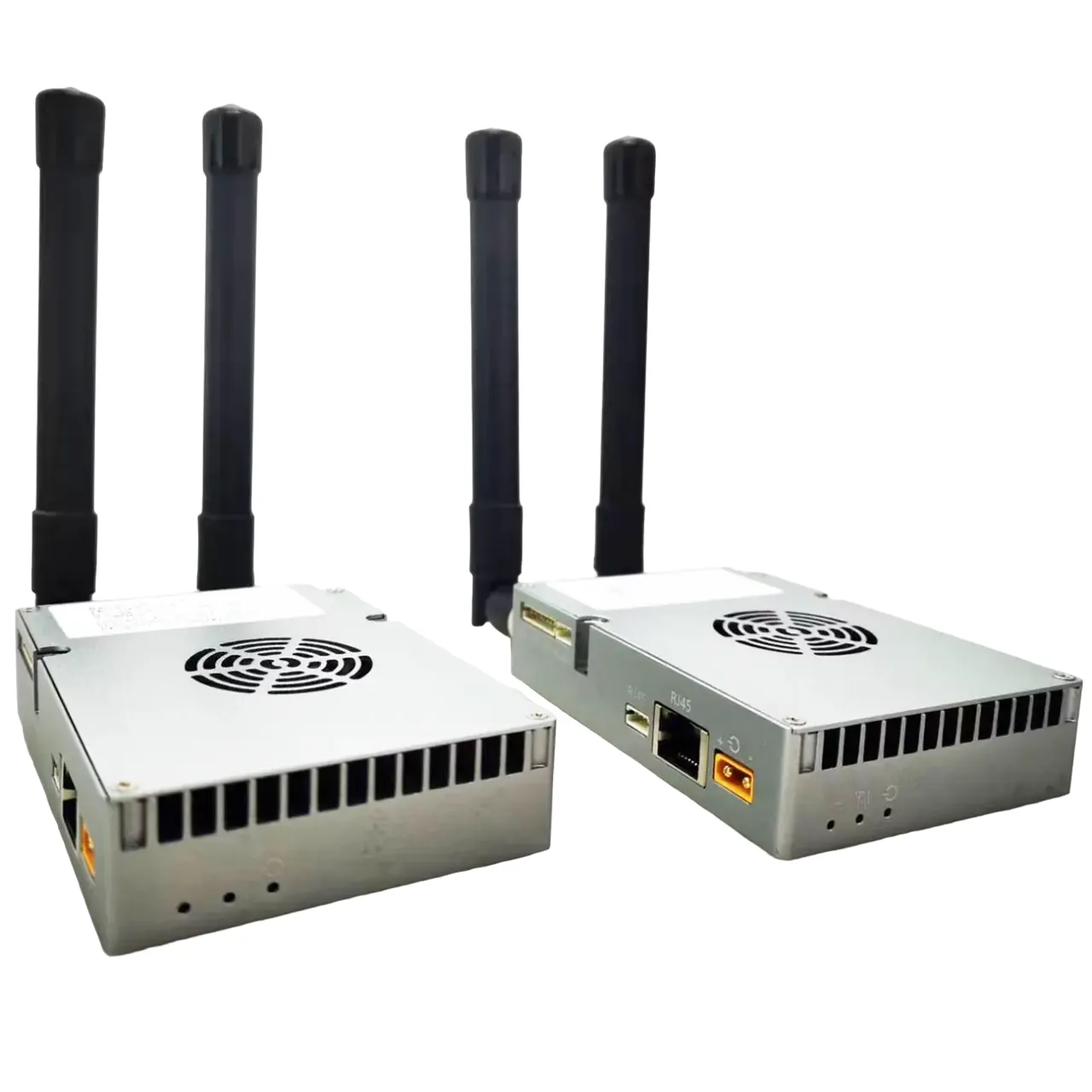


Bidirectional vs Unidirectional Drone Transmission: A Deep Dive
Unmanned Aerial Vehicles (UAVs / drones) rely heavily on wireless transmission of data between the drone (airborne) and the ground station (or other control point). The choice of transmission mode—unidirectional (simplex / one-way) vs bidirectional (duplex / two-way)—has major implications for performance, reliability, safety, and what kinds of content can be exchanged.
In this article we’ll compare:
- Transmission methods: what physically / technically defines unidirectional vs bidirectional
- What content is transmitted in each mode
- The advantages and drawbacks of each
- Example products to illustrate trade-offs
Table of Contents
What do we mean by unidirectional vs bidirectional transmission
- Unidirectional transmission (sometimes called simplex) means data flows only in one direction. Usually this is from the drone to the ground (video, telemetry), not support the flight control commands and mission commands from ground to drone.

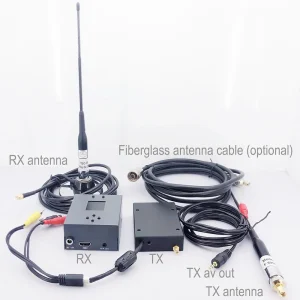


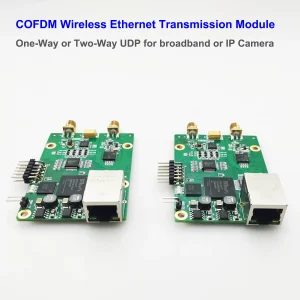
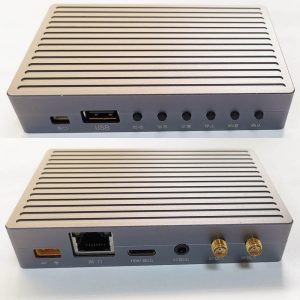
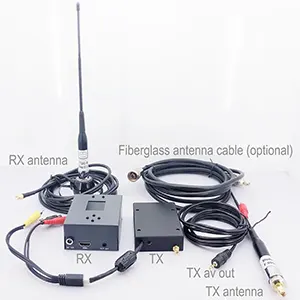
Video Transmitter
COFDM Wireless Video Receiver HDMI cvbs output mini modulator module RX long distance fpv uav
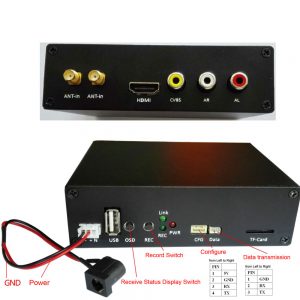
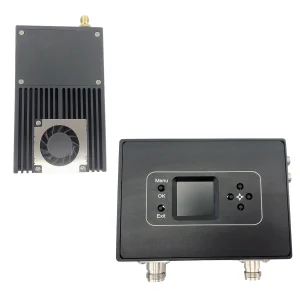
Video Transmitter
COFDM Wireless Video Receiver HDMI cvbs output mini modulator module RX long distance fpv uav
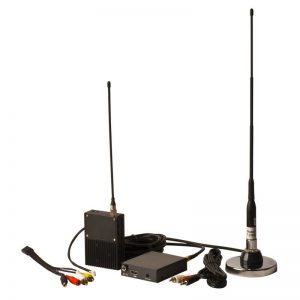
Video Transmitter

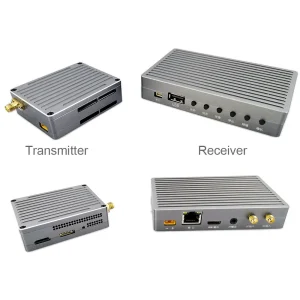
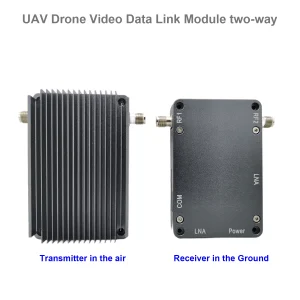
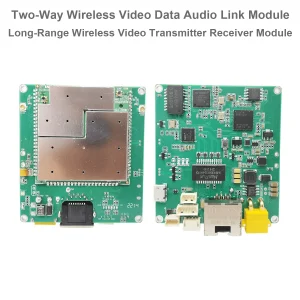
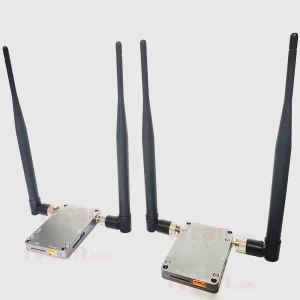
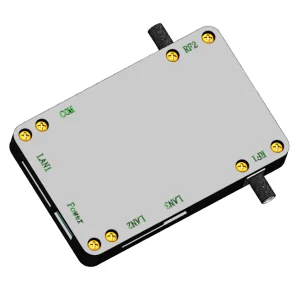
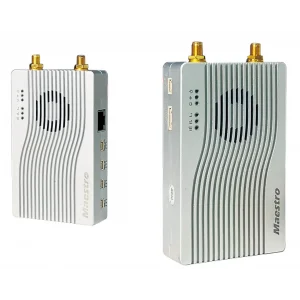
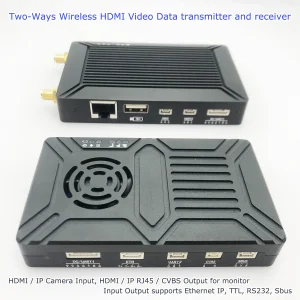
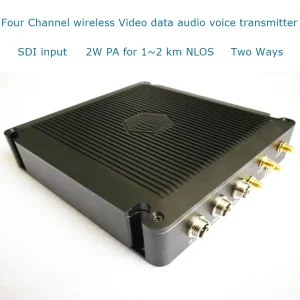
- Bidirectional transmission (often called duplex, or in some cases a mode that can switch between simplex & duplex) means that data flows in both directions: from drone to ground and from ground to drone. These transmissions can include video, plane and gimbal camera control / command signals, telemetry, audio, etc. The control of bidirectional transmission drones is generally handled by other simple wireless data transmission systems. Since they use different frequencies and channels from wireless video download systems, they can often avoid interference from counter-unmanned guns at the same time.
Bidirectional Two-Ways

Bidirectional Two-Ways

Bidirectional Two-Ways
Video Transmitter
Video Transmitter
Drone Transmission
7KM wireless Video Data RC Transmission System long range low latency HDMI SDI 15km OFDM Vcan1643

Robot Transmission
There are different subtleties:
- Half-duplex vs full-duplex: whether both directions can be used simultaneously or only in alternation
- Frequency domain: using separate channels / frequencies for up / down link vs shared ones (Time-Division Duplex or Frequency-Division Duplex, TDD or FDD)
- Modulation / encoding / RF protocols: what kind of signal, bandwidth, latency, etc.
Transmission Modes & Methods
Here are key technical differences / methods used:
| Aspect | Unidirectional (Simplex) | Bidirectional (Duplex / Two-way) |
|---|---|---|
| Channel allocation | Single channel or frequency band dedicated to one direction (air → ground) | Either separate channels/frequencies for up and down, or use time-division/frequency-division or even full-duplex with interference cancellation |
| Hardware complexity | Usually simpler: only transmitter or only receiver on one of the ends; less need for return channel hardware, less inversion / echo / interference management | More complex: need equipment to send and receive on both ends; possibly shielding or isolation to avoid self-interference; more antennas; more power considerations |
| Latency & synchronization | Can be optimized for that one direction; less overhead | More overhead for coordinating two directions; need protocols for acknowledgments, retransmissions, error correction; possibly more latency in some operations |
| Spectrum / bandwidth usage | Only the forward link needs spectrum; less bandwidth needed overall | More spectrum required; or need smarter spectrum sharing; sometimes rate in one direction may be reduced to allow return traffic |
| Power consumption | Lower (less hardware active, less continuous transmit / receive) | Higher (two active paths, possibly continuous transceiving, longer duty cycles) |
What kind of content is carried
The content types differ depending on the mission and the mode. Here’s what one typically sees:
Unidirectional mode content
- Video / imagery downlink: high-definition video from the drone’s camera to the ground station
- Telemetry downlink: essential status information (GPS coordinates, altitude, battery level, orientation, health checks)
- Sensor data: data from onboard sensors (e.g. multispectral imagers, LIDAR, thermal, environmental) streaming to ground
- Possibly logs or stored payload data (if no need to send commands back)
In many simple FPV (first-person view) or aerial photography / videography setups, the downlink is the most critical.
Bidirectional mode content
In addition to all of the above (video, telemetry, sensor data), you also get:
- Control / command uplink: pilot or autopilot commands (flight path, gimbal control, speed, orientation) from ground to drone
- Acknowledgements / error reporting: confirmation of received commands; retransmission requests; quality reports, etc.
- Return video or sensor feedback: in more advanced drones, ground station may send back processed images, augmented reality overlays, or request modifications
- Audio / intercom channels: for missions like search & rescue or inspections, two-way voice communication may be useful
- Configuration / firmware / software updates: in some cases uploading changes or updates mid-flight (rare)
Advantages & Disadvantages
Here is a comparison of pros and cons:
| Criterion | Unidirectional Transmission | Bidirectional Transmission |
|---|---|---|
| Simplicity | Very simple to implement, lighter hardware, fewer points of failure | More complex; more hardware, more protocol overhead |
| Cost | Lower initial cost, less maintenance for transmit/receive pairs | Higher cost (additional radios, antennas, signal processing etc.) |
| Power consumption | Lower; only one direction active continuously | Higher; both transmit & receive (or switching) increase power usage |
| Latency | Can be lower for the downlink video/telemetry, since no or minimal upstream traffic | Some advantage of feedback, but also overhead; potential latency if control commands need confirmation |
| Reliability | Less robust if control commands need feedback; risk of losing control or being blind if video fails and no uplink info | Greater reliability; feedback allows error correction, retries, adaptive control |
| Flexibility | Enough for simpler missions (e.g. video capture, mapping, photography) | Essential for advanced missions (inspection, real-time control, safety, autonomy) |
| Safety | Potentially less safe in complex environments if no return link for critical info | Safer: ability to send emergency commands; aborts etc.; ground can intervene |
| Bandwidth / Spectrum Efficiency | More efficient per data stream of interest (all capacity is devoted to one direction) | Overall less efficient unless well designed; half of bandwidth (if symmetric) may be underused depending on mission |
Use-cases and where each is appropriate
- Unidirectional transmission is fine when:
- The mission is simple and predictable: e.g. aerial cinematography / photo / video where the drone flies preplanned path, and pilot only needs video + telemetry
- You don’t need immediate reactive control or feedback
- You want lower weight/power/duration / cost
- Bidirectional transmission is required when:
- You have dynamic or reactive missions (inspection, search & rescue, surveillance) where immediate control / feedback is necessary
- You need remote control over payloads (gimbals, manipulators, sensors) or need to send commands to drone
- You care about safety and want robust fallback controls
Technological considerations & challenges
When implementing bidirectional transmission, especially over long ranges or through obstacles / non-line-of-sight, there are many challenges.
- Interference and self-interference in full-duplex systems: if the device transmits and receives on same or close frequencies
- Latency & jitter: uplink control commands often need low latency; video downlink may have more tolerance, but combined we need to manage delays
- Bandwidth constraints: video streams are heavy, so allocating enough bandwidth for both video and control can be challenging
- Power constraints: more hardware (antennas, radios) implies more power usage, weight, thus affecting flight time
- Regulation: spectrum licensing, allowable power, frequencies, regulatory restrictions can limit bidirectional capability
Example Product Comparison: From IVCAN
To bring these ideas into concrete terms, let’s look at a product from IVCAN that supports both unidirectional and bidirectional modes. This helps show real trade-offs.
IVCAN / “Duplex-Simplex Video Data Transmitter with RJ45 Ethernet (170-860 MHz)”
Vcan1886 is a device for drones that supports both modes: simplex (one-way) and duplex (two-way) transmission. Key specs / features:
- Frequency Range: 170-860 MHz, which is quite wide. This allows ground-station ↔ drone communication in many bands.
- Mode switching: It can be switched between simplex and duplex mode.
- Interfaces: RJ45 Ethernet, RS232, UART, TTL, possibly SBus for flight-controller compatibility. That gives flexibility in how control / video / telemetry gets interfaced.
- Path lengths/ranges: The product page claims >75 km for some configurations. That’s a very long range, presumably under favorable conditions (line-of-sight, high power, good antennas).
- Power amplification options: Optional PAs (power amplifiers) up to high wattage (depending on configuration).
- Separately: antennas: The device uses two RF antennas: one for transmitting, one for receiving. That helps isolate interference and improve duplex performance.
Trade-offs in this product
- Size / weight / power: A device capable of >75 km range, with high power output, two antennas, etc., is likely large and power-hungry. That impacts what drones it can be mounted on, and how long they can fly.
- Latency: While duplex allows feedback and command control, the long-distance link (especially with high power and long frequency) may add latency; video may degrade or need compression, which adds delay.
- Cost & complexity: Such flexible devices tend to be more expensive, more complex to configure (frequency licensing, interface configuration, choosing correct amplifier, ensuring antenna alignment, etc.).
- Regulatory constraints: Operating at high power, wide frequency range, long range—this may require licensing or fall under radio regulation in many jurisdictions. Also safety / interference concerns.
Comparison to a pure unidirectional video downlink transmitter
If instead you used an unidirectional video transmitter (air → ground) only (say for cinematic filming):
- Hardware would be simpler (just the transmitter on the drone, receiver on ground)
- Power use would be lower
- Possibly lighter and less expensive
- But you lose the ability to send commands / receive feedback over that link (unless a separate control link is used)
Performance & Metrics: What to Measure
When choosing between uni- vs bi-directional, or evaluating products, key metrics include:
- Range (line-of-sight vs non-LOS)
- Bandwidth / data rate (especially for video: resolution, frame rate, compression)
- Latency (command latency, video latency)
- Reliability / packet loss / error rates
- Power consumption and weight added
- Interference resilience / self-interference / spectrum efficiency
- Scalability (multiple drones, or switching frequency / channel)
Case Study: Using Bidirectional in Practice
Consider a drone mission for industrial inspection: drone flies around a large structure (say a tower), sends high-definition video down, detects defects, and ground operator needs to send commands to adjust gimbal, zoom, or even reposition.
- In unidirectional mode, the drone sends video + telemetry. But any command (e.g. “go to X location”, “zoom in”) must be sent via separate control link. If that control link fails (or no feedback), risks increase. Also any dynamic obstacle or issue cannot be responded to via the video channel.
- In bidirectional mode, both video/telemetry and control/commands flow via the same system. The operator sees video and sends commands, possibly receives confirmations or even processed feedback. Better for safety, precision.
But the cost is in more hardware, more potential failure points, possibly more power consumption, more weight; possibly more delay if the system isn’t optimized.
Summary: Which to choose?
Here are guidelines:
- If your mission is simple, routine, not needing rapid or dynamic interaction, a unidirectional link may suffice, and is more efficient (cost, weight, power).
- If you need real-time control, situational awareness, safety, or dynamic operations, bidirectional transmission is almost essential.
- Many modern systems offer hybrid: primarily unidirectional for video, but with a separate, lightweight uplink for control / telemetry; or bidirectional systems that can be switched into simplex mode to save power when interaction is minimal (like the IVCAN product above).
- Always consider regulation: many frequency bands, power levels, especially for long-range bidirectional, are regulated; ensure compliance.
Ask A Question
Thank you for your response. ✨