


A customer purchased our composite analog video to IP video converter board and encountered two problems during use. The following are the questions he raised and the solutions we gave. We hope that it will also be helpful to people who are interested in this product.
Table of Contents
Why can’t I ping this composite video to IP converter connected to the computer via an Ethernet cable?
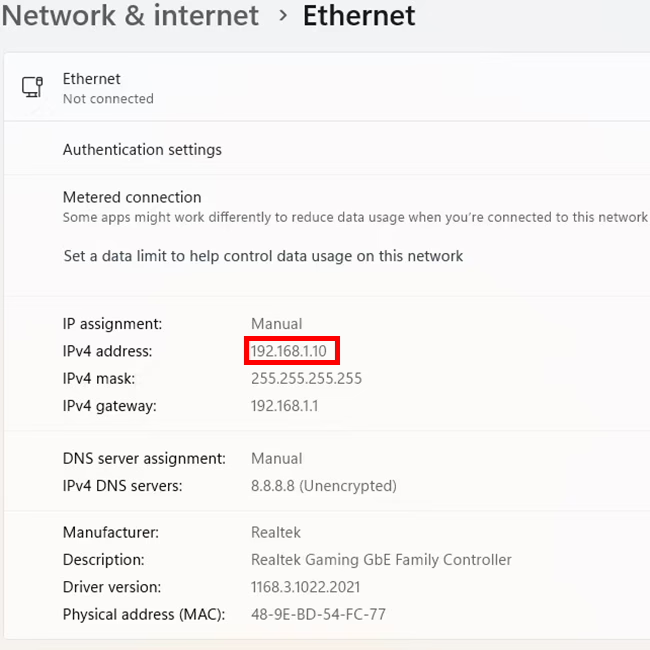
The default IP address of the composite analog video to IP video converter board is 192.168.1.30.
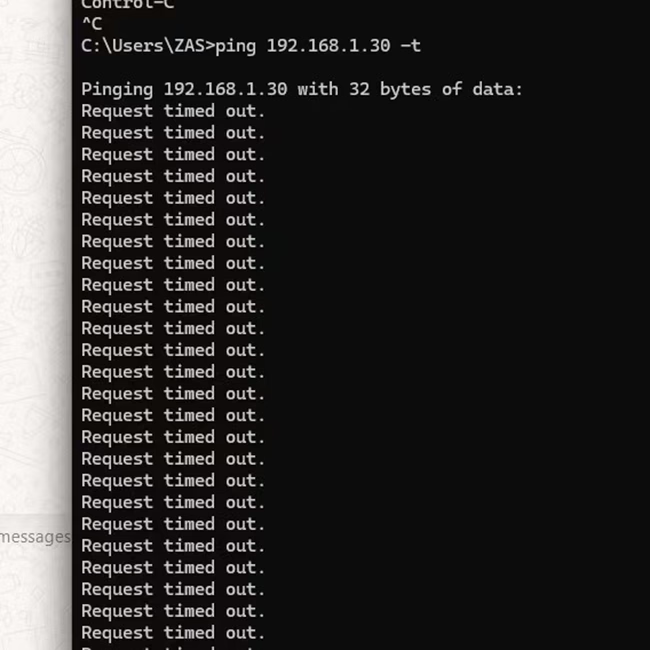
iVcan.com reply:
- Try changing the network cable, or connect the same network cable to other network devices. Is it normal?
- Is our analog video to network converter connected directly to the computer or through a hub?
- If it is a direct connection, check whether the wired network in your computer’s network neighborhood is displayed normally or unplugged.
- If it passes through a network hub, check whether the network indicator light is flashing or not. Or unplug and plug it in and observe again.
- How long is your network cable? Because our board is relatively small, there is no network transformer, so try to use a short network cable.
- If the network cable is very long, add a network hub in the middle, which has a signal enhancement function.
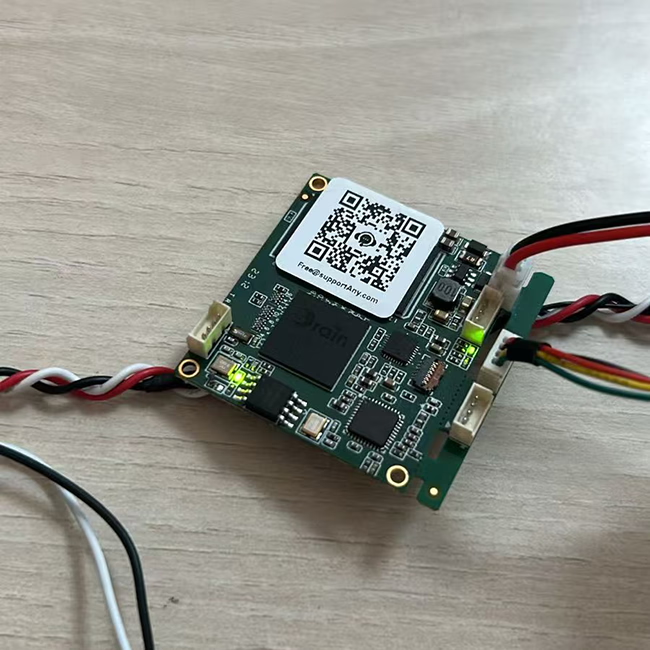
- You can also use the following method to determine whether the network connection is successful from the analog video to network port conversion board.
These two are lights related to the network card. When working normally, one of them is always on and the other one is flashing.


Why is my latency test result two seconds instead of milliseconds?
This user connected an analog camera to our analog video over IP converter board, connected it to a computer via an Ethernet cable, and played it using VLC player. He is streaming through rtsp protocol.
iVcan.com reply:
VLC player is a good general-purpose computer software. It needs to be optimized when playing video streams. Please refer to the link below.
However, we recommend using Easyplayer, a specially optimized software.
If the user is still not satisfied with the delay, they can use our specially customized Splayer player that supports the UDP protocol.
About RCA video over IP converter board
An RCA Video over IP device is a piece of hardware that allows you to transmit RCA composite video signals (along with audio, if supported) over an IP network. These devices are useful for extending or distributing standard-definition (SD) video signals over long distances using Ethernet (Cat5e, Cat6) or even the internet.
How It Works
- Encoding – The device converts analog composite video (yellow RCA) and stereo audio (red/white RCA) into a digital format.
- IP Transmission – The digital video signal is sent over a network (LAN or WAN) via standard Ethernet cables.
- Decoding – A receiving unit (decoder) converts the signal back to analog RCA video and audio for playback on a TV, monitor, or other display device.
Key Features
- Supports 480i/576i standard-definition video (SDTV).
- Uses Ethernet cables (Cat5e, Cat6) for long-distance transmission.
- Can be used for single-point or multi-point video distribution.
- May support IR, RS-232, or USB for remote control.
- Commonly used in legacy AV systems, CCTV, old gaming consoles, or DVD players.
Composite Video to IP refers to the process of converting analog composite video signals (such as those from CCTV cameras, VCRs, or older video sources) into digital IP (Internet Protocol) streams so they can be transmitted over a network (LAN, WAN, or the internet).
How It Works:
- Analog Signal Input: A composite video source (RCA or BNC connector) feeds an encoder or converter.
- Digitization & Compression: The encoder converts the analog signal into a digital format (e.g., H.264, H.265).
- Streaming Over IP: The digital stream is encapsulated in network protocols (RTSP, RTP, HTTP, or RTMP) for transmission over an IP network.
- Viewing & Storage: The video can be viewed on IP-based devices like computers, NVRs, mobile apps, or cloud platforms.
Common Use Cases:
- Upgrading Analog CCTV Systems: Converting legacy security cameras to work with modern IP-based systems.
- Remote Monitoring: Streaming old analog video sources over the internet for remote access.
- Broadcast & Streaming: Sending composite video signals to online platforms or IPTV systems.
Devices Used for Conversion:
- Video Encoders (Composite to IP converters)
- DVRs with Network Streaming Capabilities
- USB Capture Cards with Network Software
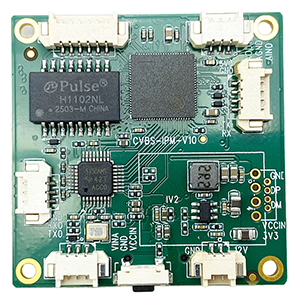
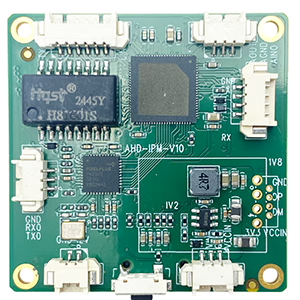
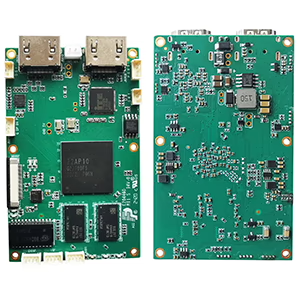
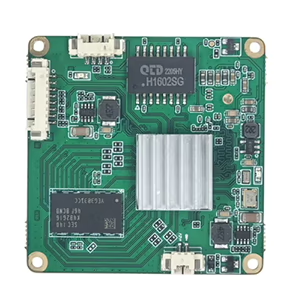
Encoder Modules Boards
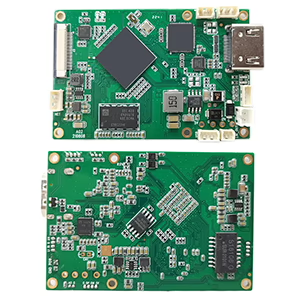
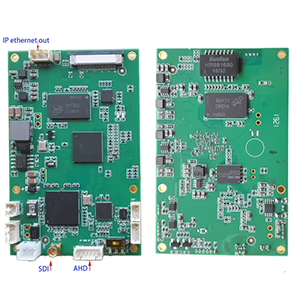
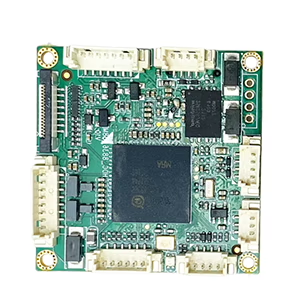
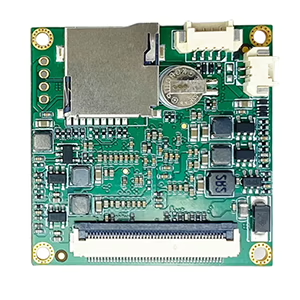
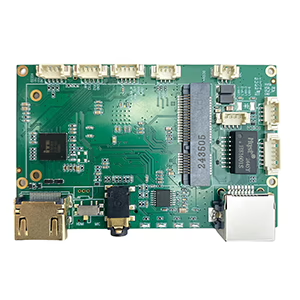
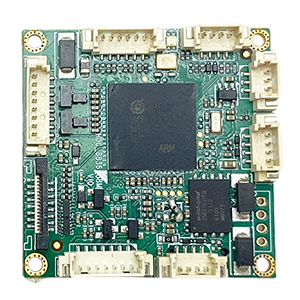
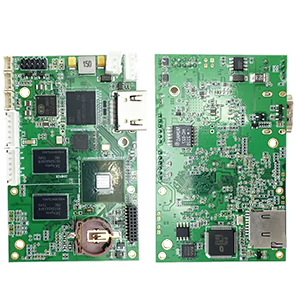
Decoder Modules Boards
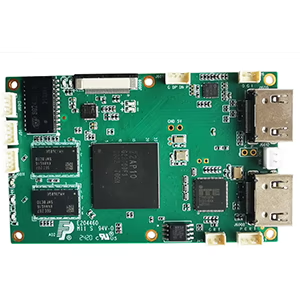
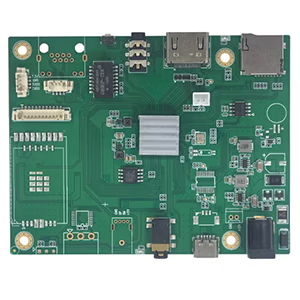
Available for Customization
New Encoder Products
| No. | Product Name | Configuration | Key Features | Status |
|---|---|---|---|---|
| 1 | Dual-Channel USB UVC Visible Light Video Encoder | 2× USB input | Supports dual USB camera video encoding, and RTSP streaming; local CVBS/HDMI output; switchable display modes | Mass Production |
| 2 | Dual-Channel Encoder (1× USB Visible Light + 1× USB Thermal Imaging camera) | 2× USB input | Supports dual USB camera (visible + thermal) capture, encoding, and RTSP streaming; local CVBS/HDMI output; switchable display modes | Mass Production |
| 3 | RTSP Decoder HDMI/CVBS Display Module | HDMI + CVBS output | Supports up to 4×1080P@30fps RTSP stream decoding; Support video streaming protocol forwarding; HDMI/CVBS output display | Sample Available |
| 4 | RTSP Decoder HDMI/CVBS Display Module with 4.3"/5" LCD | HDMI output + LCD screen | Supports up to 4×1080P@30fps RTSP stream decoding; protocol forwarding; HDMI/CVBS output display | Debugging |
| 5 | Dual-Channel Encoder (1× USB Visible Light + 1× CVBS Analog) | 1× CVBS + 1× USB UVC input | Dual video (USB + CVBS), encoding and RTSP streaming; local CVBS/HDMI output; switchable display modes | Debugging |
| 6 | Dual-Channel Encoder (1× USB UVC + 1× AHD Analog) | 1× AHD + 1× USB UVC input | Dual video capture (USB + AHD), encoding and RTSP streaming; local CVBS/HDMI output; switchable display modes | Debugging |
| 7 | Dual-Channel Encoder (1× CVBS + 1× AHD Analog Video) | CVBS + AHD 2 video input | Dual analog video capture, encoding and RTSP streaming; local CVBS/HDMI output; switchable display modes | Debugging |
| 8 | Dual-Channel Encoder (1× CMOS Camera + 1× USB Thermal Imaging camera) | 1× USB interface | Supports CMOS + USB thermal camera capture, encoding and RTSP streaming; local CVBS/HDMI output; switchable display modes | Mass Production |
For customized video input/output conversion solutions not listed in our products, please contact us for OEM/ODM support. We can develop tailored products based on your requirements.
Ask A Question
Thank you for your response. ✨