






In the context of drone video data radio links, IP Mesh, MANET (Mobile Ad hoc Network), and Ad hoc networking all represent different types of wireless networking technologies used to ensure reliable communication between drones and ground stations or among multiple drones. Here’s a breakdown of how they differ:
Table of Contents
1. IP Mesh Network
- Definition: IP Mesh is a network architecture where each node (drone or device) acts as a router, forwarding data to other nodes. The network doesn’t rely on a central hub; instead, it self-organizes and self-heals.
- Key Features:
- Scalability: Easy to add more nodes (drones) without significant reconfiguration.
- Redundancy: If one node fails, the data can be rerouted through other nodes.
- Routing: Uses standard IP protocols, meaning it can integrate well with existing IP-based networks (e.g., internet, cloud services).
- Use Case: Perfect for large-scale drone operations where a central controller might not be feasible (e.g., large area monitoring or search & rescue).
2. MANET (Mobile Ad hoc Network)
- Definition: MANET is a type of network where mobile devices (drones, in this case) communicate directly with each other without relying on a centralized infrastructure or pre-configured routing tables.
- Key Features:
- Dynamic Routing: Routes are created dynamically as drones move.
- Low Latency: The network adapts quickly to changes in position and is generally low-latency, which is critical for real-time video streaming.
- Self-Configuration: Each drone in the network can automatically establish routes with other drones in range.
- Use Case: Ideal for tactical, short-to-medium range missions where drones are moving unpredictably (e.g., military, tactical surveillance).
3. Ad hoc Networking
- Definition: Ad hoc networks are decentralized wireless networks where nodes (drones or ground stations) communicate directly with each other without a central control point.
- Key Features:
- Autonomous Communication: Nodes act independently and set up their own communication paths.
- Flexible and Temporary: Can be quickly deployed for temporary operations without relying on infrastructure.
- Challenges: Typically has less advanced routing protocols compared to MANET, and network performance can suffer in large-scale or high-density scenarios.
- Use Case: Suitable for small, short-range drone operations, or areas where network infrastructure is unavailable (e.g., field operations, small surveillance missions).
Comparison:
| Feature | IP Mesh | MANET | Ad hoc Network |
|---|---|---|---|
| Centralization | No central hub; self-organizing | No central hub; decentralized | No central hub; peer-to-peer |
| Scalability | High; easy to add more drones | Moderate; routing becomes complex | Low to moderate; ad hoc routing |
| Routing Protocol | IP-based, standard routing | Dynamic, protocol-dependent | Simple, less efficient routing |
| Fault Tolerance | High; can reroute via other nodes | Moderate; can suffer from broken routes | Low; less robust routing |
| Use Case | Large-area, continuous drone ops | Tactical, mobile, fast-changing environments | Temporary or small-scale operations |
| Deployment Speed | Slower setup due to complexity | Moderate, depending on protocols | Fast, no infrastructure needed |
Conclusion:
- IP Mesh networks are best for large-scale, resilient, and scalable drone operations that require seamless integration with existing IP infrastructure.
- MANET is better suited for tactical missions where drones are on the move, and real-time data exchange is critical.
- Ad hoc networks are typically used for smaller, short-range missions or environments where quick deployment and simplicity are key.
For drone video data transmission, you’ll generally see IP Mesh being used in larger or more complex scenarios where many drones need to communicate reliably, while MANET is often chosen for military or dynamic environments. Ad hoc might be used for simpler, short-term tasks.

Wireless Video Transmission
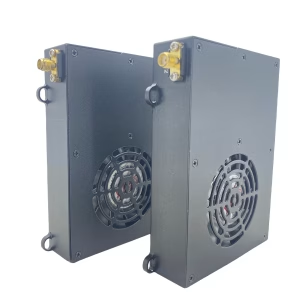
IP Mesh 100Mbps wireless video data transceiver 2X5W PA 16 hop
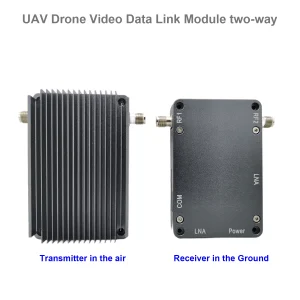
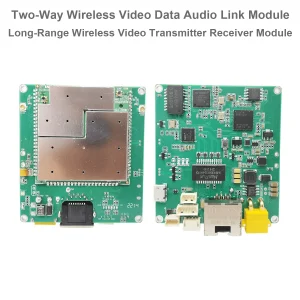
Bidirectional Two-Ways
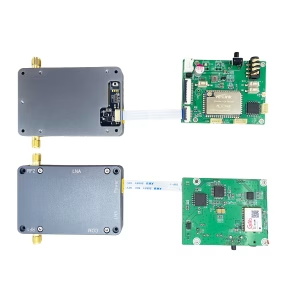
Wireless Video Transmission
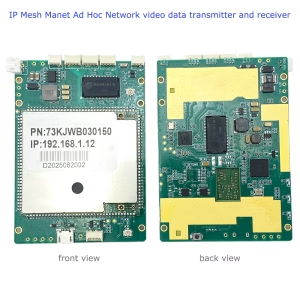
ip mesh MANET transceiver with bidirectional audio-IP board for robot UAV Drone
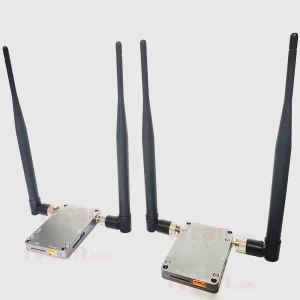
Video Transmitter

Wireless Video Transmission

Wireless Video Transmission
Mesh 2X 10 watts Power Amplifier 250km drone video data link long Range UAV Transmitter and Receiver


Wireless Video Transmission
2x20W PA IP mesh drone video data transmitter and receiver 260km

Ask A Question
Thank you for your response. ✨