






In recent years, unmanned aerial vehicles (UAVs), commonly known as drones, and ground robots have experienced a remarkable surge in applications, from industrial inspections and agriculture to security and surveillance. Central to the effectiveness of these platforms is their ability to capture and transmit high-quality video in real time. This is where ONVIF encoders come into play, providing standardized and efficient video streaming solutions. However, ONVIF encoders designed for UAVs and ground robots face unique challenges compared to traditional fixed surveillance systems. In this article, we explore the specialized requirements and key characteristics of ONVIF encoders in these mobile robotic platforms.
Table of Contents
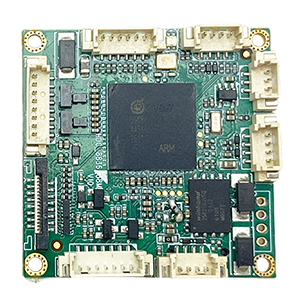
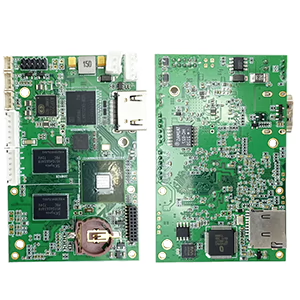
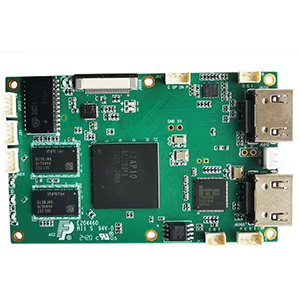
Encoder Modules Boards
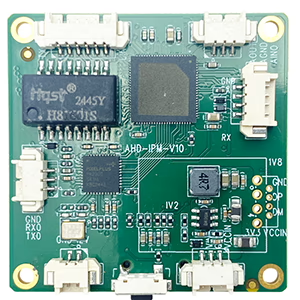
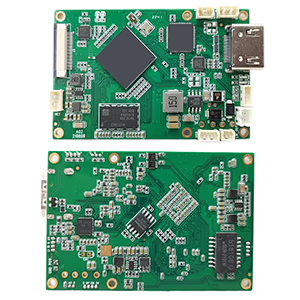
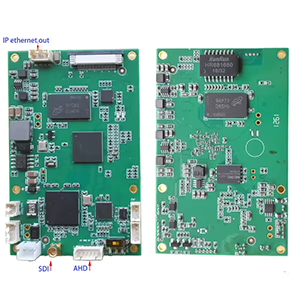
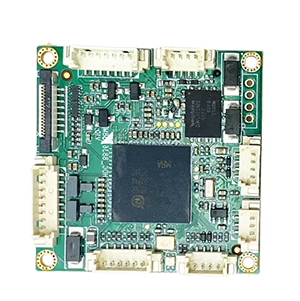
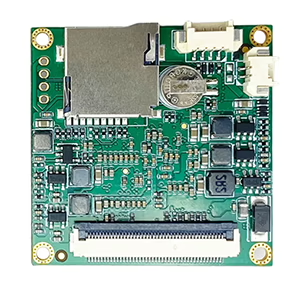
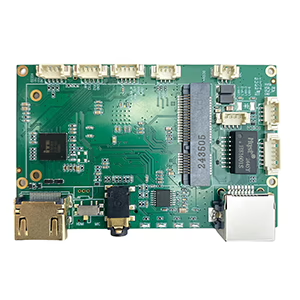
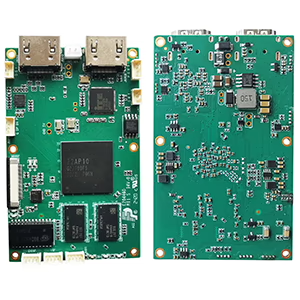
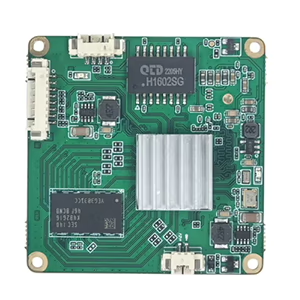
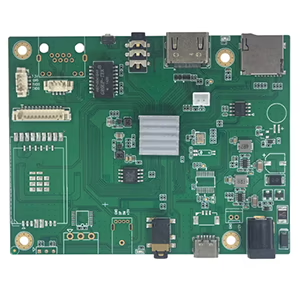
Decoder Modules Boards
Available for Customization
Understanding ONVIF Encoders
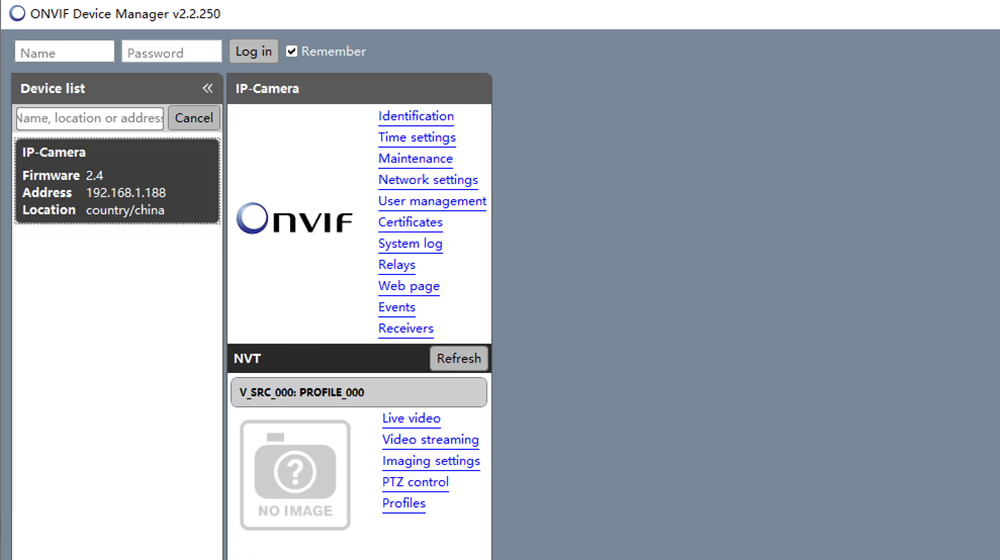
ONVIF (Open Network Video Interface Forum) is a global standard that ensures interoperability between IP-based video products. An ONVIF encoder converts analog or digital video input into an IP video stream that can be transmitted over a network. For conventional security cameras, ONVIF encoders primarily need to comply with standard profiles such as Profile S, G, or T, which cover basic video streaming, PTZ control, and recording management. While these standards remain essential for drones and ground robots, additional demands arise due to mobility, environmental conditions, and real-time operational needs.
1. Network and Bandwidth Considerations
Unlike fixed cameras that typically rely on stable wired connections, drones and ground robots depend on wireless transmission. This introduces several unique challenges:
- Error Resilience and Redundancy: Wireless networks are prone to packet loss, interference, and latency fluctuations. ONVIF encoders for UAVs and robots often incorporate Forward Error Correction (FEC) and adaptive bitrate streaming to maintain video quality even in challenging network conditions. Some models support redundant multi-link streaming to ensure continuous video delivery.
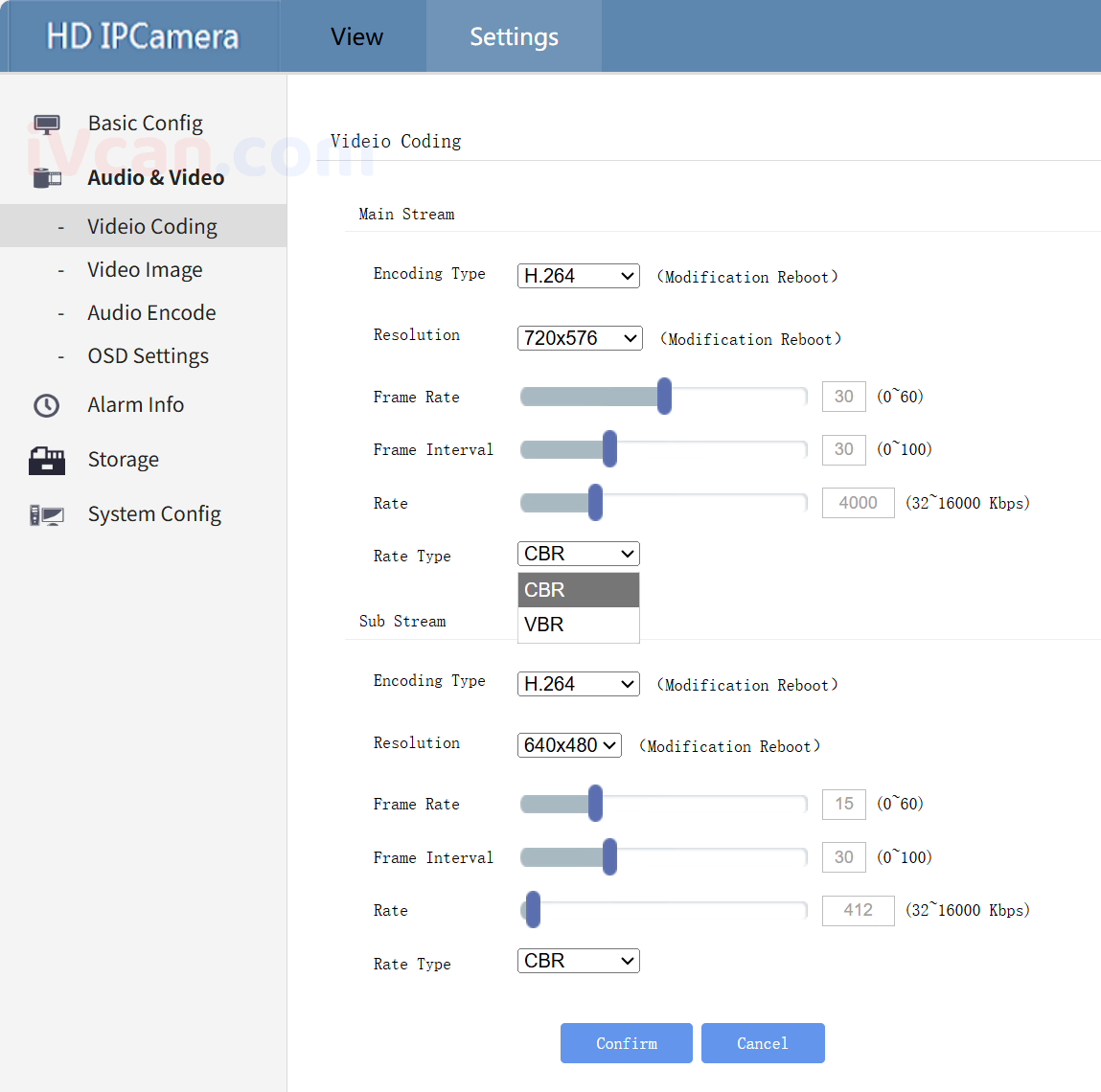
- Multiple Transmission Protocols: While traditional ONVIF streams use RTSP/RTP, mobile platforms may require additional protocols such as SRT, WebRTC, or RTMP for low-latency streaming. Many advanced ONVIF encoders now support simultaneous standard ONVIF streaming alongside these specialized protocols.
2. Low Latency Requirements
Real-time control and situational awareness are critical for drones and ground robots. High latency can compromise safety and operational effectiveness. Therefore, ONVIF encoders in these platforms are designed to minimize end-to-end delay, often achieving latencies below 80-100 milliseconds. Features such as rapid keyframe insertion (I-frames) during sudden movements or signal loss help maintain synchronization and responsiveness.
3. Adaptation to Mobile Platforms
The dynamic nature of drones and ground robots imposes additional constraints on video encoding:
- Motion-Optimized Encoding: Rapid movement and vibration can cause video artifacts. Encoders for mobile robots use intelligent motion estimation algorithms to reduce distortion and maintain clarity.
- Metadata Integration: Some encoders embed GPS or inertial navigation system (INS) data into video streams. This geospatial metadata allows ground control stations to overlay the drone or robot’s location on maps, facilitating navigation, inspection, and monitoring.
4. Power and Size Constraints
UAVs and robots have strict limitations on power consumption and physical size:
- Low Power Consumption: Encoders must efficiently use power to avoid overloading the platform’s energy supply. Advanced chips with hardware acceleration help achieve high-performance encoding at low wattage.
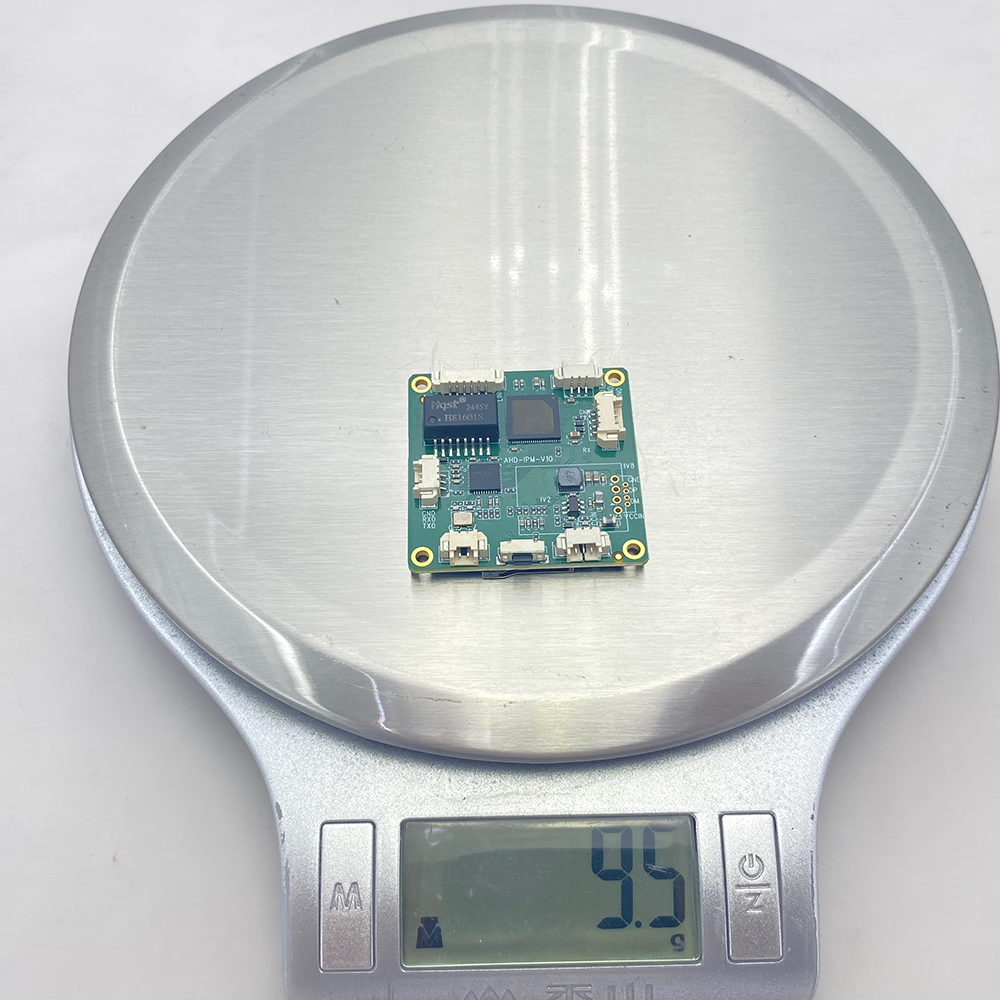
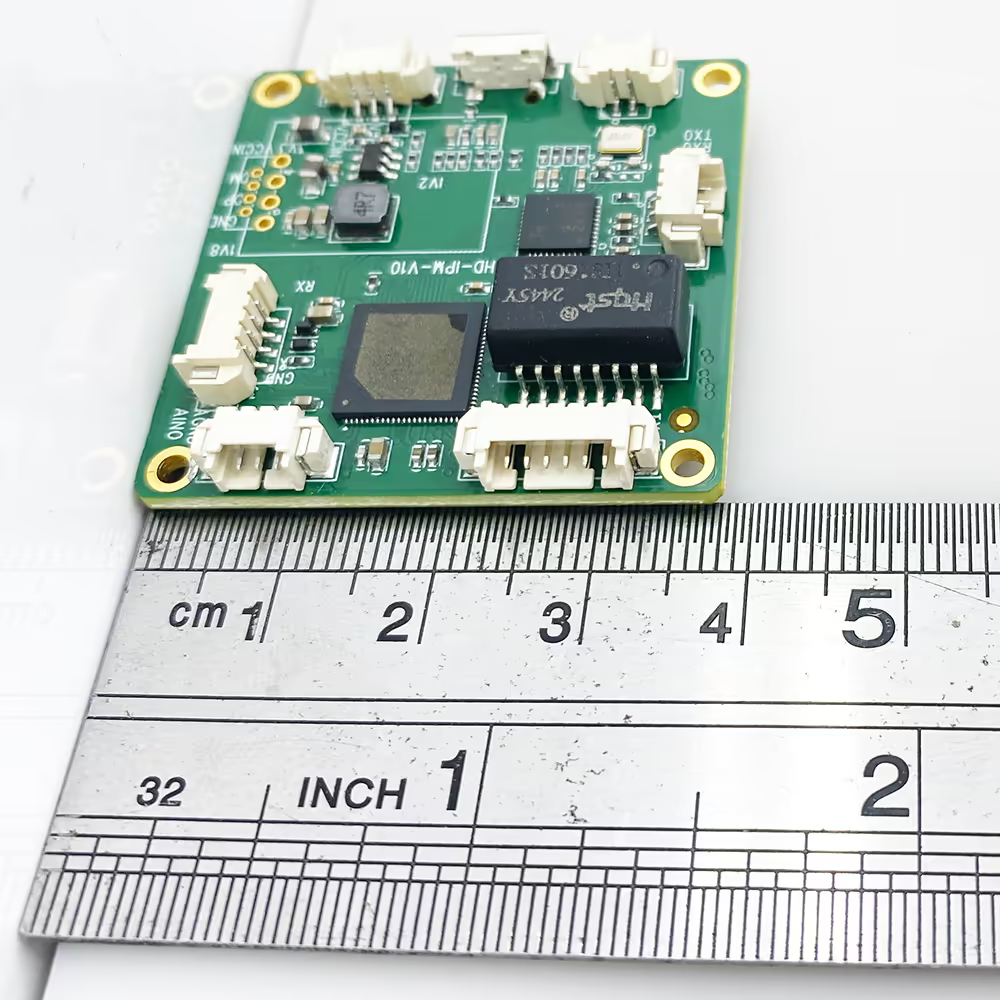
- Compact and Lightweight Design: Especially in drones, every gram counts. ONVIF encoders for these platforms are designed to be small, modular, and easy to integrate into tight spaces. Our Vcan2090s the dimension is 38x38mm, and only 9.5 grams.
5. Environmental and Durability Requirements
Operating outdoors or in industrial environments exposes encoders to various environmental stresses:
- Temperature and Weather Resistance: Encoders are often rated for wide temperature ranges (-20°C to +70°C) and high ingress protection (IP65/IP67) to withstand dust, rain, and extreme conditions.
- Shock and Vibration Resistance: Drones experience continuous vibration, and ground robots may traverse rough terrain. Encoders are built to endure these mechanical stresses without compromising performance.
6. Security and Management
Security is paramount when transmitting video from mobile platforms:
- Encrypted Streams: ONVIF encoders support HTTPS, TLS, and secure token-based access to prevent unauthorized viewing.
- User Access Control: Multi-level authentication and permissions ensure that only authorized personnel can access or control the video feeds.
7. Real-World Example
Consider a drone equipped with four high-definition cameras for industrial inspection. The ideal ONVIF encoder would:
- Support H.265 encoding to conserve bandwidth while maintaining high quality.
- Enable FEC and SRT streaming to a ground control station with low latency.
- Allow remote adjustment of bitrate and camera settings.
- Embed GPS metadata for mapping and post-mission analysis.
- Operate reliably across wide temperature ranges and resist dust and vibration.
- Fit within the drone’s compact payload without excessive power draw.
Conclusion
ONVIF encoders are critical components for drones and ground robots, transforming video feeds into actionable, standardized, and secure streams. Unlike traditional fixed surveillance applications, these mobile platforms impose additional demands on latency, bandwidth adaptation, environmental resilience, power efficiency, and metadata integration. Selecting the right ONVIF encoder is therefore essential to ensure reliable video transmission, operational safety, and mission success.
As UAVs and robots become more sophisticated and ubiquitous, the role of specialized ONVIF encoders will only grow. Engineers and operators must carefully evaluate encoders not just for standard compliance, but also for their ability to perform under the unique conditions of mobile, wireless, and often harsh environments.
Ask A Question
Thank you for your response. ✨