





Analog to IP Encoder V10 vs V20: Optimized Design for Lower Latency FPV and Industrial UAV Applications
In the rapidly evolving fields of FPV drones, UAV systems, and industrial video transmission, low latency, stable signal integrity, and compact design are critical. The Analog to IP Encoder has become a key component for converting traditional CVBS analog video into IP-based video streams that can be transmitted over Ethernet networks with high reliability.
To better meet the needs of professional users, we have released two versions of our Analog to IP Encoder board: V10 and the newly optimized V20. While both versions deliver the same core functionality and performance, V20 represents a refined and more deployment-friendly evolution of the original design.

This article explains the differences between V10 and V20, highlights the advantages of the V20 update, and provides a comprehensive overview of the Analog to IP Encoder’s features, specifications, and applications.
Table of Contents
Analog to IP Encoder: From V10 to V20
Both V10 and V20 are designed as low-latency Analog to IP Encoder boards for FPV drones, UAV platforms, robotics, and industrial video systems. They share the same encoding capability, video quality, and network compatibility. However, V20 introduces targeted hardware optimizations based on real-world deployment feedback.
Key Improvements in V20
1. Optimized Connector Placement for Better Signal Integrity
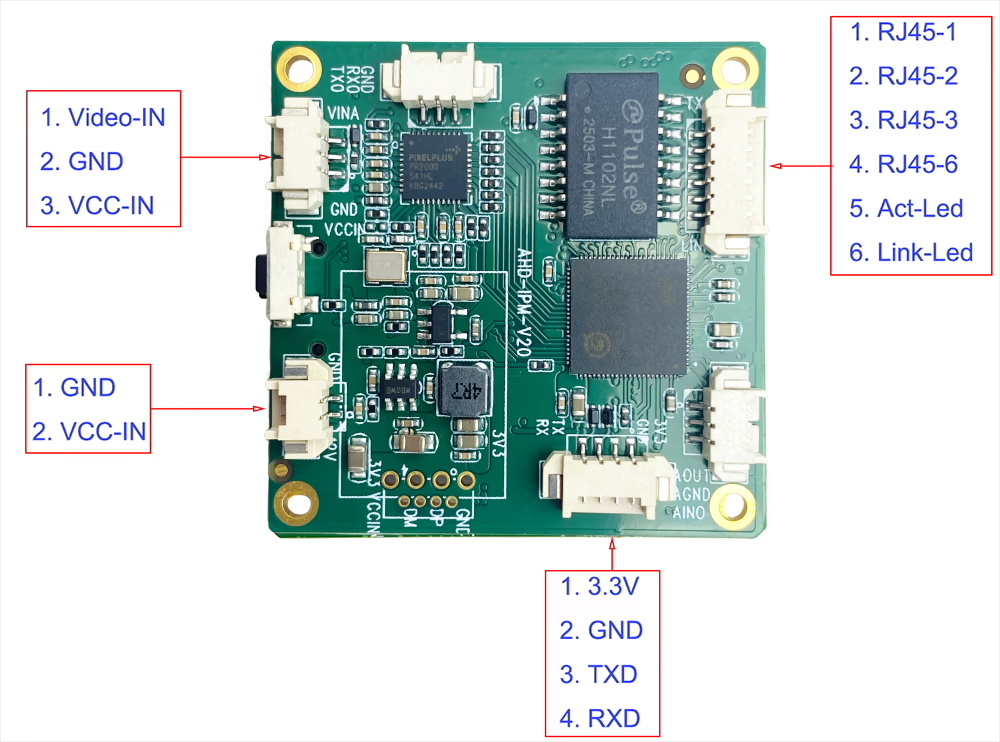
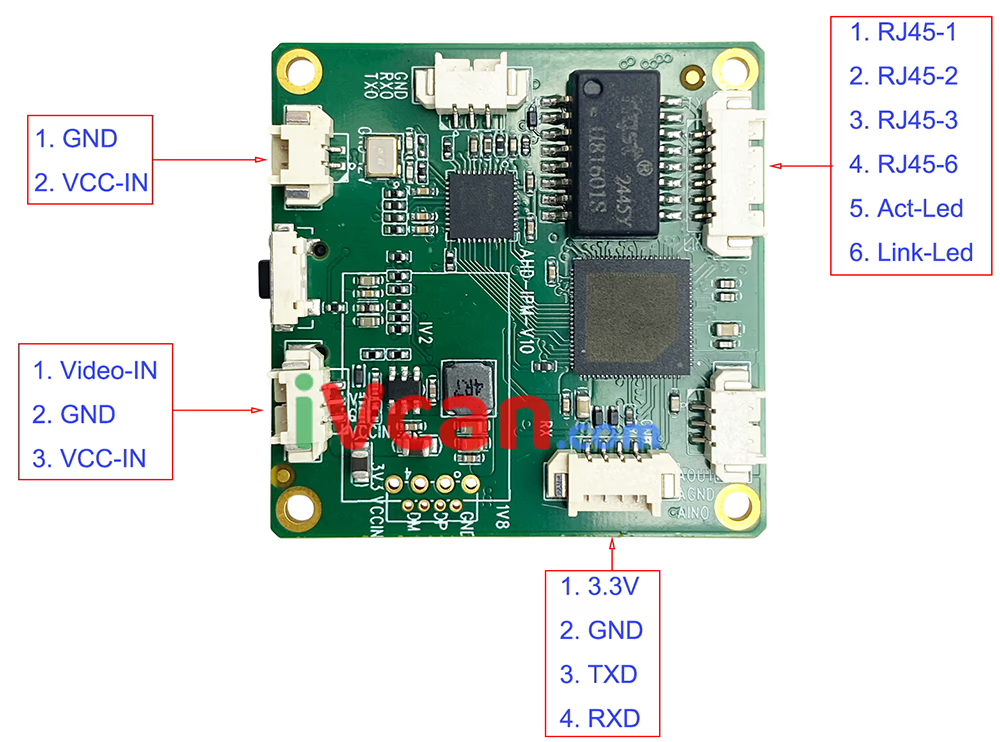
In V20, the 2-pin power input connector and the 3-pin video input connector have been repositioned. The power input is now located closer to the main power routing on the board. This shorter power path helps:
- Reduce voltage drop
- Minimize electromagnetic interference (EMI)
- Improve overall video signal stability
By physically separating and optimizing the power and video paths, V20 delivers cleaner analog video input, which is especially important in high-interference environments such as drones and industrial machinery.
2. Lower-Profile Components for Easier Stacking
V20 uses shorter, low-profile electronic components, making the board significantly easier to integrate into stacked PCB assemblies. This is a major advantage for:
- Compact UAV designs
- FPV drone stacks
- Embedded industrial systems
The reduced component height improves mechanical compatibility and airflow while maintaining the same electrical performance as V10.
V20
V10
Why Choose the V20 Analog to IP Encoder?
If you are already familiar with V10, upgrading to V20 requires no software changes, no protocol adjustments, and no system redesign. You simply gain:
- Improved EMI resistance
- Cleaner power and video routing
- Better mechanical integration
For new projects, V20 is the recommended version, offering a more refined hardware layout that aligns with modern compact and modular system designs.
Analog to IP Encoder Overview
The Analog to IP Encoder is a compact embedded board that converts CVBS analog video signals into real-time IP video streams over Ethernet. It enables legacy analog cameras to be integrated into modern IP-based networks with low latency and high reliability.
This encoder is ideal for applications that require real-time monitoring, remote control, or live video streaming where delay and signal stability are critical.
Key Features of the Analog to IP Encoder
- Converts CVBS / AV analog video to IP video stream
- Ultra-low latency encoding suitable for FPV and UAV control
- Ethernet-based video transmission
- Compact PCB design for embedded systems
- Optimized power and signal layout (V20)
- Supports continuous, stable 24/7 operation
- Designed for industrial-grade reliability
Specifications
- Video Input: CVBS / Analog AV
- Video Encoding: Real-time IP video streaming
- Network Interface: Ethernet (RJ45 or board-level interface)
- Latency: Optimized for low-latency transmission
- Power Input: 2-pin connector
- Board Design: Compact, low-profile components (V20)
- Operating Environment: Industrial and mobile applications
Exact encoding formats, resolutions, and power requirements can be customized depending on project needs.
Applications
The Analog to IP Encoder is widely used in scenarios where analog cameras must be integrated into IP networks with minimal delay:
- FPV drones and racing drones
- Industrial UAVs and inspection drones
- Robotics and autonomous vehicles
- Remote monitoring systems
- Industrial automation and machine vision
- Security and surveillance systems
- Legacy analog camera network upgrades
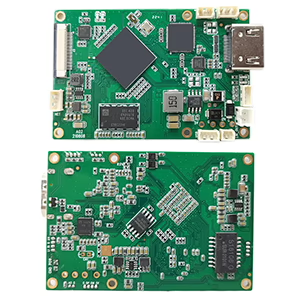
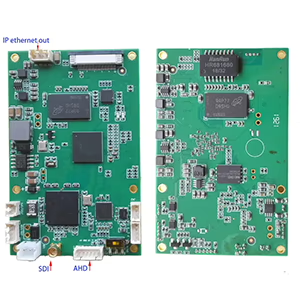
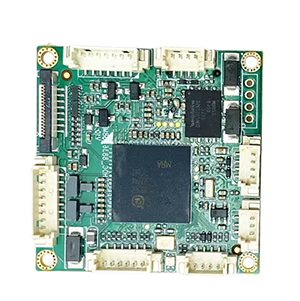
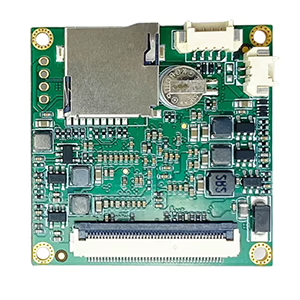
Encoder Modules Boards
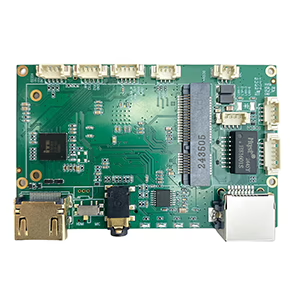
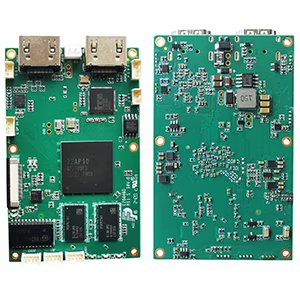
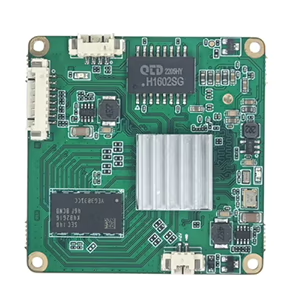
Decoder Modules Boards
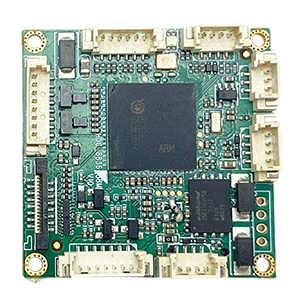
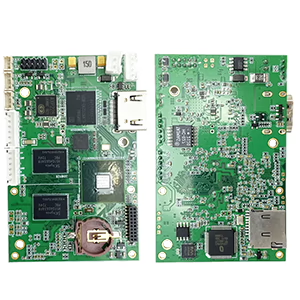
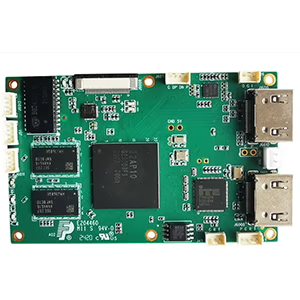
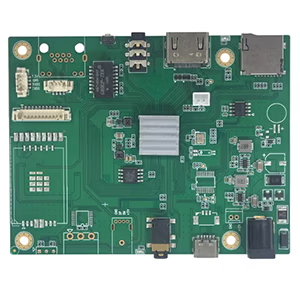
Available for Customization
New Encoder Products
| No. | Product Name | Configuration | Key Features | Status |
|---|---|---|---|---|
| 1 | Dual-Channel USB UVC Visible Light Video Encoder | 2× USB input | Supports dual USB camera video encoding, and RTSP streaming; local CVBS/HDMI output; switchable display modes | Mass Production |
| 2 | Dual-Channel Encoder (1× USB Visible Light + 1× USB Thermal Imaging camera) | 2× USB input | Supports dual USB camera (visible + thermal) capture, encoding, and RTSP streaming; local CVBS/HDMI output; switchable display modes | Mass Production |
| 3 | RTSP Decoder HDMI/CVBS Display Module | HDMI + CVBS output | Supports up to 4×1080P@30fps RTSP stream decoding; Support video streaming protocol forwarding; HDMI/CVBS output display | Sample Available |
| 4 | RTSP Decoder HDMI/CVBS Display Module with 4.3"/5" LCD | HDMI output + LCD screen | Supports up to 4×1080P@30fps RTSP stream decoding; protocol forwarding; HDMI/CVBS output display | Debugging |
| 5 | Dual-Channel Encoder (1× USB Visible Light + 1× CVBS Analog) | 1× CVBS + 1× USB UVC input | Dual video (USB + CVBS), encoding and RTSP streaming; local CVBS/HDMI output; switchable display modes | Debugging |
| 6 | Dual-Channel Encoder (1× USB UVC + 1× AHD Analog) | 1× AHD + 1× USB UVC input | Dual video capture (USB + AHD), encoding and RTSP streaming; local CVBS/HDMI output; switchable display modes | Debugging |
| 7 | Dual-Channel Encoder (1× CVBS + 1× AHD Analog Video) | CVBS + AHD 2 video input | Dual analog video capture, encoding and RTSP streaming; local CVBS/HDMI output; switchable display modes | Debugging |
| 8 | Dual-Channel Encoder (1× CMOS Camera + 1× USB Thermal Imaging camera) | 1× USB interface | Supports CMOS + USB thermal camera capture, encoding and RTSP streaming; local CVBS/HDMI output; switchable display modes | Mass Production |
For customized video input/output conversion solutions not listed in our products, please contact us for OEM/ODM support. We can develop tailored products based on your requirements.
Conclusion
The Analog to IP Encoder V20 builds upon the proven foundation of V10 with thoughtful hardware optimizations that improve signal integrity and mechanical integration without changing functionality. For customers seeking a more robust, compact, and stack-friendly solution, V20 is the clear choice.
Whether you are upgrading an existing system or designing a new FPV, UAV, or industrial video platform, the Analog to IP Encoder V20 offers a reliable and future-ready solution for analog-to-IP video conversion.
If you are starting a new project, we strongly recommend choosing V20 to benefit from its optimized design and easier integration.
Ask A Question
Thank you for your response. ✨