





Thermal Imaging Camera for Armoured Surveillance Vehicle Driver Assistance
Table of Contents
Introduction
Driving special vehicles such as armoured surveillance vehicles requires reliable visibility in all environments. Traditional visible light cameras may lose performance at night, in darkness, fog, smoke, dust, or harsh weather conditions.
A thermal imaging camera for vehicles provides an additional layer of safety by detecting heat signatures from people, vehicles, and obstacles, allowing drivers to maintain better situational awareness during day and night operations.
For modern vehicle safety systems, a dual spectrum thermal imaging camera that combines infrared thermal imaging and visible light imaging has become an effective solution for driver assistance applications.

Customer Requirement: Forward-Looking Thermal Camera for Armoured Vehicle
A recent customer project requested a thermal imaging solution for an armoured surveillance vehicle.
The main requirements included:
- Front-facing installation for driver assistance
- Thermal imaging capability for nighttime operation
- Day and night vision support
- Wide viewing angle for road visibility
- Ethernet and USB video output
- Industrial temperature operation
- Adjustable mechanical installation
The requested specifications were:
Thermal Camera Requirements
Horizontal Field of View:
100° ±10°
Vertical Field of View:
40° ±10°
Night Vision Distance:
8–10 meters for driver guidance
Operating Temperature:
-20°C to +70°C
Video Interface:
Ethernet + USB
Why Thermal Imaging Is Important for Vehicle Applications
Unlike standard cameras that depend on visible light, thermal cameras detect infrared radiation emitted by objects.
This allows the camera to recognize:
- Pedestrians
- Vehicles
- Animals
- Obstacles
- Heat sources
even in conditions where normal cameras struggle.
For armoured vehicles and special-purpose vehicles, thermal imaging improves:
- Driver awareness
- Night driving safety
- Blind spot reduction
- Hazard detection


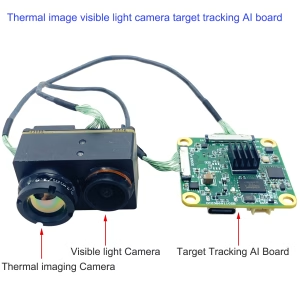
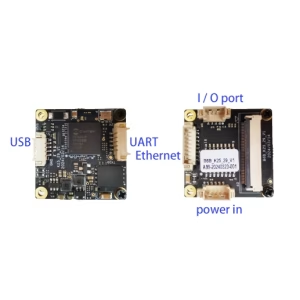

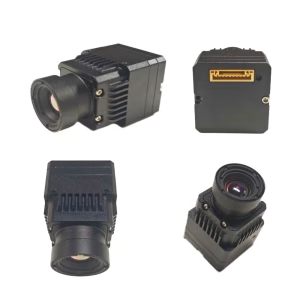


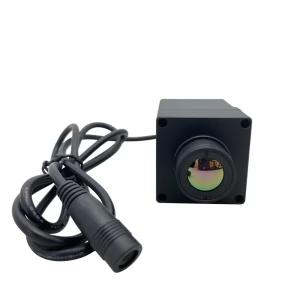
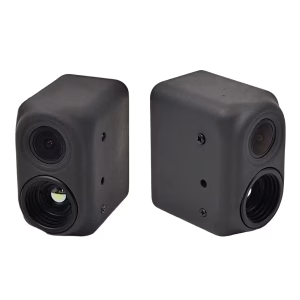
FPV camera
fpv dual lens night thermal imaging and daylight camera for drones, HD vision, low-light real-time
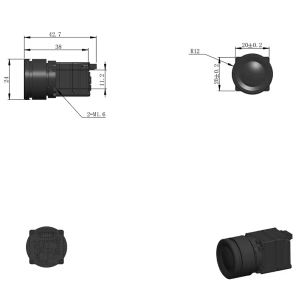
Thermal Camera

Dual Spectrum Thermal Imaging Camera Solution
To meet both daytime and nighttime requirements, a dual spectrum thermal imaging camera is an ideal choice.
The system combines:
1. Thermal Imaging Sensor
The infrared channel provides:
- Night vision capability
- Heat signature detection
- Operation without visible light
- Better visibility in fog, smoke, and dust
2. Visible Light Camera
The optical channel provides:
- Daytime color images
- Normal road observation
- Target identification
By combining thermal and visible images, drivers can receive more complete environmental information.
Wide Angle Thermal Camera Design for Driver Assistance
For vehicle applications, the viewing angle is critical.
A narrow-angle thermal camera may provide long-distance detection but can create blind areas near the vehicle.
For driver assistance, a wide-angle thermal lens is recommended.
A customized configuration can support:
- Wide horizontal field of view
- Forward road coverage
- Improved obstacle awareness
- Easier vehicle integration
For this project, a wide-angle thermal lens and adjustable mounting structure are recommended to achieve the required 100° viewing angle.
Vehicle Installation and Mechanical Adjustment
Every vehicle has different installation positions.
Therefore, the thermal camera mounting system should allow:
- Vertical angle adjustment
- Horizontal alignment
- Stable fixation
- Vibration resistance
An adjustable mounting bracket helps installers optimize the camera viewing direction after vehicle installation.
Ethernet and USB Output for Easy Integration
Modern vehicle systems often require flexible video interfaces.
A thermal camera with Ethernet output can support:
- IP video transmission
- Remote monitoring
- RTSP streaming
- Vehicle network integration
USB output can be used for:
- Local display systems
- Embedded computers
- AI processing platforms
This makes the thermal camera easier to integrate into different vehicle architectures.
Recommended Thermal Camera Configuration
For armoured vehicle driver assistance applications, the recommended configuration includes:
- Dual spectrum thermal + visible camera
- Industrial-grade design
- Wide-angle thermal lens
- Day/night imaging
- Ethernet video output
- Optional USB interface
- Vehicle adjustable mounting bracket
The AI Dual Spectrum Thermal Imaging Camera is designed for applications including special vehicles, construction machinery, industrial vehicles, and harsh environment monitoring.
Conclusion
A thermal imaging camera for armoured vehicles provides reliable vision when traditional cameras are limited by darkness or weather conditions.
By combining:
- Thermal infrared detection
- Visible light imaging
- Wide-angle coverage
- Flexible video output
a dual spectrum thermal camera becomes a practical solution for vehicle driver assistance, night vision, and safety monitoring.
For OEM vehicle projects requiring customized lens options, mechanical design, or interface integration, thermal camera solutions can be adapted according to specific application requirements.
Ask A Question
Thank you for your response. ✨