





Understanding OpenIPC and Its Applications in Digital FPV VTX / VRX Systems
As interest in digital FPV video transmission continues to grow, many customers have started asking about OpenIPC and whether it is available as a digital VTX / VRX solution.
This article explains what OpenIPC really is, how it is used, and where it fits in the FPV VTX / VRX ecosystem.
Table of Contents
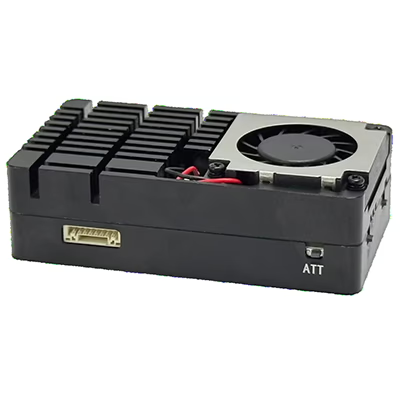
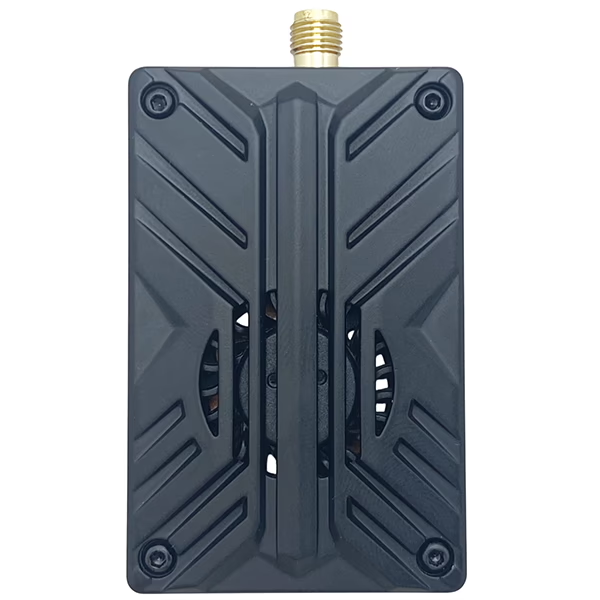
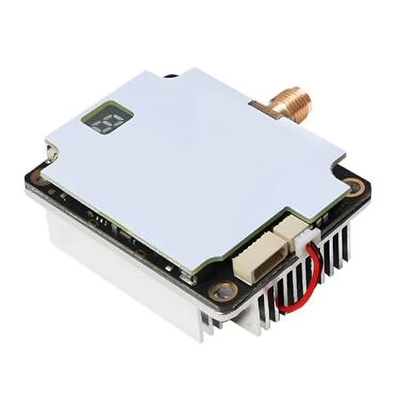
7GHz FPV VRX receiver
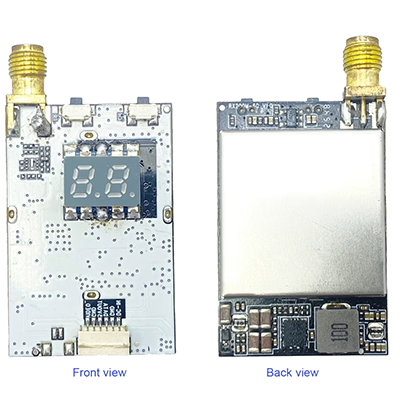
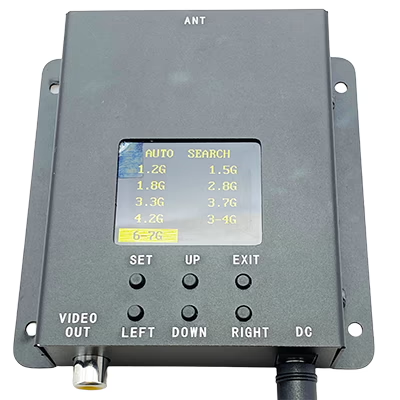
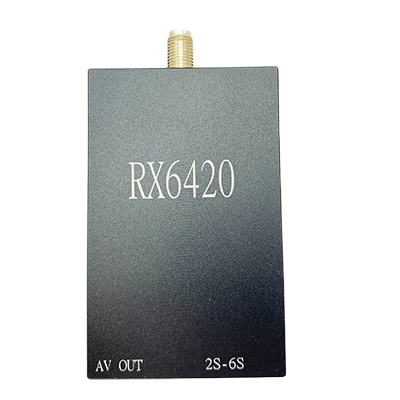
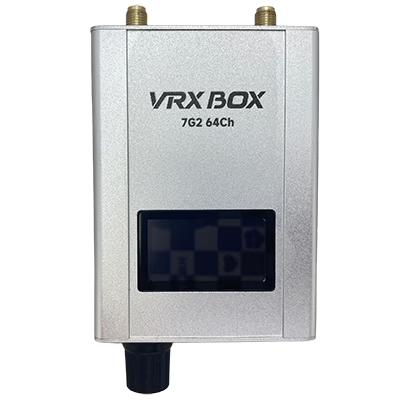
7GHz FPV VTX transmitter

1. What Is OpenIPC?
OpenIPC is an open-source firmware and software platform for IP cameras and wireless video transmission.
It is important to clarify from the beginning:
OpenIPC is not a single hardware product.
It is an open-source ecosystem that enables digital video transmission when installed on compatible hardware.
Key features of OpenIPC:
- 🧠 Open-source firmware (Linux-based)
- 📡 Digital IP video transmission
- 🔓 Community-driven development
- 🧩 Runs on specific camera SoCs and RF chipsets
- 🔧 Highly customizable for advanced users
You can think of OpenIPC as:
“An open-source operating system for digital video transmitters.”
2. Is OpenIPC a Digital VTX / VRX?
Yes — but indirectly.
OpenIPC itself does not manufacture or sell VTX or VRX hardware.
Instead, it turns compatible hardware into a digital VTX or VRX.
Typical OpenIPC digital link structure:
- VTX side:
- IP camera module (SigmaStar / Ingenic / HiSilicon SoC)
- Wi-Fi or RF module (2.4 GHz / 5.8 GHz)
- OpenIPC firmware installed
- VRX side:
- PC, SBC (Raspberry Pi, etc.), or embedded receiver
- Wi-Fi/RF receiver
- OpenIPC receiver software
The video is transmitted as compressed digital IP video, not analog RF video.
3. How OpenIPC Is Used in FPV Applications
OpenIPC has become popular in DIY and experimental FPV systems, especially among developers and advanced users.
Common FPV use cases:
- 🚁 Long-range FPV drones
- 🤖 Robotics and unmanned ground vehicles
- 🧪 Research and testing platforms
- 🛠 DIY digital FPV systems
Why FPV users choose OpenIPC:
- Full control over firmware and parameters
- No vendor lock-in
- Ability to customize latency, bitrate, resolution
- Strong open-source community support
4. Famous OpenIPC-Based Projects and Examples
While OpenIPC is not a commercial brand like DJI, it has powered several well-known community projects, such as:
📌 OpenHD (related ecosystem)
- An open-source digital FPV system
- Uses similar IP video transmission concepts
- Often compared with OpenIPC in FPV discussions
📌 DIY Long-Range Digital FPV Builds
- OpenIPC running on SigmaStar-based cameras
- External high-power RF modules
- Used for experimental 10–30 km+ digital links
📌 Robotics & Industrial Prototypes
- Low-cost digital video links
- Environments where customization is more important than plug-and-play
These projects demonstrate that OpenIPC is a platform, not a boxed solution.
5. OpenIPC vs Traditional FPV VTX / VRX
| Feature | OpenIPC | Traditional Analog VTX/VRX |
|---|---|---|
| Video Type | Digital (IP) | Analog |
| Latency | Low–Medium (configurable) | Very low |
| Image Quality | High (HD) | Low |
| Hardware Complexity | High | Low |
| Plug & Play | ❌ | ✅ |
| Customization | Very high | Very limited |
OpenIPC is best suited for advanced users, not beginners.
6. Important Notes for Customers
- OpenIPC requires compatible hardware
- Firmware installation and configuration are not plug-and-play
- Performance depends heavily on:
- RF module quality
- Antenna design
- Bandwidth and interference
- Technical knowledge is strongly recommended
7. Summary
- OpenIPC is an open-source digital video transmission platform
- It is not a ready-made VTX / VRX product
- It can be used to build custom digital FPV systems
- Widely adopted in DIY, research, and experimental FPV projects
- Ideal for users who want full control and flexibility


FPV camera
FPV Analog video scrambler and descrambler module for video encryption and decryption board

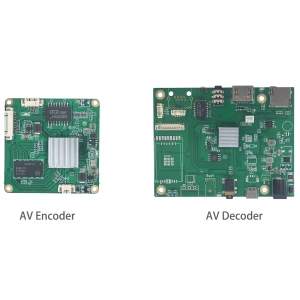
CVBS HDMI to IP Encoder

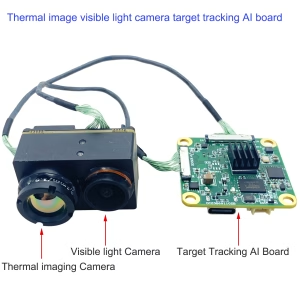


Drone Transmission


Drone Transmission
FPV camera
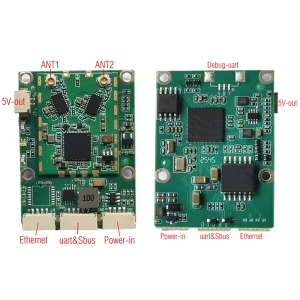
5.8GHz Long-Range Wireless Data Link Module 100Mbps MIMO | Ethernet UART SBUS | 5-15km UAV Telemetry
Ask A Question
Thank you for your response. ✨