





UAV Recovery RF Beacon Tracker (Non-GSM / Non-Satellite, Anti-Interference Design)
Table of Contents
Description
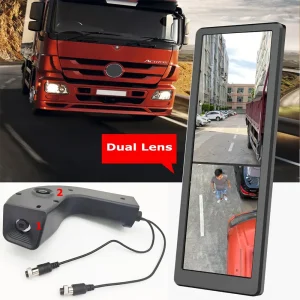
The UAV Recovery RF Beacon Tracker is a specialized tracking solution designed for drone operations in remote and challenging environments where GSM and internet connectivity are unavailable.
Unlike conventional GPS or satellite trackers, this device utilizes a low-power RF beacon technology to ensure zero interference with UAV navigation systems.
In the event of a crash, the tracker automatically activates and transmits a recoverable radio signal, enabling rapid location of the UAV even in dense vegetation or water environments.
Overview
This tracker is purpose-built for UAV recovery in forestry, mining, and off-grid operations.
Traditional satellite trackers often transmit high-power signals that may interfere with onboard GNSS systems, leading to flight instability or unintended failsafe triggers.
To address this issue, the UAV Recovery RF Beacon Tracker adopts a passive-safe architecture during flight and activates only after a crash or power loss is detected.
By combining ultra-low power RF transmission with robust waterproof housing, the system ensures reliable post-crash recovery without compromising flight safety.
Features
Zero GNSS Interference
- RF beacon operates on dedicated frequency bands
- No impact on UAV GPS or flight control systems
Crash-Activated Transmission
- Automatic activation via:
- Impact detection
- Power disconnection
- Ensures signal is only transmitted when needed
Long-Range RF Beacon Tracking
- Directional tracking using handheld receiver
- Typical range: 3–15 km (depending on terrain)
Ultra-Low Power Consumption
- Continuous transmission for several days after crash
- Optimized for long-duration recovery missions
Waterproof & Rugged Design
- IP67 / IP68 protection level
- Operates in:
- Heavy rain
- Wetland
- Water immersion scenarios
Lightweight & Compact
- Designed specifically for UAV payload constraints
Optional Audible Buzzer
- Assists in close-range recovery in dense vegetation
Specifications
| Parameter | Specification |
|---|---|
| Positioning | Optional GNSS (logging only, no transmission during flight) |
| Communication | RF Beacon (VHF / UHF / 433 MHz optional) |
| Transmission Power | Low-power (configurable) |
| Activation Mode | Crash / Impact / Power loss |
| Tracking Range | 3–15 km (line-of-sight dependent) |
| Battery Life | 48–120 hours (post-activation) |
| Waterproof Rating | IP67 / IP68 |
| Weight | < 100 g (customizable) |
| Operating Temperature | -20°C to +60°C |
| Mounting | External / embedded UAV mount |
| Optional Features | Buzzer, LED strobe, data logging |
Applications
UAV Operations
- Forestry mapping
- Surveying & inspection
- BVLOS missions
- Agricultural drones
Remote & Harsh Environments
- Dense forest areas
- Mountain regions
- Wetlands and rivers
Industrial Use Cases
- Mining operations
- Pipeline inspection
- Infrastructure monitoring
Recovery & Safety
- UAV crash recovery
- Equipment tracking in off-grid areas




iVcan.com –
We are currently exploring GPS tracker options to support our UAV operations.
As background, our operational areas are in remote forestry sites where internet connectivity is unavailable, and in many locations, there is also no GSM signal at all.
Based on our experience, when a UAV crashes, the unit often falls into dense vegetation, making it extremely difficult to locate and sometimes requiring several days of searching.
To enhance our recovery capability, we are seeking your recommendation on a tracker model that is suitable for these challenging conditions.
Previously, we tested several satellite-based GPS trackers that transmit location data every 30 minutes.
However, during UAV operations, these devices caused communication interference with the drone’s GPS system, which repeatedly triggered the failsafe Return-to-Home function.
Considering these challenges, we would appreciate your advice on the most appropriate and reliable tracker solution for UAV operations in remote, non-GSM, and non-internet environments.
Ideally, the tracker should also be waterproof so that, in case the UAV falls into water, the unit can still be located.