





Non-Radiometric Thermal Camera Germanium Glass Window for IP67 – Complete FAQ Guide
When designing a sealed enclosure for a thermal module, selecting the correct non-radiometric thermal camera germanium glass window for IP67 protection is critical. Incorrect material choice can completely block infrared transmission and degrade system performance.
This FAQ explains radiometric capability and the correct window material for IP67 housing integration.


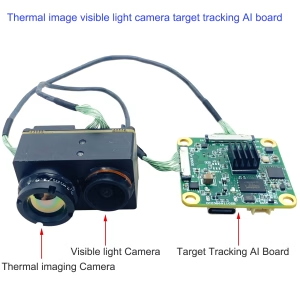
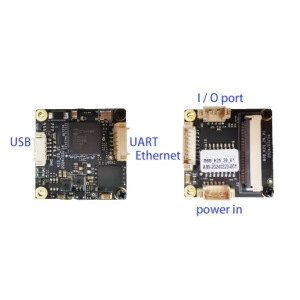

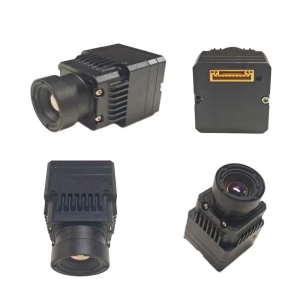


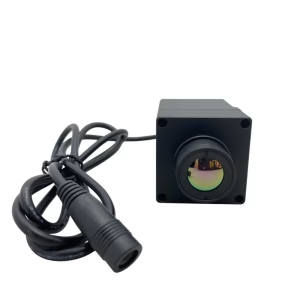
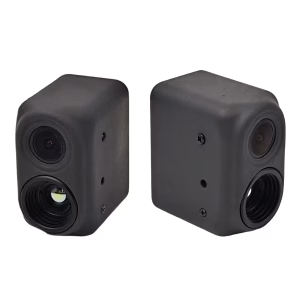
FPV camera
fpv dual lens night thermal imaging and daylight camera for drones, HD vision, low-light real-time
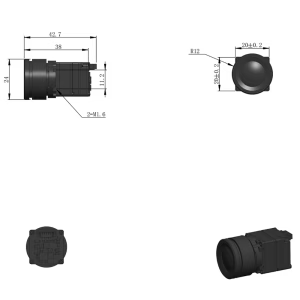
Thermal Camera

Table of Contents
1) Is the thermal camera radiometric?
Q: Is your thermal camera radiometric?
A: No. Our module is a non-radiometric thermal camera.
It is a passive infrared imaging sensor that detects long-wave infrared (LWIR) radiation and generates thermal images. However, it does not provide per-pixel temperature measurement or absolute temperature data output.
This type of non-radiometric thermal camera is ideal for:
- UAV payloads
- Night vision systems
- Security surveillance
- Target detection
- Industrial monitoring
If your application requires temperature measurement and thermal analysis, a radiometric version would be required instead.

2) Why is a Germanium Glass Window Required for IP67?
When designing a sealed enclosure, you must use a non-radiometric thermal camera germanium glass window for IP67 protection.
Thermal cameras typically operate in the 8–14 μm LWIR wavelength range. Standard optical glass or tempered glass used for visible light will block infrared radiation and make the thermal image unusable.
Recommended Material: Germanium (Ge)
Germanium is widely used in thermal imaging systems because:
- High transmission in the 8–14 μm infrared spectrum
- Stable optical performance
- Good mechanical strength
- Suitable for sealed IP67 outdoor environments
3) Important Design Notes for IP67 Housing
When integrating a non-radiometric thermal camera germanium glass window for IP67, consider the following:
- Use AR coating designed specifically for 8–14 μm LWIR (not visible-light AR coating).
- Select proper window thickness (commonly 1–3 mm depending on size and pressure requirements).
- Ensure waterproof sealing to prevent moisture ingress.
- Prevent internal condensation using proper ventilation or desiccant solutions.
Incorrect window material selection is one of the most common causes of poor thermal image performance.
Conclusion
If you are designing a sealed enclosure, always choose the correct non-radiometric thermal camera germanium glass window for IP67 applications. Standard glass will not work for LWIR systems.
For window thickness recommendations or coating specifications, feel free to contact us with your housing size and application details.
Ask A Question
Thank you for your response. ✨