





A long-range FPV (First Person View) transmitter and receiver is a wireless communication system designed to transmit real-time video and control signals over extended distances, typically used in drones, remote-controlled vehicles, or industrial applications. These systems enable operators to pilot devices beyond line-of-sight while maintaining stable video feeds and control links. Below is a detailed breakdown of their components, features, and applications, supported by insights from the search results:
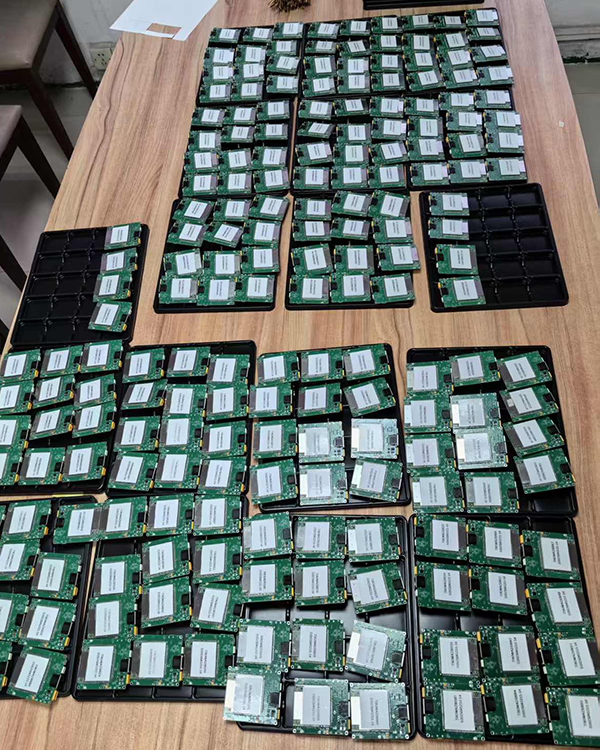
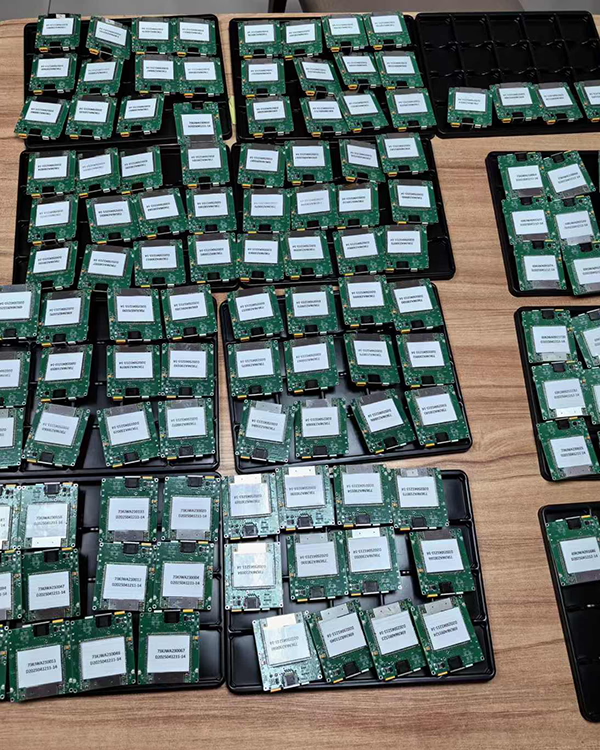
Table of Contents
Key Components
- Transmitter
- Function: Converts video/control signals into radio waves (e.g., 800Mhz, 1.4GHz, or 2.4Ghz bands) for transmission. High-power transmitters (e.g., 2-watts, 5-watts, 10-watts) extend range by boosting signal strength from 5km-150km.
- Protocols: Systems like ExpressLRS and Crossfire (CRSF) are popular for ultra-low latency and long-range reliability, supporting up to 16 control channels and telemetry feedback.
- Receiver
- Function: Captures and decodes transmitted signals, often with high sensitivity to maintain connectivity in weak signal areas.
- Diversity Antennas: Advanced receivers use multiple antennas (e.g., circular polarized antennas) to reduce interference and improve signal stability (1T1R or 2T2R).
Key Features
- Extended Range
- Capable of transmitting up to 10–150 km under optimal conditions, depending on power output (e.g., 2 watts PA, 5 watts PA or 10 watts PA), antenna design, and environmental factors.
- Lower-frequency bands (e.g., 800MHz, 600Mhz) penetrate obstacles better than higher frequencies.
- Low Latency
- Protocols like ExpressLRS prioritize minimal delay (as low as 4ms), critical for high-speed drone racing or industrial automation.
- Robust Signal Integrity
- Circular Polarized Antennas: Minimize multipath interference and signal degradation caused by reflections.
- Error Correction: Technologies like LDPC (Low-Density Parity-Check) ensure data integrity over long distances.
- Modular Compatibility
- Supports SMA/RP-SMA connectors and MMCX interfaces for integration with drones, goggles, and custom Arduino-based projects.
- Telemetry Feedback
- Transmits real-time data (e.g., battery voltage, GPS coordinates) back to the operator, enabling informed decision-making during flights.
Applications
- Drone Racing and Cinematography
- Enables pilots to fly beyond visual line-of-sight (BVLOS) while maintaining HD video feeds. Systems like Fatshark-compatible transmitters are popular in racing communities.
- Industrial Inspections
- Used in UAVs for infrastructure monitoring, agriculture, or search-and-rescue missions where long-range communication is essential.
- Custom RC Projects
- Arduino-compatible libraries (e.g., CRSF for Arduino) allow hobbyists to build custom control systems with telemetry support.
- Military and Surveillance
- High-power systems (e.g., 1.4GHz transmitters) are employed in tactical drones for secure, long-distance reconnaissance.

Challenges
- Regulatory Limits: Transmitter power is often restricted by local laws (e.g., FCC in the U.S.) to avoid interference with other devices.
- Battery Consumption: High-power transmitters drain drone batteries faster, requiring efficient power management.
Conclusion
Long-range FPV transmitters and receivers are critical for applications demanding reliable, real-time communication over vast distances. Innovations in protocols (e.g., CRSF), antenna design, and power efficiency continue to push the boundaries of what’s possible in both consumer and industrial markets.
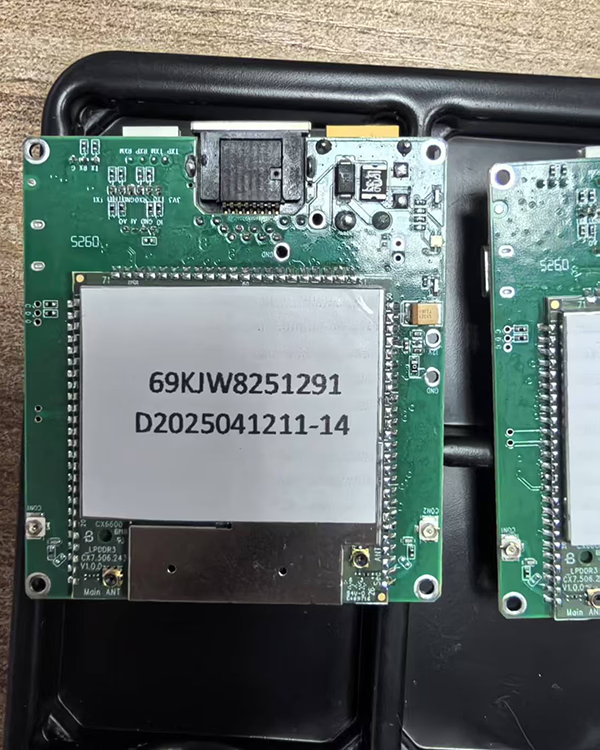
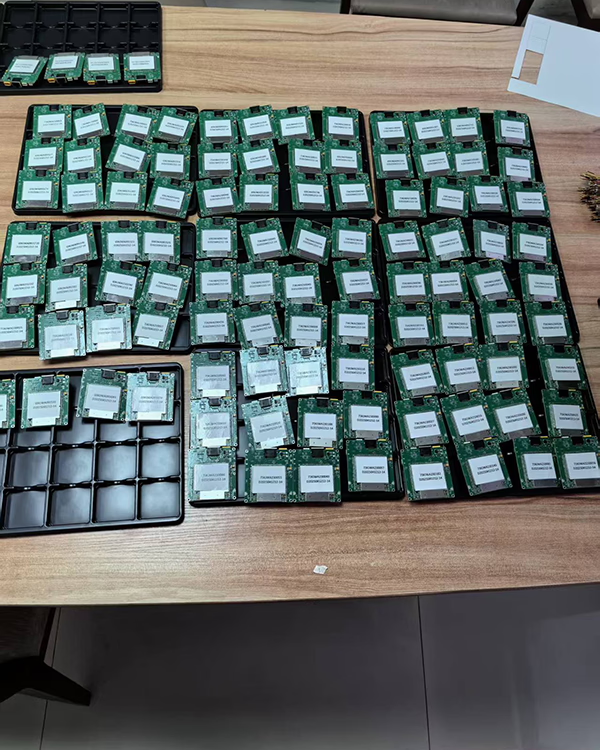
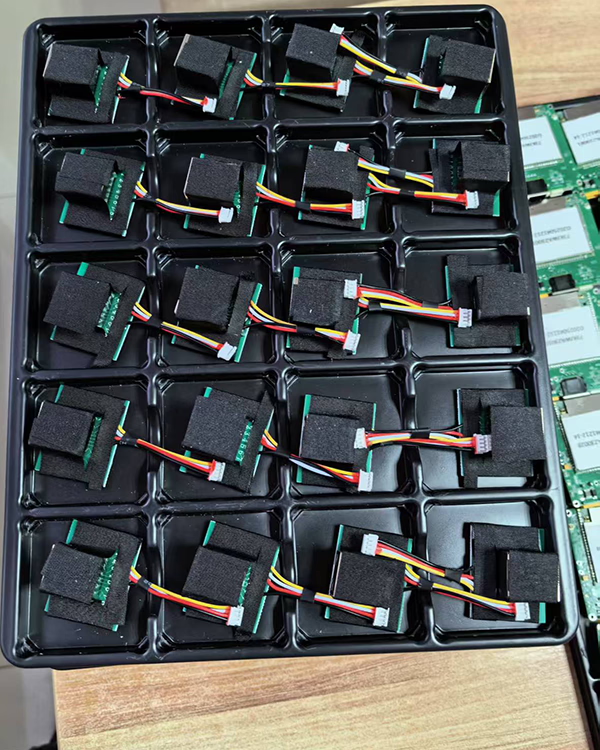
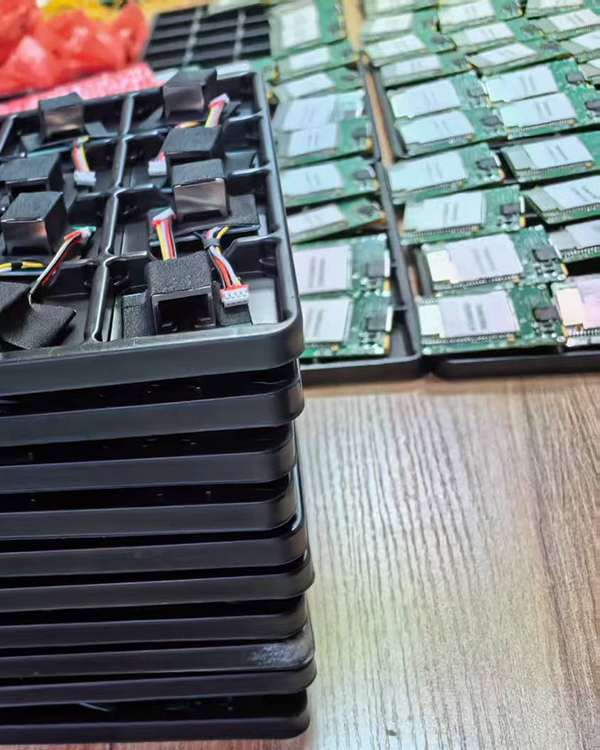
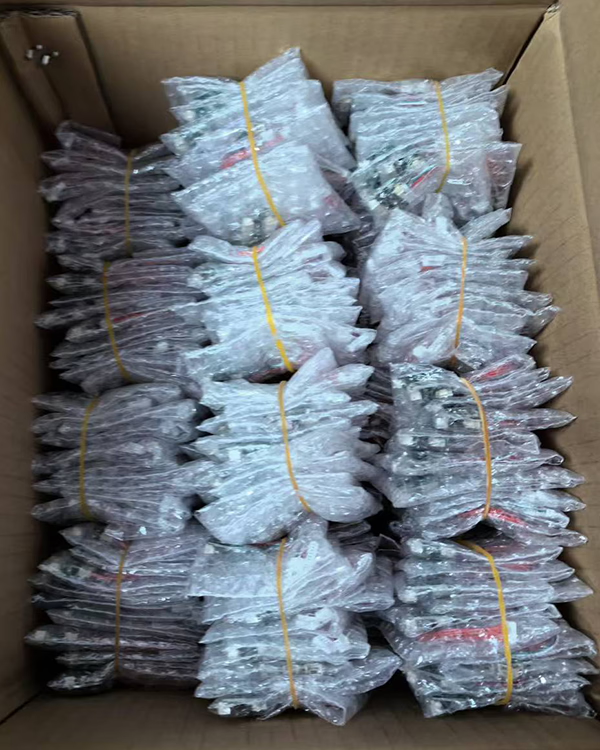
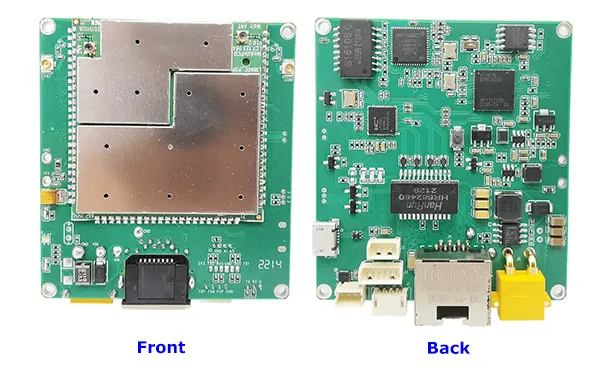
The images used in this article are all production images of our long range drone video and data radio link, vcan1681.
Ask A Question
Thank you for your response. ✨