



Table of Contents
COFDM Solution for 507.25 MHz (Channel 20) Applications
Many customers are looking for a UHF NTSC CVBS video transmitter/receiver pair with the following specifications:
- Frequency: 507.25 MHz (Channel 20)
- Bandwidth: 6 MHz
- Output Power: 250 mW or 500 mW
- Topology: Point-to-Multipoint (P2MP)
- Small and compact size
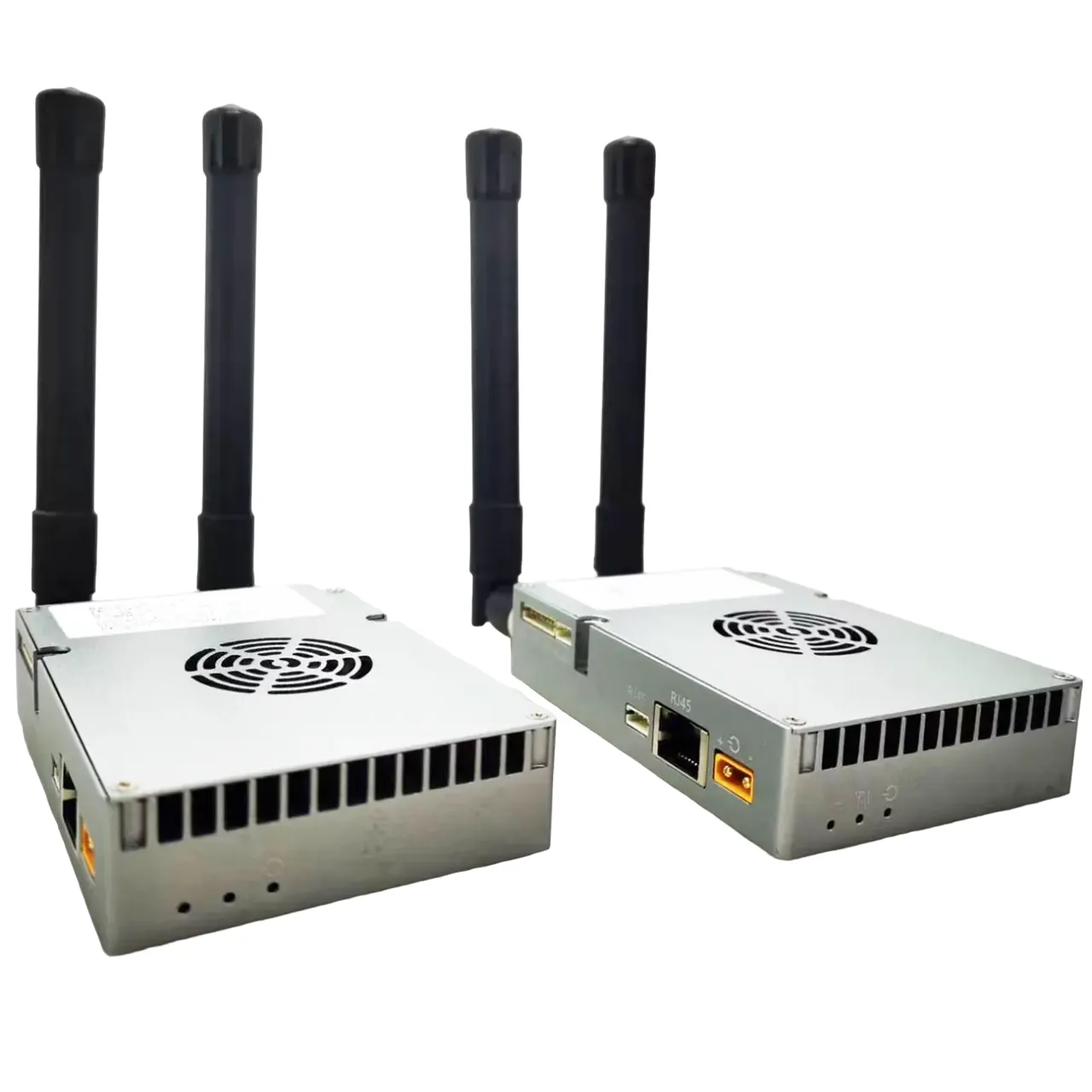
To meet these requirements, we recommend our digital COFDM solution:
COFDM-912T


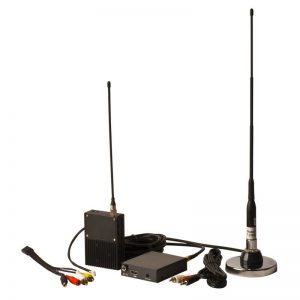
Video Transmitter
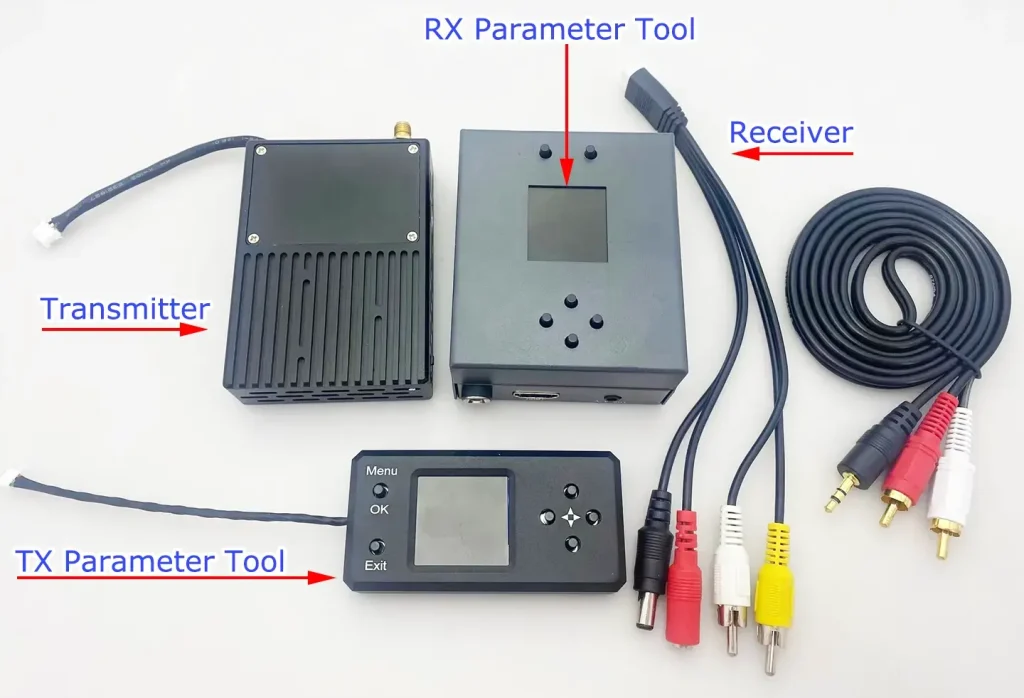

Although the customer originally requested an analog/FM UHF system, our COFDM digital transmission system provides a more stable, interference-resistant, and professional-grade solution — especially in complex RF environments.
Frequently Asked Questions (FAQ)
1️⃣ How many receivers can work with one transmitter in P2MP mode?
The COFDM system operates in broadcast mode, similar to a TV station.
✔ One transmitter can transmit to multiple receivers simultaneously.
✔ All receivers within coverage area and properly configured can receive the signal at the same time.
✔ There is no fixed theoretical limit on the number of receivers.
The actual number depends on:
- Signal coverage
- Receiver sensitivity
- Antenna configuration
- RF environment conditions
In practical deployments, customers commonly use 5–20 receivers, but technically more are possible as long as signal strength is sufficient.
2️⃣ Is your system compatible with existing transmitters or receivers?
Compatibility cannot be confirmed without technical comparison and testing.
Wireless video systems must match in:
- Frequency
- Bandwidth (6 MHz in this case)
- Modulation type (COFDM vs analog FM)
- Encoding format
- Protocol parameters
⚠ If your existing equipment is analog FM, it will NOT be compatible with digital COFDM systems.
Because the requested specification mentions NTSC CVBS at 507.25 MHz (analog TV channel 20), many legacy systems use analog modulation, while our solution uses digital COFDM modulation.
Therefore:
✔ Compatibility requires parameter verification
✔ Lab testing is recommended
✔ Without testing, accurate confirmation is not possible
If you can provide your existing equipment specifications, we can help analyze feasibility.
Why Choose COFDM Instead of Analog FM?
Although analog FM transmitters are still available, COFDM provides major advantages:
✔ Strong Anti-Interference Performance
Stable transmission even in urban or multipath environments.
✔ Better Video Stability
No snow, no ghosting, no gradual degradation like analog.
✔ Flexible Power Options
- 0.5W to 20W customizable
- Suitable for air-to-ground or ground applications
✔ Compact Size
Small transmitter modules available for space-limited applications.
Typical Application Scenarios
- UAV video transmission
- Ground robotics
- Law enforcement
- Industrial wireless monitoring
- Temporary broadcast links
Technical Summary
| Item | Supported |
|---|---|
| Frequency | 200–860 MHz (customizable, including 507.25 MHz) |
| Bandwidth | 6 MHz supported |
| Video Input | CVBS (NTSC/PAL) |
| Power | 0.5W–20W optional |
| P2MP | Yes |
| Modulation | Digital COFDM |
Test Videos (2W Power Amplifier Example)
You can see real-world transmission performance here:
Pricing Reference
Please check our updated price list here:
https://ivcan.com/price-list-for-cofdm-one-way-link-unidirectional-transmission/
(Note: Distance data shown is air-to-ground testing; ground usage may vary.)
Need Help Selecting the Right Model?
If you are currently using an analog UHF system and considering an upgrade — or if you need a customized frequency such as 507.25 MHz — we are happy to assist.
Please share:
- Frequency
- Required distance
- Environment (urban / rural / air-to-ground)
- Existing equipment details (if any)
We will recommend the best configuration for your project.
Ask A Question
Thank you for your response. ✨