






Table of Contents
Thermal Lens Focal Length vs Resolution
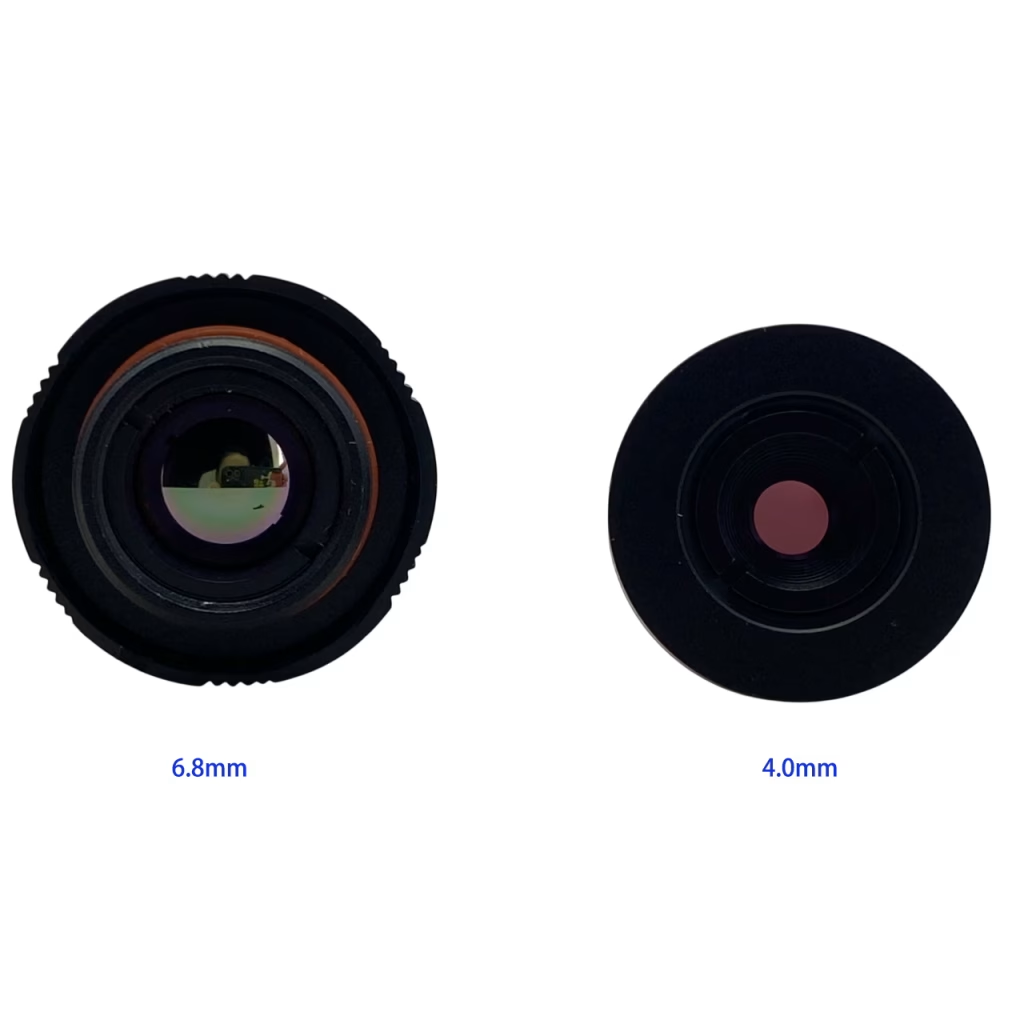
When selecting a thermal imaging camera lens, many users focus on focal length — for example, choosing between 4mm, 12mm, 35mm, or 50mm lenses. However, the sensor resolution (such as 320×240 or 640×480) is equally important. The combination of focal length and resolution directly determines how far and how clearly your thermal camera can see.
1. The Core Relationship: Focal Length and Pixels
- Focal Length determines how far the lens can “see” — a longer focal length provides higher magnification and a narrower field of view.
- Resolution (pixel count) determines how detailed the image appears — more pixels mean finer details.
In short:
A longer focal length magnifies the image, while higher resolution ensures that the magnified image remains sharp.
If the sensor has too few pixels, increasing the focal length won’t improve clarity — it just zooms in on fewer pixels.
2. Practical Examples
| Lens Focal Length | Sensor Resolution |
|---|---|
| 4mm + 320×240 | Wide view, suitable for close-range observation. |
| 35mm + 320×240 | Sees farther, but image appears pixelated due to low pixel density. |
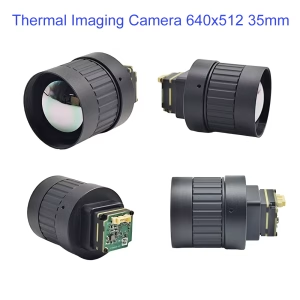
| 35mm + 640×480 | Clear and detailed long-distance image — optimal combination. |
A low-resolution sensor with a long focal length lens can make distant objects appear larger but not clearer.
A high-resolution sensor can fully utilize a long focal length lens to achieve both range and image quality.
3. Why Matching Matters
Choosing the wrong combination can lead to:
- Blurry or pixelated images when using a long focal lens on a low-resolution sensor.
- Too wide field of view with insufficient target detail when using a short focal lens.
To get the best performance, the lens and sensor must be balanced based on your target size, distance, and application scenario.
4. Recommended Combinations
| Application Scenario | Recommended Focal Length | Recommended Resolution |
|---|---|---|
| Close-range monitoring / Inspection | 4mm – 6.8mm | 320×240 |
| Mid-range detection / Vehicle use | 12mm – 25mm | 640×480 |
| Long-range observation / Security / UAV | 35mm – 70mm | ≥640×480 |
5. Key Takeaway
Focal length determines how far you can see; resolution determines how clearly you can see.
To achieve the best thermal imaging results, both must be chosen together.
FAQ
Q1: What happens if I use a long focal lens with a low-resolution sensor?
The image may appear zoomed in but pixelated, losing detail clarity.
Q2: Does a short focal lens work better for close-range use?
Yes, short lenses provide a wide field of view, ideal for near-range monitoring.
Q3: Which is more important — focal length or resolution?
Both are equally important. Focal length defines detection distance; resolution defines detail quality.
Q4: How do I choose the right lens for my thermal camera?
Consider your target size, observation distance, and sensor resolution.
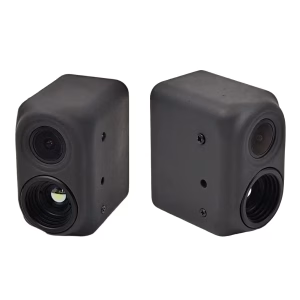
FPV camera
fpv dual lens night thermal imaging and daylight camera for drones, HD vision, low-light real-time





Ask A Question
Thank you for your response. ✨