






Composite Video to IP refers to the process of converting analog composite video signals (such as those from CCTV cameras, VCRs, or older video sources) into digital IP (Internet Protocol) streams so they can be transmitted over a network (LAN, WAN, or the internet).
How It Works:
-
Analog Signal Input: A composite video source (RCA or BNC connector) feeds an encoder or converter.
-
Digitization & Compression: The encoder converts the analog signal into a digital format (e.g., H.264, H.265).
-
Streaming Over IP: The digital stream is encapsulated in network protocols (RTSP, RTP, HTTP, or RTMP) for transmission over an IP network.
-
Viewing & Storage: The video can be viewed on IP-based devices like computers, NVRs, mobile apps, or cloud platforms.
Common Use Cases:
-
Upgrading Analog CCTV Systems: Converting legacy security cameras to work with modern IP-based systems.
-
Remote Monitoring: Streaming old analog video sources over the internet for remote access.
-
Broadcast & Streaming: Sending composite video signals to online platforms or IPTV systems.
Devices Used for Conversion:
-
Video Encoders (Composite to IP converters)
-
DVRs with Network Streaming Capabilities
-
USB Capture Cards with Network Software
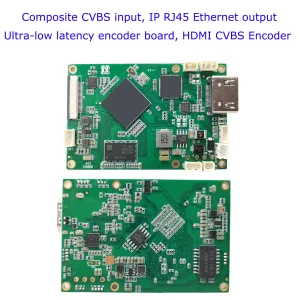
CVBS HDMI to IP Encoder

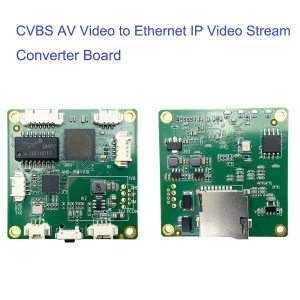
CVBS HDMI to IP Encoder
