






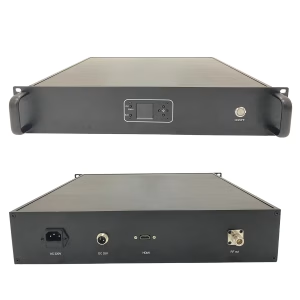
Digital COFDM FPV Relay Drone Repeater 170-860Mhz 5W PA long range Retransmitter
Extend your drone’s reach with our Digital COFDM FPV Relay – stable, long-range transmission anywhere.
Fly farther, see clearer – our COFDM FPV Relay ensures seamless, real-time video streaming.
Fly beyond line of sight – relay your FPV signal with zero interference.

Table of Contents
Feature:
- The operating frequency is customizable. Typical transmitters and receivers operate within a custom frequency range of 170-860 MHz.
- The repeater’s transmit power is customizable—1, 2, 5, 10, or 20 watts—depending on how far you need to transmit.
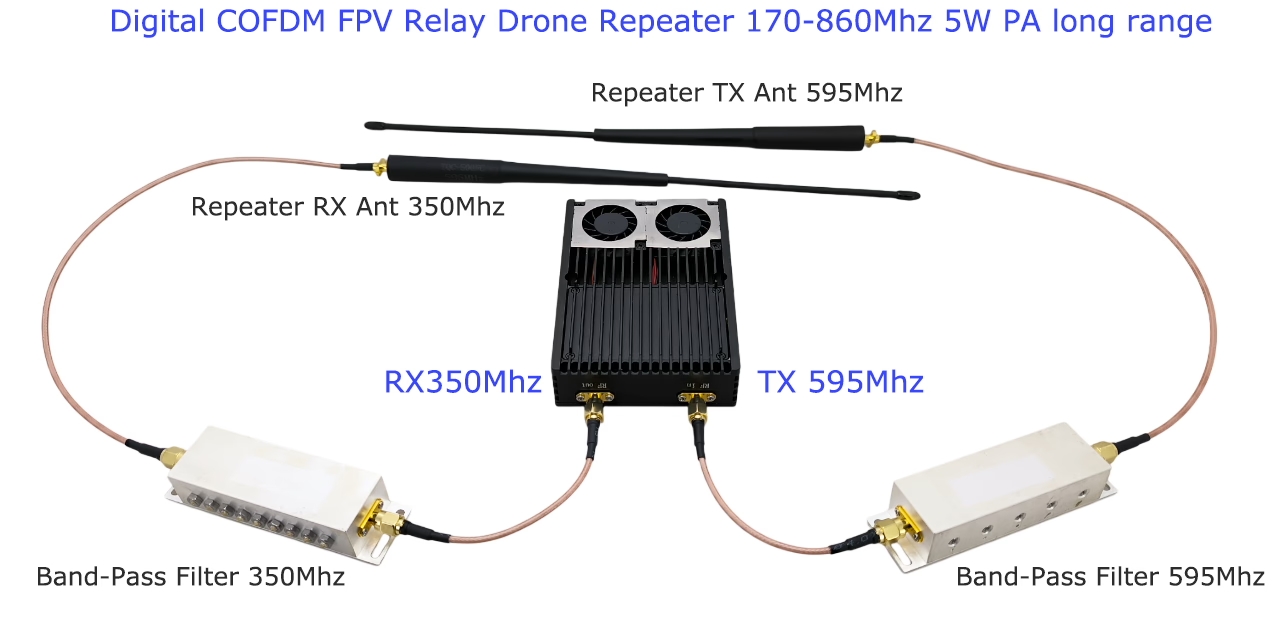
- Integrate a Band-Pass Filter or Helical Filter to allow only the operating frequency while blocking interference.
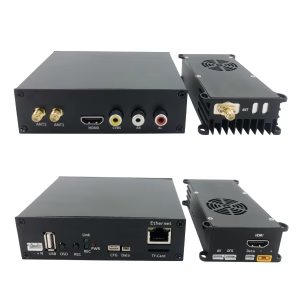
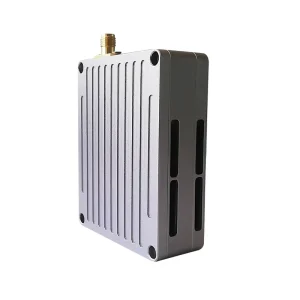
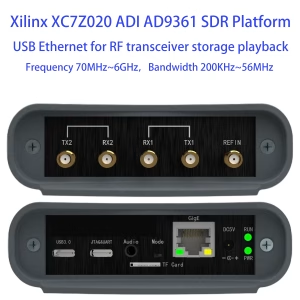
- If you want to create a drone relayer yourself, we can also provide UAV repeater modules and technical support.

Specification:
- Repeater Power Supply: 12V
- Working Frequency 170-860Mhz can produce according to your demand.
- Here is the recently frequency we can do for one cofdm relay /repeater.
- RX:350Mhz TX595Mhz
- RX:595Mhz-TX350Mhz
- RX:700Mhz-TX595Mhz
- RX:595Mhz-TX700Mhz
- RX:350Mhz-TX700Mhz.
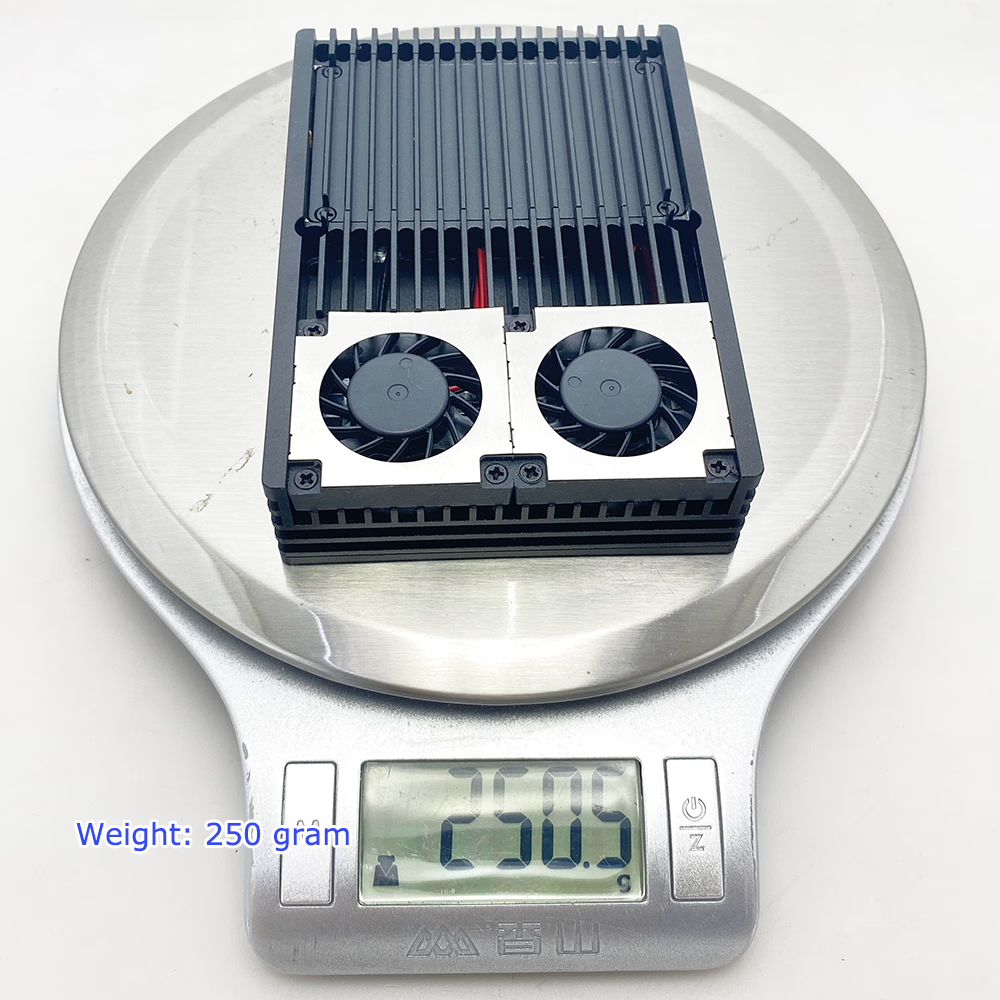
Connection:
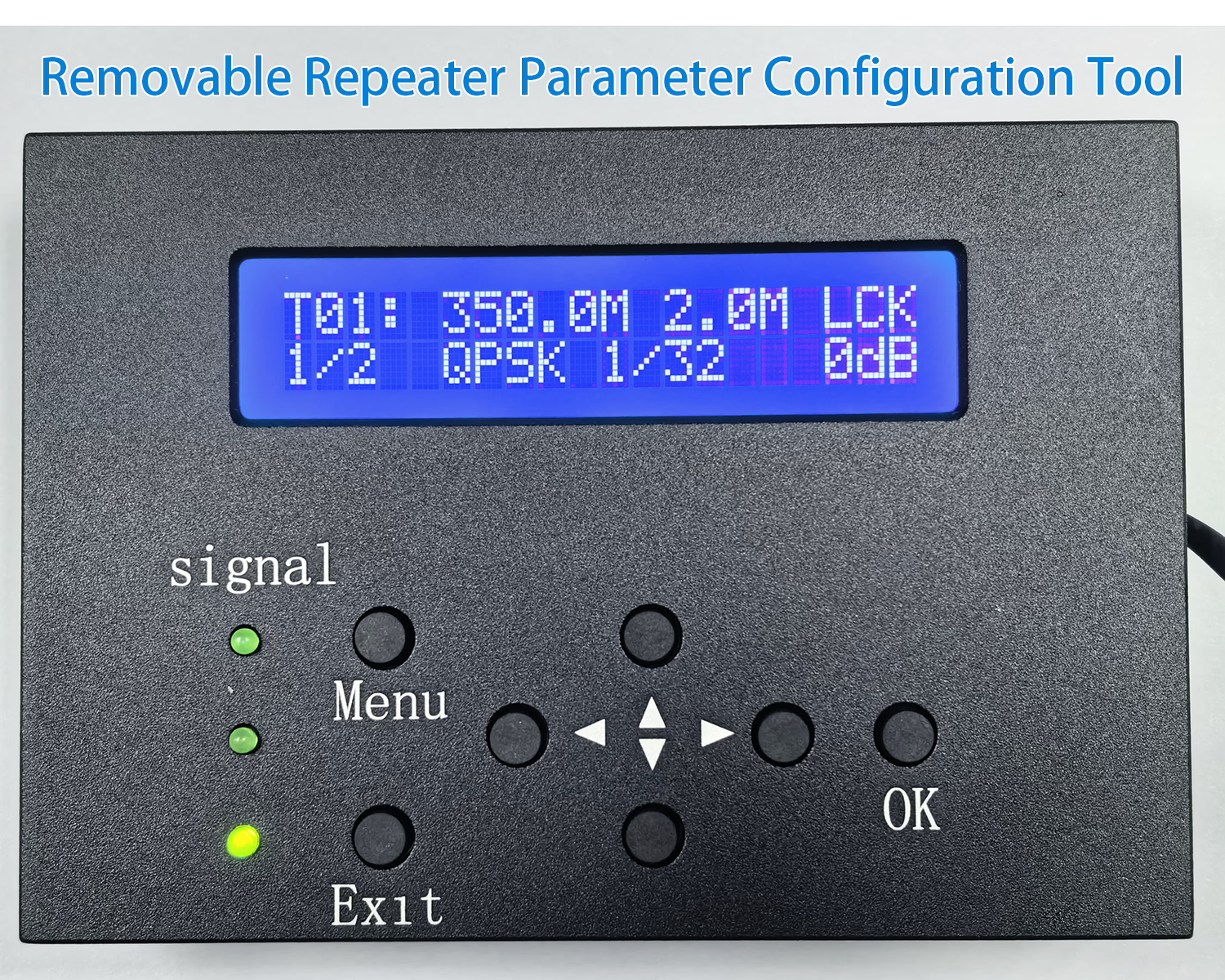
Removable Repeater Parameter Configuration Tool
Why you need a relay?
If you have the following needs, you can consider adding a relay.
- Extended Transmission Range: The relay device receives the air transmitter’s source signal and retransmits it to the ground receiver, extending the reach of the signal.
- Signal enhancement: The repeater receives and amplifies the signal before it attenuates, compensating for path loss, especially maintaining video quality when penetrating walls or encountering physical obstacles.
- AES-128 end-to-end encryption: prevents video or data from being stolen during forwarding and ensures video privacy.
FAQ
Q1: Does the Helical Bandpass Filter have a direction and need power supply?
A1: Helical Bandpass Filter is a passive filter, usually composed of spiral inductors and capacitors, mainly used in RF and microwave circuits. Our Helical bandpass filters are symmetrical and non-directional.
A Digital COFDM FPV Relay Drone Repeater is a specialized drone-based communication system that extends the range and reliability of First-Person View (FPV) video transmission using COFDM (Coded Orthogonal Frequency Division Multiplexing) technology. Here’s a breakdown of its key features:
Key Components & Features:
-
COFDM Technology:
-
COFDM is an advanced modulation technique that provides resistant transmission against interference, multipath fading, and obstacles like buildings or mountains.
-
It allows stable, low-latency video and data transmission even in non-line-of-sight (NLOS) conditions.
-
-
FPV Relay Function:
-
Acts as a midpoint repeater to relay video and control signals from a drone, ground control, or another UAV.
-
Extends the communication range beyond normal limits, useful in urban environments, mountainous terrain, or remote areas.
-
-
Long-Distance Transmission:
-
Significantly increases video and data link coverage, making it ideal for surveillance, search and rescue, and military applications.
-
Some systems support up to 50-100 km or more in range.
-
-
Low Latency & High Definition (HD) Video:
-
Ensures real-time video streaming with minimal delay, which is crucial for drone operators needing a clear FPV feed.
-
-
Encryption & Secure Communication:
-
Many models offer AES-128 encryption for secure, interference-resistant transmissions.
-
-
Use Cases:
-
Police & Law Enforcement: Surveillance, Disaster Relief Communication, and Reconnaissance.
-
Search & Rescue: Provides communication in remote or disaster-hit areas.
-
Broadcasting: Live HD video relay for events, journalism, or filmmaking.
-
Industrial Inspections: Extends drone operations for large industrial sites, pipelines, or offshore rigs.
-
FAQ
Q1: I already purchased a 595 MHz FPV digital transmitter and receiver. How can I extend the transmission range using a retransmitter? What do I need to buy or configure?
A: To extend your transmission distance, you can add a video retransmitter (relay system). This device typically includes:
- One receiver module (to receive your original signal)
- One transmitter module (to retransmit the signal)
How it works:
- The retransmitter receives your existing signal at 595 MHz
- It then retransmits the signal at 350 MHz
What you need to do:
- Purchase the retransmitter system (receiver + transmitter combo)
- Ensure your existing setup:
- Your original transmitter stays at 595 MHz
- Your ground receiver must be reconfigured to 350 MHz
- Replace antennas:
- Your ground receiver must use 350 MHz antennas (not 595 MHz)
- It is recommended to purchase two 350 MHz antennas for optimal diversity reception
About the band-pass filter:
- The retransmitter includes an external band-pass filter
- You can:
- Test without the filter first
- If there is no interference at 595 MHz or 350 MHz → filter may not be necessary
- If you experience signal interference or noise → install the filter to improve signal quality
Q2: How do I install and deploy the retransmitter?
A: The retransmitter is designed for one-way video transmission and can be deployed flexibly depending on your mission needs.
Common installation options:
- On a relay drone (airborne repeater):
- Positioned between your FPV drone and the ground station
- Ideal for:
- Long-distance missions
- Obstructed environments (mountains, urban areas)
- On elevated terrain:
- Mountain tops or hills
- Provides strong line-of-sight coverage
- On structures:
- Rooftops
- Towers or telescopic masts
- Ground-based relay station:
- Installed at a forward position
- Operator can remain in a safe or concealed location
Additional Recommendations:
- Line of sight is critical:
Always try to maintain clear, unobstructed paths between:- Transmitter → retransmitter
- Retransmitter → receiver
- Power supply planning:
Ensure the retransmitter has a stable power source, especially for long missions - Antenna positioning:
Use directional antennas where possible to maximize range and signal strength - Frequency planning:
Verify that 595 MHz and 350 MHz bands are legal and relatively interference-free in your operating area

Reviews
There are no reviews yet.