


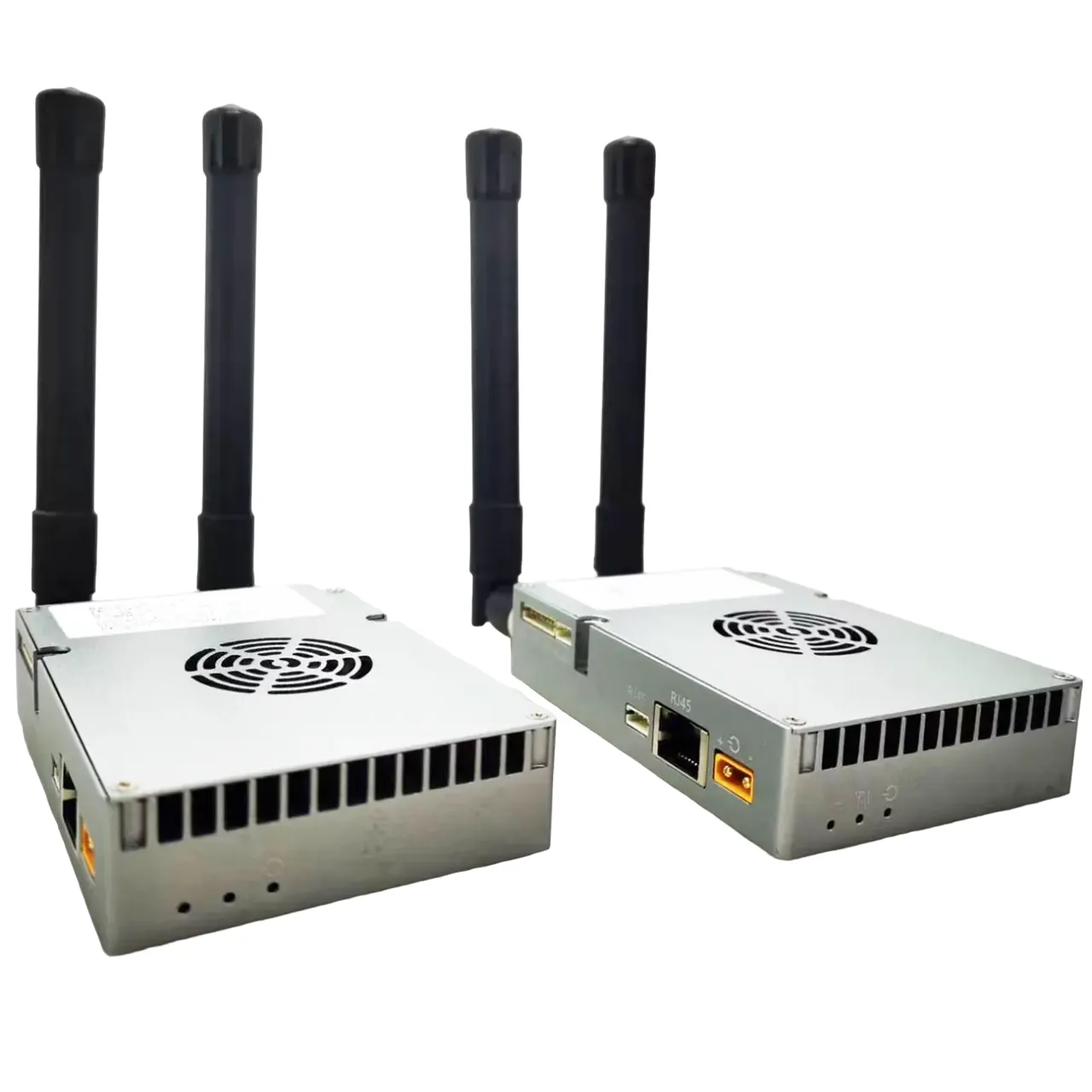
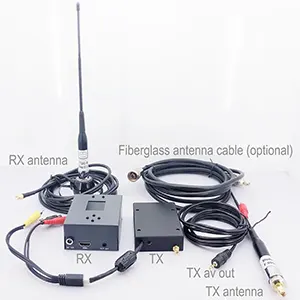


FHSS stands for Frequency Hopping Spread Spectrum, and it’s a method used in wireless communication systems, including wireless video data transmitters and receivers, to enhance signal reliability, minimize interference, and improve security.
Table of Contents
How FHSS Works
In an FHSS system, the transmitter and receiver continuously hop between different frequencies within a predetermined frequency range, rather than staying on a single frequency. These hops occur rapidly and are synchronized between the transmitter and receiver, ensuring that both are on the same frequency at any given time.
Here’s how it works:
- Frequency Hopping: The system uses a sequence of frequencies, and the transmitter rapidly switches between them in a pseudorandom order, often hundreds or thousands of times per second.
- Synchronization: The transmitter and receiver are synchronized to hop between the same frequencies at the same time, allowing for continuous communication without interference.
- Hop Pattern: The pattern of frequency hops is typically pre-programmed and kept secret or encrypted, so even if someone tries to intercept the signal, they won’t know the hopping sequence.
Benefits of FHSS in Wireless Video Data Systems
- Reduced Interference: By frequently changing frequencies, FHSS minimizes the risk of interference from other devices that may be using the same frequency bands, improving the reliability of the signal.
- Improved Security: The rapid switching between frequencies makes it difficult for unauthorized users to intercept or jam the communication, enhancing security.
- Enhanced Range: Since the system is constantly hopping between frequencies, it is less likely to experience sustained interference, resulting in better communication range and stability.
- Robustness in Crowded RF Environments: FHSS is effective in environments with a lot of wireless traffic or crowded radio frequencies, as it avoids staying on a single frequency that may be congested.
- Resistance to Jamming: If a jamming signal is introduced on one frequency, the system will quickly hop to another frequency, making it difficult for the jammer to disrupt communication.
FHSS vs. DSSS (Direct Sequence Spread Spectrum)
- FHSS (Frequency Hopping Spread Spectrum) hops between different frequencies, reducing the chances of interference and offering better security.
- DSSS (Direct Sequence Spread Spectrum) spreads the signal across a wide frequency band without hopping, offering better performance in low-interference environments but being more susceptible to narrowband interference.
FHSS in Wireless Video Transmitters and Receivers
In wireless video data systems, such as FPV drones or live broadcasting systems, FHSS is useful because it:
- Keeps the video signal clear by avoiding interference from other wireless devices.
- Allows continuous, stable transmission of high-quality video in environments where many devices might be operating on the same frequency bands.
- Ensures better performance in noisy RF environments (like urban areas or crowded event spaces).
Overall, FHSS is a valuable technology in wireless video systems, providing more secure, reliable, and interference-resistant communication for high-quality video transmission.
How does FHSS work on the drone wireless video transmitter and receiver?
FHSS is an automatic frequency modulation technology. We widely used FHSS in wireless video data transmission of drones. Because the drone’s wireless link is often subject to signal interference.
In this video, this frequency point shows the current signal strength.
The 1365 we see is the current signal working frequency point of our wireless transmission equipment.
Why does this frequency go here?
Because there are other signals on the right that are interfering. It will run automatically.
If the signal receives interference again, it runs away again, choosing the frequency with the least interference.
This process is meant to avoid interference. We also call it the FHSS function.
-
 Drone Link for long-range Video Data Radio Telemetry Wireless transmission between UAV and Ground Control Station
 -
 Drone mesh wireless video data link 150-200km longe-range centerless ad hoc network transceiver
 -
 wireless video data RC control link for ip ethernet camera transmitter and receiver fhss Vcan1806
Q1: What is the FHSS Frequency-hopping spread spectrum?
A1: Frequency-hopping spread spectrum (FHSS) is a method of transmitting radio signals that involves rapidly changing the carrier frequency among a wide range of frequencies.
FHSS will occur automatically on both the transmitter and receiver at the same time. FHSS is used to prevent eavesdropping and interference on the long-range wireless video transmitter and receiver. When the current working frequency is jammed or interfered with, the transmitter and receiver disconnect and hop to the next available frequency to reconnect.
Q2: Why do you need the FHSS function?
A2:
1. Because the signal hops to a different frequency band, FHSS signals are highly resistant to narrow-band interference.
2. If the frequency-hopping pattern is unknown, signals are difficult to intercept.
3. Jamming is also difficult if the pattern is unknown; if the spreading sequence is unknown, the signal can only be jammed for a single hopping period.
4. With minimal mutual interference, FHSS transmissions can share a frequency band with many types of conventional transmissions. FHSS signals interfere in narrow-band communications and vice versa.
Q3: How to set the FHSS at your wireless video data transmitter and receiver?
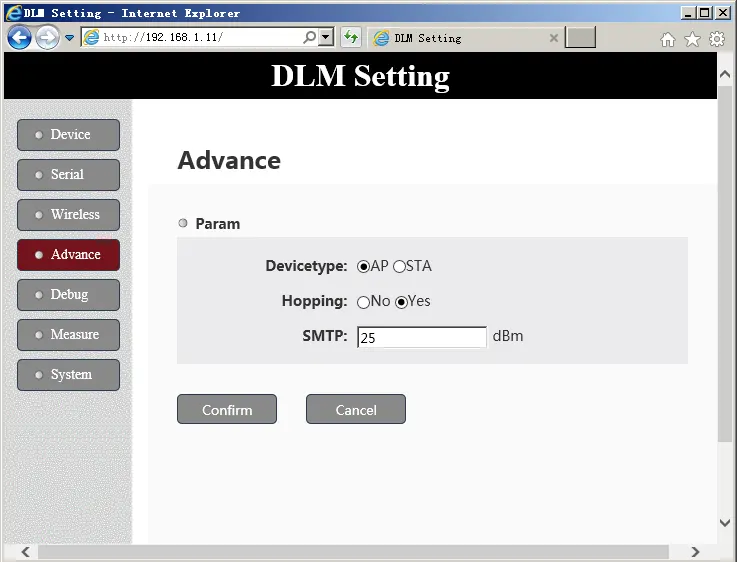
A3: At the web manager UI, please choose the advance page, you can see the above picture.
https://i0.wp.com/ivcan.com/wp-content/uploads/2022/02/UI-Advance.webp
Q4: 7 tips you should know before you choose a wireless video transmitter and receiver with FHSS function.
A4:
1. TX900B-2W supports the frequency range is 1420~1530MHz, and there is 110Mb bandwidth to use.
2. The customer can set the working bandwidth as 1.4M/3M/5M/10M/20MHz (However, 1.4M/3MHz may not be suited for video transmitting). Then TX900B-2W can work in FHSS mode (Frequency-hopping spread spectrum) and the system will automatically select the central working frequency and may do frequency hopping (between 1420~1530MHz) during its working.
3. Customers can also plan to use the frequency channels in the whole 1420~1530MHz and set the device to work in the fixed frequency channels too.
4. TX900B-2W supports the longest distance at 22km.
Except for the frequency range supported and the longest distance, the physical appearance, interface, UI, operation, and so on, the TX900B-2W is the same as the existing TX900B-15km-2W.
5. TX900B-2W only support a frequency range is 1420~1530MHz, it does not support 800MHz and 2.4GHz frequency range.
6. There are two versions, TX900B-2W-15km, and TX900B-2W-22km.
7. As the TX900B-2W frequency range is 110Mb, so if you config the working bandwidth as 10Mb, then you will get 11 points to hopping.
Q5: What is the working principle of your FHSS?
Our wireless video transceiver adopts intelligent frequency selection-interference avoidance.
Intelligent frequency selection (interference avoidance) technology is a new anti-interference technology, which can effectively avoid interference and maximize the reliability and stability of wireless transmission.
The key to our unique intelligent frequency selection (interference avoidance) technology lies in the three major processes of interference detection, decision-making, and switching execution. Interference detection refers to real-time detection of interference and background noise at each frequency point during normal communication, so as to provide basic support for decision-making. The decision-making is completed independently by each node, and the optimal frequency is selected based on the criterion of optimizing its own receiving performance. The point is used as the receiving frequency point; the switching execution occurs after the decision selects a new optimal frequency point, and the switching process will not cause data loss, ensuring stable and continuous data transmission.
Our unique intelligent frequency selection (disturbance avoidance) technology enables each node to independently and dynamically select different optimal frequency points for different frequency networking, so as to optimize the overall network performance and effectively avoid interference.
Please check the below picture, the blue area is the effective signal, and the red line is interference. 
Q6: Does your FPV VTX support the FHSS frequency automatic jumping function to avoid interference?
FPV VTX is a one-way transmission and cannot support the FHSS frequency automatic hopping function.
FPV VTX is a one-way transmission, which can transmit the video from the aircraft to the ground receiver through the transmitter.
FHSS function, when the user finds that the signal sensitivity is declining or encounters an obstacle, it will notify the transmitter and receiver to modify the frequency at the same time and find a frequency with the least interference for transmission. If only the receiver modifies the frequency without controlling the transmitter to modify the same frequency, the frequency of the transmitter and receiver will be inconsistent and the transmission will be interrupted.
Because of the above requirement of notifying the transmitter to modify the frequency, the FHSS function needs to be based on a two-way transmission system.
Or your FPV VTX can support modifying the frequency function through the serial port. When you need to modify the frequency, the operator sends a preset serial port command from the receiver to the serial port of the transmitter. After receiving this command notification, the transmitter automatically changes to the next frequency point.
This is equivalent to your wireless transmission equipment, which has both a one-way video transmission function and a two-way data transmission function, which is equivalent to your current wireless control system. So whether it supports the serial port to modify the frequency of the transmitter depends on whether your current device supports it.
Our models below support such functionality.
Vcan1776 Vcan1886
Q: Do you have a video data link as per the below requirement?
The required distance is 50 kilometers, with frequency hopping technology (jumping over 1,000 times in one second), ideally above 6Ghz (others can be considered, the most important thing is frequency hopping technology), and it is also necessary to transmit data, video, and protect the remote control channel, preferably A set of data links (transmitter + receiver + antenna) using frequency hopping technology (FHSS)
iVcan Reply: No, The frequency is only 1.4G, the working frequency for 6Ghz needs custom development.
Q: Do you have any optional model to support the FHSS Frequency-hopping spread spectrum?
In the below picture, you can see that there are 12 points frequency ready for FHSS.
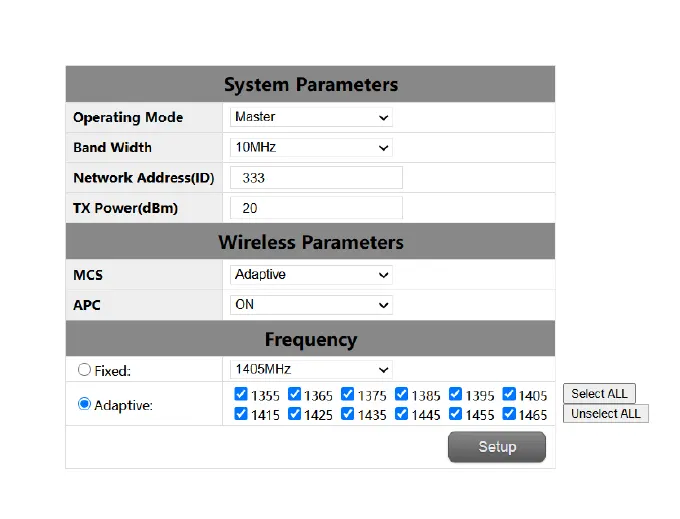

Real-time interference detection function
Ask A Question
Thank you for your response. ✨