





Here is four sets full accessory of 20-watt amplifiers 200 kilometers drone wireless data link. Please get the details at the Vcan2086 here.
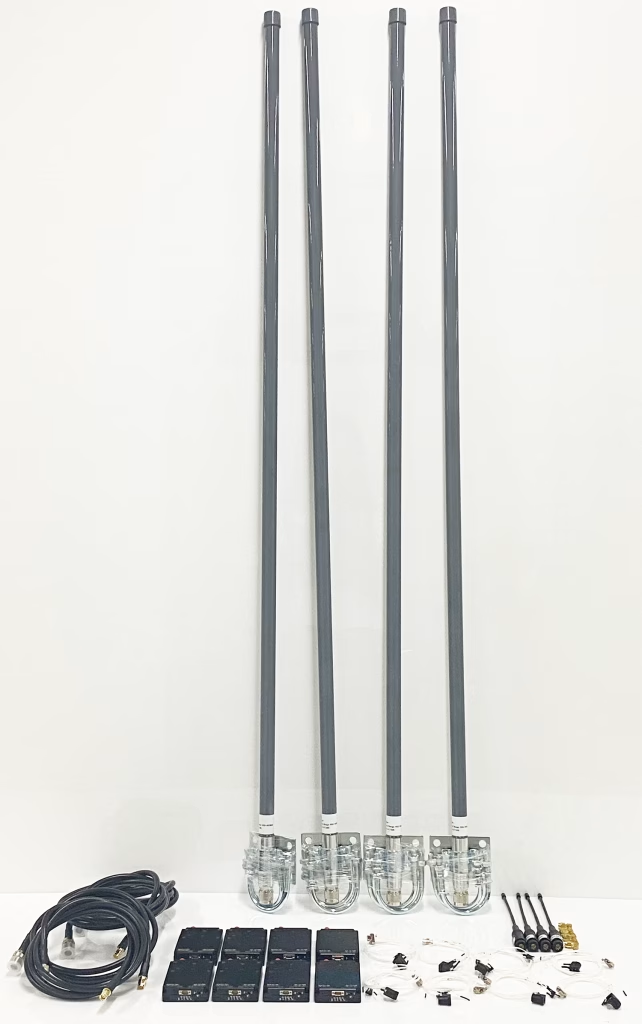
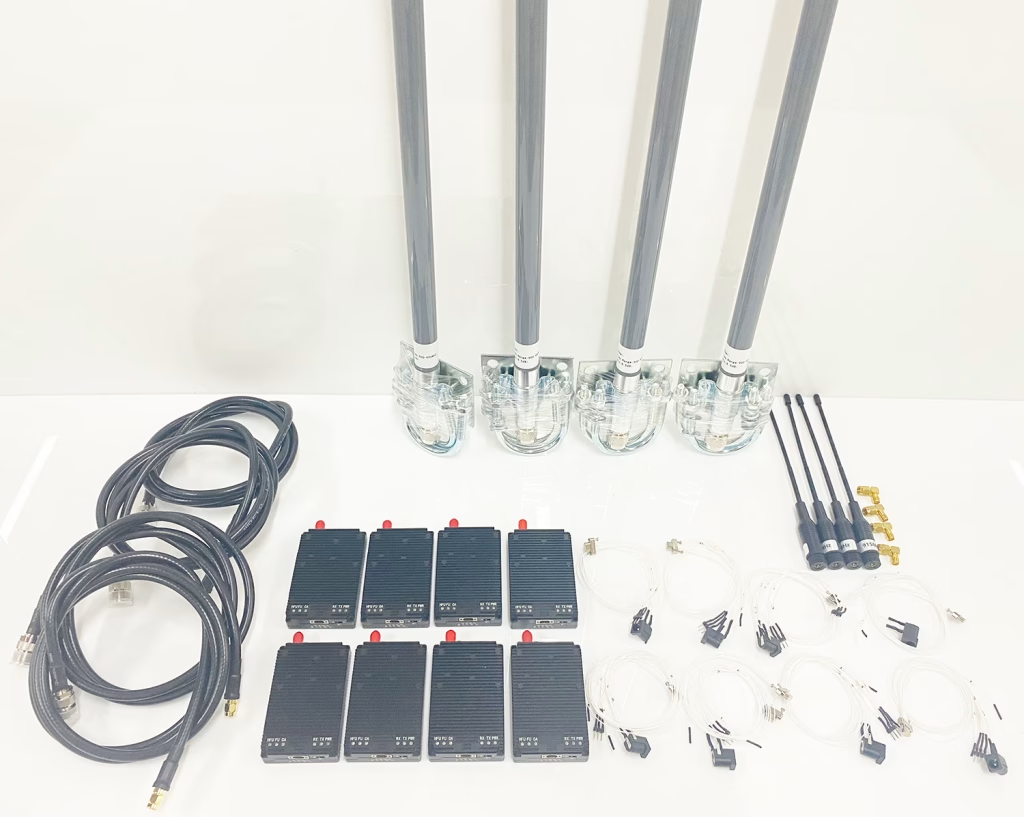
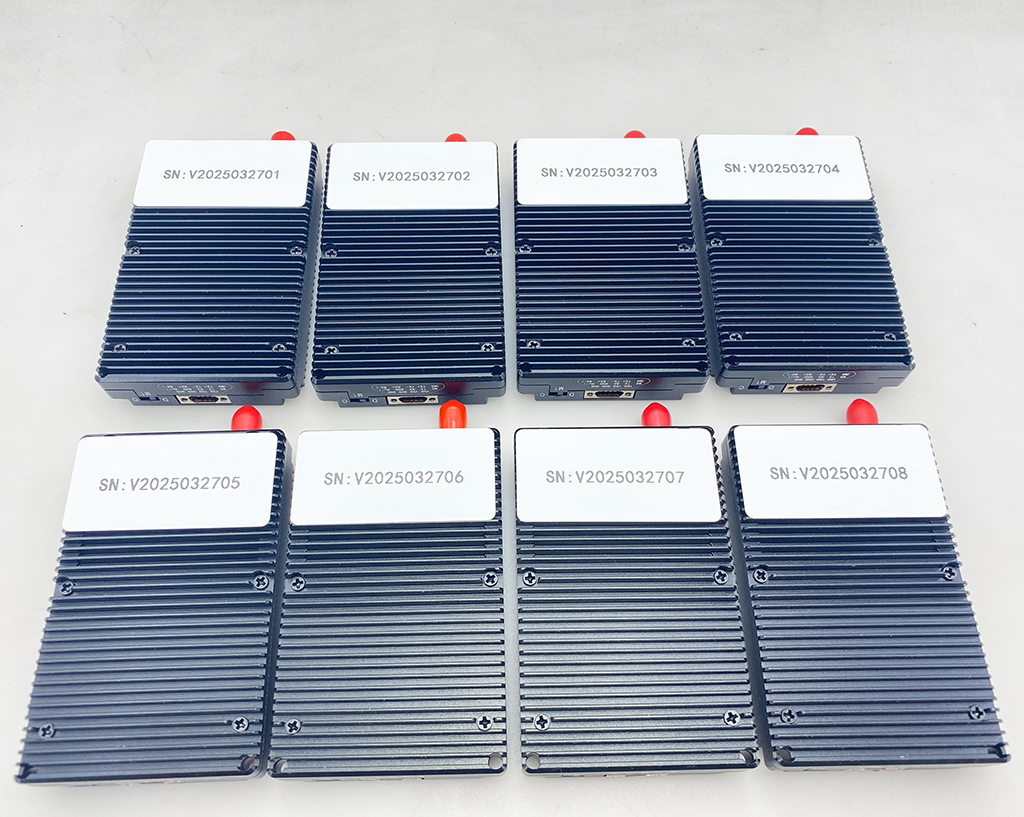
A drone with a 1.4 GHz wireless video data link TX900 may still require an additional 900 MHz data link Vcan2086 for several reasons:
- Separation of Control and Video – The 1.4 GHz link is likely dedicated to video transmission, which requires high bandwidth and low latency. A 900 MHz link can serve as a separate control and telemetry channel, ensuring a reliable connection for commands and status updates.
- Better Penetration and Range – Lower frequencies like 900 MHz have better penetration through obstacles (trees, buildings, etc.) and longer range compared to higher frequencies. This makes it useful for maintaining control in challenging environments.
- Interference Management – If the 1.4 GHz band is congested with video transmission, control signals on the same frequency could suffer from interference. Using 900 MHz reduces the chance of signal degradation.
- Failsafe and Redundancy – If the 1.4 GHz link fails, the 900 MHz link can provide a backup for sending emergency commands, ensuring the drone can return to home or land safely.
- Bidirectional Communication – The 900 MHz link is often used for low-bandwidth telemetry data, sending flight status, battery levels, and GPS information back to the operator.
A 20-watt amplifier for a 200-kilometer drone wireless data link requires a highly efficient RF system operating in a frequency band suitable for long-range communication. Here are some key considerations:
Table of Contents
1. Frequency Band Selection
- UHF (300 MHz – 3 GHz): Often used for long-range communication.
- L-Band (1–2 GHz): Good for satellite and UAV communication.
- S-Band (2–4 GHz): Common in military and commercial drone communications.
- C-Band (4–8 GHz): Provides high bandwidth but may require more power.
- Ku/Ka Band (12–40 GHz): Used in high-data-rate applications but can be affected by atmospheric conditions.
2. Amplifier Power Requirements
- 20 Watts (43 dBm) RF Power Output is suitable for long-range transmission.
- Efficiency depends on antenna gain and environmental factors.
- High-power amplifiers (HPAs) or solid-state power amplifiers (SSPAs) are commonly used.
3. Antenna Considerations
- Directional Antennas (Yagi, Parabolic, or Phased Array) can maximize range.
- High-Gain Antennas (20+ dBi) help compensate for free-space path loss.
4. Modulation & Encoding
- OFDM, QAM, or DSSS are often used for high data rate and interference resistance.
- Error Correction Codes (LDPC, Turbo Codes) help maintain link integrity.
5. Data Rate & Latency
- Low Data Rates (10-100 kbps) can be achieved at extreme ranges.
- Higher Data Rates (1-100 Mbps) require more power and optimal conditions.
6. Environmental & Regulatory Factors
- FCC/ITU Regulations dictate permissible power levels and frequencies.
- Line-of-Sight (LOS) or Near-LOS is required for effective transmission.
- Weather Conditions (Rain, Fog, Terrain Obstruction) can affect performance.
Ask A Question
Thank you for your response. ✨