






Table of Contents
Why Thermal Camera Lens Prices Differ
Choosing a thermal imaging camera lens often raises questions about pricing. For example, a 4mm lens may cost USD 55, while a 35mm lens can cost USD 210. The price difference is due to several key factors.
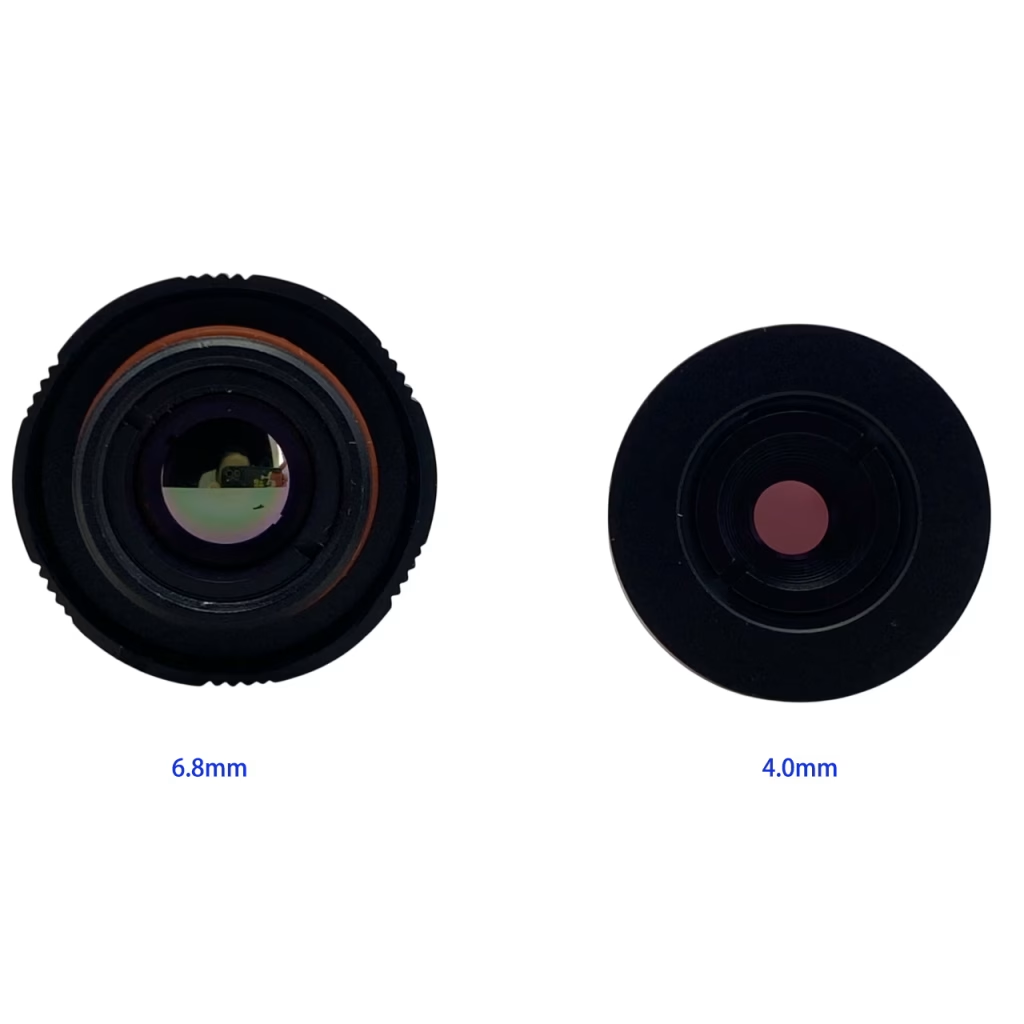
1. Focal Length and Optical Precision
- Short focal lenses (4mm): Wide field of view, suitable for near-range observation.
- Long focal lenses (35mm+): Narrow field of view but can capture distant objects with more detail.
Long focal lenses require higher optical precision and assembly accuracy, which increases production complexity and cost.
2. Material Costs
Thermal lenses use special infrared materials like germanium or chalcogenide glass.
- Long focal lenses often require larger or more complex lens elements, increasing material cost.
3. Manufacturing Complexity
- Longer focal lenses have stricter tolerances.
- Production yield is lower, making them more expensive than short focal lenses.
4. Application and Market Demand
- Short focal lenses: Mass-market, near-range use, lower price.
- Long focal lenses: Professional, long-distance applications, lower demand, higher price.
Summary
- 4mm lens: Affordable, wide-angle, mass-market use.
- 35mm lens: Expensive, long-distance, high-precision, professional use.
Understanding these factors helps customers make informed decisions and appreciate the value of long focal lenses.
FAQ
Q1: Can a 4mm lens be used for long-distance observation?
No, it provides a wide view but cannot capture distant objects clearly.
Q2: Why is a 35mm lens more expensive than a 4mm lens?
Higher material cost, stricter optical precision, and complex manufacturing.
Q3: Are other focal lengths available?
Yes, common options include 6.8mm, 45mm, 50mm, and 70mm.
Q4: How to choose the right lens?
Consider observation distance, field of view, and budget.
Ask A Question
Thank you for your response. ✨