



Here’s a consolidated global overview of countries and regions where DVB‑T2 broadcasting still primarily uses H.264/AVC rather than H.265/HEVC. This list focuses on the current dominant codec for most channels, though some markets are in transition and may use H.265 for UHD or test services.
DVB‑T2 with H.264 as the Main Codec
| Country / Region | Main Codec | Launch Year (DVB‑T2) | Transition Notes |
|---|---|---|---|
| United Kingdom | H.264 | 2010 | HD channels on DVB‑T2 use H.264; SD remains DVB‑T + MPEG‑2. |
| Italy | H.264 | 2015 | Gradual migration to H.265; most channels still H.264. |
| Spain | H.264 | 2018 (tests) | H.265 only in limited trials; H.264 dominant. |
| France | H.264 | 2016 (tests) | H.265 for 4K trials; HD still H.264. |
| Russia | H.264 | 2012 | Nationwide DVB‑T2 entirely H.264. |
| Thailand | H.264 | 2014 | All multiplexes in H.264. |
| Malaysia | H.264 | 2016 | myFreeview platform uses H.264. |
| Philippines | H.264 | 2017 | All DVB‑T2 broadcasts in H.264. |
| Kenya | H.264 | 2014 | East African DVB‑T2 networks use H.264. |
| Uganda | H.264 | 2014 | Same as Kenya. |
| Tanzania | H.264 | 2014 | Same as Kenya. |
| Jordan | H.264 | 2015 | Middle East DVB‑T2 in H.264. |
| UAE | H.264 | 2015 | Same as Jordan. |
| Serbia | H.264 | 2015 | Eastern Europe DVB‑T2 in H.264. |
| Bulgaria | H.264 | 2013 | Same as Serbia. |
| Romania | H.264 | 2015 | Same as Serbia. |
| Germany | H.265 (now) / H.264 (pre‑2017) | 2016 | Switched to H.265 for HD; some local channels still H.264. |
| Finland | H.265 | 2020 | New rollouts in H.265; older DVB‑T2 muxes in H.264. |
| Czech Republic | H.265 | 2020 | Full migration to H.265. |
Table of Contents
Trends
- H.264 remains dominant in countries that deployed DVB‑T2 before ~2015.
- H.265 adoption is growing in newer rollouts (e.g., Finland, Czech Republic, updated German networks) to save spectrum.
- Compatibility is a key factor: H.265 requires newer TV tuners/decoders, so many broadcasters keep H.264 for maximum audience reach.
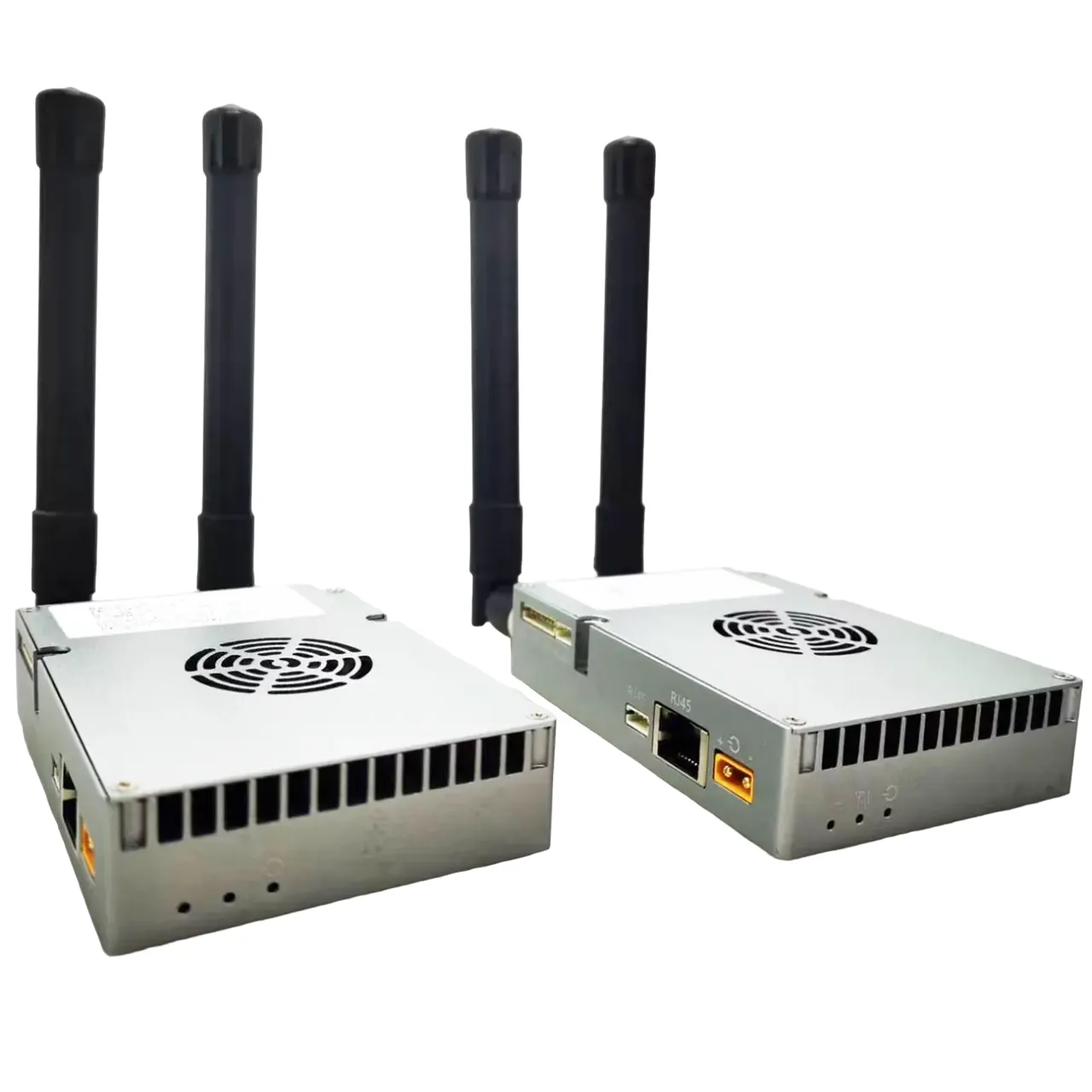
Therefore, our car four-antenna DVB-T2 can still be used normally in the above countries. If you have any demand for high-speed mobile digital TVs, our DVB-T24-Y can meet your needs very well.
Advantages in H.264‑Dominant DVB‑T2 Markets
1. Full Compatibility with Existing Broadcasts
- In those countries, all or most DVB‑T2 multiplexes are H.264, so an H.264‑only receiver will decode every available channel without needing H.265 support.
- Avoids the risk of “black screen” issues that can occur if a receiver encounters unsupported H.265 streams.
2. Lower Processing Load & Power Consumption
- H.264 decoding requires less CPU/GPU power than H.265, which is important for in‑vehicle systems where thermal management and power draw matter.
- Reduced heat generation improves long‑term reliability in enclosed automotive installations.
3. Faster Channel Switching
- Lower codec complexity means quicker tune‑in and zapping times, which is noticeable when driving and switching between channels.
4. Better Performance in Weak Signal Conditions
- A 4‑antenna diversity system can combine signals from multiple antennas to mitigate multipath fading and Doppler effects common in moving vehicles.
- Since H.264 streams typically run at slightly lower compression efficiency than H.265, they can be more forgiving in marginal reception areas — fewer visible artifacts when bit errors occur.
5. Lower Latency
- H.264 decoding pipelines generally have shorter end‑to‑end delay than H.265, which is beneficial for live events, navigation overlays, or synchronized multimedia in the car.
6. Cost Efficiency
- H.264‑only chipsets are cheaper and more mature, reducing BOM (Bill of Materials) cost for the receiver.
- No need to license H.265/HEVC patents, which can lower manufacturing costs.
7. Proven Ecosystem & Stability
- H.264 DVB‑T2 receivers have been deployed for over a decade, so firmware, tuner modules, and demodulator ICs are well‑tested and stable.
- Easier integration with existing in‑car infotainment systems.
Why 4‑Antenna Diversity Matters
- Improved SFN (Single Frequency Network) reception: Many DVB‑T2 networks use SFN, and diversity reception helps resolve overlapping signals from multiple transmitters.
- Reduced dropouts at high speed: Essential for highway or urban driving where signal reflections change rapidly.
- Better fringe‑area coverage: Extends usable reception range before picture/audio degradation.
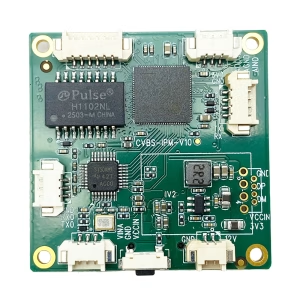
CVBS HDMI to IP Encoder
CVBS to Ethernet IP Encoder stable in weak Signal proof, Low Signal lock
Price range: $118.00 through $178.00
Ask A Question
Thank you for your response. ✨