






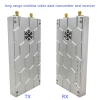
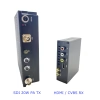
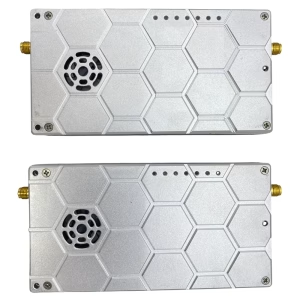
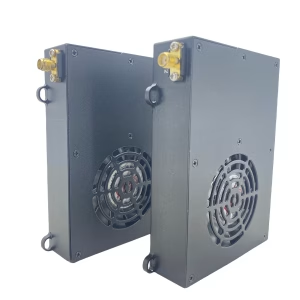
FPV 175Mhz COFDM Digital VTX VRX wireless video transmitter and receiver
Table of Contents
Feature
- The operating frequency can be customized.
- The lower the frequency, the lower the probability of interference.
- The bandwidth can be set to 2Mb.
- Stronger diffraction transmission capability.
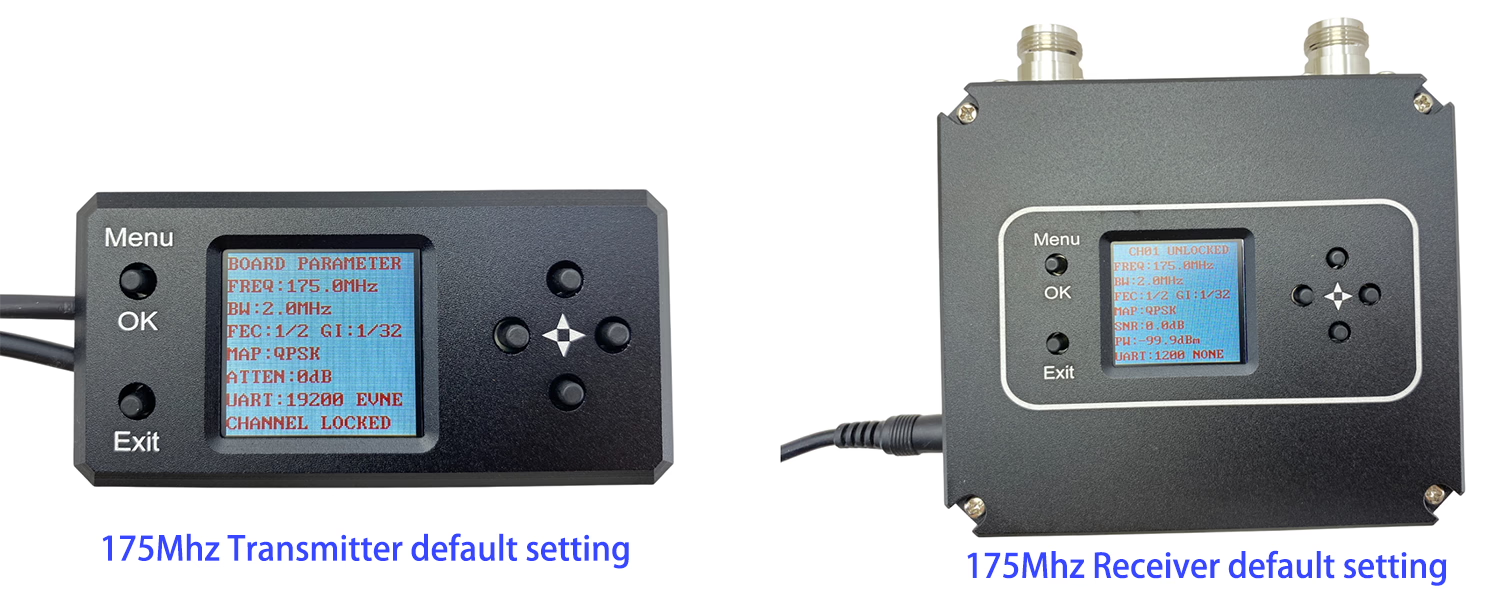
Default VTX VRX Setting
Weight and Size
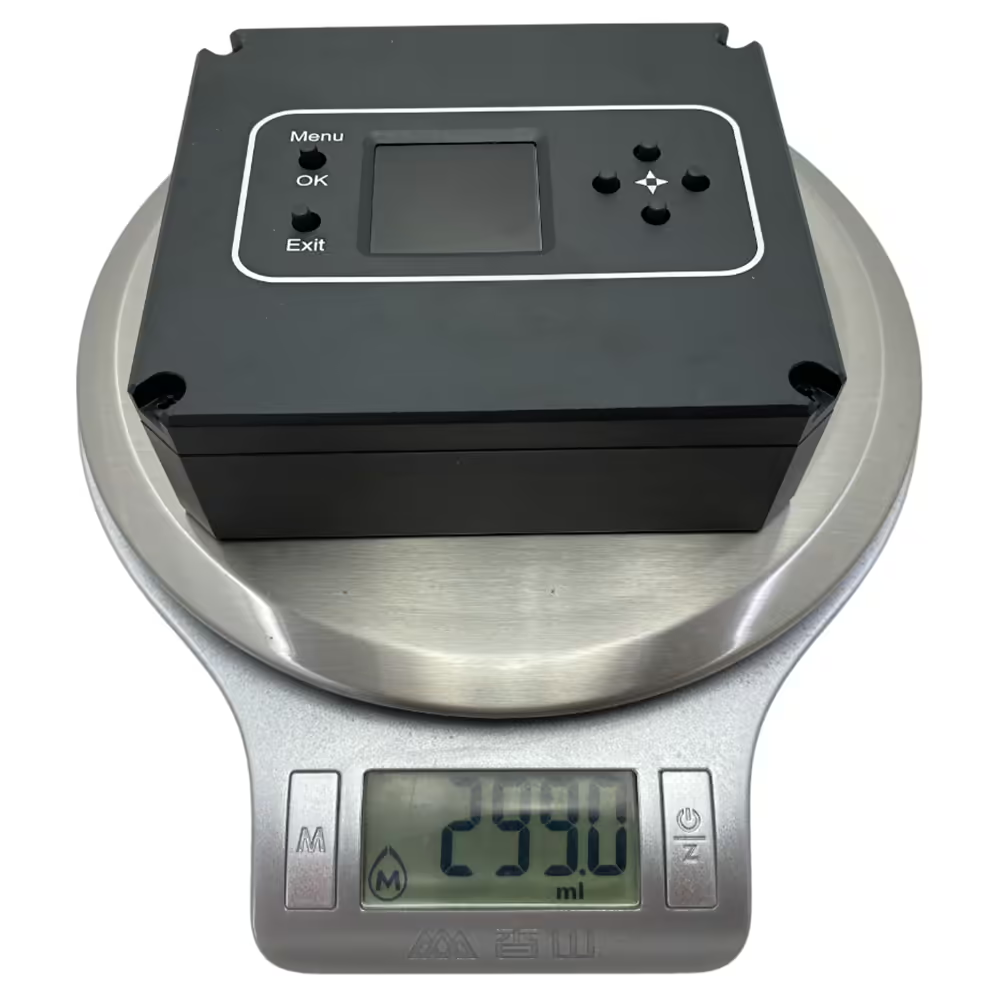
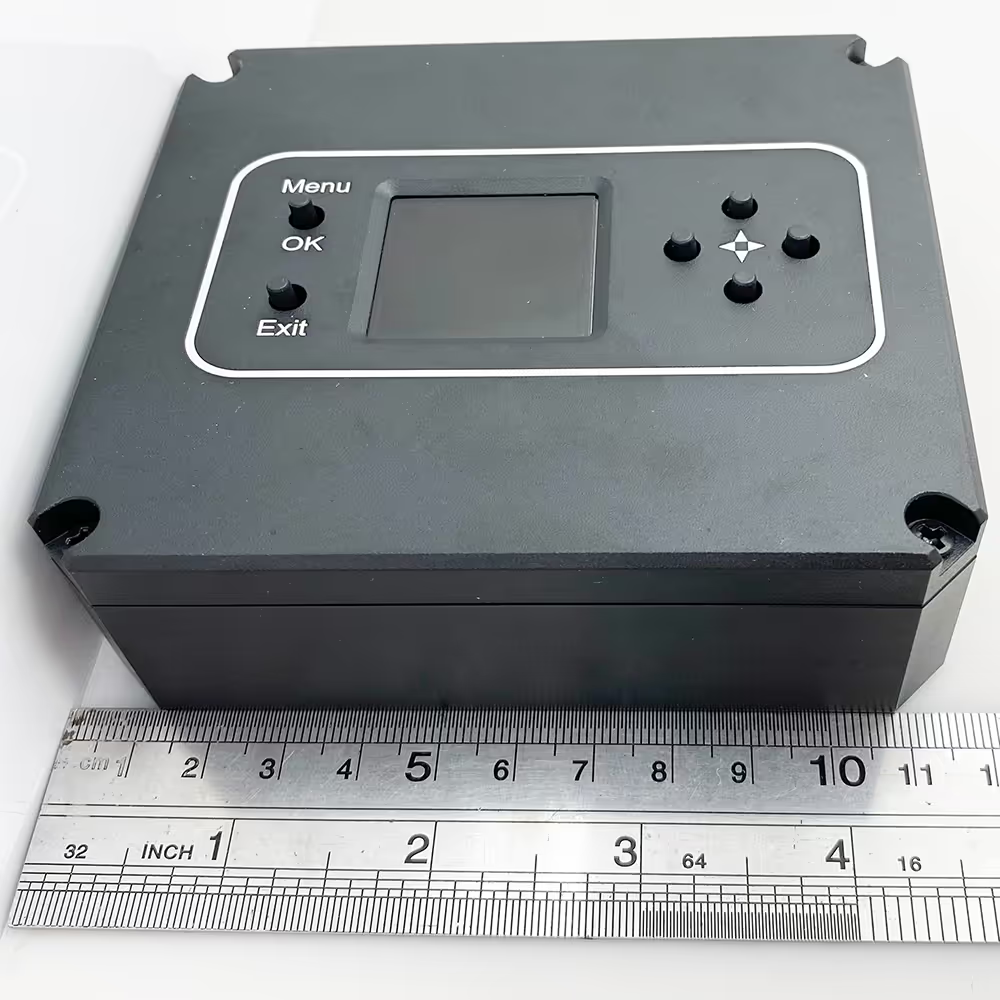
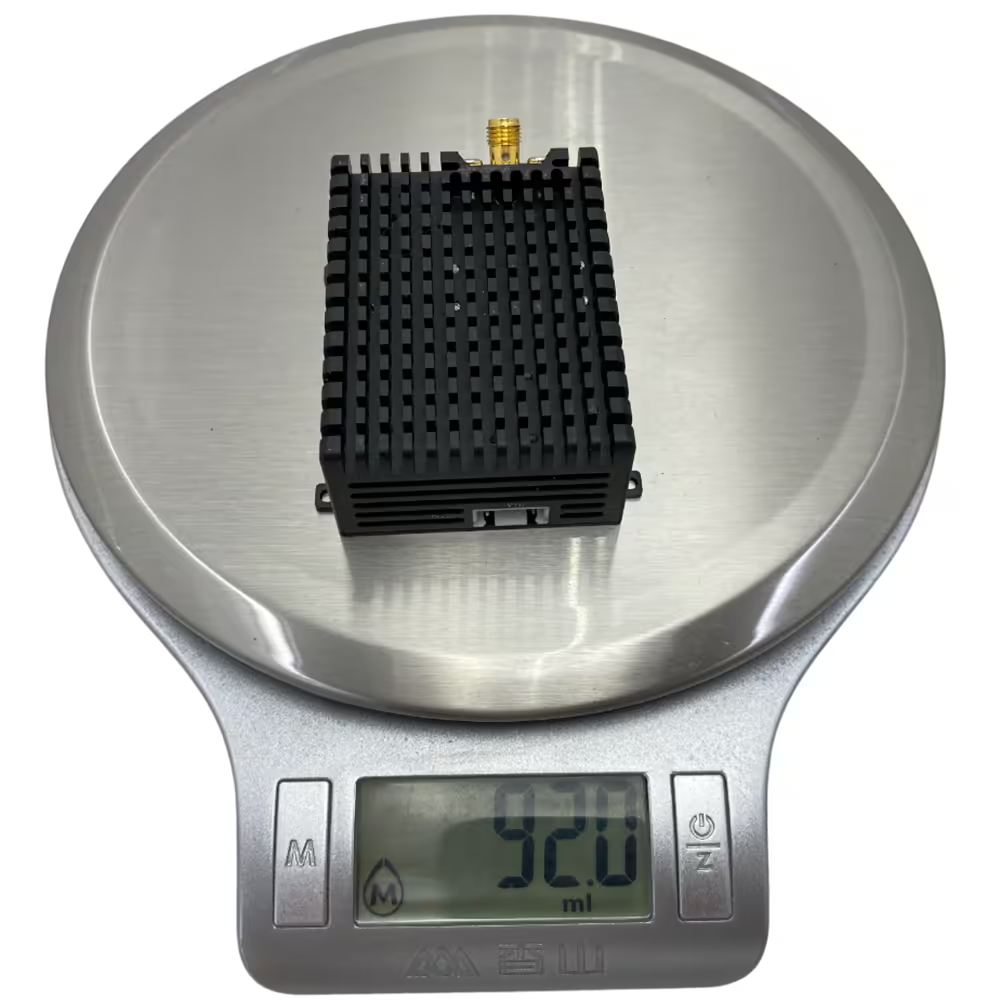
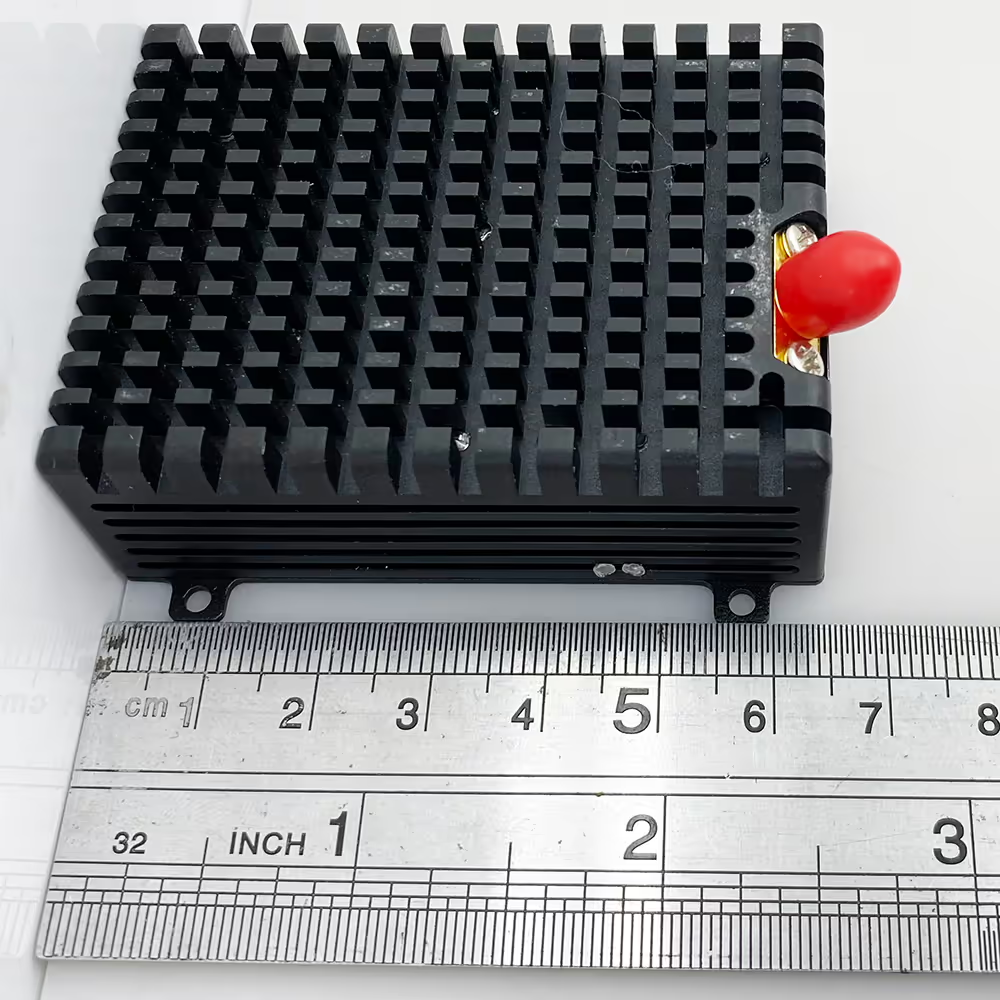
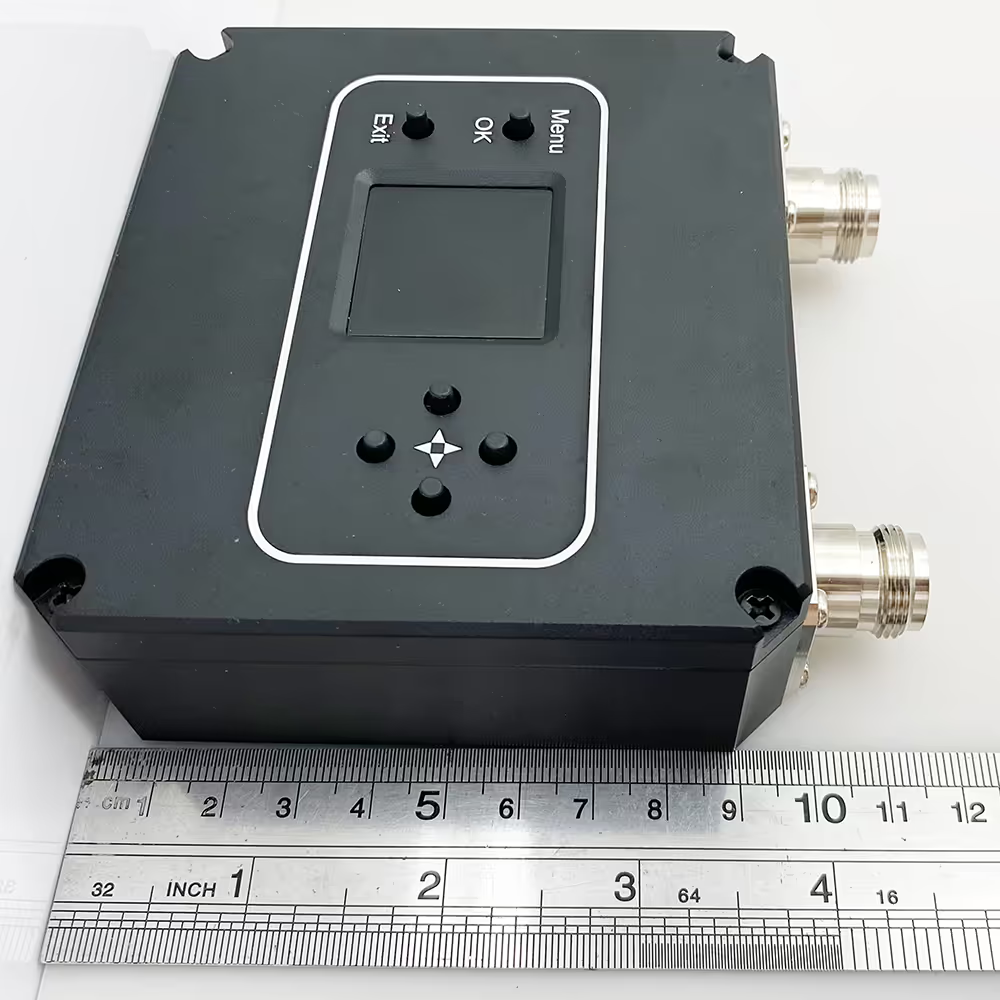
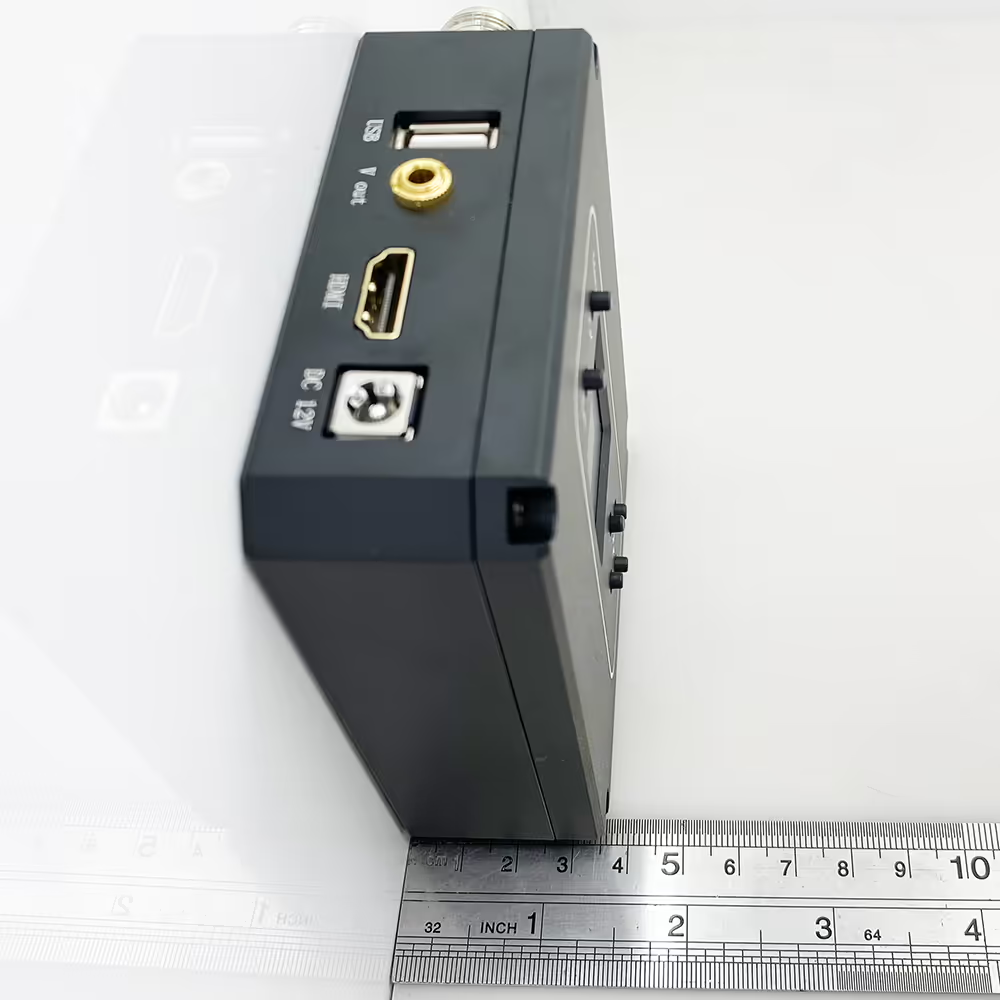
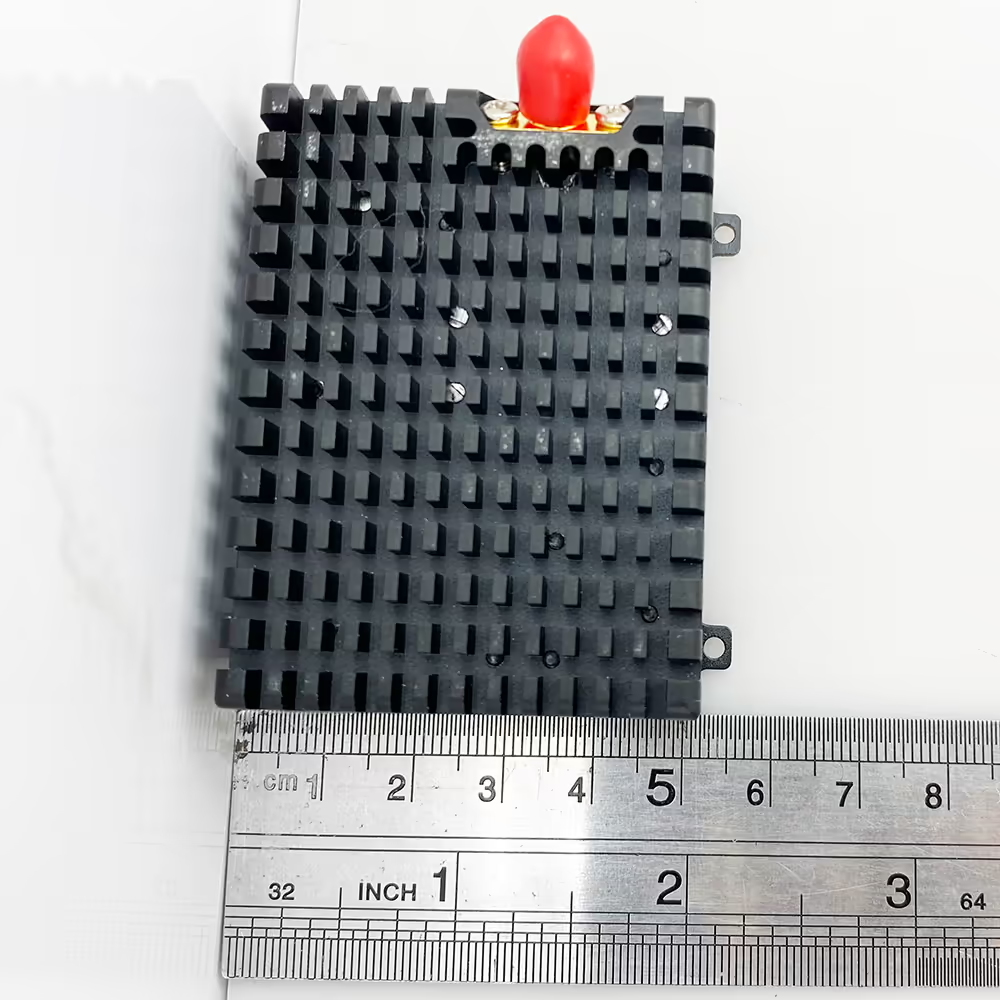

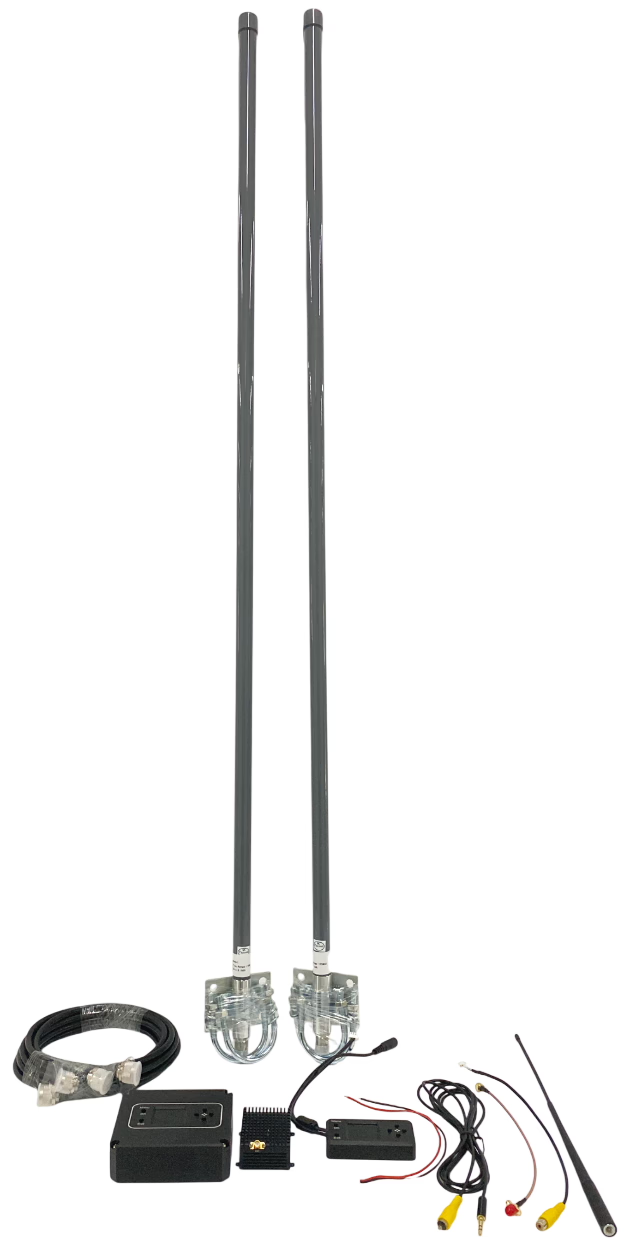
Customizable Options
1. Frequency & Bandwidth
-
Operating frequency: e.g., 1.2–1.3 GHz, 2.4 GHz, 5.8 GHz, or custom frequency bands
-
Channel bandwidth: e.g., 2 MHz, 4 MHz, 6 MHz
2. Transmission Power & Range
-
Output power: adjustable (e.g., 100 mW, 500 mW, 1 W, 10 W)
-
Transmission range: short-range (1–2 km) to long-range (50+ km)
-
Power supply voltage: 5–36 V DC or custom range
3. Video & Audio Interfaces
-
Video input: HDMI, SDI, CVBS, or Ethernet/IP camera input
-
Video output: HDMI, SDI, CVBS, or IP streaming (RTSP, UDP)
-
Audio input/output: analog or digital audio support
4. Encoding & Compression
-
Video resolution support: 480p, 720p, 1080p, or higher
-
Compression options: H.264, H.265, or uncompressed for low-latency
-
Frame rate: 25 fps, 30 fps, 60 fps, or custom
5. Modulation & Demodulation
-
COFDM modulation parameters can be customized for robustness vs. latency
-
Support for diversity reception with single or dual receiver setup
6. Control & Configuration
-
Onboard buttons or remote control for video/audio switching
-
Remote management via web GUI or serial commands
-
OSD (On-Screen Display) overlay configuration
7. Physical Design
-
Size and weight customization for drone payload requirements
-
Connector types: SMA, MCX, N-type, or custom
-
Casing materials: aluminum, plastic, or custom colors
8. Special Features
-
Anti-interference or frequency hopping features
-
Low-latency mode for FPV racing
-
Recording function or onboard storage option
-
Support for mesh networking or multi-transmitter scenarios
FAQ
Q1: For better video transmission, could you set the frequency to 170 MHz and increase the sensitivity?
A: Yes, we can customize it at 170Mhz, but 175Mhz is much better at sensitivity. 170Mhz is the lowest frequency range that the receiver can allow, and it would be better to set the center frequency at 175Mhz.
Q2: Can I directly connect my drone’s 4S battery to the video transmitter?
A: Yes, our COFDM wireless video transmitter can operate directly from a 4S battery. It supports voltages down to 11 V.
Q3: How does a 4S battery voltage work?
A: Nominal voltage: 4 × 3.7 V = 14.8 V; Fully charged voltage: 4 × 4.2 V = 16.8 V; Safe discharge lower limit: 4 × 3.0 V = 12.0 V. Even when your battery voltage drops near 11 V, the transmitter will continue to operate safely.
Q4: I purchased the 3W PA version. If I don’t need long-distance transmission, can I reduce the output power to 1W to save battery?
A: Yes, you can reduce the transmit power by adjusting the transmitter parameters on the configuration board.

Q5: How do I adjust the transmit power via the transmitter parameter configuration board?
Please modify the ATTEN (Attenuation) parameter in the transmitter settings. (see above picture). Power levels correspond to the following attenuation values:
-
0 dB ≈ 3-watt PA (maximum power)
-
–2 dB ≈ 2-watt PA
-
–4 dB ≈ 1-watt PA
By increasing the attenuation value (more negative dB), the output power will be reduced accordingly.
Note: After adjusting the parameter, please save the settings and reboot the transmitter to ensure the new power level takes effect.
If you need assistance accessing the configuration interface, please contact our support team.
More
1. Core Technical Specifications
-
Frequency Range:
-
Operates within 170–860 MHz default, with 175 MHz achievable via customized center frequency tuning (±15 MHz bandwidth around the target frequency) .
-
Example: Ordering a 175 MHz system configures the power amplifier (PA) and antenna for 160–190 MHz, at 175Mhz frequency performance is best.
-
-
Modulation & Protocols:
-
COFDM (Coded Orthogonal Frequency Division Multiplexing) for robust signal resilience in non-line-of-sight (NLOS) environments.
-
Supports AES-128 encryption for secure video transmission.
-
-
Power Output:
-
Configurable from 1W to 50W (default 3W). Higher power extends range but increases heat/power consumption.
-
Power Management: Attenuation adjustments via config tools (e.g.,
-4dB ≈ 1W).
-
-
Latency:
-
<150 ms for analog CVBS inputs (suitable for FPV drones).
-
500–600 ms for HDMI/SDI inputs (common in broadcast systems).
-
-
Range Performance:
-
LOS (Line-of-Sight): Up to 50 km (3W PA), 110 km (10W PA).
-
NLOS (Non-LOS): 1–3 km in urban areas.
-
2. Customization Options
-
Frequency Tuning:
-
Specify center frequency (e.g., 175 MHz) during order. PA/antenna are then tailored to ±15 MHz around it.
-
-
Bandwidth Flexibility:
-
Adjustable 2–8 MHz bandwidth (lower = better diffraction; higher = better image quality).
-
-
Antenna & PA Matching:
-
Directional antennas (Yagi, Helical) are required for long-range. Omnidirectional antennas reduce the range by 50%.
-
-
Power Scaling:
-
PA output is customizable from 1W to 50W.
-
3. Compatibility & Interfaces
-
Video Input/Output:
-
VTX Input: Analog CVBS (PAL/NTSC), HDMI, or SDI Vcan1726.
-
VRX Output: HDMI, CVBS.
-
-
Data & Control:
-
UART/Serial ports for parameter configuration (frequency, encryption).
-
Limitation: No automatic power adjustment based on signal strength.
-
4. Real-World Deployment Notes
-
Thermal Management:
-
3W+ PA requires heatsinks + active cooling (fans). Overheating triggers auto-shutdown.
-
-
Regulatory Compliance:
-
>1W transmission mandates HAM licensing in most countries.
-
-
Range vs. Environment:
-
Urban NLOS: ≤3 km | Suburban: 10–15 km | Maritime/Aerial LOS: 50–110 km.
-
-
Receiver Diversity:
-
Dual-antenna VRX systems mitigate signal loss (e.g., sensitivity: -100 dBm).
-




iVcan.com –
I have been using this specially designed FPV COFDM digital VTX/VRX wireless video transmitter and receiver, and it has exceeded my expectations. The unit is very user-friendly—simply connecting the power and camera gets it up and running immediately. The 3-watt power amplifier provides a remarkably stable transmission from air to ground, easily covering distances up to 50km. I also appreciate the metal shell and included antenna, which add durability and ensure excellent signal quality. The option to customize the working frequency beyond 175MHz makes it very flexible for different applications. Overall, this complete set is robust, reliable, and ideal for long-range FPV operations.