






Choosing the right drone frame is one of the most critical decisions in building or upgrading an FPV drone. The frame acts as the chassis, determining everything from flight performance and durability to weight and compatibility with components. Whether you’re a beginner entering the world of FPV, a freestyle enthusiast chasing smooth tricks, or a racing pilot seeking maximum speed, the frame sets the foundation for your build.
In 2025, the FPV drone scene continues to evolve with advancements in materials and designs. Carbon fiber remains the dominant choice due to its unmatched strength-to-weight ratio, but understanding frame types, sizes, geometries, and custom options is key to making an informed decision. This guide covers essential factors, popular trends, and why partnering with a specialist like CFmade.com for CNC-cut carbon fiber frames can elevate your drone project.
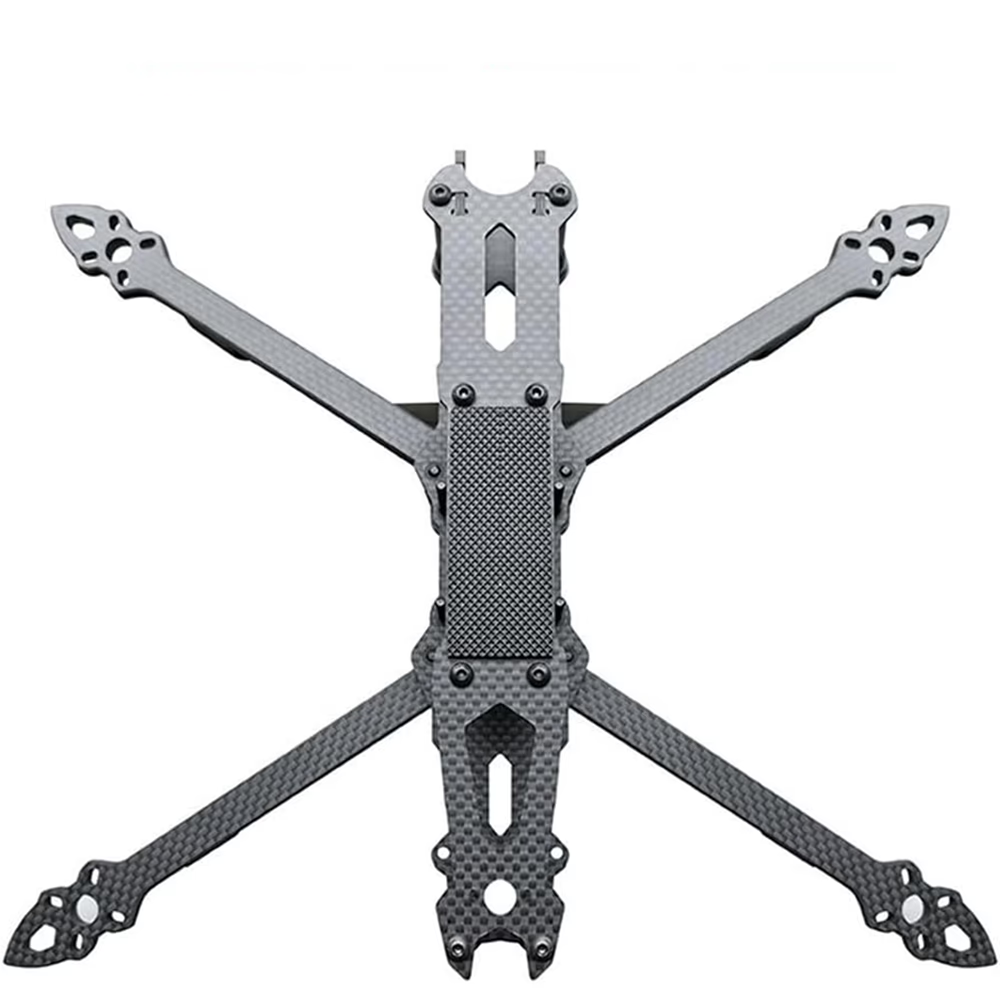
Why the Drone Frame Matters More Than You Think
The drone frame influences:
- Weight and Efficiency: Lighter frames improve flight time and agility.
- Durability: Stronger materials withstand crashes better.
- Aerodynamics: Frame geometry affects speed and handling.
- Component Compatibility: Mounting patterns for motors, flight controllers, and cameras.
- Flight Characteristics: Rigidity impacts tuning and responsiveness.
A poor frame choice can lead to frequent breaks, poor performance, or compatibility issues, while the right one enhances your flying experience.
Key Factors to Consider When Choosing a Drone Frame
Table of Contents
1. Frame Size and Propeller Compatibility
Drone frames are sized by motor-to-motor diagonal distance (wheelbase) or maximum propeller size. Popular sizes in 2025 include:
- Micro/Whoop (2-3 inch): Ideal for indoor flying, lightweight and safe.
- 3-4 inch: Great for tight spaces and beginners.
- 5 inch: The most popular for freestyle and racing—balanced power, agility, and outdoor performance.
- 6-7 inch: Suited for long-range or cinematic builds with heavier payloads.
- 7+ inch (Cinelifters): For professional filming with full-size cameras.
10-inch frames dominate due to their versatility and component availability.
2. Frame Geometry and Layout
Common layouts:
- True X: Symmetrical and balanced—excellent for freestyle and racing.
- Stretched X: Longer front-to-back for forward flight stability (racing-focused).
- Squashed/Wide X: Wider for better freestyle maneuverability.
- Deadcat: Props out of camera view—perfect for cinematic HD footage.
- H-Frame: More space for components, often used in freestyle or photography drones.
For racing, True X or Stretched X provides speed. For freestyle, Squashed X or Deadcat offers smoother control.
3. Material: Why Carbon Fiber is King
Carbon fiber outperforms alternatives like aluminum (heavier), plastic (less durable), or fiberglass (less stiff):
- Strength-to-Weight Ratio: 5x stronger than steel, twice as stiff, yet much lighter.
- Rigidity: Minimizes vibrations for better flight tuning.
- Durability: Resists impacts without deforming.
- Grades: T300 (standard, affordable), T700 (higher strength, reduces delamination), T800 (premium modulus for ultimate performance).
All premium materials are sourced from Toray Japan for consistency.
4. Thickness and Design Features
- Arms: 5-6mm for durability in 5-inch frames.
- Plates: 2-4mm for lightness.
- Features: Chamfered edges for safety, countersunk holes, replaceable arms for easy repairs.
5. Freestyle vs. Racing Frames
- Racing: Lightweight, low-drag, minimalistic—optimized for speed.
- Freestyle: Thicker carbon, protective features—built for crashes and tricks.
Many pilots choose versatile freestyle frames for everyday flying.
The Advantages of Custom CNC-Cut Carbon Fiber Frames from CFmade.com
Off-the-shelf frames are great, but custom CNC-cut frames from CFmade.com offer unmatched benefits for serious builders, teams, and professionals.
Precision CNC Cutting for Perfect Fit and Performance
CFmade.com uses state-of-the-art CNC machines to cut frames with micron-level accuracy. This ensures:
- Exact dimensions for seamless component assembly.
- Clean edges with optional chamfering/rounding to prevent cuts and improve aesthetics.
- Custom features like logos, countersunk holes, press nuts, and surface coatings.
Unlike mass-produced frames, custom cuts eliminate fit issues and optimize weight distribution.
Premium Toray Carbon Fiber Options
Choose from T300 (cost-effective strength), T700 (high-strength to prevent delamination), or T800 (top-tier modulus). Thicknesses from 0.5mm to 25mm support any build—mini whoops to large agricultural drones.
Cost and Time Savings
As a direct carbon fiber specialist, CFmade.com maintains large stock for fast turnaround. Prices start low, with no middleman markups. Bulk orders for teams get competitive pricing.
Expertise and Additional Services
With years of experience in drone frame cutting, CFmade.com handles complex designs, including TBS Source series replicas, forged carbon, or large frames. Services include painting, coating, and assembly guidance.
Why Customers Choose CFmade.com
- Quality Guarantee: Imported Toray materials ensure consistency.
- Fast Delivery: In-stock raw materials mean quick production.
- Customization Flexibility: Send CAD/STEP/IGS files for exact replication.
- Support for All Builds: FPV racing, freestyle, cinematic, agricultural, or prototypes.
Many pilots and teams report significant improvements in durability and performance after switching to custom frames from CFmade.com.
How to Get Started with a Custom Drone Frame
- Define your needs (size, style, thickness).
- Sketch or create CAD drawings.
- Select carbon grade and finishes.
- Email info@CFmade.com with files for a quote.
Custom frames start affordably, often comparable to premium off-the-shelf options but tailored perfectly.
FAQ: Common Questions About Drone Frames
What is the best frame type for drone racing in 2025? True X integrated frames for quick replacements and symmetry.
How much does a custom carbon fiber drone frame cost? Starting as low as a few dollars per part, depending on size and complexity—highly competitive at CFmade.com.
Can CFmade.com cut popular designs like TBS Source series? Yes—send files for exact replicas.
What screws work best with carbon fiber frames? M3 hexagon socket heads in high-grade steel or aluminum.
How to design a carbon fiber drone frame? Start with components layout, hand sketch, then CAD 2D/3D models.
Final Thoughts: Build Better with the Right Frame
In 2025, True X freestyle frames remain popular, but custom options unlock true potential. Partner with CFmade.com for precision CNC-cut carbon fiber frames that save time, reduce costs, and deliver superior quality.
Ready to elevate your build? Contact info@CFmade.com today with your drawings—turn your vision into a high-performance reality.
Ask A Question
Thank you for your response. ✨