





Table of Contents
FPV Thermal Cameras: Unlocking a New World of Vision
FPV (First-Person View) drones have revolutionized the way we explore and capture the world from above. But what if you could see beyond the visible spectrum—into the realm of heat and infrared? That’s exactly what FPV thermal cameras allow you to do. These advanced imaging devices bring night vision, heat detection, and enhanced situational awareness to drone pilots, opening up a range of exciting applications.
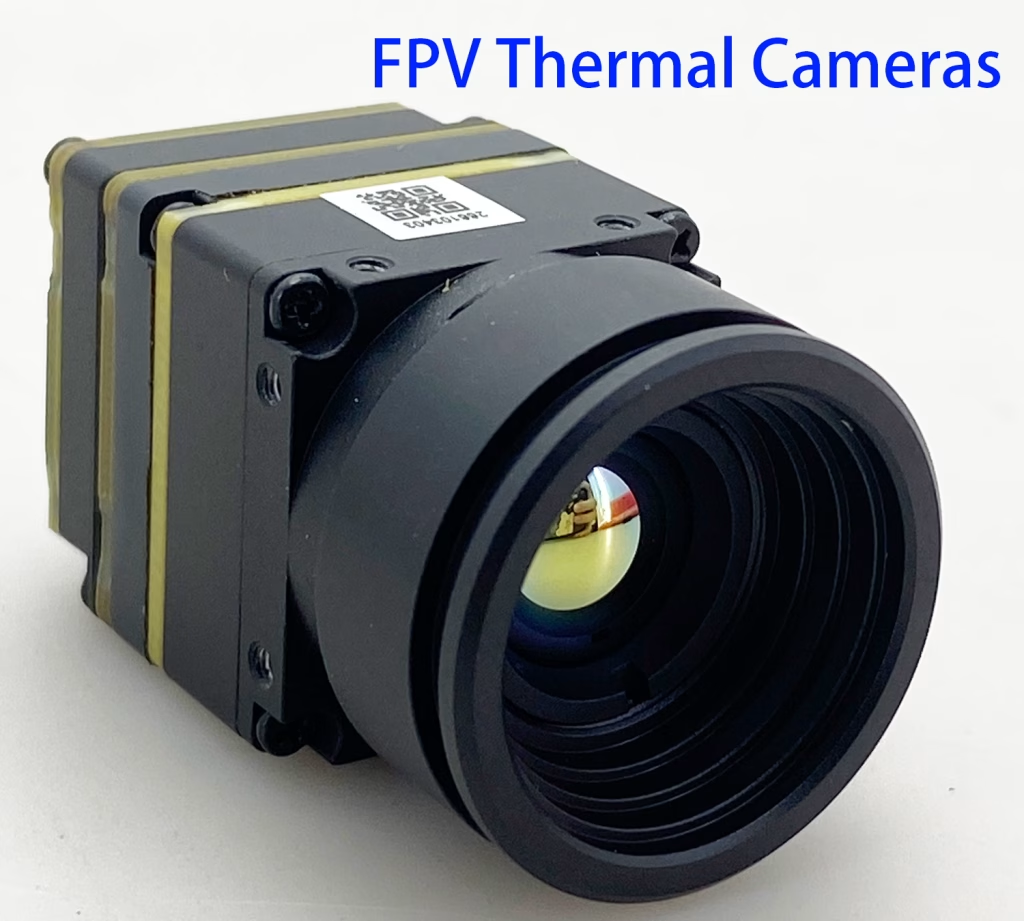
What is an FPV Thermal Camera?
An FPV thermal camera is a specialized camera designed to detect heat (infrared radiation) instead of visible light. Unlike standard FPV cameras, which rely on ambient light, thermal cameras work in complete darkness, smoke, fog, or challenging weather conditions. This makes them incredibly useful for various industries, from search and rescue operations to industrial inspections.

How Does an FPV Thermal Camera Work?
Thermal cameras use infrared sensors to detect temperature differences in objects and surroundings. Warmer objects appear brighter in the thermal image, while cooler objects appear darker. The data is processed in real time and transmitted to FPV goggles or a monitor, allowing pilots to navigate and analyze environments beyond what the human eye can see.
Some FPV thermal cameras also come with dual-sensor technology, combining a standard visible-light camera with an infrared sensor. This feature enables pilots to overlay thermal imaging onto a normal video feed for better context and navigation.
Key Benefits of FPV Thermal Cameras
- Night Vision & Low-Light Capability: See in complete darkness, making nighttime flights more practical.
- Enhanced Visibility in Harsh Conditions: Smoke, fog, and dust don’t obstruct thermal vision.
- Heat Signature Detection: Identify objects, animals, or people based on temperature differences.
- Versatility: Useful for security, search and rescue, industrial inspections, and even creative filmmaking.
Applications of FPV Thermal Cameras
1. Search & Rescue
FPV drones equipped with thermal cameras help locate lost persons in remote areas, detect survivors in disaster zones, and assist emergency responders in dangerous environments. The ability to spot heat signatures in the dark makes them invaluable for rescue missions.
2. Security & Surveillance
Thermal cameras can detect intruders at night, even if they attempt to hide in bushes or shadows. This makes them an excellent tool for property surveillance, border security, and law enforcement operations.
3. Wildlife Monitoring & Conservation
Researchers and conservationists use thermal-equipped FPV drones to track nocturnal animals, monitor wildlife populations, and prevent poaching activities in protected areas.
4. Industrial Inspections
Thermal imaging helps detect overheating electrical components, pipeline leaks, and structural weaknesses in buildings. Drones can inspect large industrial sites quickly and safely without requiring workers to climb dangerous structures.
5. Firefighting & Disaster Management
Firefighters use thermal cameras to locate hotspots, assess the spread of wildfires, and navigate through smoke-filled environments. They are crucial tools in disaster response situations where visibility is limited.
Popular FPV Thermal Cameras
Several brands manufacture high-quality FPV thermal cameras, including:
- FLIR Boson & FLIR Vue Pro: Industry-leading thermal sensors with excellent resolution and performance.
- DJI Zenmuse XT2: A dual-sensor camera combining thermal and visible imaging for DJI drones.
- Runcam Thermal: A budget-friendly option for FPV pilots experimenting with thermal vision.
- Teledyne FLIR Hadron: A compact thermal camera designed for integration with lightweight drones.
Choosing the Right FPV Thermal Camera
Here’s what to keep in mind when selecting an FPV thermal camera:
- Resolution: Higher resolution (e.g., 640×512) provides clearer thermal images. Another solution is 384×288 and 256×192 cheapest.
- Lens Options: Different focal lengths affect the field of view and zoom capabilities.
- 4.8mm
- 9mm
- 15mm
- 19mm
- 25mm
- 35mm
- 50mm
- Video output Interface
- CVBS (composite AV) for FPV analog VTX.
- Ethernet RJ45 for digital long range TDD two-way transmission.
- Type-C for Android phone or tablet.
- USB for computer.
- Only Thermal camera or with day light camera to be dual light camera
- Frame Rate: A faster refresh rate (e.g., 30Hz) ensures smooth real-time video.
- Compatibility: Ensure the camera integrates with your FPV drone’s video transmission system.
Conclusion
FPV thermal cameras expand the possibilities of drone technology, offering pilots the ability to see in the dark, detect heat sources, and navigate through challenging environments. Whether for professional applications like search and rescue or creative aerial photography, thermal imaging brings a whole new dimension to FPV flying.
As technology advances, we can expect even more compact, high-resolution, and affordable thermal cameras for FPV enthusiasts. If you’re looking to enhance your drone capabilities, an FPV thermal camera might be the perfect upgrade.
Ask A Question
Thank you for your response. ✨