




long range drone relay transmitter receiver repeater module to greatly extend the flight distance of your drone or break through obstacles, such as mountains, to achieve real-time transmission of video data beyond line of sight.
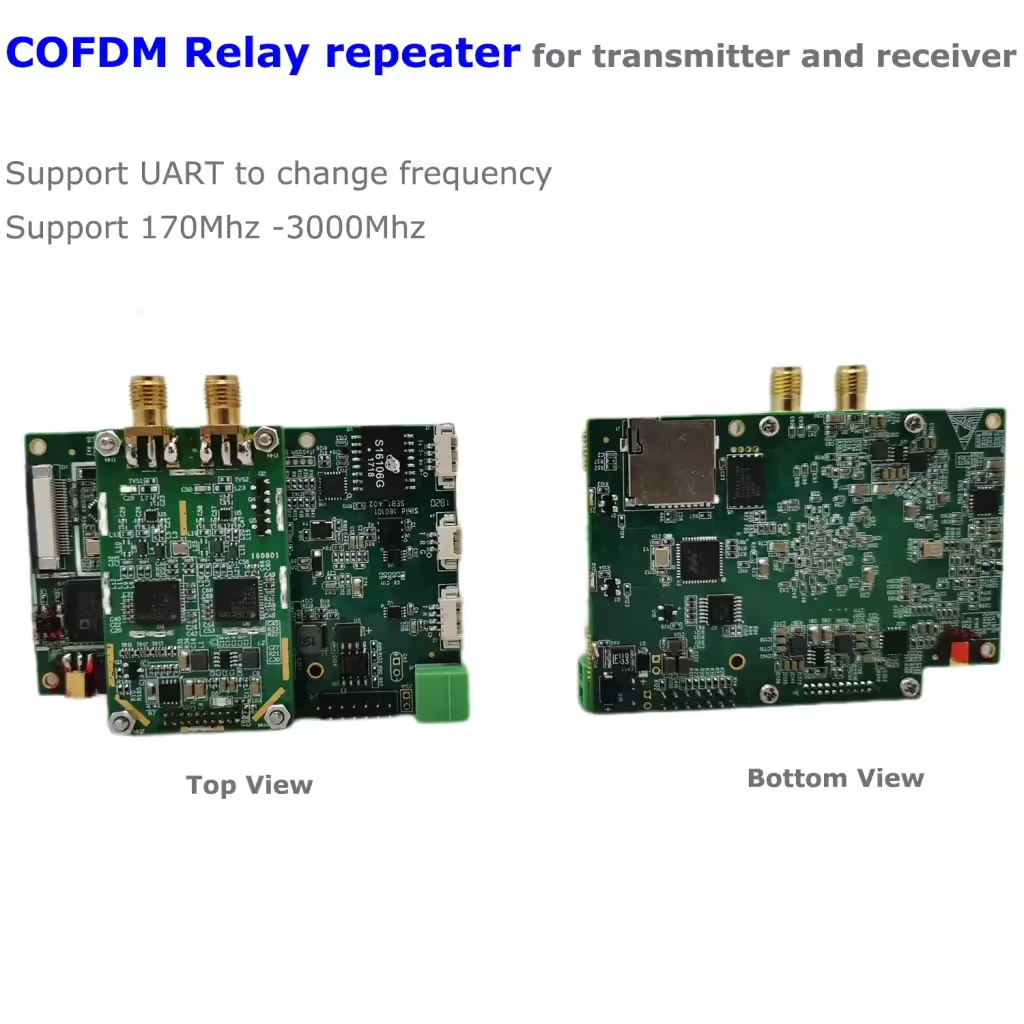
Our relay module consists of two parts, receiving function and transmitting function. On the one hand, it will receive the signal sent by your transmitter, and through the built-in power amplifier, it will also enhance the signal and transmit it to the ground receiving station again.
Therefore, to customize our relay module, you need to know the frequency of your transmitter and the frequency of your ground receiver. In order to avoid interference and conflict, we need to set the two transmission frequencies to be different. For example, if the frequency transmitted from your transmitter is 350 MHz, then the frequency we transmit to the ground receiving station is 510 MHz.
We can also customize the video data transmission module of the entire transmission system for you, including the transmitter of your mission drone, the intermediate module of the relay drone, and the receiving module for ground reception. FPV1887 and Relay Module 2028.
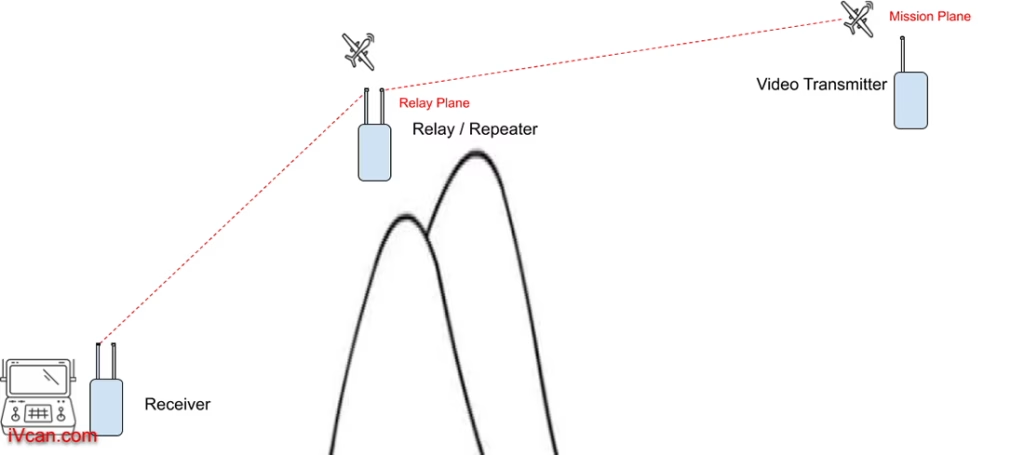
I want to make Communication relay drone (transmitting/receiving module) that has specifications as follows:
Vertical landing possible
Flight time: 3 hours
Receiving frequency: 300~500MHz
Bandwidth: 15MHz
Altitude: 500~1000m
Transmitting frequency: Frequency that does not overlap with receiving
The bandwidth of the long range drone relay transmitter receiver repeater module is 2M~8M.
The long range drone relay transmitter receiver repeater module frequencies are customized, according to the buyer’s transmitter and receiver parameter.
A Drone Relay Transmitter-Receiver Repeater Module is a communication device used to extend the range of signals between a drone and its remote controller, base station, or another network. It acts as an intermediary, receiving a signal and retransmitting it to cover greater distances or overcome obstacles like buildings, hills, or interference.
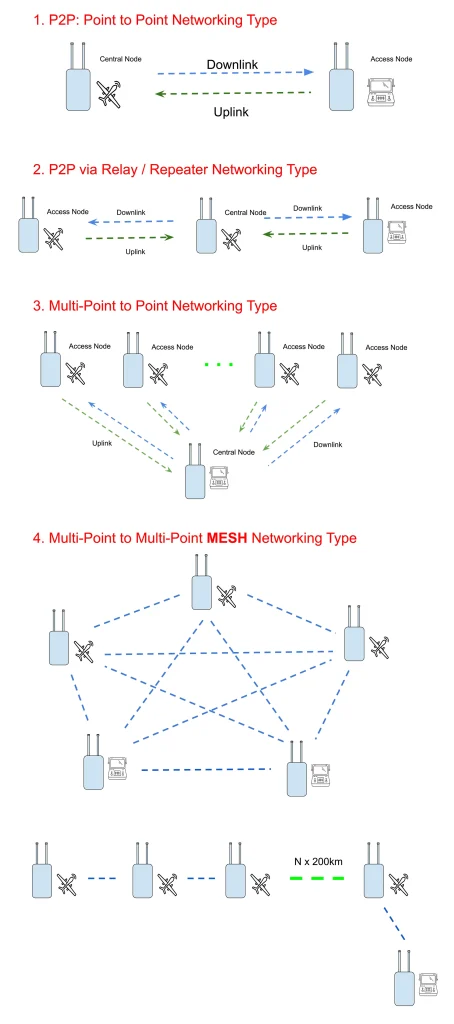
In star networking, the central node can be deployed on a relay drone, and the nodes of the mission drone and the nodes of the ground receiver serve as access nodes to form a network.
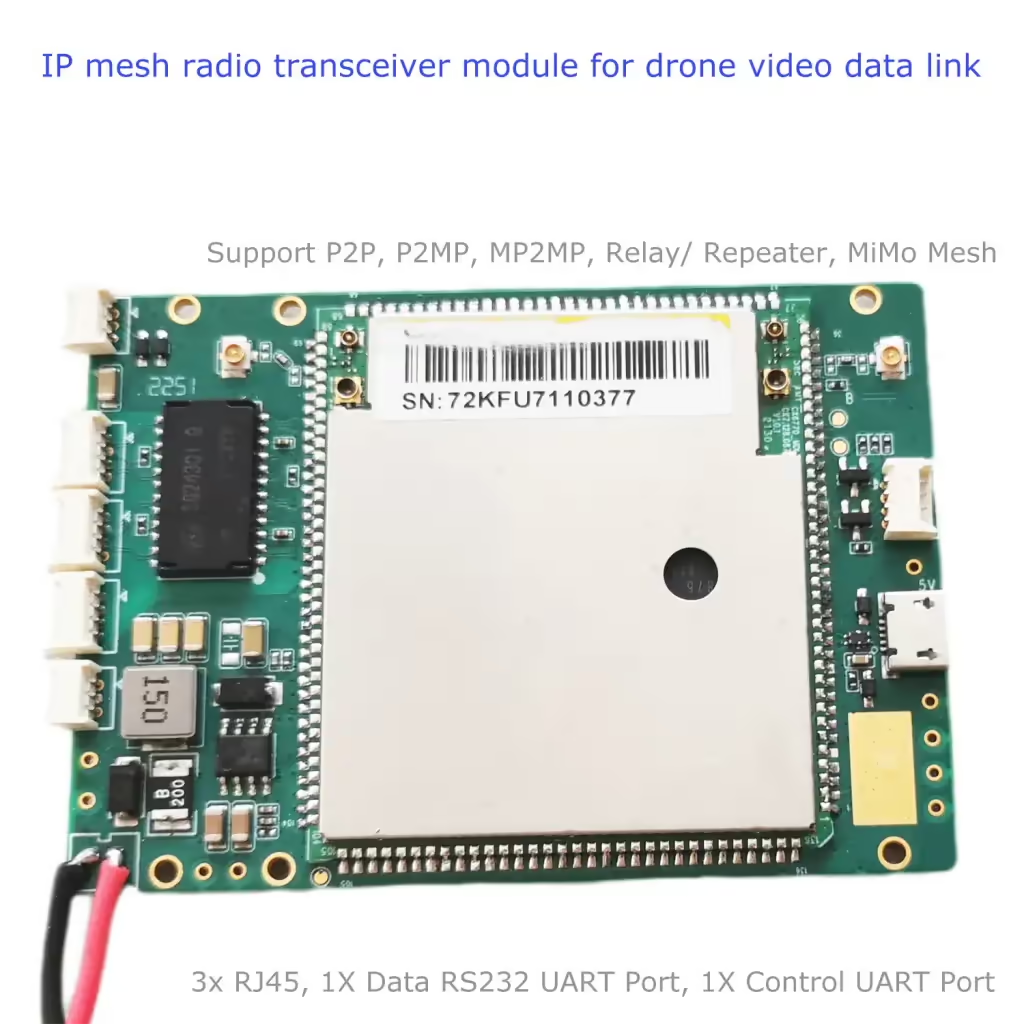
If the budget allows, or the scenario requires more than three nodes, you can consider using mesh networking. Because in a decentralized network, each node acts as a video data transceiver, and each node can play different roles, such as transmitter, receiver, and transfer node for other nodes, to extend the transmission distance, avoid obstacles such as mountains, or avoid that if one node is damaged, it will not affect the continued operation of other nodes, thus playing a backup role.


Ask A Question
Thank you for your response. ✨