



Table of Contents
Analog FPV drone repeater Introduction
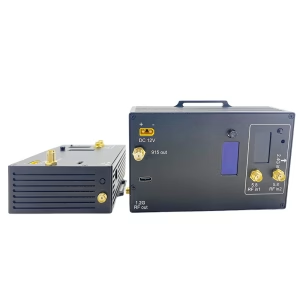
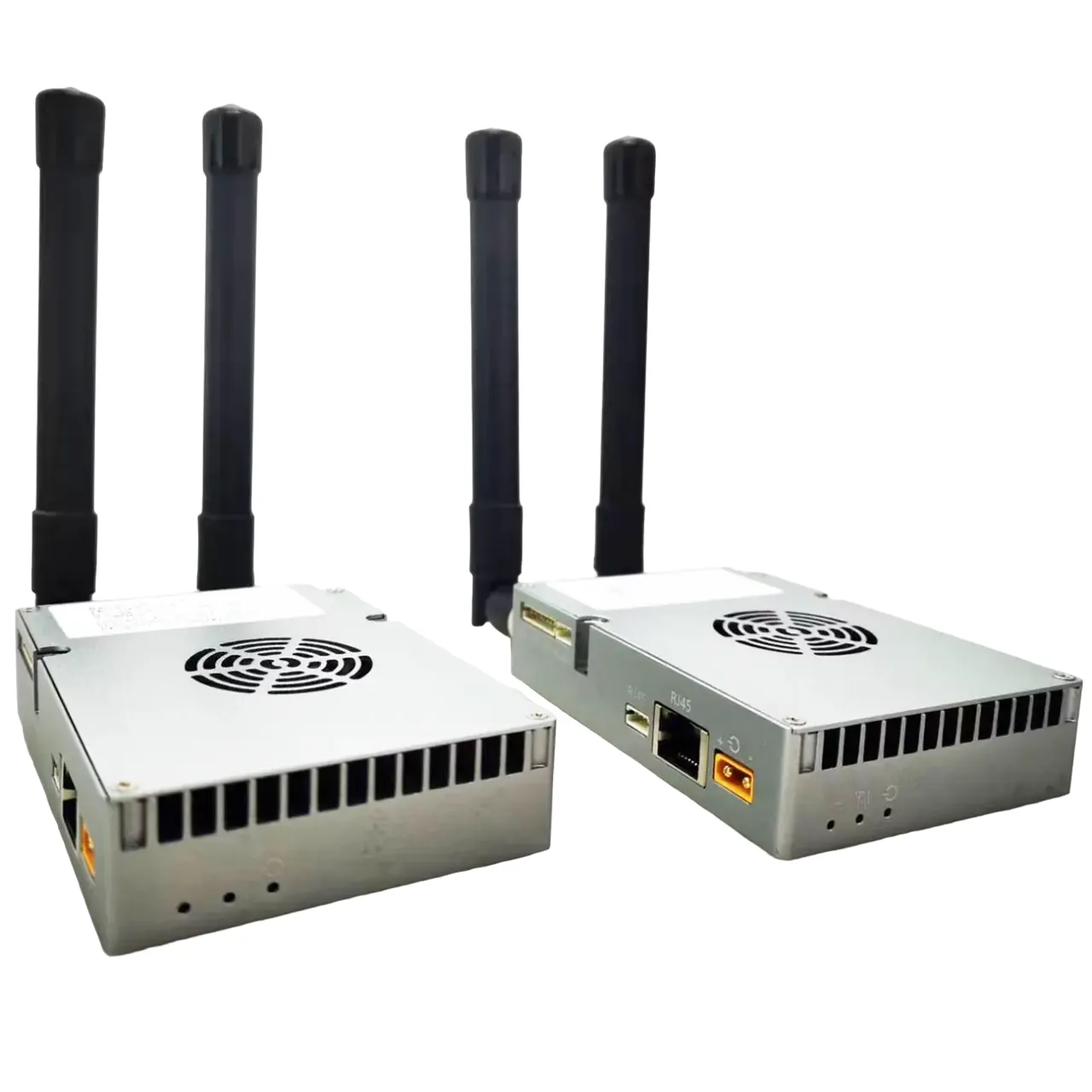
This is a repeater we customized according to customer’s requirements for FPV drones with analog video transmitter.
FPV repeaters boost the range and improve the signal quality of your First Person View system. Basically, it receives the video from your drone and retransmits it with a stronger signal, typically from a better location.
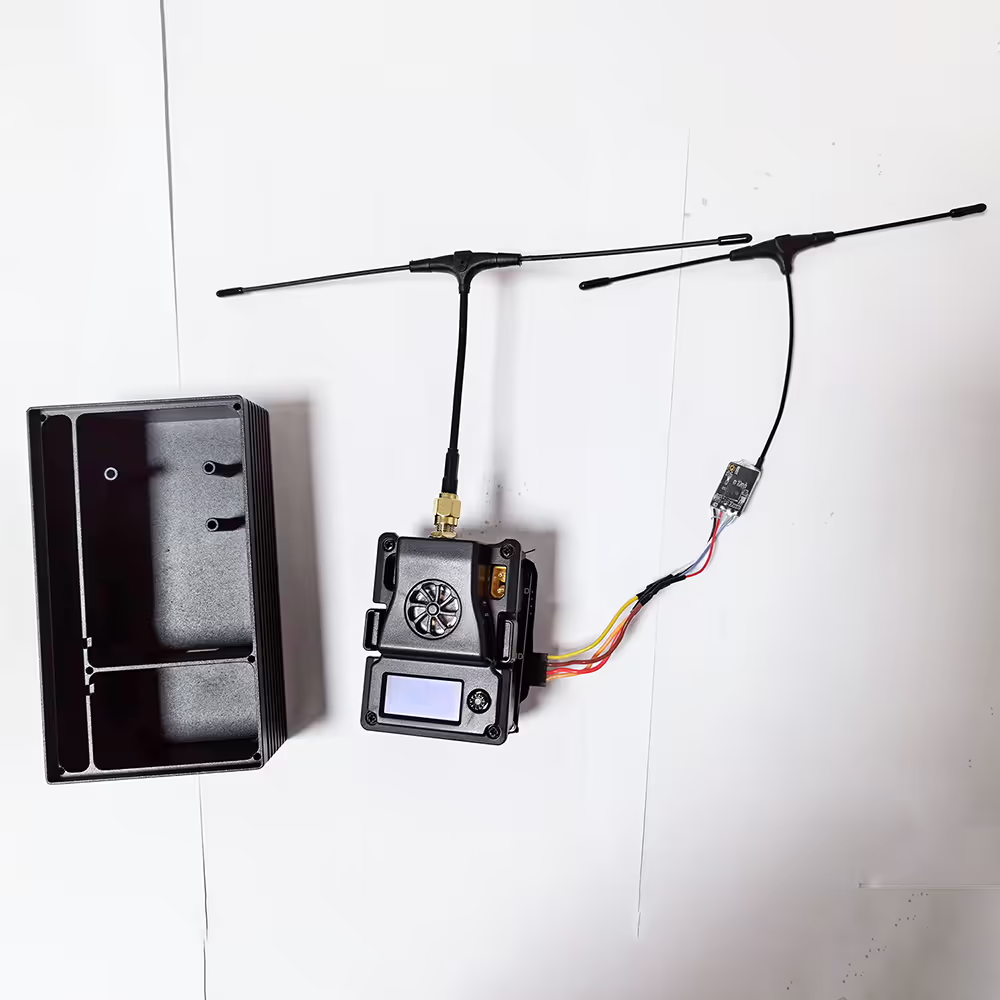
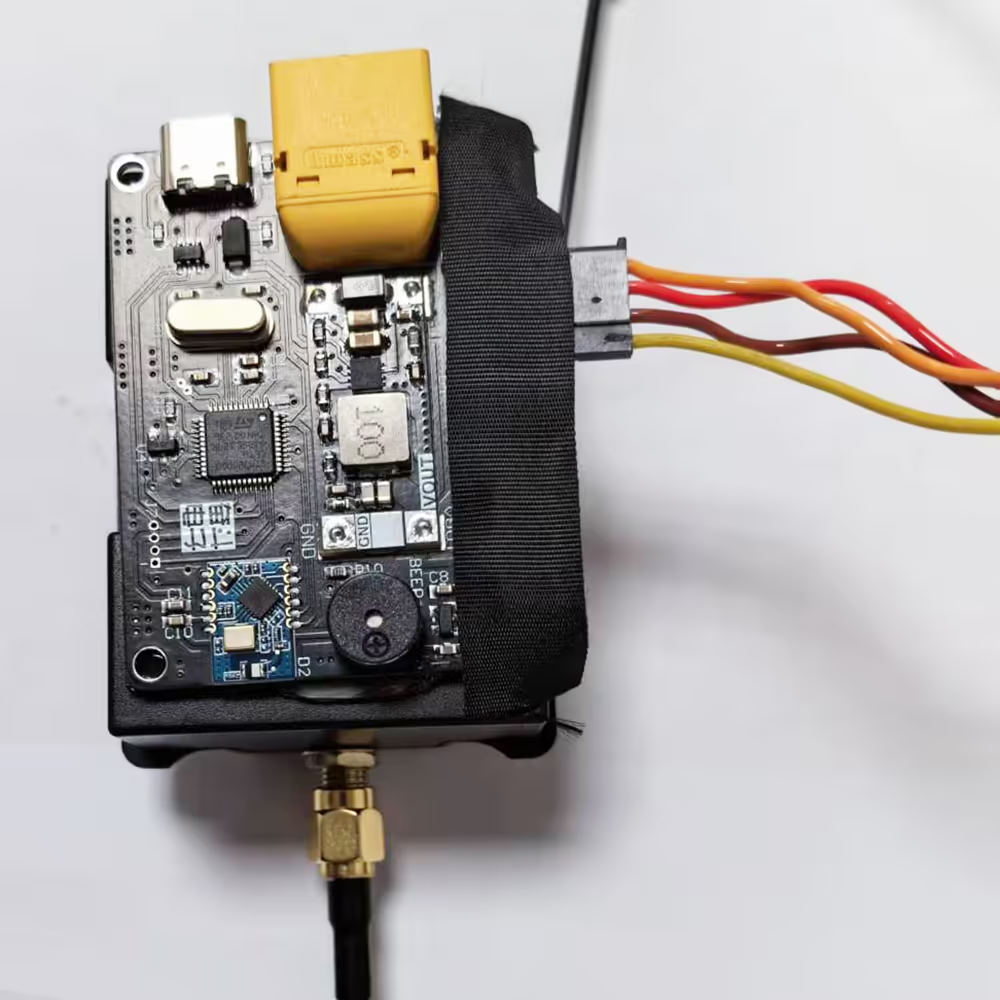
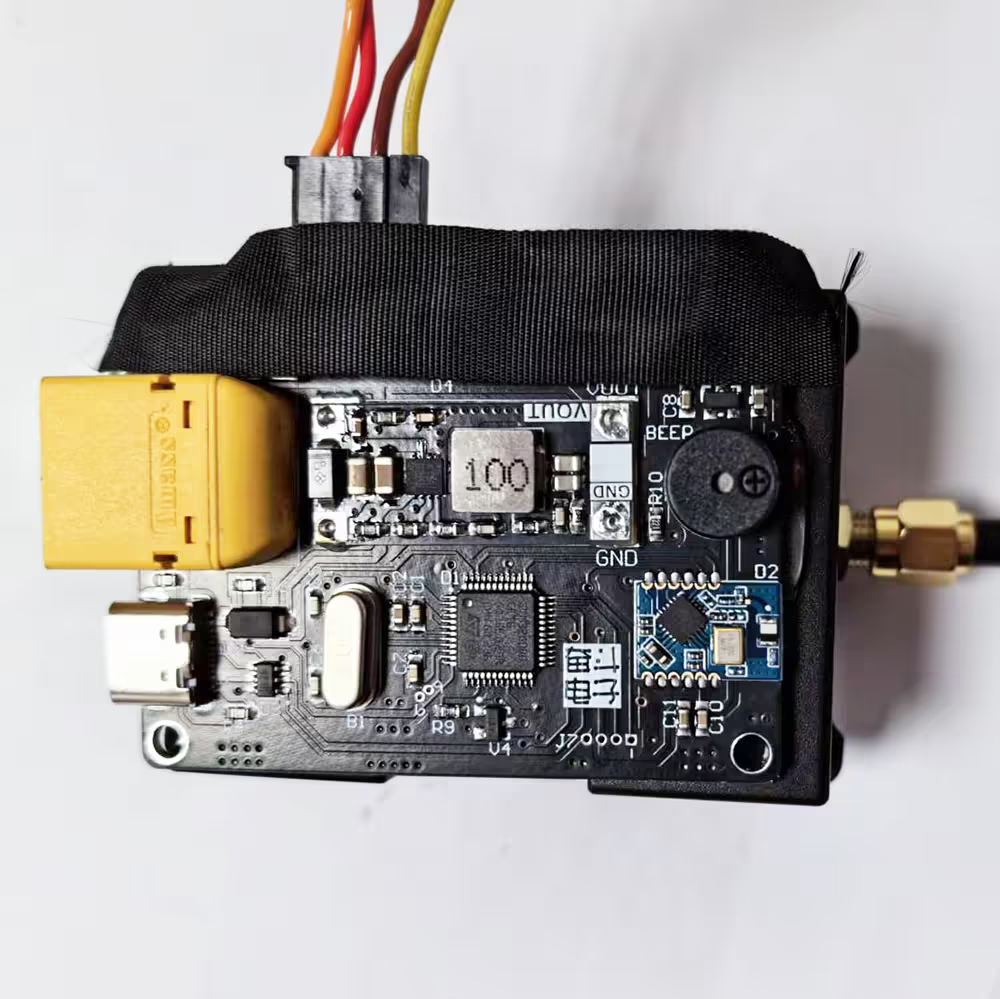
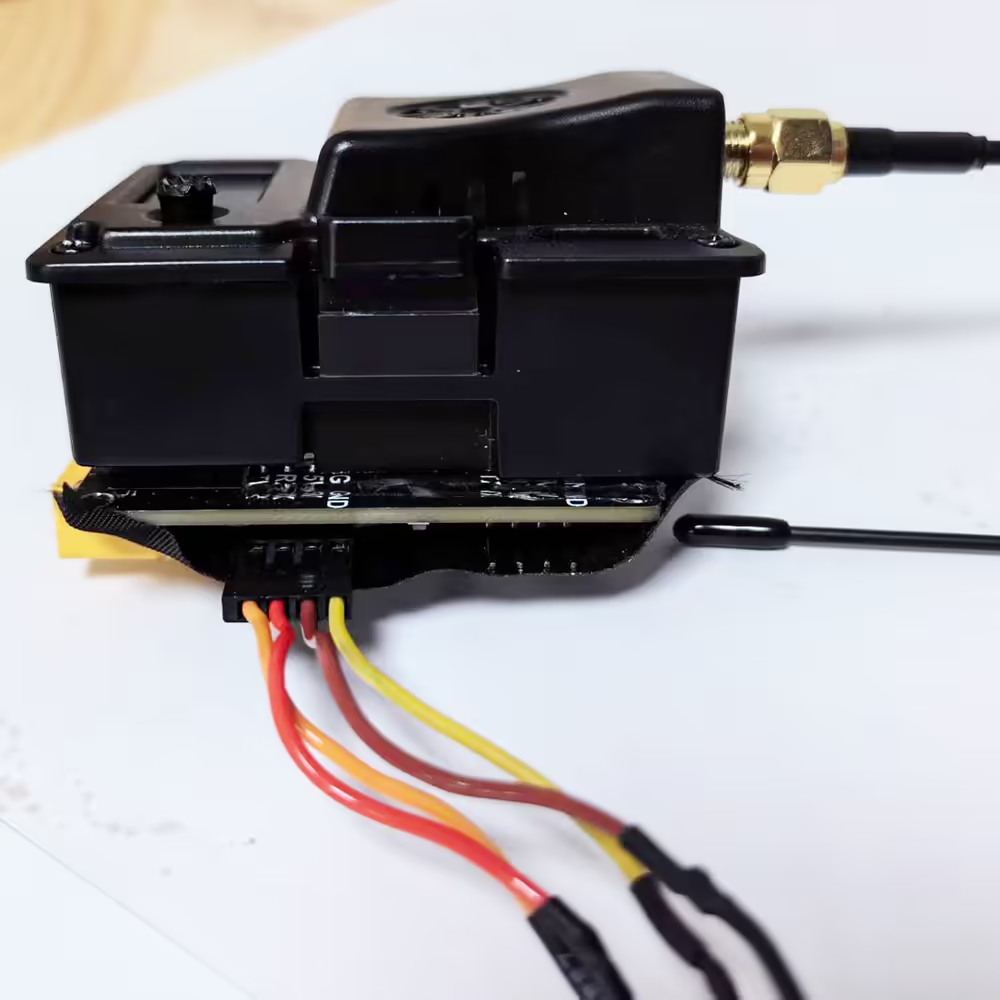
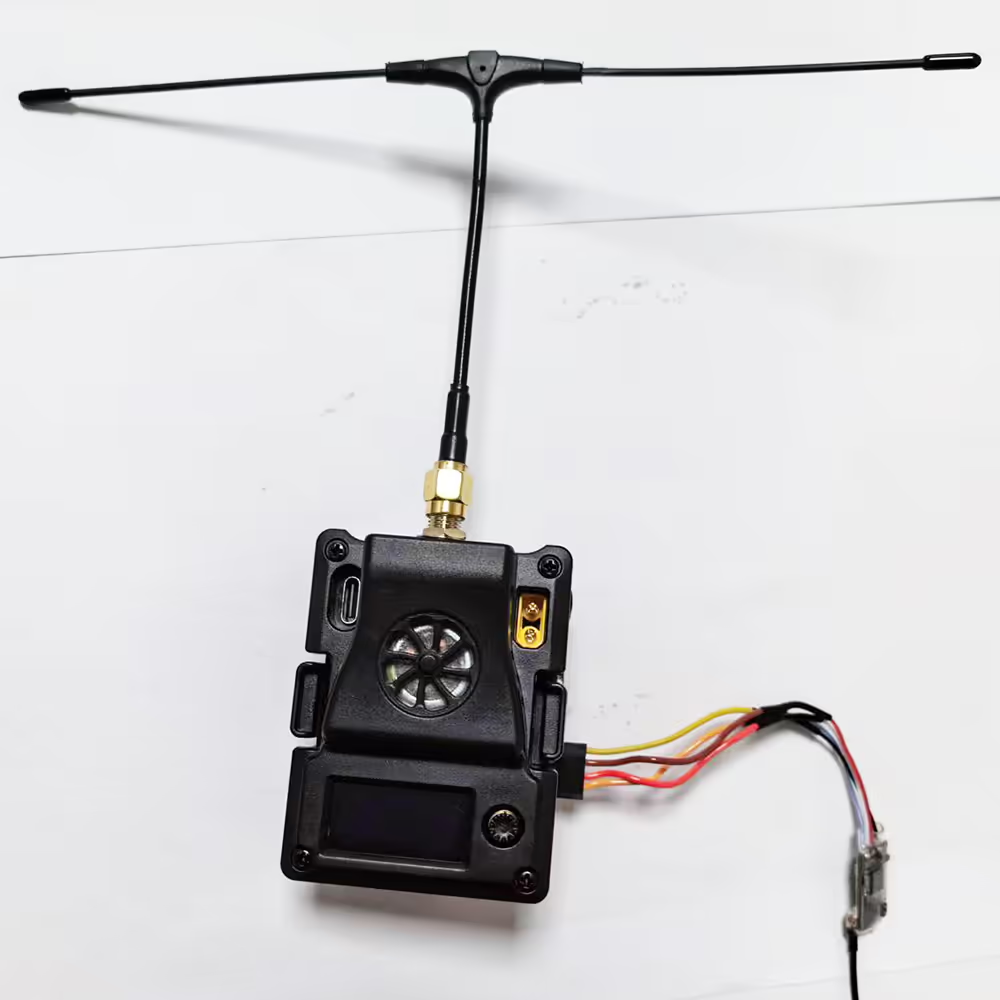
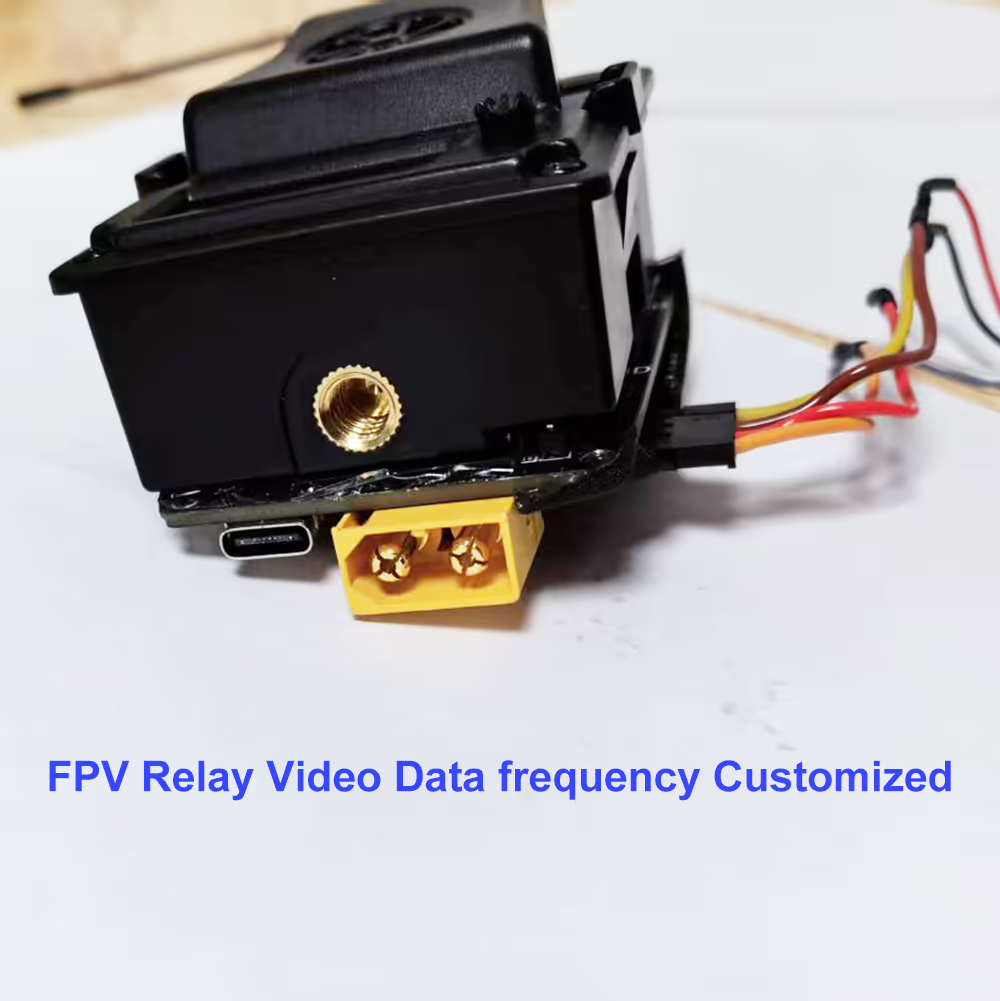
Video Repeater (from 5.8G to 1.2G)
Video repeaters boost or retransmit video signals. These are frequently used in long-range FPV flights to minimize signal loss and interference. To extend the repeater’s range, consider a higher location or directional antennas.

Telemetry Repeater (from 900Mhz to 750Mhz)
Telemetry repeaters expand the communication distance for telemetry data (e.g., OSD, battery status, control signals) between the drone and its ground station.

Digital COFDM FPV video repeater
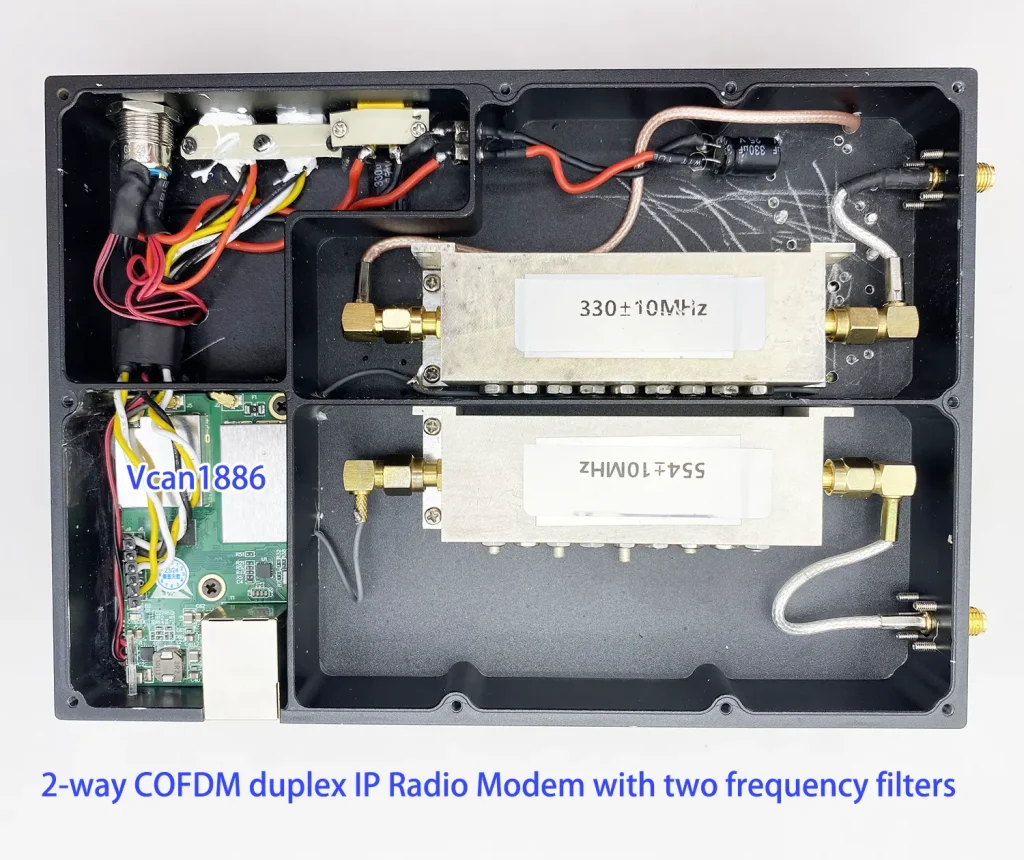
In areas with limited signal range, such as dense forests, large cities, or mountainous regions with significant electromagnetic interference, FPV drone repeater systems prove invaluable.
To discuss your custom repeater requirements, please get in touch. We offer free customization.
How to increase the FPV range?
Increasing the range of your FPV (First Person View) system involves a combination of improving both your video transmission and control signal. Here are some of the most effective ways to increase your FPV range:
1. Use Higher Gain Antennas
- For Video (VTX): Upgrade your video transmitter (VTX) antenna to one with a higher gain, such as a patch or panel antenna. These focus the signal in a specific direction, increasing range. Omnidirectional antennas like cloverleaf or Lumenier are good for general use but may have a limited gain range compared to directional options.
- For Control (RC): Antennas for the receiver (on the ground station) and transmitter (on the drone) are just as important. High-gain directional antennas, like helical or yagi antennas, can increase the range and reliability of your control link.
2. Upgrade the Video Transmitter (VTX)
- Higher Power Output: Most FPV systems use VTXs with a power output ranging from 25mW to 1W (1000mW). A higher output power can increase the range, but it’s important to check local regulations, as there are legal limits to the transmission power you can use in different countries.
- COFDM Systems: If you’re looking for a significant increase in range and quality, you might want to consider a COFDM (Coded Orthogonal Frequency Division Multiplexing) system. These systems use robust encoding and are resistant to interference, offering stable, long-range video transmission, even in challenging environments.
3. Use a Repeater or Relay System
- FPV Video Repeaters: As mentioned earlier, a video repeater amplifies and relays the video signal, effectively extending the range. You could set up a ground-based repeater (mounted on a tall structure) or a mobile repeater on a vehicle to relay the signal.
- Telemetry Repeaters: If you’re concerned about control link range, a telemetry repeater can help extend the communication range between your transmitter and the drone.
4. Increase Antenna Height
- Elevating your antennas can significantly extend the range, especially in areas with line-of-sight obstructions. A ground-based antenna elevated on a pole or mast will have a much clearer line of sight to your drone, reducing signal blockages from obstacles.
- Drone-mounted Antennas: A long-range drone setup might use an external high-gain antenna (e.g., a circular polarized antenna or even a directional antenna mounted on the drone) to further enhance the signal.
5. Use a Higher Quality Video Receiver (VRX)
- The receiver’s quality plays an important role in how well you can pick up the signal from the drone. Consider using a diversity receiver with two or more antennas to help maintain a stable signal, especially in areas where one antenna might experience interference or signal loss.
6. Switch to Digital FPV
- Digital FPV systems like DJI Digital FPV or Fat Shark Byte Frost provide clearer and more reliable video transmission, especially at longer distances. Digital systems also handle interference better and often provide longer-range capabilities compared to analog setups.
- These systems may require different antennas or special configurations, but they offer much better range and image quality, especially when combined with high-power transmitters.
7. Optimize Your Setup for Minimal Interference
- Choose the Right Frequency: Most FPV systems operate on the 5.8GHz frequency, but it can be crowded with other signals. Try using other frequencies (like 2.4GHz or 900MHz) if your equipment supports it, as they can sometimes provide better range and less interference.
- Use Filters: Adding a low-pass filter or a band-pass filter can help eliminate interference from other electronic devices, giving you a cleaner signal.
8. Increase Your Flight Altitude
- Flying higher can dramatically increase the range by minimizing obstacles between the drone and your ground station, improving line-of-sight to your transmitter. Additionally, being at a higher altitude can help reduce the effects of interference from buildings or trees.
9. Improve Power Supply and Cable Quality
- Ensure your video transmitter (VTX) and receiver (VRX) have stable power supplies. Battery voltage sag during flight can degrade signal quality, so using higher-quality connectors and ensuring good power distribution can help maintain a steady signal.
- Low-loss cables (like RG-213 or LMR-400) for connecting antennas to the VTX and VRX can help prevent signal attenuation, especially over longer distances.
10. Reduce Power Consumption (for Long Range)
- If you’re using a high-powered VTX, ensure your drone’s battery is strong enough to support it without losing power mid-flight. As you extend your range, your drone will consume more power, and it’s essential to keep an eye on battery levels to avoid running out of power unexpectedly.
11. Monitor and Improve Video Quality
- Consider using an on-screen display (OSD) to monitor your video signal strength, flight parameters, and range in real-time. This way, you can adjust your settings or return to a safe range before you lose the signal.
Conclusion:
To achieve maximum FPV range, it’s crucial to focus on both the video transmission and control link. Upgrading your antennas, VTX, and receiver, using repeaters, flying higher, and ensuring minimal interference can all lead to significantly better performance. If you’re looking for an extremely long-range setup, a digital FPV system with a high-power VTX and advanced antenna configurations is likely your best bet.
Ask A Question
Thank you for your response. ✨