






This is the latest digital wireless video transmission. It uses the same compression coding technology as COFDM or DVB-T, which can effectively ensure the stability of the transmission signal. The picture is as clear as the digital TV set-top box at home.

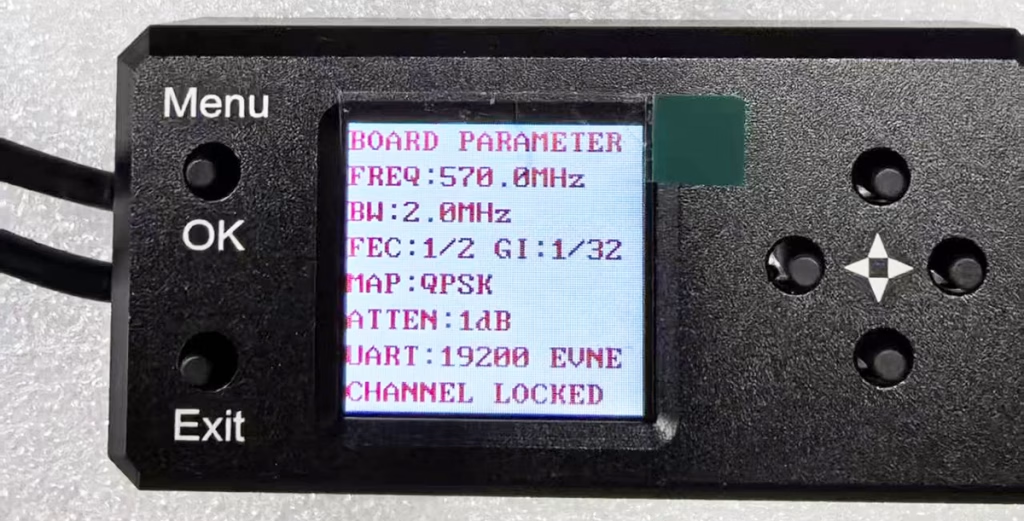
Its working central frequency can be customized from 170Mhz to 860Mhz. This is 570Mhz COFDM digital FPV video transmitter for CVBS analog camera.

A 570MHz COFDM digital FPV video transmitter for CVBS analog cameras is a specialized wireless transmission device designed to convert analog video signals (from a CVBS camera) into a digital format and transmit them over radio frequencies using COFDM (Coded Orthogonal Frequency Division Multiplexing) modulation. This technology is widely used in applications requiring robust, low-latency video transmission in challenging environments, such as drones, vehicles, or remote monitoring systems. Below is a detailed breakdown of its key components and functionalities:
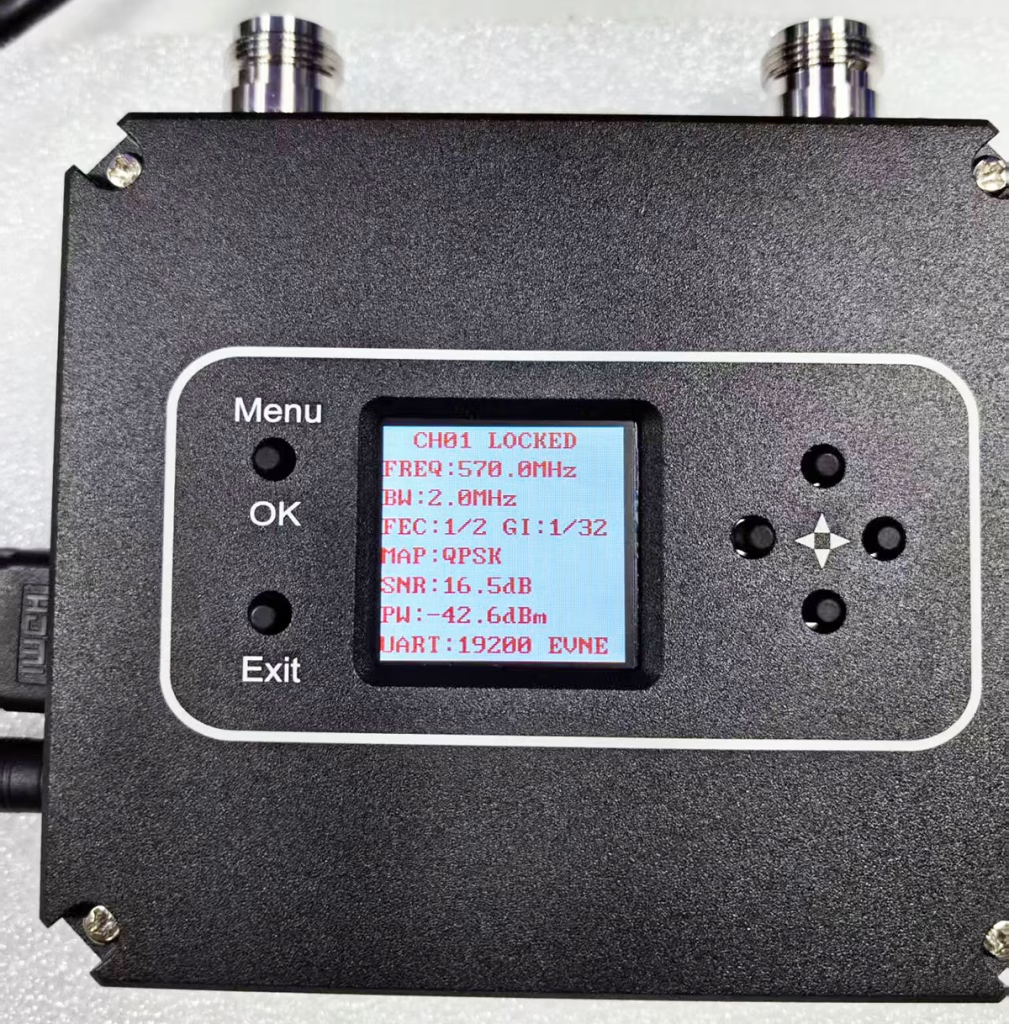
Table of Contents
1. Core Technology: COFDM Modulation
- COFDM splits data into multiple subcarriers, enhancing resistance to multipath interference and signal degradation, especially in non-line-of-sight (NLOS) scenarios like urban areas or forests.
- The 570MHz frequency band falls within the UHF range, offering a balance between penetration and coverage. This band is often used for long-range transmissions (e.g., 10–50 km) and is less prone to interference compared to higher frequencies like 2.4 GHz.
2. Integration with CVBS Analog Cameras
- CVBS (Composite Video Baseband Signal) is a standard analog video format. The transmitter digitizes this signal using encoders like H.265 or MPEG-2, compressing the data to reduce bandwidth while maintaining image quality (e.g., 720×576 resolution).
- Example: The SG-H.265 COFDM transmitter supports CVBS input and achieves low-latency encoding (e.g., 40 ms end-to-end delay), critical for real-time FPV applications.

3. Key Features and Performance
- Low Latency: Essential for FPV (First-Person View) control, with delays as low as 40–600 ms depending on compression and modulation settings.
- Adaptive Bandwidth: Supports narrowband (1–8 MHz) configurations to optimize spectrum usage and transmission stability.
- Robustness: Designed for high-speed mobility (up to 240 km/h) and harsh environments, with features like AES encryption for secure data transmission.
4. Applications
- Drones/UAVs: Enables real-time HD video feeds for surveillance or cinematography, even in non-line-of-sight conditions.
- Vehicles/Public Safety: Used in police, firefighting, or military vehicles for live situational awareness.
- Remote Monitoring: Deployed in industrial or disaster-response scenarios where wired connections are impractical.
5. Technical Considerations
- Signal Conversion: Analog-to-digital conversion must minimize noise to preserve video quality.
- Power and Range: Higher transmission power (e.g., 10–30 W) extends coverage but increases power consumption.
- Environmental Factors: Rain, foliage, or urban structures may attenuate 570 MHz signals, though less severely than higher frequencies36.
Ask A Question
Thank you for your response. ✨