





This is the latest digital wireless video transmission. It uses the same compression coding technology as COFDM or DVB-T, which can effectively ensure the stability of the transmission signal. The picture is as clear as the digital TV set-top box at home.

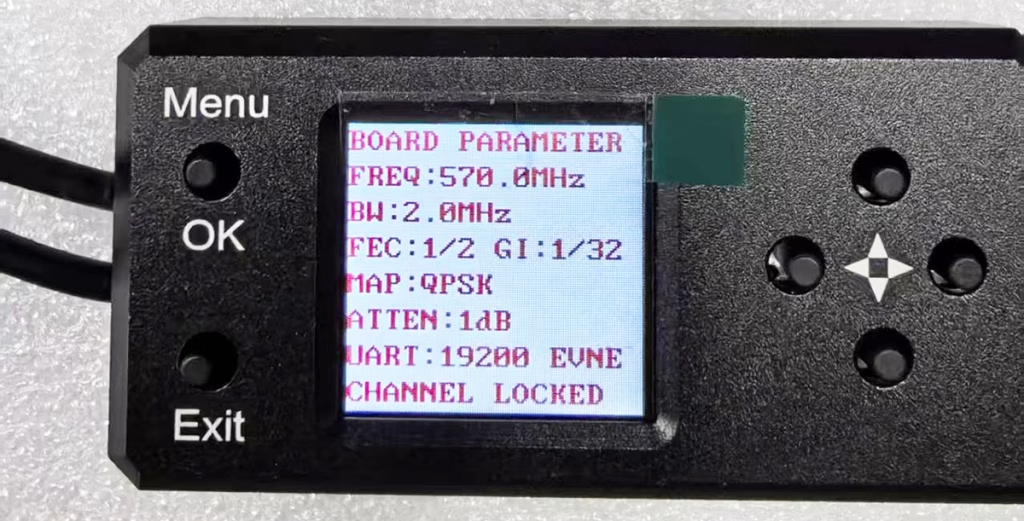
Its working central frequency can be customized from 170Mhz to 860Mhz. This is 570Mhz COFDM digital FPV video transmitter for CVBS analog camera.

UN 570MHz COFDM digital FPV video transmitter for CVBS analog cameras is a specialized wireless transmission device designed to convert analog video signals (from a CVBS camera) into a digital format and transmit them over radio frequencies using COFDM (Multiplexación por división de frecuencia ortogonal codificada) modulación. This technology is widely used in applications requiring robust, low-latency video transmission in challenging environments, such as drones, vehículos, or remote monitoring systems. Below is a detailed breakdown of its key components and functionalities:
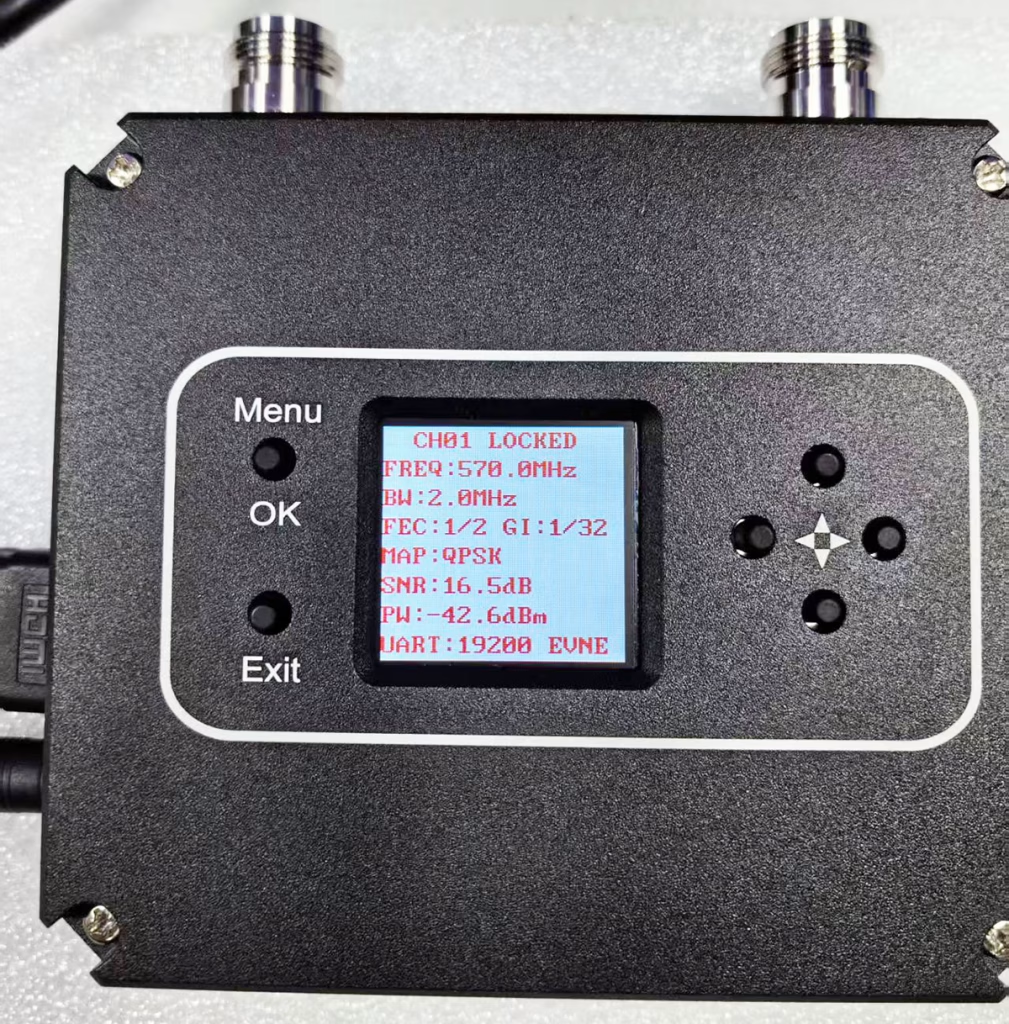
Tabla de contenido
1. Core Technology: Modulación COFDM
- COFDM splits data into multiple subcarriers, enhancing resistance to multipath interference and signal degradation, especially in non-line-of-sight (NLOS) scenarios like urban areas or forests.
- los 570MHz frequency band falls within the UHF range, offering a balance between penetration and coverage. This band is often used for long-range transmissions (P.EJ., 10–50 kilómetros) and is less prone to interference compared to higher frequencies like 2.4 GHz.
2. Integration with CVBS Analog Cameras
- CVBS (Composite Video Baseband Signal) is a standard analog video format. The transmitter digitizes this signal using encoders like H.265 or MPEG-2, compressing the data to reduce bandwidth while maintaining image quality (P.EJ., 720×576 resolution).
- Ejemplo: los SG-H.265 COFDM transmitter supports CVBS input and achieves low-latency encoding (P.EJ., 40 ms end-to-end delay), critical for real-time FPV applications.

3. Key Features and Performance
- Baja latencia: Essential for FPV (Vista en primera persona) control, with delays as low as 40–600 ms depending on compression and modulation settings.
- Adaptive Bandwidth: Supports narrowband (1–8MHz) configurations to optimize spectrum usage and transmission stability.
- Robustez: Designed for high-speed mobility (arriba a 240 kilómetros por hora) and harsh environments, with features like AES encryption for secure data transmission.

4. Aplicaciones
- Drones/UAVs: Enables real-time HD video feeds for surveillance or cinematography, even in non-line-of-sight conditions.
- Vehicles/Public Safety: Used in police, extinción de incendios, or military vehicles for live situational awareness.
- Monitoreo remoto: Deployed in industrial or disaster-response scenarios where wired connections are impractical.
5. Consideraciones técnicas
- Signal Conversion: Analog-to-digital conversion must minimize noise to preserve video quality.
- Power and Range: Higher transmission power (P.EJ., 10–30 W) extends coverage but increases power consumption.
- Environmental Factors: Lluvia, follaje, or urban structures may attenuate 570 MHz signals, though less severely than higher frequencies36.
Haz una pregunta
Gracias por tu respuesta. ✨