





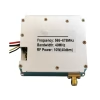
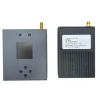
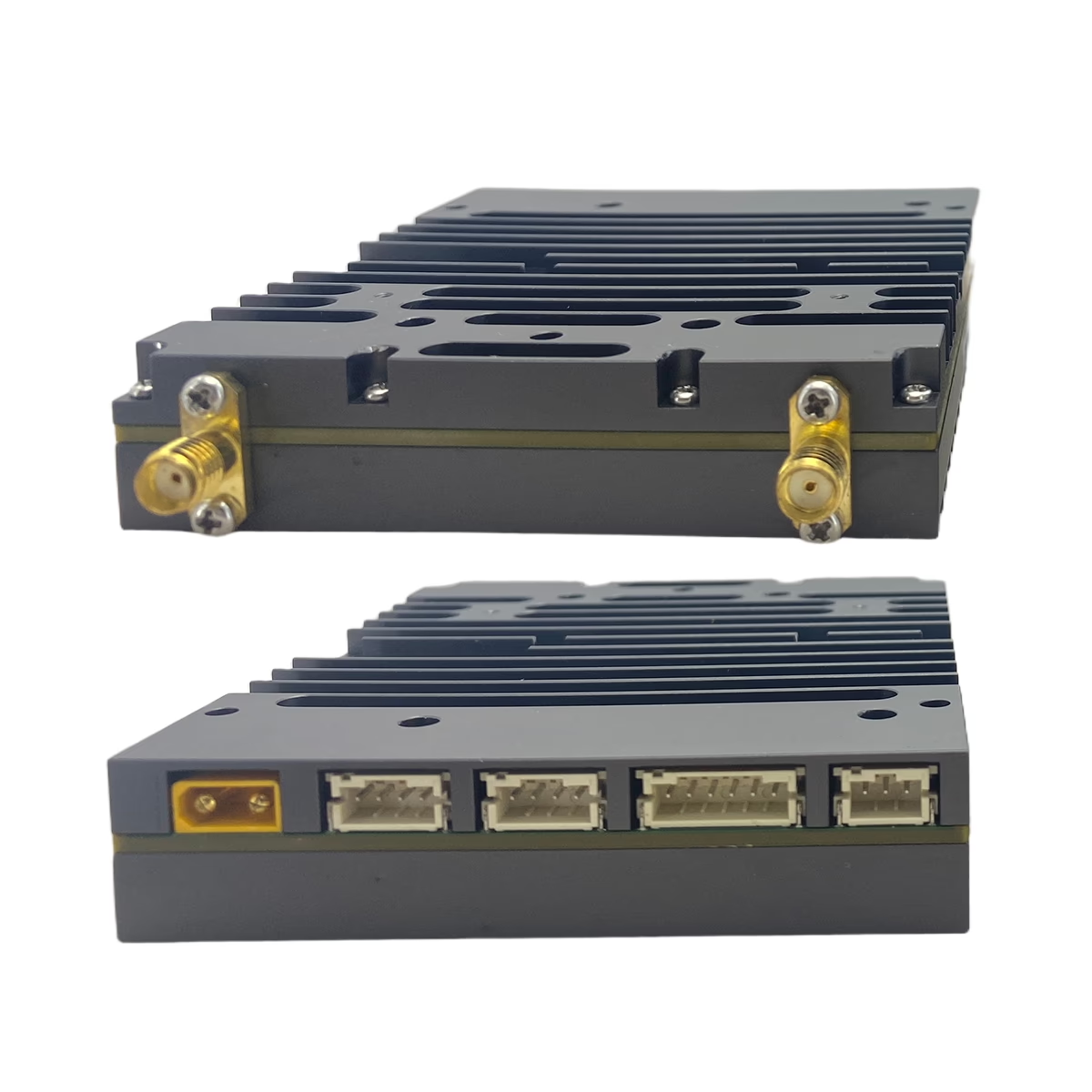
High-Performance Interference-Resistant Anti-Jamming Drone Wireless link, UAV Communication Module for Complex Electromagnetic Environments
Table of Contents
Overview
The Vcan2111 is a state-of-the-art, high-performance wireless communication module designed to meet the most demanding requirements of modern industrial and professional drones. Engineered specifically for environments with high electromagnetic interference (EMI), this module ensures reliable video, telemetry, and control data transmission even in the presence of powerful jamming sources, pulsed interference, and broadband electromagnetic noise.
At the core of Vcan2111 is the ISSA (Intelligent Spectrum Sensing and Adversarial) technology. This advanced AI-driven system continuously monitors the spectrum, detects potential interference in real time, and dynamically selects the cleanest channels for transmission. Using NOW (Next-Generation On-sight Warning) technology, the module can even anticipate incoming interference, proactively mitigating the impact before it affects communications.
Equipped with a high-performance FPGA and cutting-edge adaptive algorithms, Vcan2111 maintains low-latency, high-bandwidth 1080P@60fps video transmission over distances up to 50 km, providing drones with unmatched operational reliability. Compared with conventional frequency modulation systems, Vcan2111 achieves stable communication using fewer modulation levels while maximizing resistance to jamming and packet loss. This makes it the ultimate solution for drones operating in hostile electromagnetic environments, where mission success depends on uninterrupted data transmission.
Key Features
-
Exceptional Anti-Jamming Capability: AI-driven ISSA technology, dynamic spectrum sensing, and real-time adaptive modulation allow the Vcan2111 to maintain stable communications in environments with heavy interference, pulsed jamming, or broadband noise.
-
Long-Range Transmission: Reliable link distances up to 50 km, ensuring robust video and telemetry for extended drone missions.
-
Ultra-Low Latency: End-to-end delay under 50 ms, ideal for real-time monitoring, control, and HD video streaming.
-
Adaptive Modulation & Demodulation: Supports QPSK, 16QAM, 64QAM, and 256QAM, automatically optimizing signal integrity under varying interference conditions.
-
High-Frequency Agility: Over 1,500 frequency hops per second, dynamically avoiding congested or jammed channels to maintain uninterrupted communication.
-
Full-Band Jamming Resistance: Spectrum hole capture, smart frequency selection, and patented anti-jamming algorithms deliver superior resistance across the full operating band.
-
Extreme Environment Endurance: Operates reliably from -40°C to +85°C, with 5–95% humidity tolerance, ensuring consistent performance in harsh environmental conditions.
-
High-spare capacity Video Transmission: Supports 1080P@60fps without frame loss, even in strong interference zones.
-
Secure Communication: AES-256 encryption protects sensitive video and telemetry data from unauthorized access.
-
Compact and Lightweight Design: 102.5 × 81 × 22 mm, weighing only 162 g (excluding antennas), making it easy to integrate into a wide range of drones.
Specifications
| Category | Parameter Details |
|---|---|
| Transmit Power | Dual channel, 2 W per channel |
| Operating Frequency | 1350 – 1450 MHz |
| Carrier Bandwidth | 20 MHz |
| Duplex Mode | TDD (Time Division Duplex) |
| Modulation | QPSK / 16QAM / 64QAM / 256QAM (Adaptive) |
| Max Data Rate | 47 Mbps @ 20 MHz |
| Receive Sensitivity | <-100 dBm @ 5 MHz |
| Encryption | AES-256 |
| Power Supply | DC 18–27 V, ≤20 W |
| Interface | Antenna: SMA-K ×2; Power: XT30PW-M; Network/Serial: PH2.0 Encapsulation |
| Dimensions | 102.5 × 81 × 22 mm |
| Weight | 162 g (without antennas) |
| Ambient Temperature | -40°C ~ +55°C |
| Operating Temperature | -40°C ~ +85°C |
| Humidity Range | 5%–95% |
ISSA Technology – Intelligent Anti-Interference
The ISSA (Intelligent Spectrum Sensing and Adversarial) technology is the cornerstone of Vcan2111’s superior anti-jamming performance. By continuously scanning the working frequency band (default 1350–1450 MHz), ISSA builds a local interference profile and dynamically selects the optimal frequency channel for transmission.
Key capabilities include:
-
Dynamic Frequency Hopping: Millisecond-level adaptive hopping avoids jammed or noisy channels, maintaining a stable link.
-
Real-Time Spectrum Perception: Continuous monitoring detects interference trends and anticipates incoming jamming before it occurs.
-
Adaptive Modulation Control: Automatically adjusts modulation parameters to maximize link quality under high-interference conditions.
-
Node-to-Node Link Optimization: Each node dynamically creates optimal communication paths, reacting instantly to environmental changes.
This advanced technology ensures that drones equipped with Vcan2111 maintain stable communications, even in electronic countermeasure environments or areas with severe natural and man-made interference.
Interface
Interface Diagram
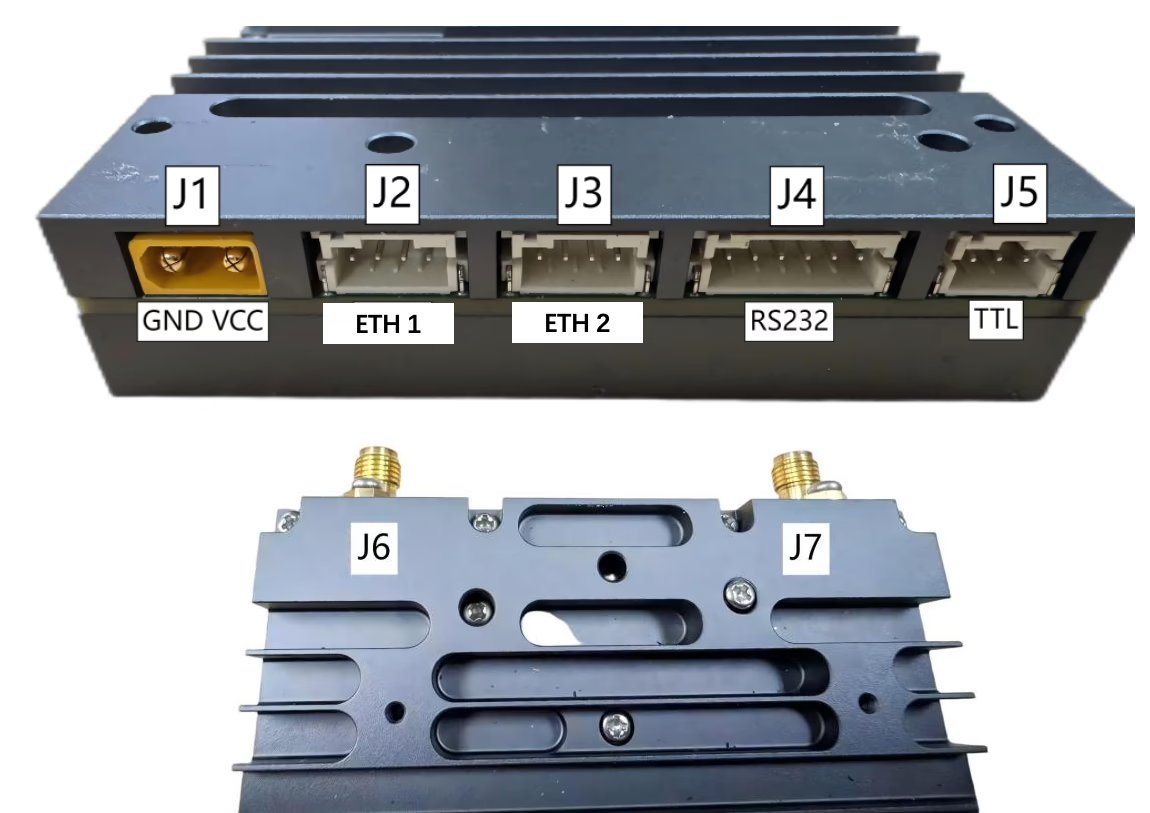
| Interface | Function | Connector Type | Pinout (Left to Right) |
| J1: Power | DC Power Input | XT30PW-M | GND, VCC |
| J2: ETH1 | 10/100M Ethernet | PH2.0-4 | RX-, RX+, TX-, TX+ |
| J3: ETH2 | 10/100M Ethernet (Redundant) | PH2.0-4 | RX-, RX+, TX-, TX+ |
| J4: COM1/0 | Dual RS232 Serial Ports | PH2.0-6 | R1, GND, T1, R0, GND, T0 |
| J5: COM2 | TTL 3.3V UART | PH2.0-3 | R2, GND, T2 |
| J6: ANT2 | RF Port 2 | SMA-K | |
| J7: ANT1 | RF Port 1 | SMA-K |
Indicator Light Specifications
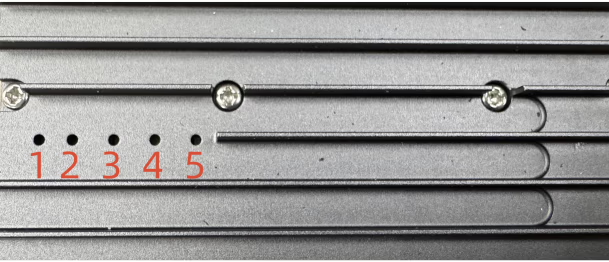
| Indicator Name | Color Status | Device Status |
| Indicator 1: Power | Green light steady | Power normal |
|
Indicator 2: Status |
Green light steady | Connection normal – Quality excellent |
| Yellow light steady | Connection normal – Quality medium | |
| Red light steady | Connection normal – Quality poor | |
| Off | Link interrupted | |
|
Indicator 3: Link |
Green light steady | Connectted |
| Red light steady | Disconnected | |
| Red light blinking | System abnormal,or system restarting | |
|
Indicator 4: Port 1 |
When the Ethernet port is connected and transmitting data, the green light remains steady and blinks. When there is no
connection, the light turns off. |
|
|
Indicator 5: Port 2 |
When the Ethernet port is connected and transmitting data,
the green light remains steady and blinks. When there is no connection, the light turns off. |
Performance Advantage
| Metric | Vcan2111 | Traditional Systems | Benefit |
|---|---|---|---|
| Jamming-Resistant Radius | 50 m from interference source (stable) | Disconnection >2 km | 20× larger anti-jamming radius |
| Anti-Jamming Mode | AI-driven spectrum sensing & counteraction | Basic hopping / none | Revolutionary interference resilience |
| Video Quality | 1080P@60fps, zero frame loss | Severe lag or artifacts | Dual advantage in resolution + frame rate |
| Bit Error Rate (BER) | <1e-6 | >1e-6 | Maintains signal integrity under extreme conditions |
| Latency | <50 ms | >500 ms | 10× real-time improvement |
| Frequency Agility | >1,500 hops/sec | <100 hops/sec | Fast, intelligent anti-jamming response |
| Full-Band Resistance | Spectrum hole capture | No effective countermeasure | 8.5× spectrum efficiency |
| Extreme Endurance | 30+ mins continuous operation | <2 mins | 15× sustained operation capability |
Applications
Vcan2111 is purpose-built for drones that must operate reliably in complex electromagnetic environments. Its versatility and robustness make it ideal for:
-
Industrial UAV Operations: Inspection, surveying, and monitoring in areas with high EMI, such as urban infrastructure, power plants, and industrial zones.
-
Security and Public Safety: Firefighting, search and rescue, law enforcement, and disaster response missions requiring uninterrupted communications.
-
Military and Tactical Drones: Reconnaissance and surveillance in electronic warfare environments with intentional jamming.
-
Broadcasting and Live Streaming: High-definition aerial video transmission for live events, sports, and media production.
-
Scientific Research & Environmental Monitoring: Remote drone operations for wildlife, climate, or geological surveys in electromagnetically challenging locations.
With its AI-driven anti-interference technology, adaptive modulation, and high-bandwidth capabilities, Vcan2111 ensures that drones can maintain stable flight, continuous video feed, and reliable telemetry, even under extreme interference conditions.
Summary
The Vcan2111 High-Performance Anti-Jamming Drone Wireless Module sets a new global standard for UAV communication in challenging electromagnetic environments. Combining intelligent spectrum sensing, dynamic frequency hopping, adaptive modulation, and advanced anti-jamming algorithms, it delivers unparalleled reliability, low latency, and high-quality video transmission.
For industrial, public safety, military, and professional drone applications, Vcan2111 ensures mission success even in the presence of severe interference, making it the ultimate choice for operators demanding the highest operational resilience and survivability.
How To Connect
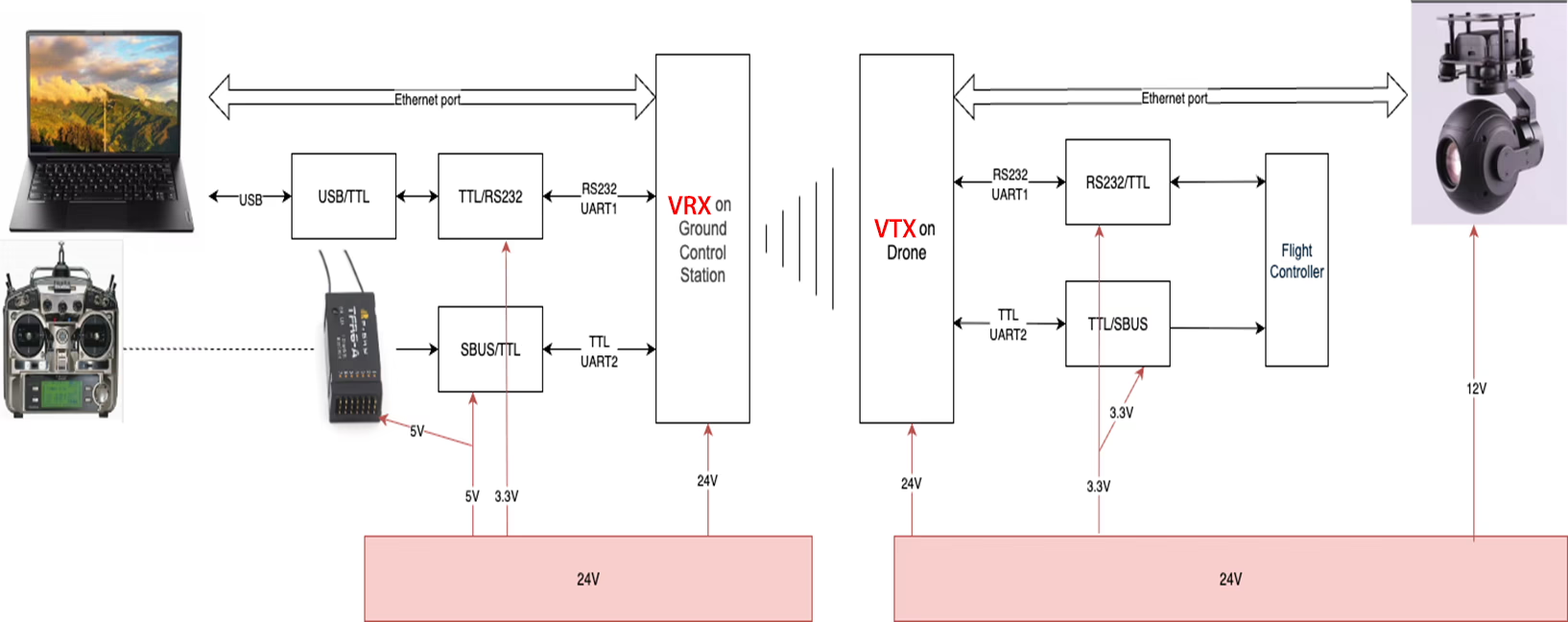
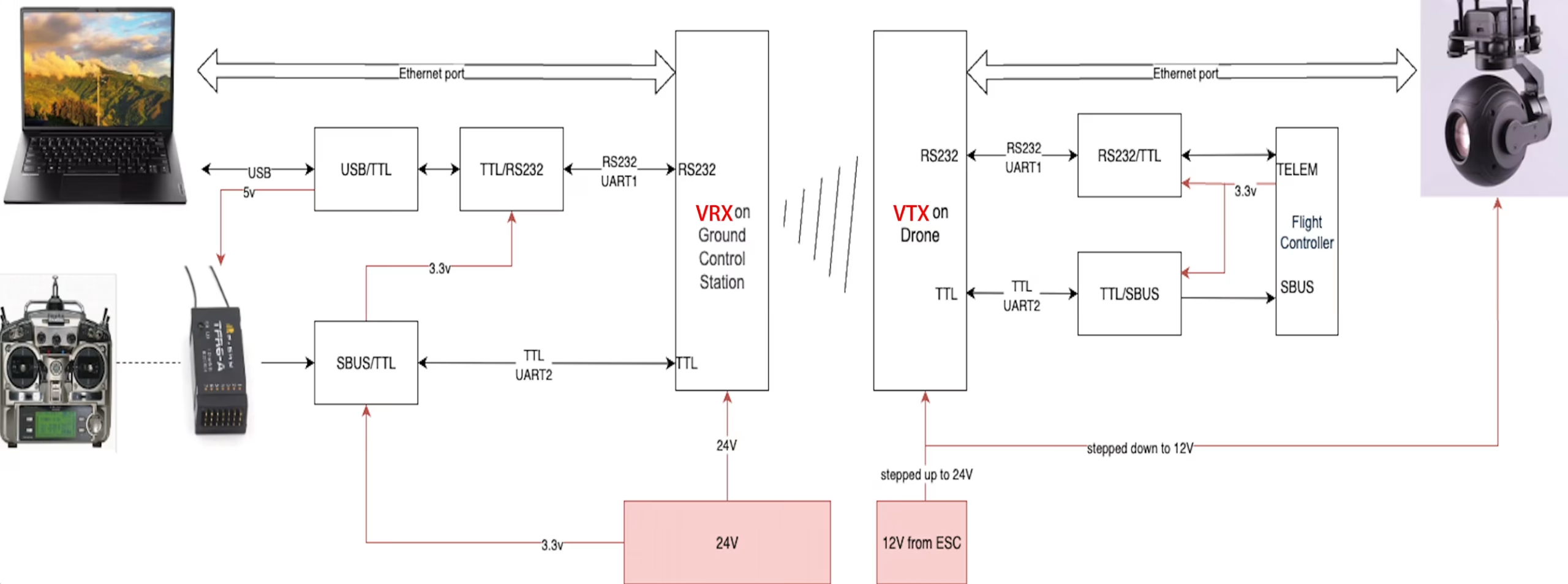
There are two solution topologies, which differ in the power supply method on the ground side.
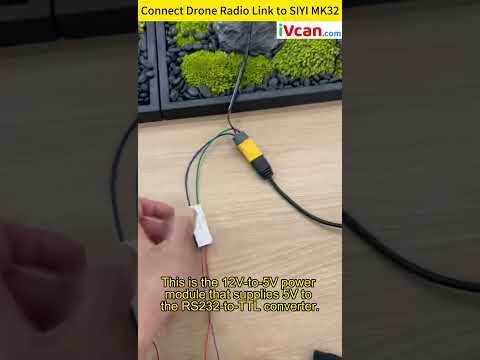
Solution 1 (Figure 1) uses independent 3.3V and 5V power supplies on the ground side to power the remote control receiver, TTL to RS232 converter, SBUS to TTL converter, and other modules.
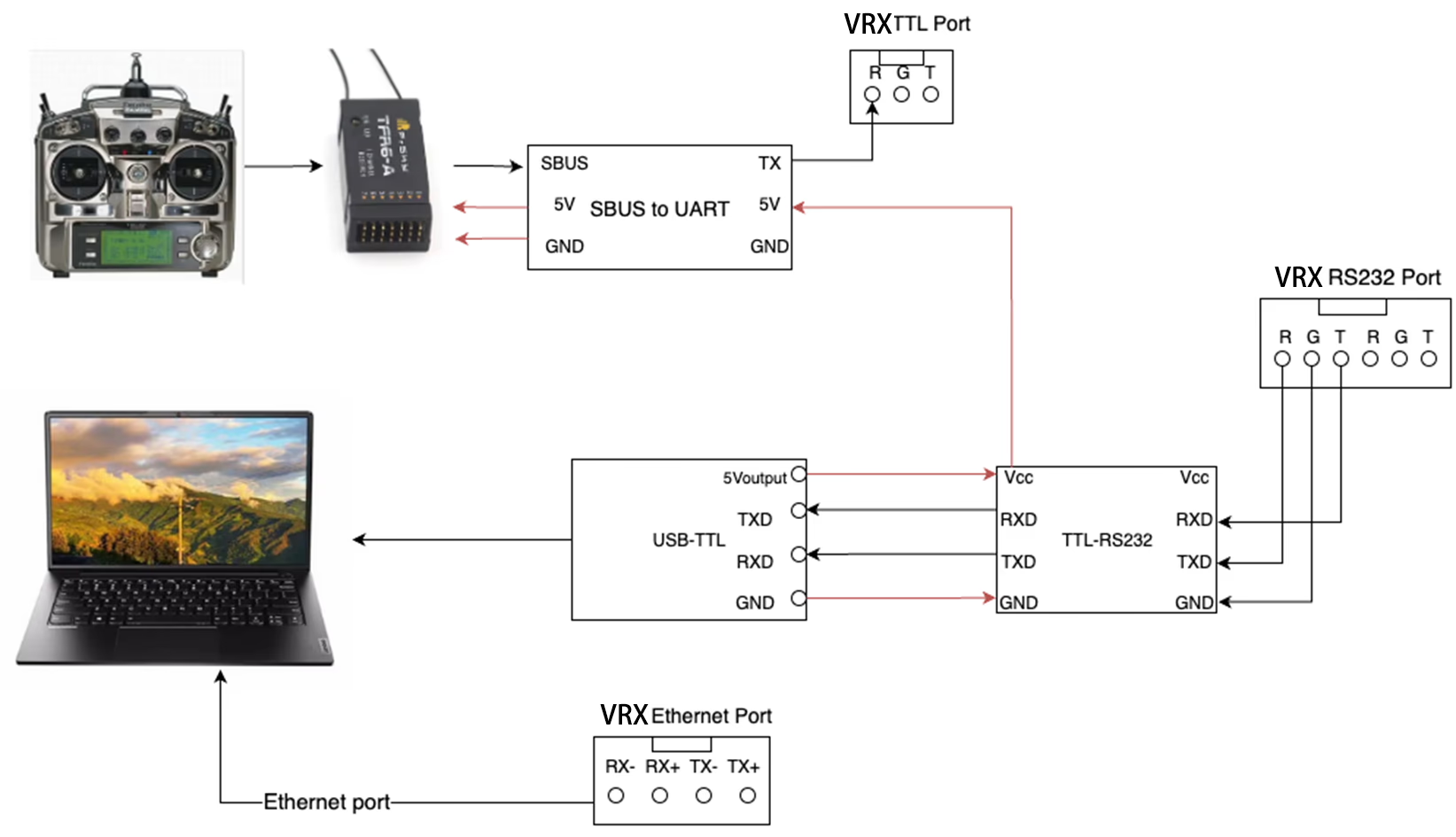
Solution 2 (Figure 2) does not require separate power supplies; instead, it uses the power output from the USB-to-TTL module to supply power to the other modules.
Solution 2 is recommended, as it offers a simpler and more convenient setup.
By default, the camera operates with a 12V power supply. However, during actual implementation, the specific power requirements of the camera should take precedence.
Connection 1
Connection 2
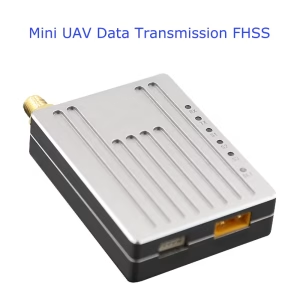
Air Unit

Ground Unit







iVcan.com –
We have been using the wireless link for our industrial and long-range drone projects, and the performance has been outstanding. Even in areas with heavy electromagnetic interference, the video and control signals remain extremely stable. The image quality is crystal clear at 1080P@60fps, and the latency is almost unnoticeable. The ISSA intelligent anti-jamming technology truly makes a difference — no signal drops or interruptions, even near jamming sources. It’s reliable, powerful, and easy to integrate. Highly recommended for professional UAV operations!