






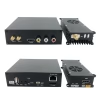
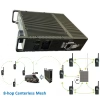
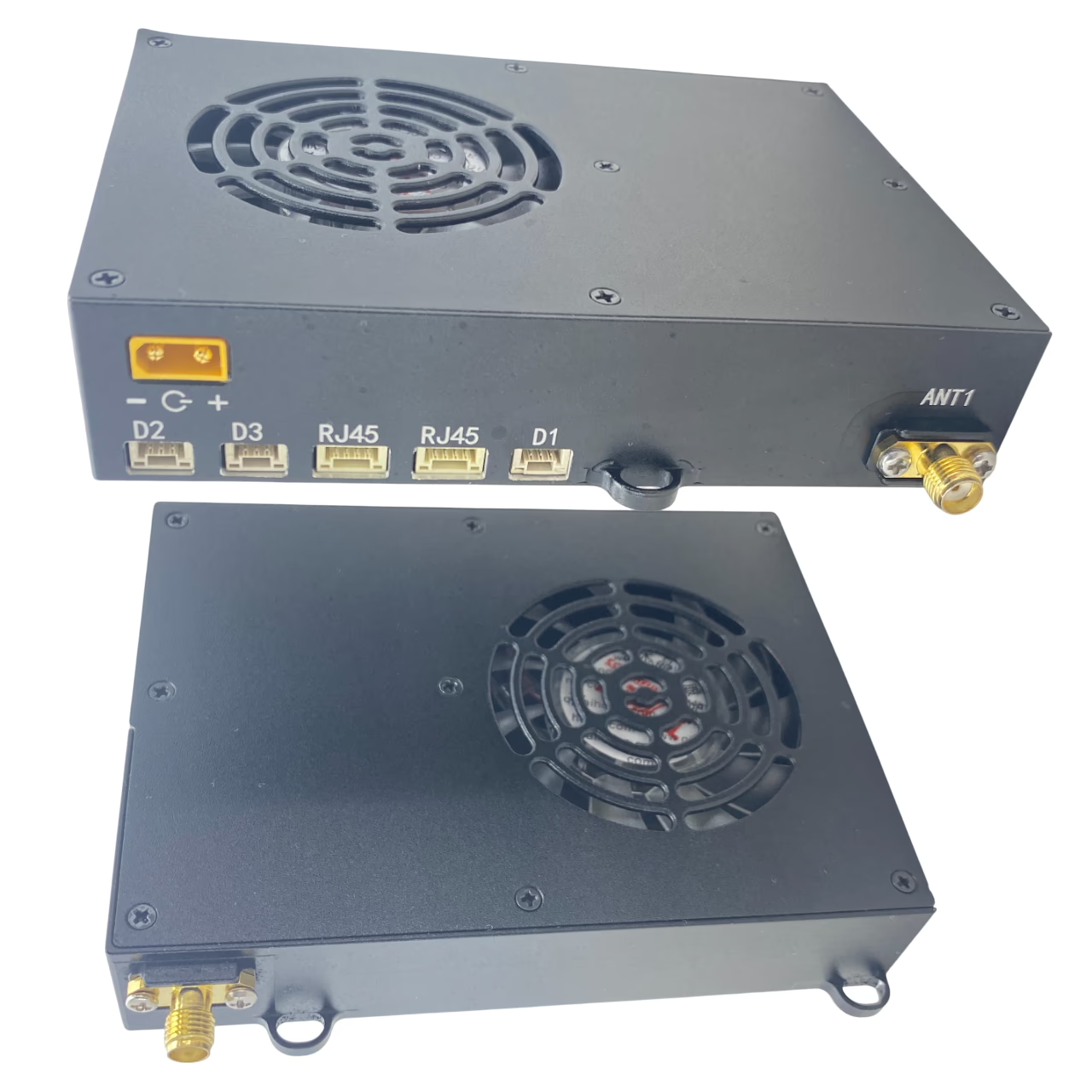
100 Mbps Bidirectional Link Transceiver for Car Racing Broadcast – 22 km Range, Star Networking up to 64 Nodes, Dual 5 W PA
Table of Contents
Product Overview
The Vcan1806-100Mbps-64Nodes-22Km is a professional-grade bidirectional wireless transmission system specifically designed for car racing live broadcast, event coverage, and other high-speed, mission-critical environments. Built on advanced TDD OFDM + Star Networking Point to Multi-points technology, this compact transceiver enables reliable, low-latency, high-bandwidth video, audio, and data links over distances of up to 22 kilometers.
This model supports star-topology networking with up to 64 transmitters (mobile nodes) communicating simultaneously with a single central receiver, allowing multiple camera angles and live feeds to be captured and broadcast in real time.
With dual 5-watt power amplifiers, advanced 2T2R MIMO, and adaptive modulation (QPSK / 16QAM / 64QAM), the system ensures long-range coverage, excellent anti-interference capability, and a sustained data rate of up to 100 Mbps bidirectional throughput. This makes it ideal for high-definition (HD) and ultra-high-definition (UHD) video transmission during live motorsport events, rally races, and outdoor broadcast operations.
Key Features
1. High-Speed 100 Mbps Bidirectional Transmission
The radio provides up to 100 megabits per second (Mbps) of full-duplex wireless bandwidth, supporting real-time video, telemetry, and IP data. Both uplink and downlink channels operate simultaneously, enabling live HD video streaming from multiple racing vehicles while control commands and telemetry data are transmitted back without delay.
2. Optimized for Car Racing and Broadcast Environments
Designed for high-mobility and low-latency operation, the transceiver maintains continuous connectivity with vehicles moving at high speed. It supports rapid link recovery, automatic frequency adaptation, and strong error-correction performance—essential for maintaining smooth live video during fast-changing race conditions.
3. Star Networking with Up to 64 Nodes
This model supports star-topology networking, allowing up to 64 transmitting nodes (cars, cameras, or mobile units) to link to a single ground receiver. Each node can send HD video and data streams simultaneously. The central receiver intelligently manages bandwidth allocation and ensures that each feed remains synchronized and stable.
4. 22 km Line-of-Sight Coverage
With a 22-kilometer air-to-ground communication range, this radio is ideal for large race circuits, off-road events, and open-area broadcasting. The dual-antenna design and 5 W × 2 PA output guarantee robust signal penetration and consistent link quality over long distances.
5. Dual 5 W Power Amplifiers (2×5 W PA)
Each unit integrates two high-efficiency 5 W power amplifiers, delivering a total of 10 watts RF output. The extra power ensures strong signal transmission, enhanced stability in challenging environments, and superior resistance to multipath fading or interference. (2x10WPA or 2x20WPA is optional).
6. Adaptive Modulation and Coding
To optimize performance in dynamic RF conditions, the radio automatically switches between QPSK, 16QAM, and 64QAM modulation modes. This enables continuous operation with the highest possible throughput and minimal packet loss, even when the signal environment deteriorates due to interference or movement.
7. Multi-Interface Design

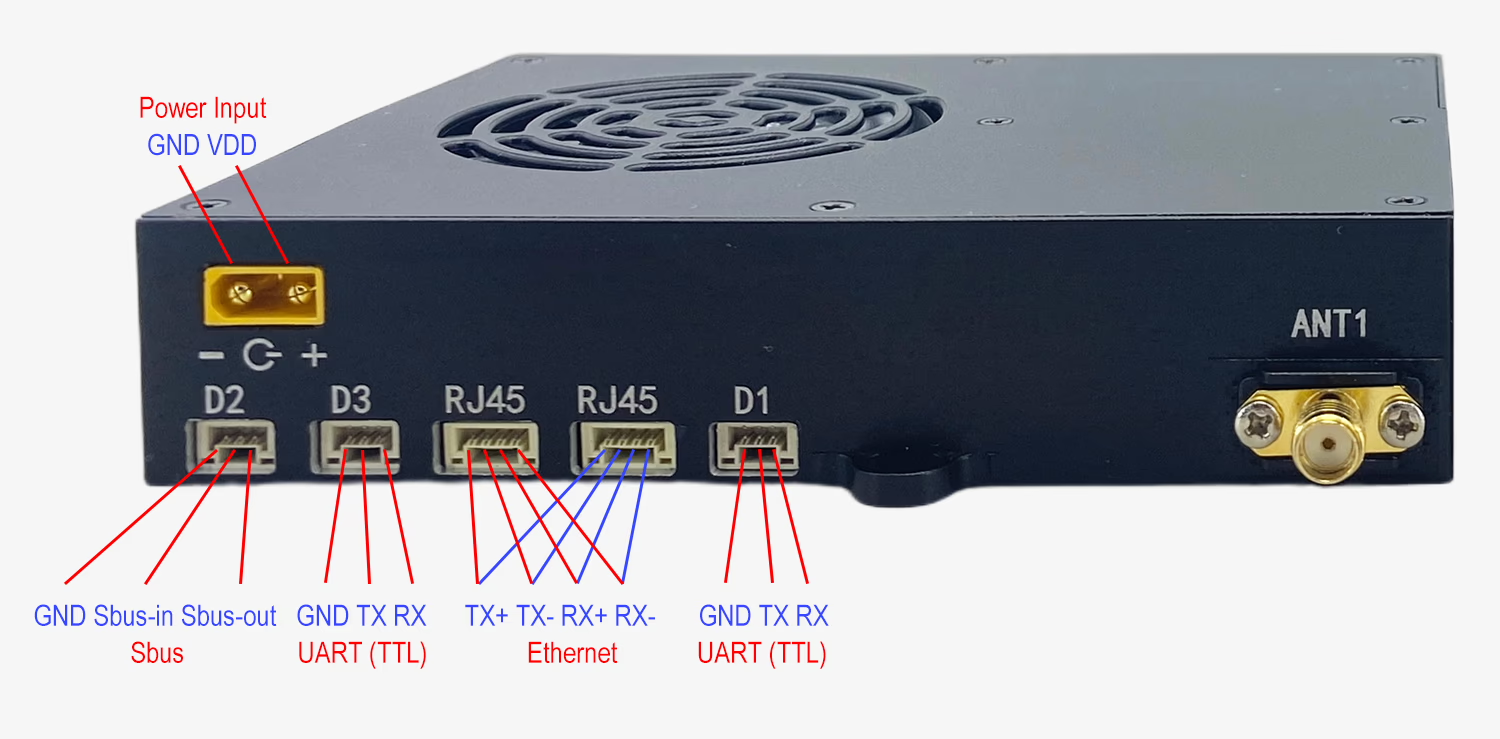
The transceiver includes multiple hardware interfaces to meet different integration requirements:
-
2 × RJ45 Ethernet Ports – Transparent IP transmission for video, data, or control.
-
2 × UART Serial Ports (TTL, optional RS232) – For telemetry or command signals.
-
1 × SBUS Interface – Compatible with remote-control systems.
-
Power Input: 24–32 V DC via XT30PW-M connector.
This flexible interface design makes it suitable for vehicle-mounted, airborne, or ground-based applications.
8. Dual-Antenna MIMO Technology
The 2T2R MIMO (two-transmit, two-receive) architecture enhances throughput, link stability, and spectral efficiency. The main and auxiliary antennas, connected via SMA ports, allow spatial diversity and better resistance to multipath effects common in race environments with reflective surfaces.
9. Advanced Security and Encryption
To protect valuable live footage and confidential telemetry, the system employs AES-128, SNOW 3G, and ZUC encryption algorithms. These ensure that all transmitted video and data are securely protected against unauthorized access or signal interception.
10. Web UI Configuration and Status Monitoring
Through an Ethernet connection, users can access a built-in Web UI for easy setup and real-time system monitoring. Parameters such as frequency, bandwidth, power level, and node status can be viewed and adjusted instantly. This interface also provides firmware upgrade options and network diagnostics.
11. Compact and Lightweight
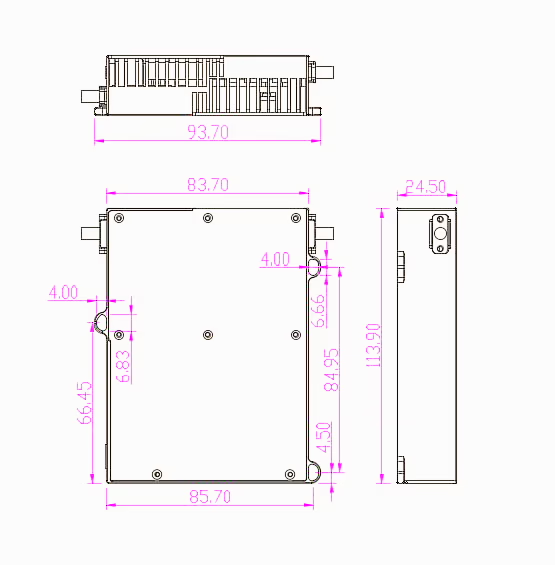
The device measures only 113.9 × 83.7 × 24.5 mm and weighs 255 grams, allowing easy integration inside race cars, broadcasting vehicles, or camera rigs. Despite its small size, it delivers enterprise-grade communication performance.
12. Energy Efficient and Reliable
Operating at 24–30 V DC with typical power consumption under 23 W per node, the system offers long-term stability and minimal heat generation. The efficient design ensures reliable operation under continuous load, even in high-temperature environments.
LED Indicators
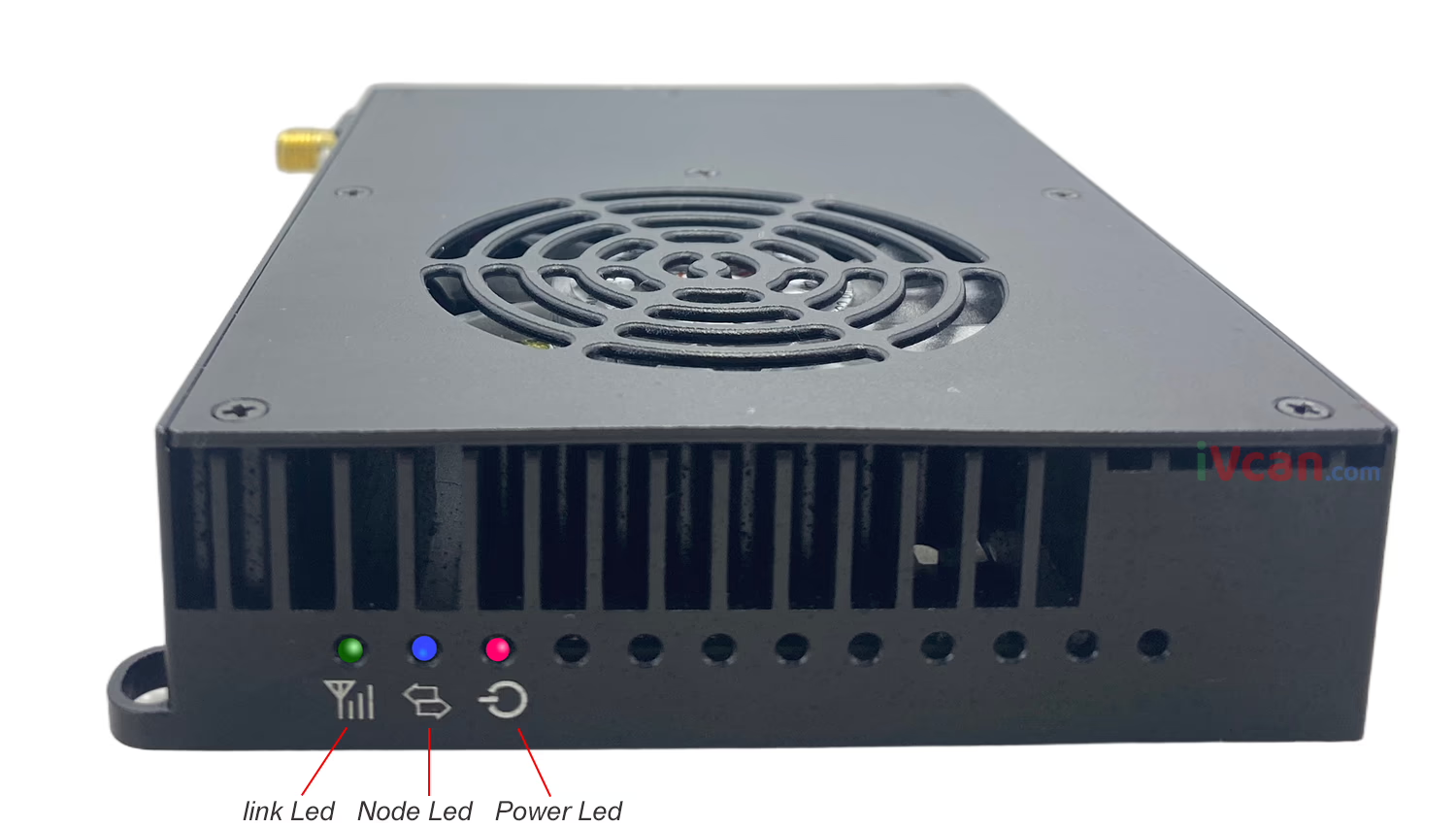
- Power LED (Red): Constant ON when powered.
- Node LED (Blue): Constant ON for center node, blinking for client nodes.
- Link LED (Green/Orange/Red):
- OFF – No link
- RED – Weak signal
- ORANGE – Medium signal
- GREEN – Strong signal
Technical Specifications
| Category | Specification |
|---|---|
| Technology | TDD OFDM Radio |
| Networking Mode | Star Topology (default), up to 64 nodes |
| Data Rate | Up to 100 Mbps (bidirectional) |
| Frequency Band | 566-678MHz and 1420–1530 MHz (customizable) |
| Range | Up to 22 km (LOS) |
| Transmit Power | 2 × 5 W PA |
| Receiver Sensitivity | −95 dBm @ 20 MHz bandwidth |
| Bandwidth Options | 3 / 5 / 10 / 20 / 40 MHz |
| Interfaces | 2 × RJ45 Ethernet, 2 × UART (TTL or RS232), 1 × SBUS |
| Security | AES128 / SNOW3G / ZUC |
| Power Supply | 24–32 V DC |
| Power Consumption | < 23 W per node |
| Dimensions | 113.9 × 83.7 × 24.5 mm |
| Weight | 255 g |
| Antenna Connectors | SMA × 2 (MIMO) |
Applications
1. Car Racing Live Broadcast
This radio system is engineered for motorsport broadcasting scenarios where multiple high-speed vehicles transmit live video simultaneously.
-
Each car carries a transmitter that sends HD video and telemetry to the central receiver.
-
The receiver aggregates all signals for the broadcast control center.
-
Perfect for track racing, rally, drifting, and endurance events.
-
Provides real-time camera feeds for dynamic multi-angle coverage.
2. Outdoor Event Coverage
Ideal for large outdoor concerts, marathons, or cycling races where wired connections are impossible. Multiple transmitters can capture live views and send them to a production vehicle or media center within 22 km.
3. Mobile Video Surveillance
Provides stable wireless video and data transmission for temporary event security or surveillance systems. The encrypted radio link ensures reliable real-time monitoring without external infrastructure.
4. Industrial Monitoring
Used for mobile robots, autonomous vehicles, or remote camera systems that require high-speed data streaming within a limited coverage area.
Performance in Real Racing Environments
During a typical racing event, each car is equipped with an onboard camera system connected to the Vcan1806 radio link transceiver. The device transmits real-time HD video, driver audio, and telemetry data directly to a ground receiver located at the control tower or broadcast truck.
Even when cars move at high speed and enter temporary shadow zones, the dual-antenna MIMO design ensures quick link recovery and minimal frame loss. The star-network structure allows every car’s data to be sent to the same central receiver, simplifying synchronization and post-production workflow.
The result is a smooth, low-latency, high-definition broadcast feed, perfectly synchronized with timing and scoring systems—ensuring audiences enjoy seamless live coverage from multiple camera angles.
Why Choose the Vcan1806 Radio link for Broadcast Use
-
Purpose-Built for Dynamic Mobility:
Designed for high-speed vehicular movement, vibration, and variable link distance. -
Low-Latency HD Transmission:
End-to-end latency below 50 ms (typical), ensuring real-time broadcast synchronization. -
Flexible Network Architecture:
Supports point-to-point, point-to-multipoint, relay / repeater, and star networking with up to 64 active links. -
Enhanced Stability and Anti-Interference:
Advanced OFDM waveform and frequency-hopping algorithm minimize packet loss and interference issues. -
Superior Signal Penetration:
2×5 W PA output extends coverage and reduces dead zones caused by obstacles or terrain. -
Compact Design for On-Vehicle Integration:
Small footprint fits easily in tight vehicle spaces without adding significant weight. -
Future-Proof Security:
Multiple encryption protocols keep transmissions safe for private or commercial events. -
Simple Deployment and Management:
Plug-and-play setup via Web UI and automatic network configuration reduce technical effort on-site.
Example Deployment
-
Transmitter Setup: Each car installs a Vcan1806 unit connected to its HD camera and telemetry computer.
-
Receiver Station: A central ground unit equipped with directional or omnidirectional antennas collects all streams.
-
Network Management: The receiver assigns frequencies and priorities automatically to maintain a balanced load.
-
Output: All video feeds are aggregated into the broadcast system for real-time mixing or live streaming.
Security and Reliability
For professional broadcasting, signal integrity and data protection are essential.
The Vcan1806 employs AES-128 encryption combined with custom key management to prevent unauthorized decoding.
Its error-correction and adaptive bitrate features ensure video continuity even when bandwidth fluctuates due to interference or movement.
The system’s high sensitivity (−95 dBm @ 20 MHz) enables strong performance in non-line-of-sight conditions, such as urban tracks or hilly terrains.
Comparison with Traditional Solutions
| Feature | Vcan1806 Radio Link | Conventional Wi-Fi / Analog Link |
|---|---|---|
| Data Rate | Up to 100 Mbps bidirectional | Typically 20–30 Mbps (one-way) |
| Range | Up to 22 km (LOS) | Under 2 km |
| Network Type | Star P2P P2MP(adaptive) | Single link only |
| Latency | < 50 ms | > 200 ms |
| Security | AES128 / ZUC / SNOW3G | Weak / none |
| Nodes | Up to 64 | 1 Tx + 1 Rx |
| Reliability | High (MIMO + FEC + FHSS) | Moderate |
| Integration | Professional I/O interfaces | Limited |
This comparison highlights why the Vcan1806 is the preferred choice for professional broadcast applications, providing superior range, throughput, and security in a compact package.
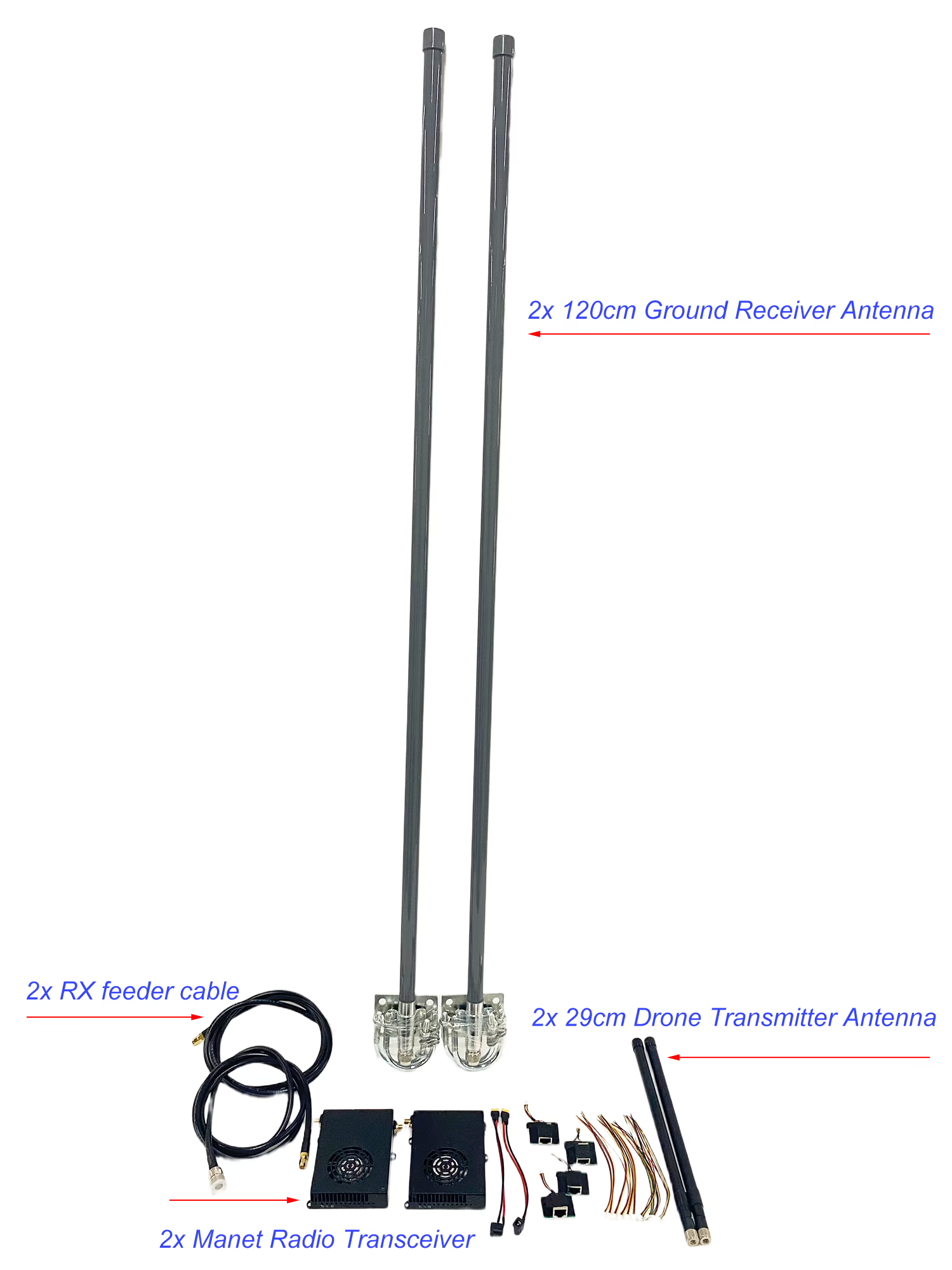
Accessories and Complete Set
Each full set includes:
-
2 × Vcan1806 Radio link Unit (at least 2 nodes, one as transmitter, one as receiver)
-
4 × High-gain Antennas (SMA) (two antennas for transmitter and two antennas for receiver)
-
2 × Power Cable (XT30PW connector)
-
2 × Ethernet Cable
-
2 × Mounting Bracket or Vehicle Fixing Kit
-
User Manual and Configuration Guide
Optional accessories include external directional antennas, battery packs, and video encoders for multi-camera integration.
Conclusion
The Vcan1806-100Mbps-64Nodes-22Km is a next-generation wireless communication system tailored for the unique requirements of car racing broadcasting and other dynamic live events. Its combination of high bandwidth, long range, secure encryption, and multi-node scalability delivers a professional-grade solution for real-time HD video and data transmission.
From multi-angle camera feeds to real-time telemetry and race control, this radio system ensures every signal arrives on time, without delay or dropout. Compact, powerful, and efficient, it represents the ideal core technology for modern motorsport broadcast systems and mobile media production networks.
Key Benefits at a Glance
-
100 Mbps bidirectional HD transmission
-
22 km air-to-ground coverage
-
Supports up to 64 transmitting nodes
-
Dual 5 W power amplifiers for strong signal strength
-
Low-latency performance for real-time broadcast
-
Advanced encryption for data security
-
Compact, lightweight, and energy-efficient design
How to choose the Radio link Default configuration
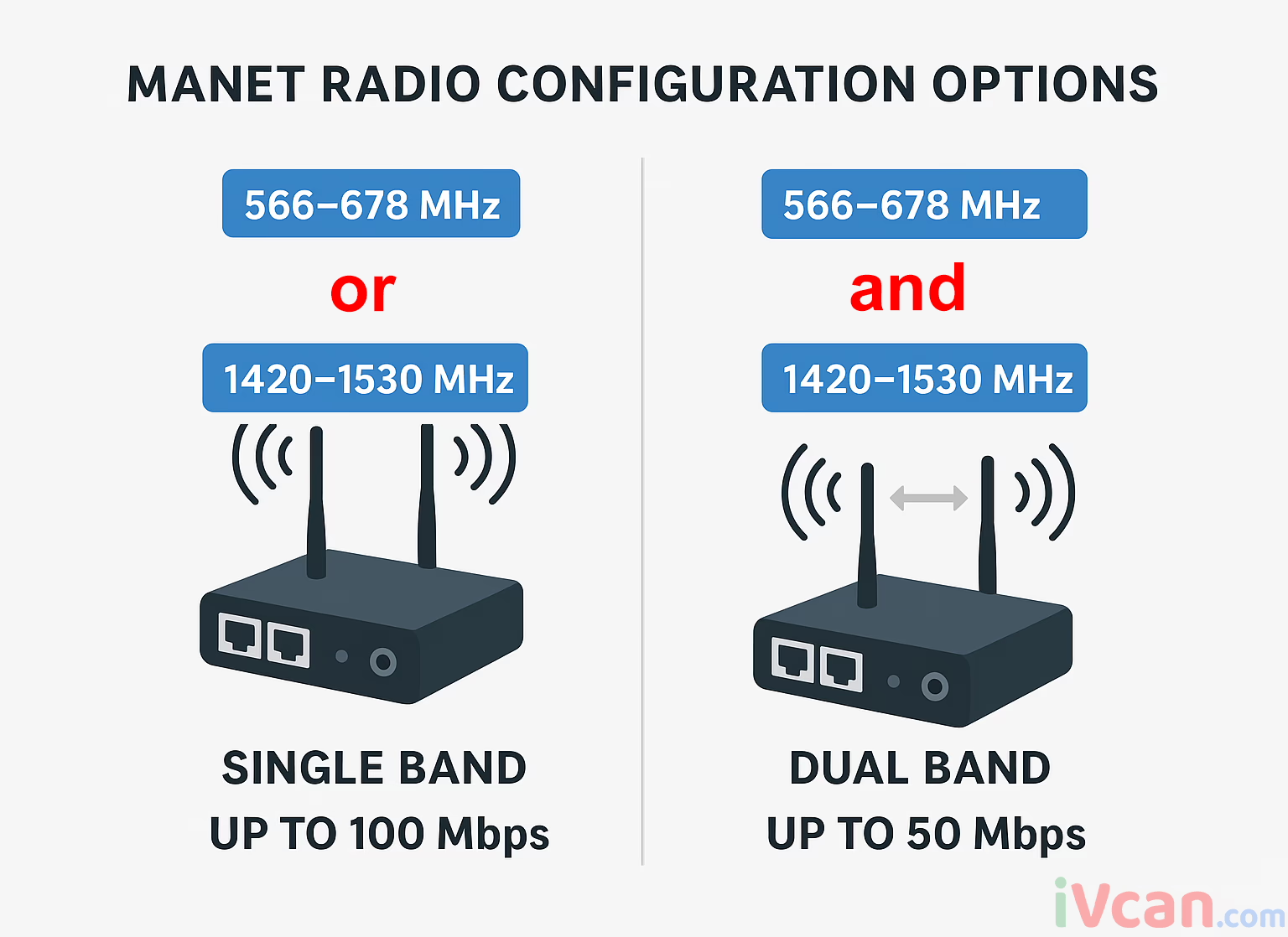
Our radio link can be configured in two different ways depending on the customer’s priority: high data rate or strong anti-interference.
-
Single band configuration (566–678 MHz or 1420–1530 MHz):
In this mode, the radio uses only one band. It can achieve the maximum throughput of 100 Mbps (50+50 Mbps up/down). This option is best if the main requirement is high speed. -
Dual band configuration (566–678 MHz and 1420–1530 MHz):
In this mode, the radio supports cross-band frequency hopping. If one band suffers interference, the system automatically switches to the other band. This provides stronger anti-jamming performance, but the maximum data rate is limited to 50 Mbps.
In short:
-
Choose single band → up to 100 Mbps, best for high data rate.
-
Choose dual band → up to 50 Mbps, best for reliability and interference resistance.
Dimension
Full set Accessory


iVcan.com –
I saw your videos on YouTube. I am interested in wireless audio+video transmission. Please send me some details of your TX-RX solutions for analog cameras as well as data. If you could share some data sheets, it would be nice. The size of TX and power consumption is also important for our purposes. Waiting for your reply.