






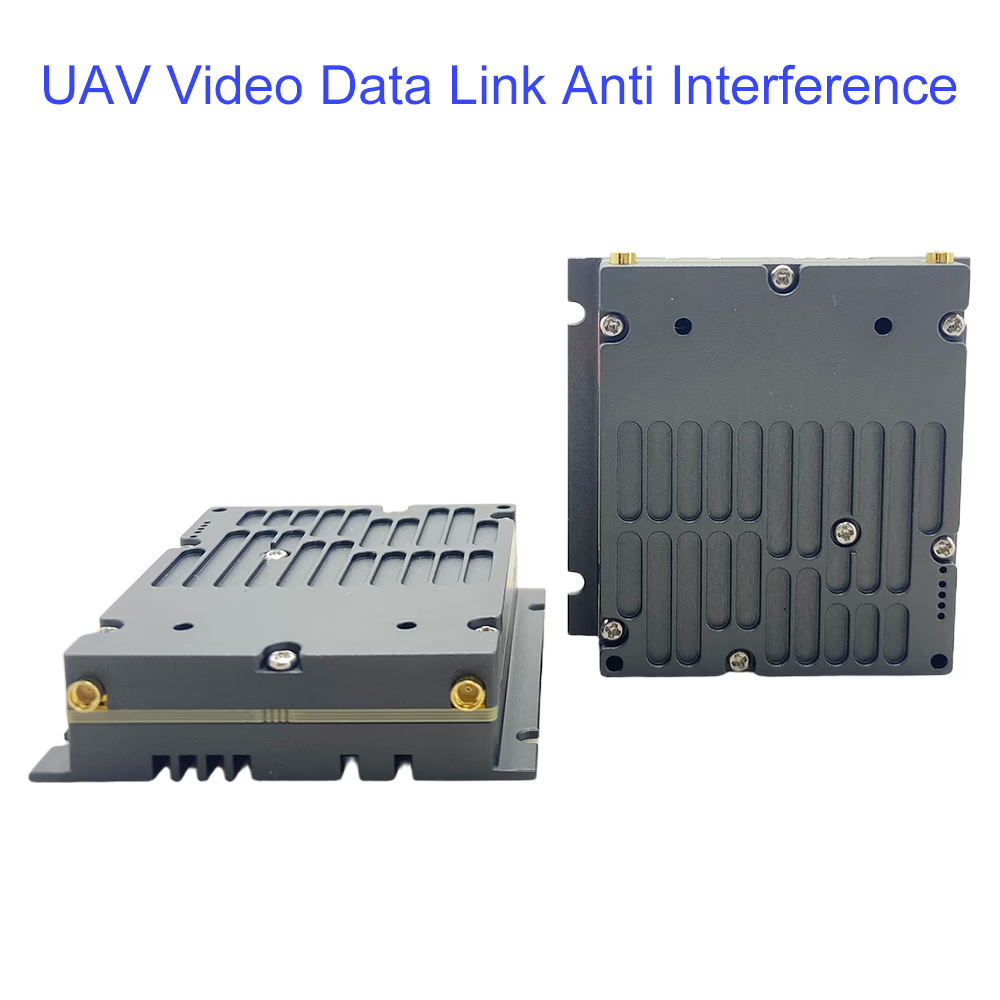
UAV Video Data Link Anti Interference
Table of Contents
Overview
From the perspective of a professional UAV wireless link factory, this is a new generation of high-reliability integrated video and data transmission modules, specifically engineered for industrial and mission-critical unmanned systems operating in harsh and electromagnetically complex environments.
It integrates high-definition video transmission and bidirectional data communication into a compact, lightweight module. It can be flexibly deployed as an airborne payload for various UAV platforms or configured as a ground station unit mounted on vehicles, tripods, or fixed installations.
As industrial UAV operations expand into urban areas, power facilities, emergency response zones, border regions, and contested electromagnetic environments, wireless links are increasingly exposed to:
-
Broadband noise interference
-
Pulse and burst electromagnetic interference
-
Co-channel and adjacent-channel interference
-
Mixed intentional and unintentional jamming
-
Dynamic spectrum congestion
Traditional fixed-modulation data links struggle under such conditions. It is purpose-built to address these challenges by incorporating advanced interference-resistant algorithms, adaptive modulation and demodulation, and real-time link quality assessment, allowing the system to predict, avoid, and mitigate interference dynamically.
Extensive field testing has proven that VCAN2111 can significantly improve link stability, throughput, and reliability compared with conventional UAV wireless links, even in environments with severe electromagnetic pollution.
Features
1. Outstanding Anti-Interference Capability
The core advantage of VCAN2111 lies in its strong resistance to electromagnetic interference, making it suitable for operation in extremely complex RF environments.
Key anti-interference technologies include:
-
Adaptive modulation and coding (AMC)
-
Intelligent interference detection and avoidance
-
Dynamic link adaptation based on real-time channel conditions
-
Robust forward error correction mechanisms
-
Optimized RF filtering and shielding at hardware level
These technologies allow the system to maintain stable communication under:
-
Broadband interference
-
Narrowband jamming
-
Pulsed electromagnetic noise
-
Mixed interference scenarios
2. Adaptive Modulation & Demodulation
VCAN2111 supports QPSK, 16QAM, 64QAM, and 256QAM, with fully automatic adaptive switching based on:
-
Signal-to-noise ratio (SNR)
-
Interference intensity
-
Link distance
-
Environmental dynamics
This ensures:
-
Maximum throughput when channel conditions are good
-
Maximum robustness when interference increases
The adaptive algorithm continuously optimizes performance without operator intervention.
3. Ultra-Low Latency Transmission
Latency is critical for UAV control, real-time video monitoring, and autonomous decision-making.
VCAN2111 is optimized for ultra-low end-to-end latency, making it ideal for:
-
FPV and ISR drones
-
Real-time surveillance and inspection
-
Precision control and navigation
Low latency is maintained even when adaptive modulation adjusts under interference conditions.
4. Integrated Video and Data Link
Unlike traditional systems that require separate modules for video and telemetry, VCAN2111 provides:
-
Integrated HD video transmission
-
Bidirectional data communication
-
Support for Ethernet, RS232, TTL, and SBUS
This reduces system complexity, weight, wiring, and power consumption.
5. Long-Range Communication Capability
With optimized RF design and high receiver sensitivity, VCAN2111 supports:
-
Communication distances of 30–50 km (line-of-sight)
-
Dual-channel transmission at 500 mW per channel
This makes it suitable for:
-
Long-range inspection drones
-
Fixed-wing UAVs
-
Ground-to-air and air-to-ground applications
6. Wide Operating Temperature Range
Industrial-grade components enable reliable operation across extreme temperatures:
-
Operating temperature: -40°C to +85°C
-
Environmental temperature: -40°C to +55°C
This ensures stable performance in deserts, high-altitude regions, cold climates, and harsh outdoor environments.
Specifications
| Parameter | Specification |
|---|---|
| Model | VCAN2111 |
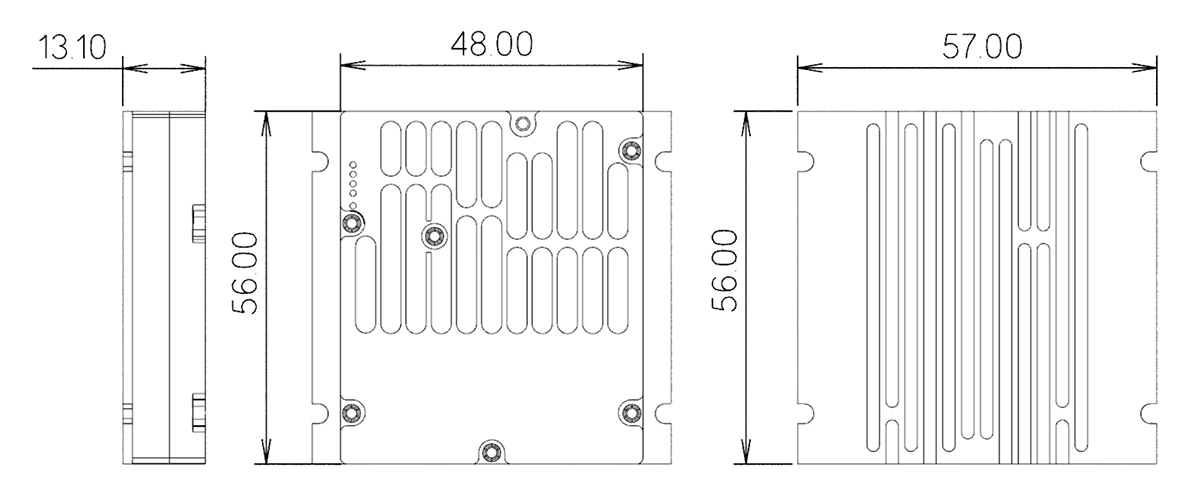
| Dimensions | 56 mm × 57 mm × 13 mm |
| Frequency Band | 1350 – 1450 MHz |
| Channel Bandwidth | 1.25 / 2.5 / 5 / 10 MHz |
| Modulation | QPSK / 16QAM / 64QAM / 256QAM (Adaptive) |
| Transmission Power | 500 mW per channel, dual-channel |
| Receiver Sensitivity | ≤ -103 dBm @ 5 MHz |
| Data Rate | Up to 28 Mbps @ 10 MHz |
| Communication Distance | 30 – 50 km (LOS) |
| Power Supply | DC 7–30 V |
| Typical Consumption | 12 V @ 1 A |
| Peak Power Consumption | ≤ 9.5 W |
| Antenna Interface | MMCX × 2 |
| Operating Temperature | -40°C to +85°C |
| Environmental Temperature | -40°C to +55°C |
Interfaces & Connectivity
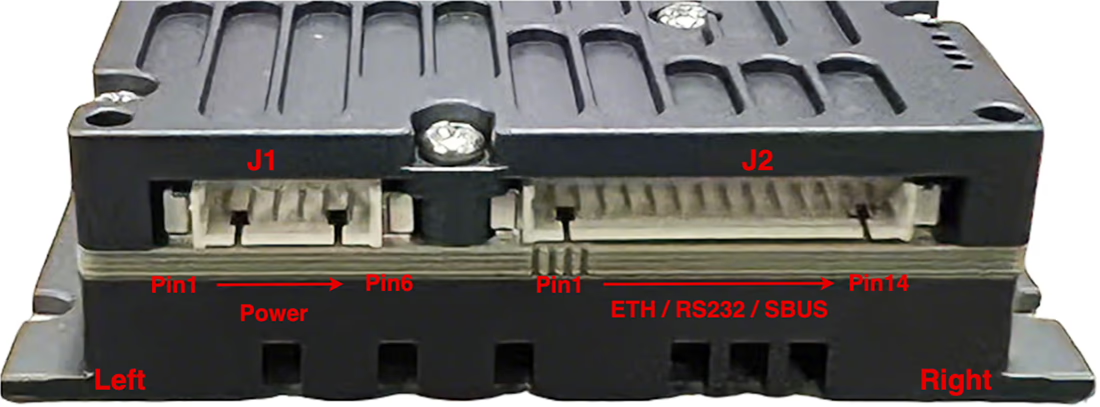
VCAN2111 is designed for maximum integration flexibility.
Power Interface (J1)
-
Connector: HC-1.25-6PWT
-
Pins 1–3: VCC
-
Pins 4–6: GND
Data Interface (J2)
-
Connector: HC-1.25-14PWT
-
Ethernet (100M / 10M)
-
RS232 (dual channel)
-
TTL serial
-
SBUS interface
This wide range of interfaces allows seamless integration with:
-
UAV flight controllers
-
Gimbals and cameras
-
Ground control stations
-
Embedded computing platforms
| Interface Name | Interface Function | Connector Specification | Pin Assignment
(From Left to Right) |
| J1: Power | Power Supply Interface | HC-1.25-6PWT | Pin1~Pin3: VCC,
Pin4~Pin6: GND, |
| J2: Transmission Interface | Ethernet port/RS-232/SBUS/TTL | HC-1.25-14PWT | Pin1: 4V
Ethernet port(Pin2~Pin5) Pin2: TX- Pin3: TX+ Pin4: RX- Pin5: RX+ RS232(Pin6~Pin9) Pin6: 232_TX0 Pin7: 232_RX0 Pin8: 232_TX1 Pin9: 232_RX1 (Pin10~Pin11) Pin10: NC Pin11: NC SBUS(Pin12~Pin3) Pin12: SBUS_ RX Pin13: SBUS_ TX Pin14: GND |
Indicator LEDs
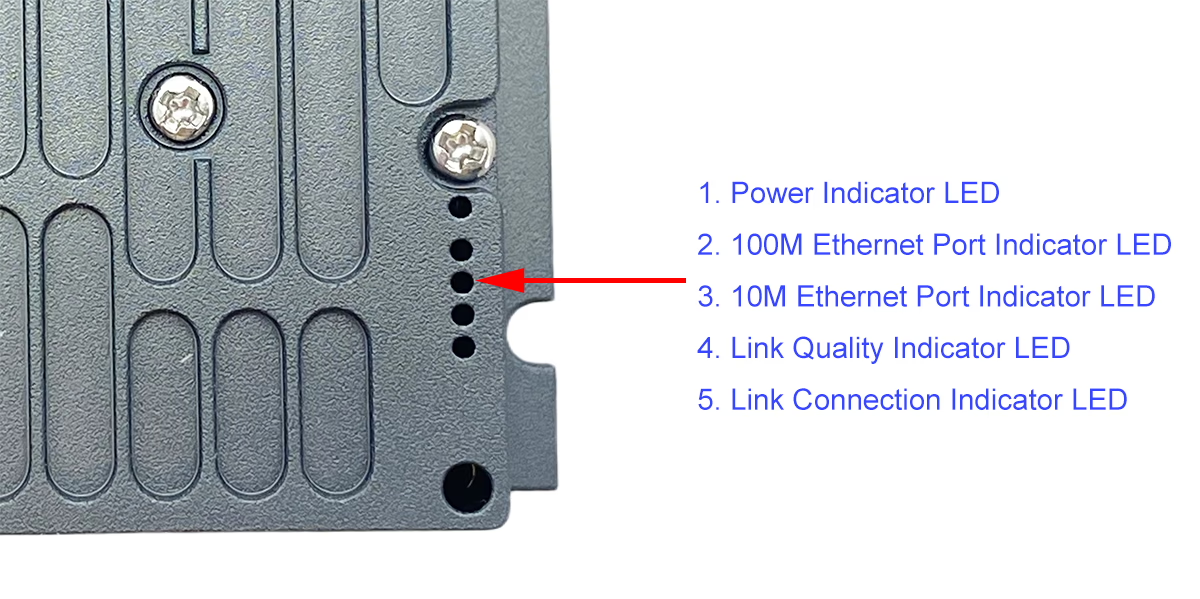
VCAN2111 includes intuitive LED indicators for real-time status monitoring:
-
Power status
-
Ethernet connection speed
-
Link quality (green / yellow / red)
-
System and fault indication
This simplifies installation, testing, and maintenance.
| Indicator Name | Color Status | Device Status |
| LED 1: Power Indicator | Green light steady | Power normal |
| LED 2: 100M Ethernet Port Indicator | Blinking | 100M Ethernet working |
| LED 3: 10M Ethernet Port Indicator | Blinking | 10M Ethernet working |
| LED 4: Link Quality Indicator | Green light steady | Connection normal – Quality excellent |
| Yellow light steady | Connection normal – Quality medium | |
| Red light steady | Connection normal – Quality poor | |
| Off | Link interrupted | |
| LED 5: Link Connection Indicator | Green light steady | Connected |
| Red light steady | Disconnected | |
| Red light blinking | System abnormal, or system restarting |
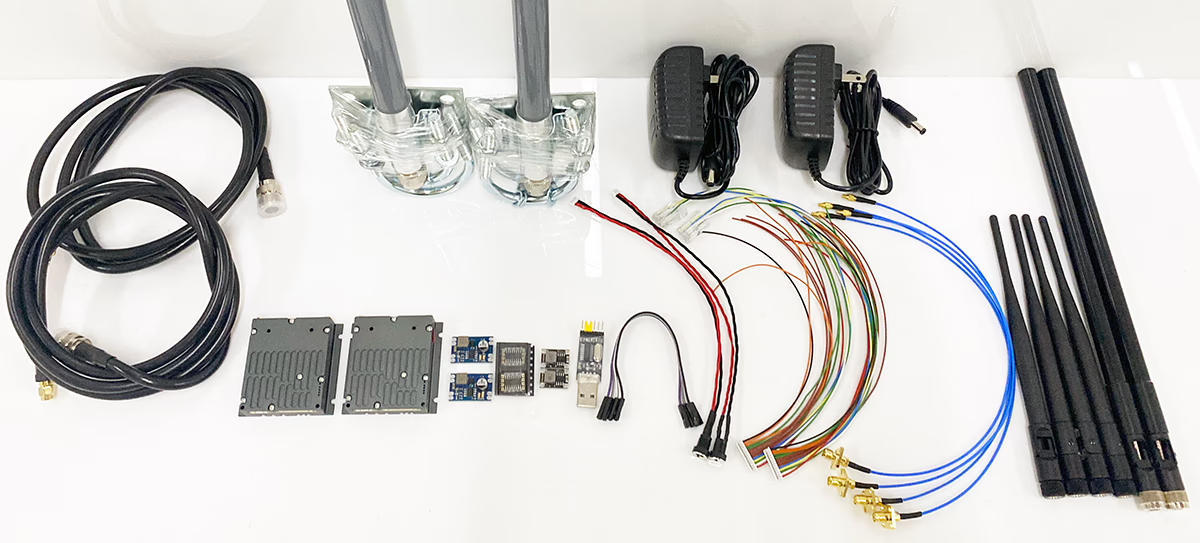
How to connect the drone video data radio link with flight control and ground control station remote control
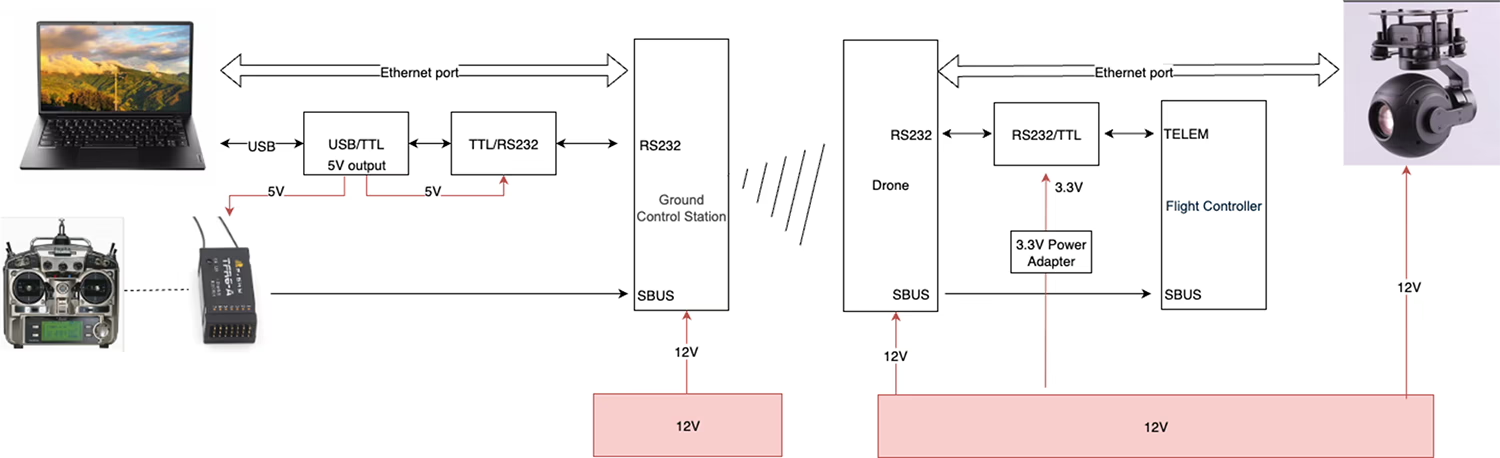
Material used
- 12V Power supply
- 3.3V Power Adapter(4.5V-30V input and 3.3V output)
- RS232 to TTL Module(3-5.5v input)
- TTL to USB Module
- 12V Module(13V-100V input)
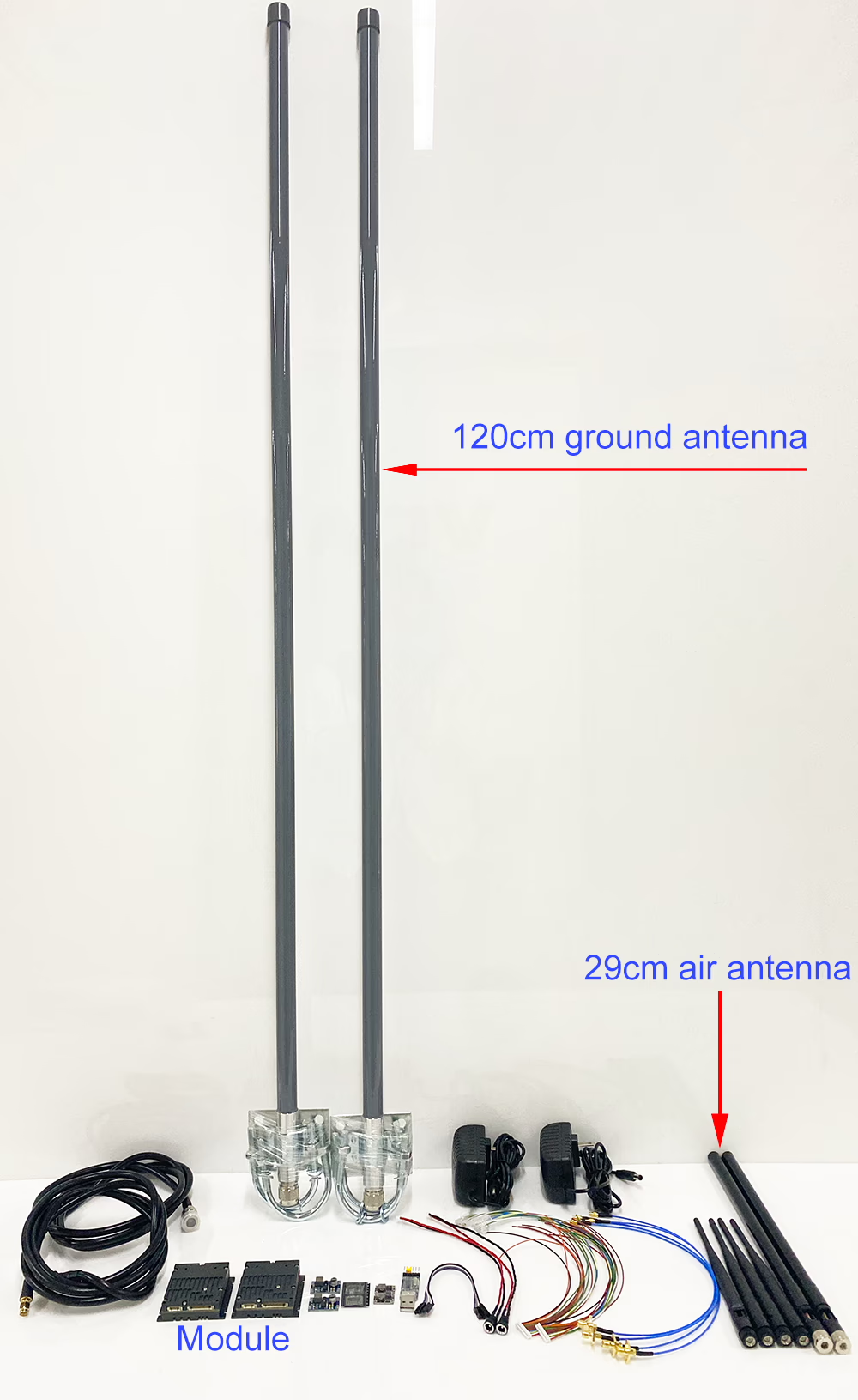
Accessory
Typical Applications
VCAN2111 is suitable for a wide range of professional and industrial scenarios:
UAV Applications
-
Industrial inspection drones
-
Power line and pipeline inspection
-
Mapping and surveying UAVs
-
Long-range fixed-wing UAVs
-
Emergency response and disaster monitoring
Ground & Vehicle Applications
-
Mobile command vehicles
-
Unmanned ground vehicles (UGVs)
-
Temporary communication relay stations
Complex Electromagnetic Environments
-
Urban areas with dense RF signals
-
Power substations and industrial zones
-
Border surveillance and security operations
-
Emergency and disaster-relief environments
Customization Options
As a professional wireless link factory, we offer extensive customization services:
-
Frequency band customization
-
Power output adjustment
-
Interface configuration
-
Firmware and protocol customization
-
Encryption and security options
-
Mechanical form-factor adaptation
OEM and ODM projects are welcome.
Frequently Asked Questions (FAQ)
Q1: Is VCAN2111 suitable for high-interference environments?
A: Yes. It is specifically designed for complex electromagnetic environments and features advanced anti-jamming algorithms.
Q2: Can it be used as both airborne and ground station equipment?
A: Yes. The same module can be configured for airborne or ground deployment.
Q3: Does it support long-range transmission?
A: Yes. It supports up to 30–50 km line-of-sight communication.
Q4: Can modulation be manually fixed?
A: Adaptive modulation is default, but fixed modes can be customized.
Our Factory Advantages
As a specialized UAV wireless link manufacturer, we provide:
-
In-house RF design and algorithm development
-
Full production line from SMT to system testing
-
Extensive field testing in real electromagnetic environments
-
Strict quality control and reliability verification
-
Long-term supply stability
Why Choose this model
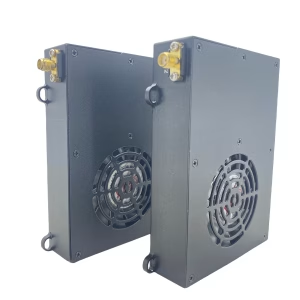
In environments with high electromagnetic interference or where counter-UAV systems may be in use, we recommend equipping your UAV with the Vcan2111-2x500mW module. This module utilizes advanced AI algorithms, offering superior performance compared to traditional frequency hopping, and ensures robust and stable communication even under challenging conditions.
Key advantages include:
-
High transmission power (2×500mW): Improves signal penetration and resistance to jamming.
-
Enhanced reliability: Maintains stable links in electromagnetic-intensive environments.
-
Optimized for counter-UAV scenarios: Reduces the risk of communication loss when facing interference or signal suppression.
Using this module helps ensure that your UAV can operate safely and effectively, maintaining critical data links even in hostile or complex EM environments.
VCAN2111 is not just a wireless module—it is a mission-ready communication solution engineered for the most challenging electromagnetic environments.
If you are looking for stable, secure, and interference-resistant UAV wireless links, VCAN2111 is the professional choice.




iVcan.com –
The VCAN2111 offers outstanding stability and incredibly low latency for transmitting video and data, even when dealing with difficult electromagnetic environments. Its light weight, reliability, and simple integration greatly improve the performance, safety, and operational efficiency of unmanned aerial vehicles in industrial and mission-critical contexts.