








Thermal Camera CVBS Output to USB UVC Converter Board for FPV Thermal Camera 2036
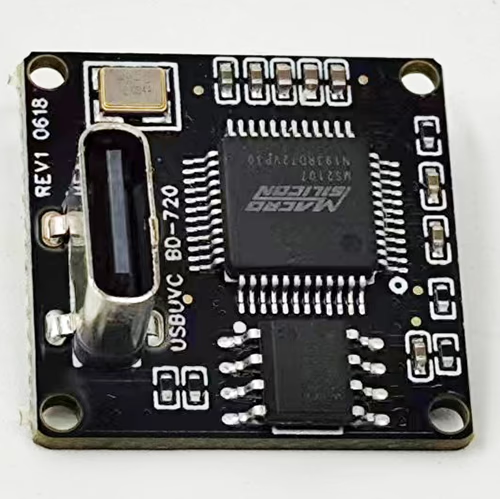
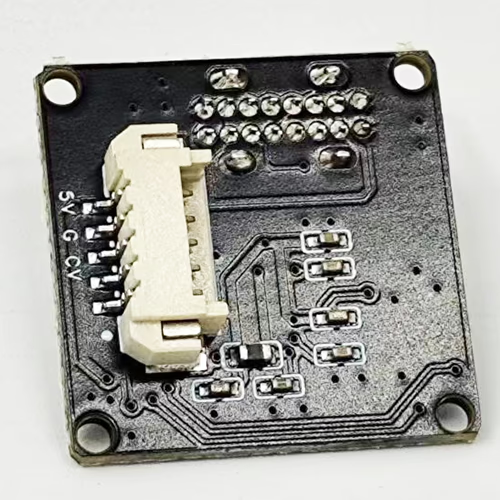
Converts thermal imaging analog composite CVBS video to USB UVC video output via a video adapter board

Based on the search results, a Thermal Camera CVBS Output to USB UVC Converter Board for FPV Thermal Camera 2036 is a specialized hardware device designed to convert analog video signals from thermal imaging cameras into digital USB UVC (USB Video Class) streams. This enables compatibility with modern devices like computers, smartphones, or digital FPV goggles. Below is a detailed breakdown of its function, technical basis, and compatibility:
Table of Contents
1. Core Function
-
CVBS to UVC Conversion:
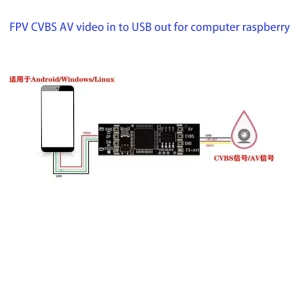
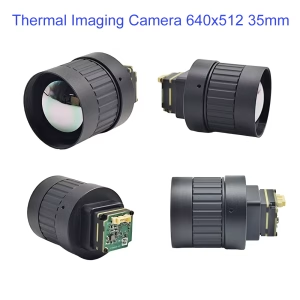
Thermal cameras like the FPV Thermal Camera 2036 often output analog video via CVBS (Composite Video Blanking Sync), typically in PAL/NTSC formats (e.g., 800×600 resolution). This converter board digitizes the analog CVBS signal and repackages it into USB UVC, a standardized protocol that allows plug-and-play video streaming without custom drivers. -
FPV Integration: By converting to UVC, the thermal video feed can be displayed on USB-compatible screens, smartphones (via OTG adapters), or digital FPV systems like HD goggles.

Application Scenarios
-
Industrial inspection – Connects analog thermal cameras to laptops or tablets via USB for monitoring electrical equipment, pipelines, and mechanical parts.
-
Medical and veterinary use – Enables thermal cameras to transmit real-time imaging to computers for diagnostics, rehabilitation, or animal health checks.
-
Firefighting and rescue – Integrates thermal cameras into portable computers for quick deployment during emergency search and rescue operations.
-
Security and surveillance – Allows legacy thermal CCTV cameras with CVBS output to be connected to modern NVRs or PCs through USB.
-
Drone and robotics – Converts analog thermal video from onboard cameras to USB for ground-station analysis or AI vision processing.
-
Research and education – Provides students and engineers with a cost-effective way to capture thermal video into PCs for experiments, software development, and algorithm training.
-
Military and law enforcement – Supports tactical operations by converting analog thermal sights or surveillance feeds into USB for digital recording and analysis.
Customizable options
-
Input compatibility – Support for different thermal camera CVBS standards (PAL / NTSC / SECAM).
-
Output interface – USB 2.0 / USB 3.0, Type-A or Type-C connectors.
-
Video resolution – Adjustable scaling (e.g., 480p, 720p, 1080p) depending on customer requirements.
-
Frame rate – Configurable frame output (15fps, 25fps, 30fps, etc.).
-
Board size & form factor – Can be customized for integration into compact devices or enclosures.
-
Power supply – USB-powered or external DC supply options.
-
Operating temperature range – Extended industrial or military-grade ranges.
-
Firmware functions – Custom UVC descriptors, OSD overlay, timestamp, or metadata embedding.
-
Driver support – Windows, Linux, Android, macOS compatibility per customer needs.
-
Enclosure design – bare PCB, aluminum housing, or ruggedized casing for harsh environments.
-
Additional interfaces – optional TTL/RS232 serial port for camera control.
-
Waterproofing & ruggedization – For field or outdoor applications.
-
Color palette options – pseudo-color conversion (iron bow, rainbow, gray scale, etc.).
-
Latency optimization – low-latency mode for real-time monitoring applications.


iVcan.com –
It is not a complete plug and play UVC thermal camera it is only the converter. I just need a simple thermal camera working with windows usb UVC as conventional web cameras.
iVcan.com –
This CVBS to UVC converter is an absolute game-changer for integrating my Thermal Camera 2036 into my FPV setup! The plug-and-play simplicity blew me away – literally connected the analog output to the board and plugged the USB into my goggles/computer, and bam, crystal-clear thermal video appeared instantly with zero driver hassle. The near-zero latency is perfect for real-time FPV flying, and the picture quality conversion is impressively clean and stable. No more finicky capture cards or complex software! It feels incredibly robust and reliable, making thermal FPV accessible and frustration-free. An essential, brilliantly executed little device that just works perfectly.