








FPV Analog Camera CVBS Video SBUS CRSF Data to optical fiber converter
Table of Contents
Feature
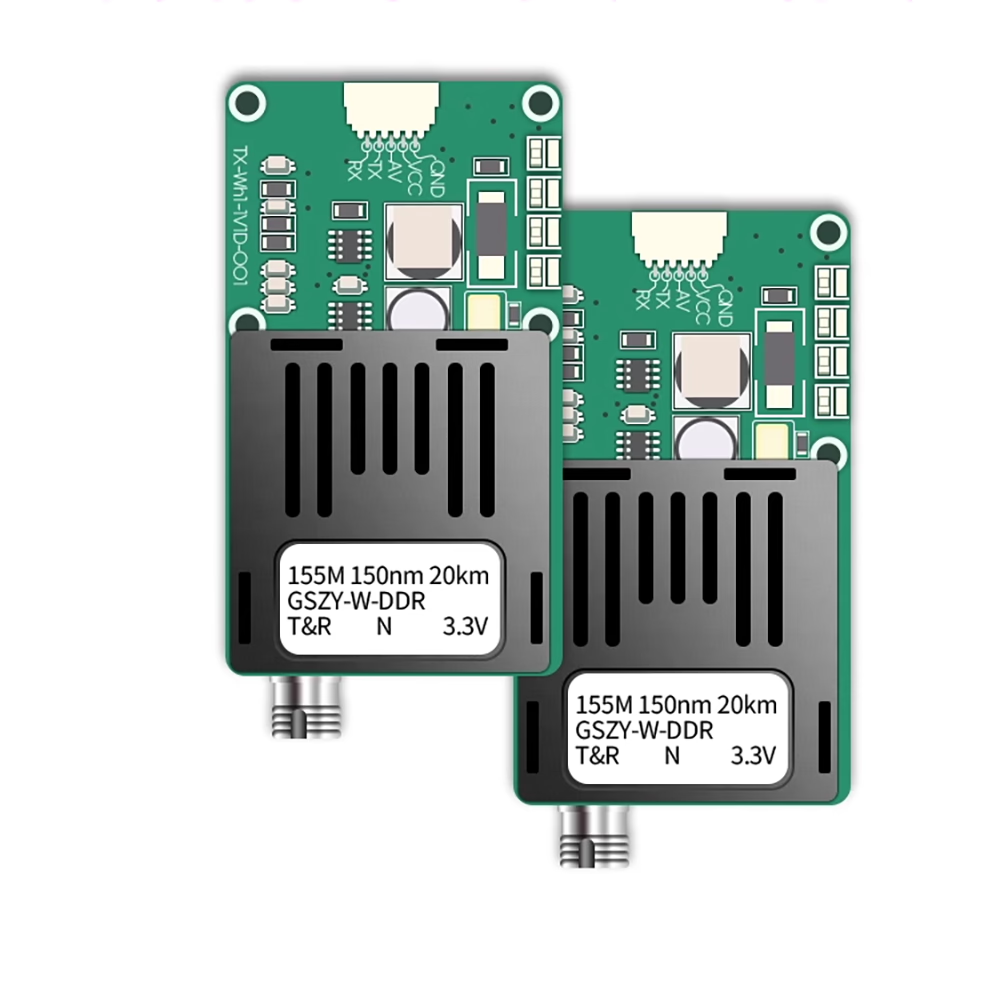
- Convert Analog Camera and CRSF Telemetry to Optical Fiber Ethernet Data Transceiver.
- Support 1-channel video + bidirectional 485/TTL/UART/SUBS fiber optic transmitter
- Video interface: BNC/RJ45/pin (1.54; 2.54 customized according to actual needs)
- Fiber optic interface: SC/FC/LC optional Transmission distance: 0-20 kilometers
- Video: Analog camera · CVBS camera Compatible with PAL NTSC SECAM video format
- Signals are transmitted via optical fiber
- Video input/output impedance: 752 (unbalanced)
- Video bandwidth 8MHZ
- Compatible with PAL, NTSC, SECAM video formats
- Video voltage: 1VP-P
- Video signal-to-noise ratio: 70dB
- Video format: default analog video, CVBS video, expandable CVI/TVI/AHD coaxial video, SDI/HDMI video, etc. (such as Sony/Panasonic), completely customized according to customer needs!
- Serial port: UART, TTLSUBS and other serial port signals can be customized upon request
- Baud rate: 115.2Kbps (baud rate can be customized upon request)
- Fiber optic interface: FC/LCPC standard optical module 1*9 or SFP package (guaranteed not to use laser replacement)
- Transmission distance: 0-20km
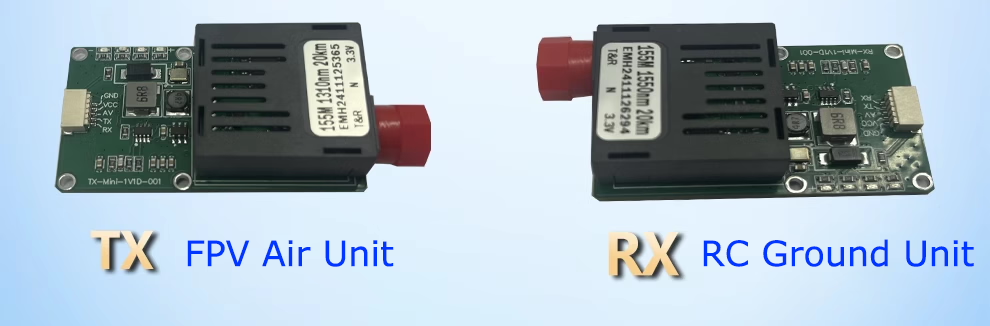
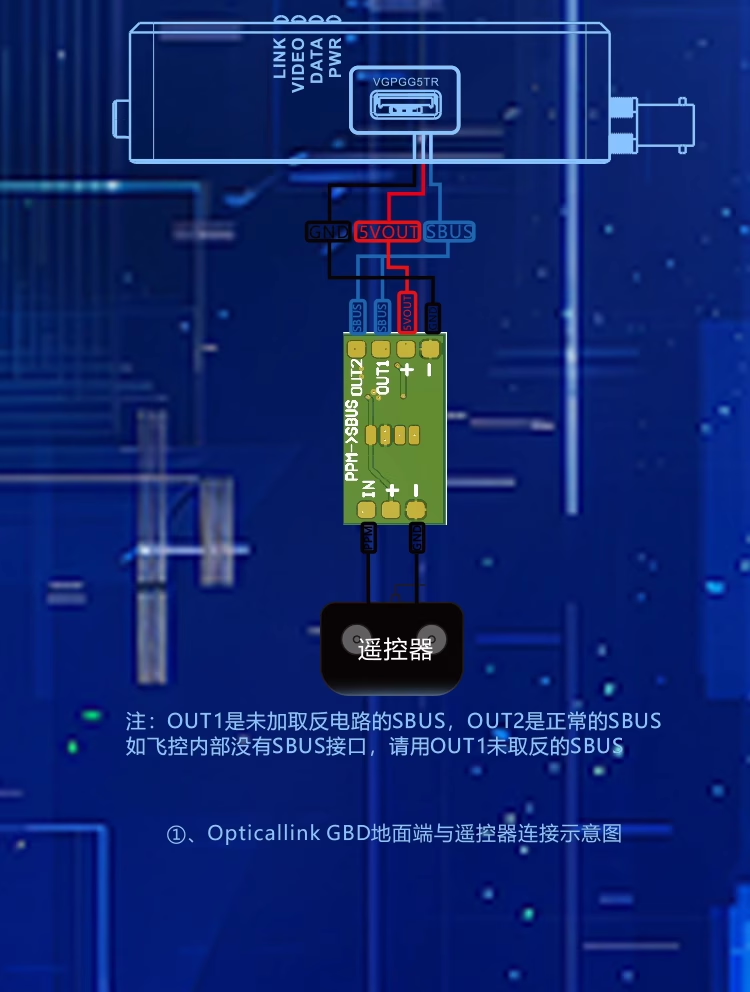
Converter Connector
| No | definition | Remark |
| 1 | CVBS video GND | Ground wire |
| 2 | Power supply 5-26V | Connect to power supply |
| 3 | CVBS video input | Connect VTX |
| 4 | CRSF TX/Sbus | Connect to flight control |
| 5 | CRSF RX | Connect to flight control |
| 6 | Connecting optical fiber | Connect to Optical Fiber Transceiver |
Connection
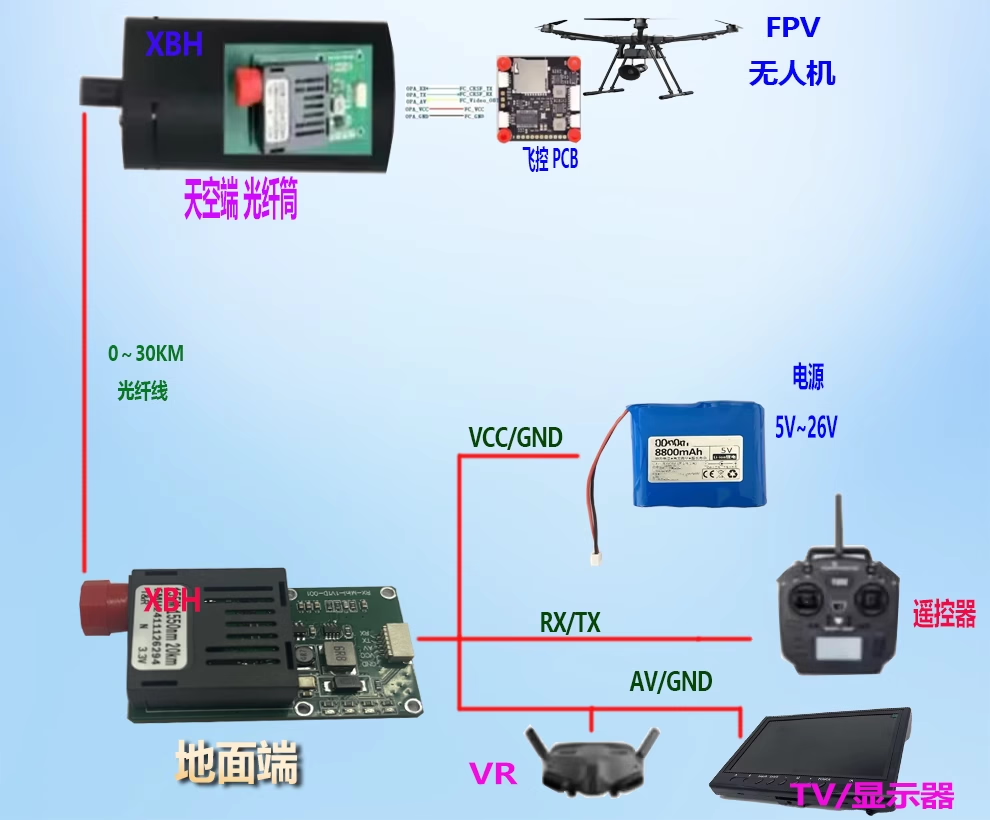
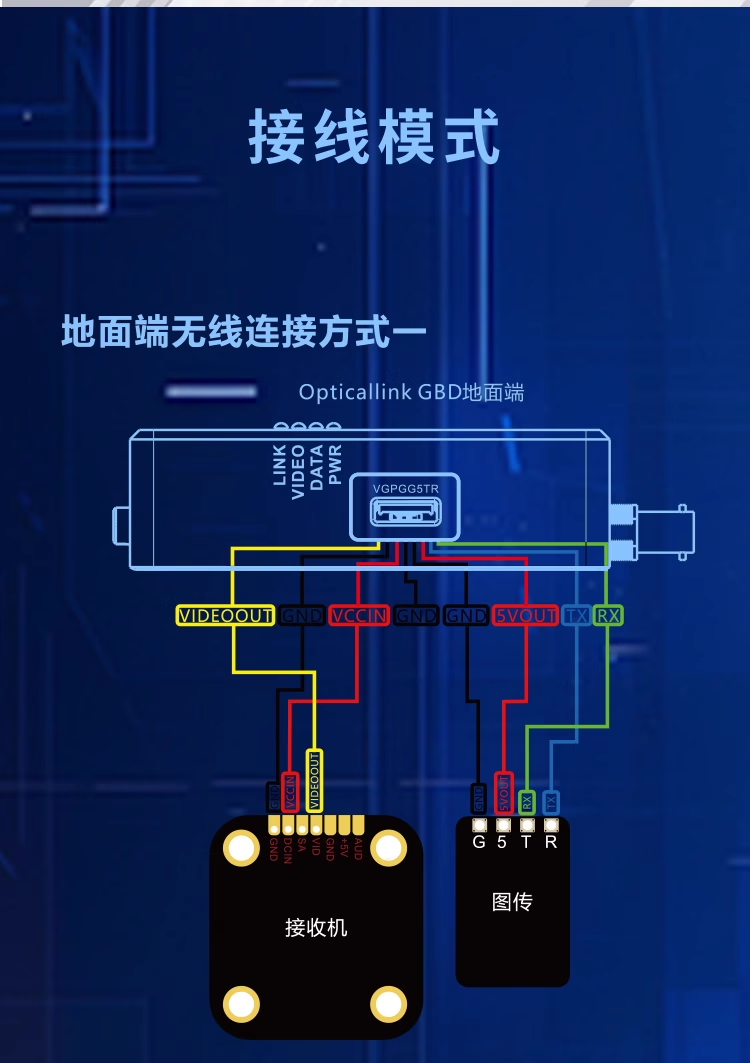
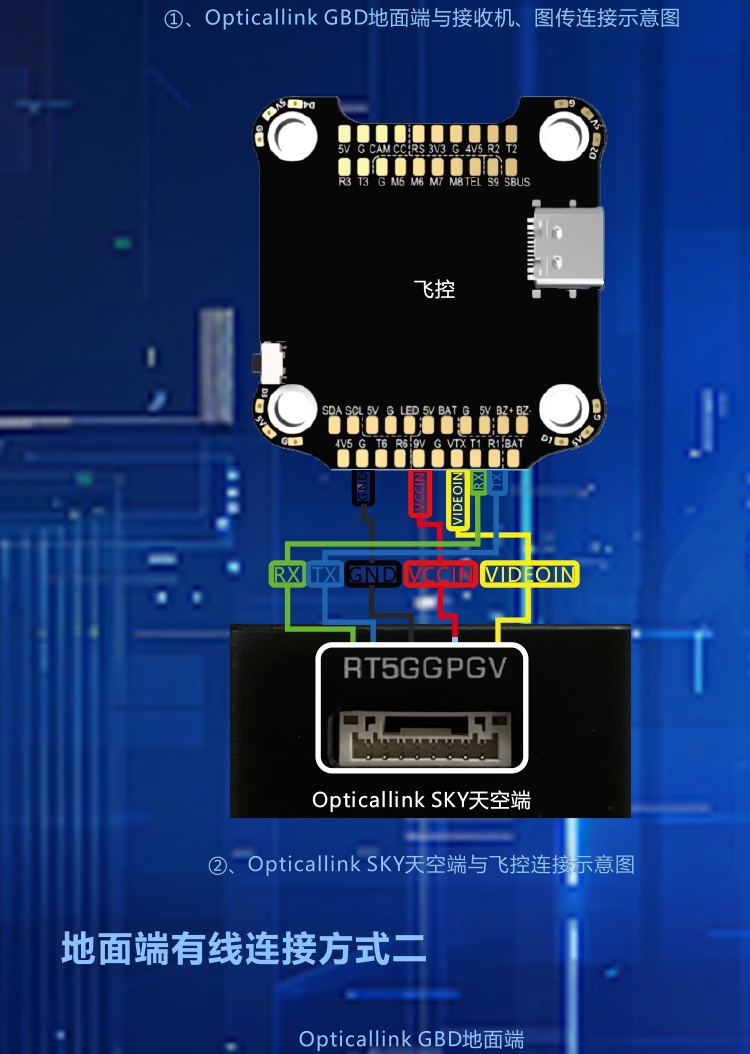
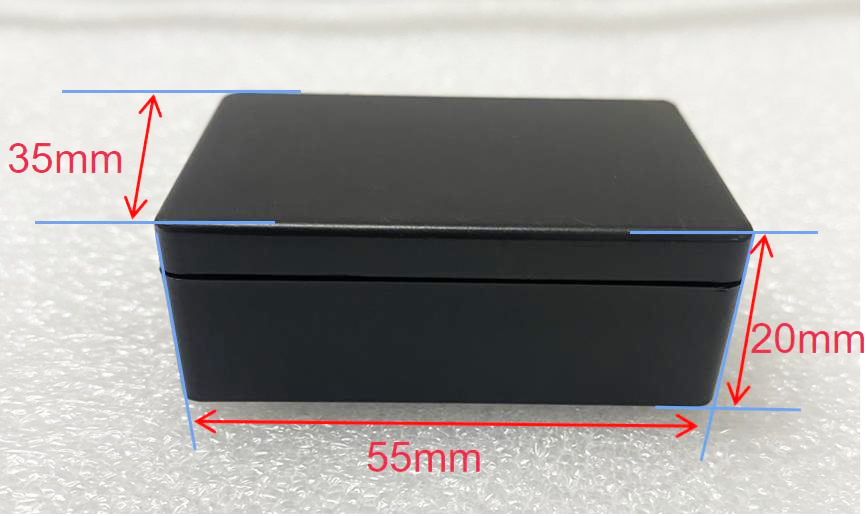
Size
FAQ
What is the FPV Analog Camera CVBS Video SBUS CRSF Data to Optical Fiber Converter?
This device converts analog CVBS video and SBUS/CRSF telemetry data from drones or cameras into optical fiber for long-distance, low-latency transmission.
Which video formats are supported by this converter?
It supports PAL, NTSC, SECAM, and is compatible with analog CVBS cameras, with options to expand to AHD, CVI, TVI, SDI, or HDMI formats.
What is the maximum transmission distance?
The converter supports optical fiber transmission up to 20 kilometers, ensuring stable long-range FPV video and data links.
Can this converter transmit both video and telemetry data simultaneously?
Yes, it supports 1-channel video along with bidirectional 485/TTL/UART/SBUS telemetry data over a single optical fiber link.
Which connectors are used for video input?
Video input uses BNC, RJ45, or pin connectors, which can be customized according to actual requirements.
What type of fiber optic interface does the device use?
It supports SC, FC, or LC fiber optic connectors and can be used with standard 1*9 or SFP optical modules.
Is the converter compatible with FPV drones?
Yes, it is specifically designed for FPV drones, supporting both TX FPV air units and RX RC ground units.
What is the video input impedance?
The video input and output impedance is 75Ω (unbalanced), ensuring high-quality signal transmission.
What is the video bandwidth of this converter?
The video bandwidth is 8MHz, suitable for standard analog CVBS video transmission.
What is the video signal voltage?
The default video voltage is 1VP-P, compatible with most analog cameras.
What is the video signal-to-noise ratio?
The signal-to-noise ratio is 70dB, providing clear and stable video output.
Can the serial port settings be customized?
Yes, UART, TTL, or SBUS serial ports can be customized, including baud rate adjustments up to 115.2Kbps.
Does it support bidirectional telemetry?
Yes, both TX and RX serial data signals are transmitted simultaneously over optical fiber.
What power supply is required for the converter?
The device works with a wide voltage range of 5V to 26V DC, making it suitable for most FPV systems.
Is the converter plug-and-play?
Yes, connectors are clearly labeled, and setup is straightforward without complex configurations.
Can this converter replace traditional coaxial video transmission?
Yes, using optical fiber significantly reduces signal loss and interference compared to traditional coaxial wiring.
Is it compatible with long-range drone flights?
Absolutely, the 20km optical fiber link ensures reliable video and telemetry for long-range FPV operations.
What applications is this converter suitable for?
It’s ideal for FPV drones, surveillance cameras, robotics, UAV telemetry, and long-distance video transmission projects.
Does it support high-definition analog video?
Yes, it can handle CVBS, and with customization, it supports higher-definition formats like AHD, CVI, or HDMI.
How durable is the converter for field use?
The device is compact and robust, suitable for outdoor FPV drone setups and long-term use.
Can multiple converters be connected in a network?
Yes, multiple units can be integrated to extend video and telemetry networks via optical fiber.
What is the latency of the conversion process?
The converter provides ultra-low latency, ensuring real-time video and telemetry feedback.
Does it support CRSF protocol?
Yes, CRSF telemetry is fully supported alongside SBUS data for advanced flight control integration.
Is the fiber optic module replaceable?
Yes, standard FC, SC, or LC modules can be replaced without affecting device performance.
Can it be used with standard BNC cameras?
Yes, standard analog CVBS cameras are fully compatible, making it versatile for existing setups.
Is the device lightweight for drone mounting?
Yes, it is designed to be compact and lightweight, minimizing impact on drone flight performance.
Can it be customized for specific projects?
Yes, the video interface, serial ports, and optical modules can all be customized to meet specific needs.
Does the converter require software installation?
No software is needed; it operates as a hardware plug-and-play solution.
What is the maximum video resolution supported?
It supports standard analog video resolutions and can be customized for HD analog formats depending on camera compatibility.
Can the converter work with multiple video sources?
Yes, with proper setup, it can handle multiple analog video channels using separate units or optical links.
Is the device weather-resistant?
While primarily for indoor/outdoor drone use, it should be protected from direct exposure to water or extreme weather.
Does it support telemetry for autonomous drones?
Yes, the bidirectional SBUS/CRSF telemetry ensures reliable communication for autonomous UAV control.
Can the converter integrate with existing FPV systems?
Yes, it is fully compatible with existing FPV setups, VTX, and flight controllers.
Is the converter suitable for long-range video streaming?
Yes, the optical fiber transmission ensures stable, long-distance video without degradation.
What is the advantage of optical fiber over coaxial cables?
Optical fiber minimizes signal loss, interference, and weight, providing clearer video and reliable telemetry over long distances.
Can the converter be used for industrial surveillance?
Yes, it can transmit analog CCTV video and control signals over optical fiber for industrial applications.
Does it support plug-and-play telemetry integration?
Yes, SBUS/CRSF connections are ready for direct integration with flight controllers.
What is the maximum power consumption?
Power consumption is low, optimized for FPV drone operations with minimal battery impact.
Can it handle high-noise environments?
Yes, optical fiber transmission is highly resistant to electromagnetic interference, ensuring stable data and video.
Is it compatible with DJI or similar camera systems?
Yes, with proper adaptation, it supports a wide range of analog and HD cameras, including DJI setups.
How is the video quality compared to traditional links?
Video remains crisp and clear with high SNR, often better than coaxial or wireless analog systems.
Can the converter be used in multi-drone operations?
Yes, each drone can have a dedicated converter for independent long-range video and telemetry links.
Does it support real-time flight control feedback?
Yes, the low-latency optical fiber link ensures real-time telemetry for precise drone control.
Is the fiber interface compatible with SFP modules?
Yes, standard SFP packages are supported for flexible integration with optical networks.
Can the converter transmit data over 10km reliably?
Yes, it supports optical fiber transmission distances up to 20km, ensuring long-range reliability.
Does it support both analog and digital video formats?
Primarily analog CVBS, but it can be customized to support AHD, CVI, TVI, SDI, and HDMI digital formats.
Is it easy to install on FPV drones?
Yes, compact design, labeled connectors, and lightweight form factor make installation straightforward.
Can it improve FPV signal stability in interference-heavy areas?
Absolutely, optical fiber eliminates RF interference, ensuring consistent video and telemetry.
What kind of maintenance does the converter need?
Minimal; just ensure connectors are clean and fiber modules are secure for optimal performance.
Does it support bidirectional communication for UAV control?
Yes, SBUS/CRSF data is transmitted both ways, allowing full control and telemetry feedback.
Is this converter suitable for hobbyist and professional FPV users?
Yes, its versatility, long-range capability, and customizable options make it ideal for both hobbyist and professional use.
An FPV Analog Camera CVBS Video SBUS/S.RSF Data to Optical Fiber Converter is a specialized device designed to transmit analog video signals (specifically CVBS format) and digital control data (SBUS or S.RSF protocols) over optical fiber. This setup is crucial in FPV (First-Person View) systems, such as drones or remote-controlled vehicles, where long-distance, interference-free transmission is required. Below is a detailed breakdown:
1. Core Components
-
CVBS Video:
Composite Video Broadcast Signal, an analog video format combining luminance (brightness), chrominance (color), and synchronization signals into a single channel. It is the standard output for analog FPV cameras. -
SBUS/S.RSF Data:
-
SBUS: A serial communication protocol (inverted UART) used in RC systems to transmit multiple control channels (e.g., throttle, steering) over a single wire.
-
S.RSF: Spektrum’s Remote Receiver Serial Format, similar to SBUS, used for low-latency control data transmission.
-
-
Optical Fiber Converter:
Converts electrical signals (CVBS video + SBUS/S.RSF data) into optical signals for transmission via fiber optic cables. This ensures immunity to electromagnetic interference (EMI) and enables long-range communication (kilometers).
2. Conversion Process
-
Signal Integration:
The converter merges CVBS video and SBUS/S.RSF data into a unified digital stream using multiplexing. For CVBS, an analog-to-digital converter (ADC) digitizes the video; SBUS/S.RSF data may be packetized directly. -
Optical Modulation:
A laser diode (e.g., VCSEL) converts the digital stream into light pulses transmitted through fiber optics. -
Reception & Demultiplexing:
At the receiver end, a photodiode converts light back to electrical signals, followed by demultiplexing to separate video and control data.
3. Key Technical Considerations
-
Latency:
Critical for FPV systems; optical fiber minimizes delay (<1 ms/km) but ADC/DAC stages add ~2–5 ms. Total latency must stay below 20 ms for real-time control. -
Bandwidth:
CVBS requires ~6 MHz bandwidth; SBUS/S.RSF uses low-bandwidth serial data. Fiber optics easily supports this, but multiplexing must avoid data collision. -
Noise Immunity:
Fiber optics eliminate ground loops and EMI, crucial in environments with motors/ESD (e.g., drones). -
Power Supply Isolation:
Use isolated DC/DC converters to prevent noise coupling from power sources.
4. Design Implementation
-
Circuit Architecture:
-
Video Path: CVBS → ADC (e.g., ADV7180 for SD video) → Digital multiplexer.
-
Data Path: SBUS/S.RSF → Level shifter (e.g., ADG3245) → Multiplexer.
-
Fiber Driver: Laser diode controller (e.g., MAX3737) with automatic power control.
-
-
Synchronization:
Time-stamping or hardware triggers align video and control data to prevent jitter.
5. Applications
-
Long-Range Drones: Transmit HD analog video and control data beyond 10 km.
-
Industrial Inspection: EMI-resistant video in high-noise environments (e.g., power plants).
-
Military/Medical Systems: Reliable transmission for critical missions.
6. Advantages vs. Traditional Wiring
| Parameter | Copper Cable | Optical Fiber Converter |
|---|---|---|
| Range | Limited (≤100 m) | Up to 20 km |
| EMI Immunity | Poor | Excellent |
| Data Security | Vulnerable to tapping | Difficult to intercept |
| Weight | Heavy (thick cables) | Lightweight |
7. Challenges & Solutions
-
CVBS Quality Degradation:
Use high-resolution ADCs (≥10-bit) and anti-aliasing filters. -
Control Data Errors:
Implement CRC checks in SBUS/S.RSF packets. -
Fiber Damage:
Reinforce cables with Kevlar jackets for rugged use.
Conclusion
This converter solves the core FPV challenges of range and interference by leveraging fiber optics. For deployment, prioritize:
-
Low-latency ADCs (e.g., sigma-delta type for high resolution).
-
Industrial-grade fiber transceivers.
-
Rigorous testing for synchronization between video/control paths. Applications span from consumer drones to mission-critical systems where signal integrity is non-negotiable.



iVcan.com –
I have been using the FPV Analog Camera CVBS Video SBUS CRSF Data to Optical Fiber Converter for several weeks, and it has exceeded my expectations. The device flawlessly converts analog CVBS video and telemetry data to optical fiber, providing ultra-stable long-distance transmission up to 20 kilometers. Setup is straightforward, connectors are clearly labeled, and compatibility with PAL, NTSC, and SECAM formats makes it highly versatile. The video quality is crisp, signal-to-noise ratio is excellent, and the bidirectional serial data transmission works seamlessly. This converter significantly improves my FPV drone system reliability, and the customizable features allow me to tailor it to my specific needs. Highly recommended for anyone requiring professional-grade video and data transmission via fiber optics.