








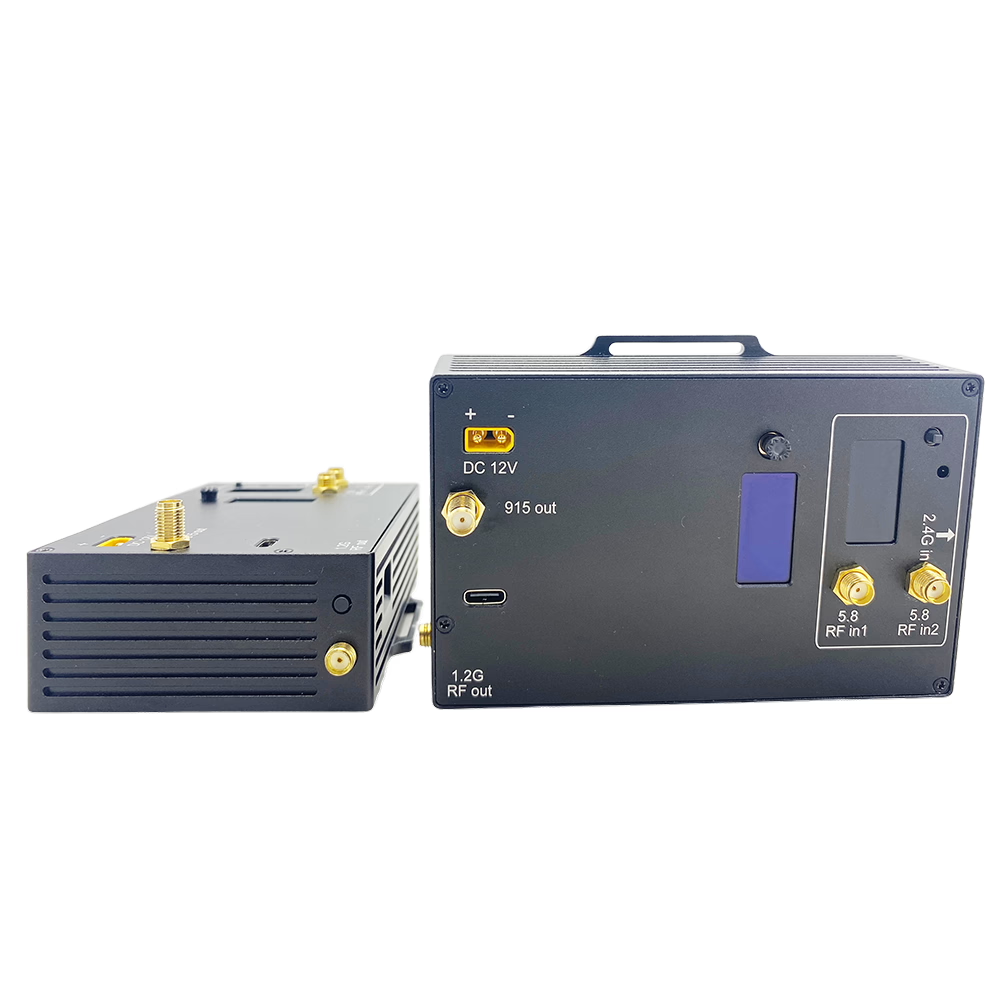
Analog FPV Drone repeater relay retransmitted data from 750Mhz to 915Mhz video from 5.8G to 3.3G

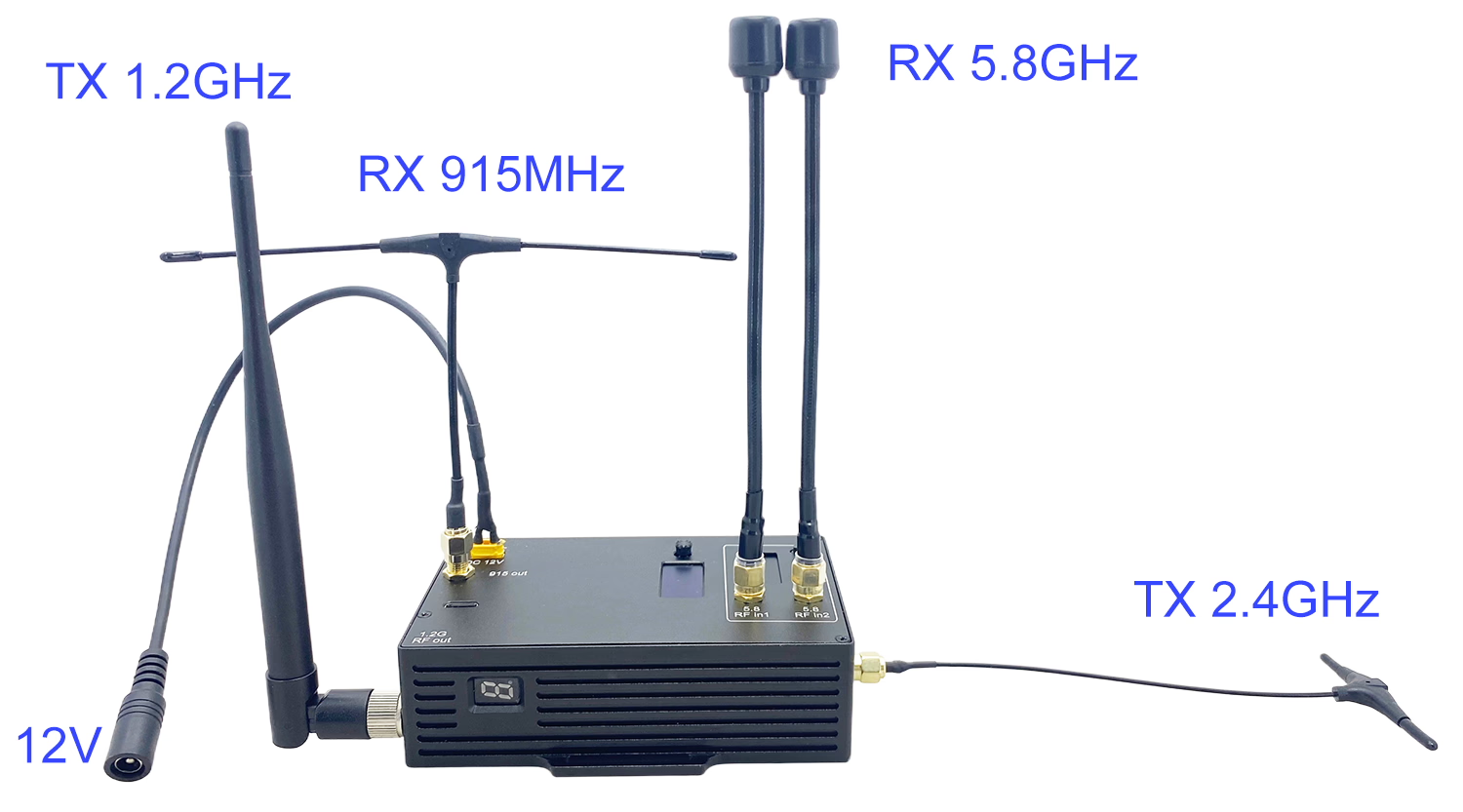
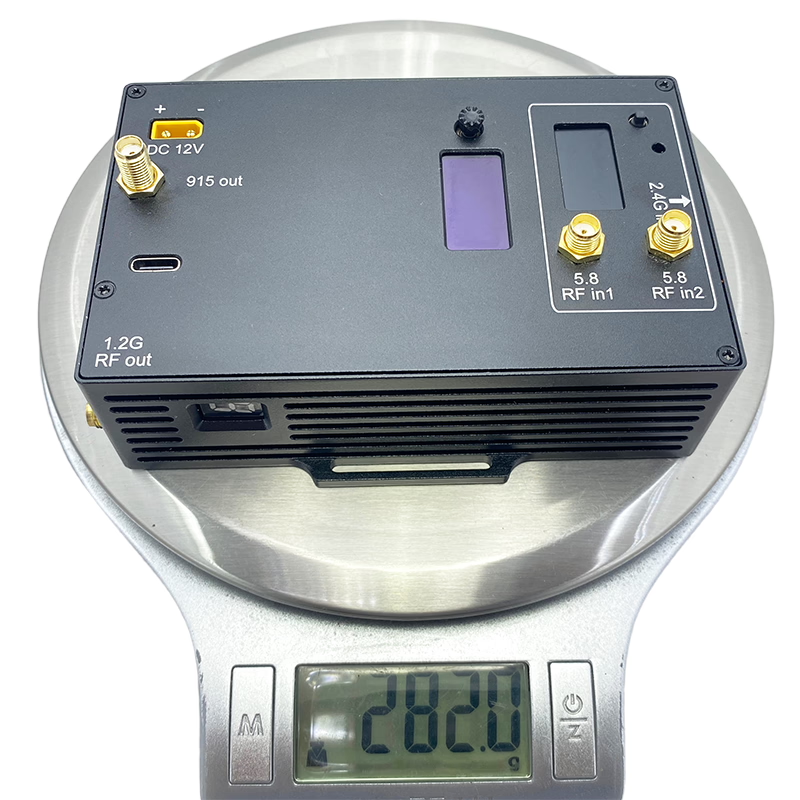
Weight and Dimension
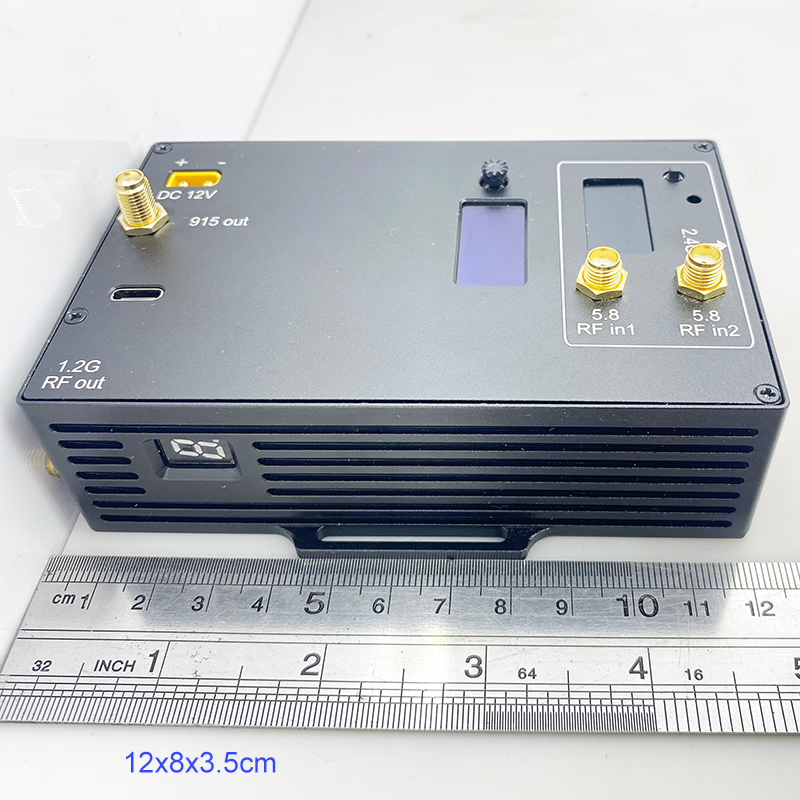
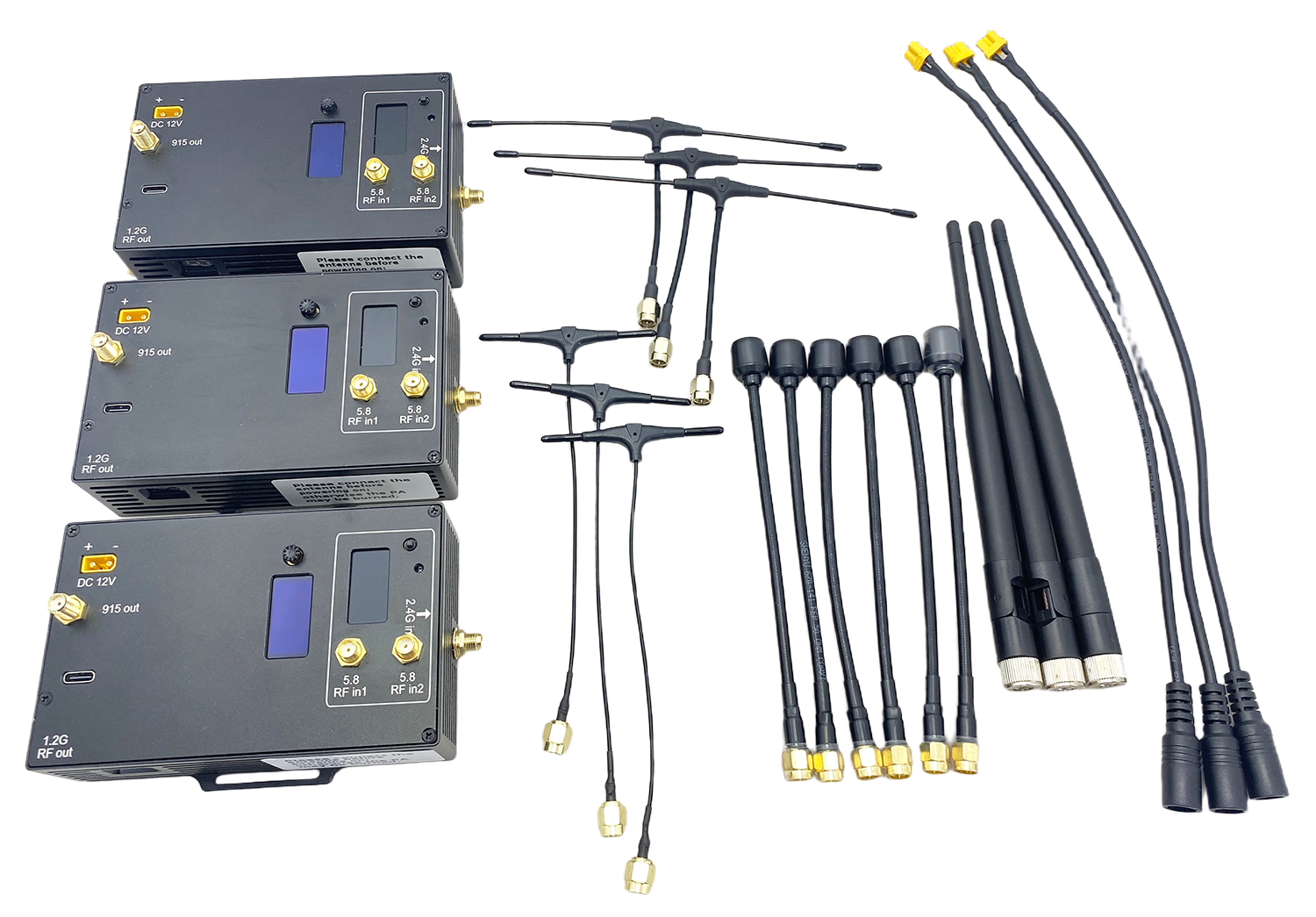


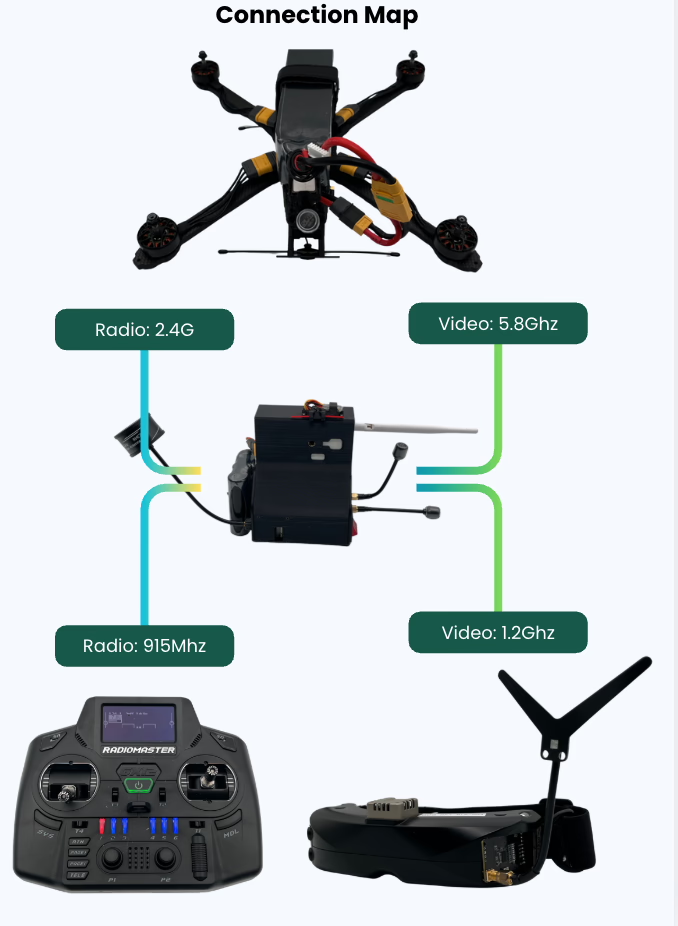
Frequency Customization Cases
- Repeater (Air 5.8 Elrs 915Mhz) (Ground 4.9 Elrs750Mhz)
- Repeater (Air 4.9 Elrs 750Mhz)(Ground 5.8 Elrs915Mhz)
- Repeater (Air 5.8 Elrs 750Mhz)(Ground 4.9 Elrs915Mhz)

Product Video at Youtube
FAQ
Q: My FPV air unit transmits video at 5.8G and receives data at 915MHz. My ground unit operates at 3.3GHz for video, with a remote at 868MHz and 915MHz. How can I add an FPV relay into this setup?
A: Then relay video should support RX 5.8G and TX 3.3G. The air unit and ground unit can not both use 915Mhz, you should think to use 750Mhz on the remote control, you can move your 915Mhz to our relay, we add one 750Mhz at your ground unit remote control, so data relay is RX 915, re-transmitter TX 750Mhz.
Q: How do I bind the controller to the repeater module?
A: To bind the controller with the repeater module, please follow these steps: Using bind phrase, not physical button.
-
Power off the drone – ensure the drone is completely turned off before starting the binding process.
-
Bind the repeater to the controller – use the same procedure as you would to bind a drone to the controller.
-
Power off the controller – after the repeater is successfully bound, turn off the controller.
-
Bind the drone to the repeater – finally, use the repeater module to bind with the drone.
Following this sequence ensures a proper and stable connection between the controller, repeater module, and drone.
Q: Can the video and radio transmission frequencies of your FPV repeater be customized?
A: Yes, the FPV repeater can operate using our default frequencies or customized frequencies based on your requirements. When selecting custom frequencies, please ensure they are chosen to minimize interference with other devices and comply with local regulations.
Q: Which transmission frequencies does the 1.2GHz FPV repeater support? Do I need to set my FPV goggles to the same frequency for pairing?
A: Our FPV repeater uses a 1.2GHz video transmitting and retransmitting system. To ensure proper transmission and reception, your FPV goggles must be set to the same frequency channel as the repeater. The supported channels and frequencies are:
- CH4: 1080 MHz
- CH5: 1120 MHz
- CH6: 1160 MHz
- CH7: 1200 MHz
- CH8: 1240 MHz
- CH9: 1280 MHz
- H CH: 1320 MHz
- C CH: 1360 MHz
Please select the same channel and frequency on your FPV goggles to successfully receive the video signal from the repeater.
Q: What is the default transmission power of the FPV repeater, and what is the transmission range?
A: The FPV repeater uses the following built-in transmitters:
-
1.2 GHz video transmitter: 2.5 Watts
-
2.4 GHz radio transmitter: 1 Watt
With this configuration:
-
The video transmission range from the repeater to the remote controller can reach up to 3 km.
-
The radio control/data link from the repeater to the drone can reach up to 2 km.
Please note that actual transmission distance may vary depending on several factors, including:
-
The transmit power of the drone’s onboard video transmitter
-
The transmit power of the remote controller’s radio
-
Environmental conditions (obstacles, interference, terrain, etc.)
For best performance, we recommend using a high-quality video transmitter on the drone and a sufficiently powerful radio controller.
Q: Can you customize a relay solution for my existing FPV system (915MHz ELRS + 5.8GHz VTX), and what information do you need to ensure compatibility?
A: Yes, we can customize a relay solution based on your existing FPV setup. To ensure proper compatibility between your current equipment and our system, we need a clear overview of your configuration.
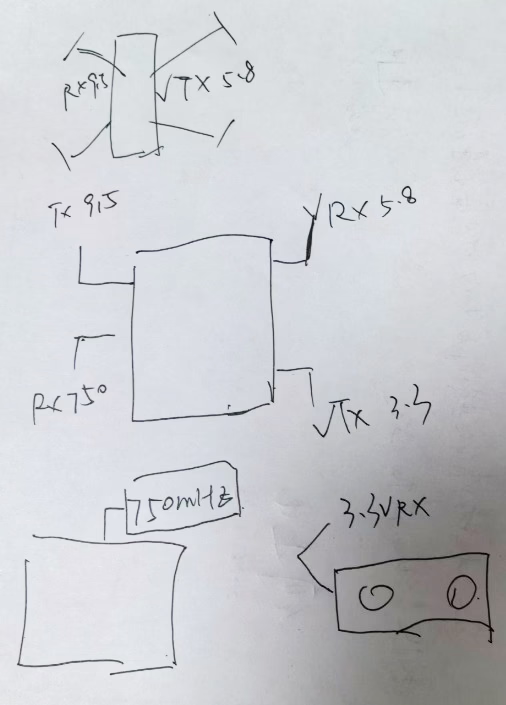
Please provide a simple sketch (hand-drawn is acceptable) showing your system layout, including transmitters, receivers, and relay links. In addition, let us know:
- The frequencies of all your current devices (e.g., 915MHz ELRS TX, 5.8GHz VTX, etc.)
- The specific components you already have (TX, RX, VTX, VRX, antennas, etc.)
- The target configuration you want to achieve (e.g., relay system with 1.2GHz VRX and 2.4GHz RX)
This information helps us evaluate frequency matching, signal conversion requirements, and overall system compatibility. Based on your details, we will recommend a suitable relay solution and provide a quotation.
-
Analog FPV drone repeater relay for long-range video and data transmission
-
FPV repeater relay supports frequency conversion from 750MHz to 915MHz
-
Analog FPV video re-transmitter from 5.8GHz to 3.3GHz for extended range
-
Professional FPV relay solution for multi-band video and control systems
-
FPV drone repeater relay compatible with ELRS 750MHz and 915MHz
-
Long-distance analog FPV signal relay with stable re-transmission
-
FPV relay module for air-to-ground frequency bridging applications
-
Analog FPV repeater relay for complex multi-frequency drone setups
-
FPV video and telemetry relay supporting 5.8G, 4.9G, and 3.3G bands
-
Reliable FPV signal repeater relay for extended flight missions
-
Analog FPV re-transmitter designed for low-latency video relay
-
FPV drone relay system for separating video and control frequencies
-
Frequency-customizable FPV repeater relay for professional UAV users
-
Analog FPV relay solution to avoid 915MHz interference conflicts
-
FPV repeater relay improves signal coverage and penetration
-
Multi-band FPV relay re-transmitter for long-range drone communication
-
Analog FPV relay module ideal for relay drones and airborne repeaters
-
FPV frequency conversion relay for advanced ELRS control networks
-
Stable analog FPV repeater relay for professional and industrial drones
-
FPV drone re-transmission relay for extended range and flexible frequency planning


Teodor –
The relay can be placed on a roof, treetop, or retractable bracket, or it can be installed on a relay drone to extend the transmission distance or hide the true location of the FPV operator (flyer).
This repeater is an absolute game-changer for serious FPV exploration! Effortlessly extending my range was just the start. Shifting my 5.8GHz video down to the incredibly robust 3.3GHz band meant penetrating obstacles like trees and light structures.
The rock-solid reliability of the 750MHz to 915MHz data retransmission kept my control link stable far beyond its normal limit. Setup was surprisingly straightforward, and the instantaneous, real-time relay meant zero perceivable latency – crucial for those low, fast proximity flights.