






30 millisecond FPV CVBS HDMI COFDM video transmitter receiver
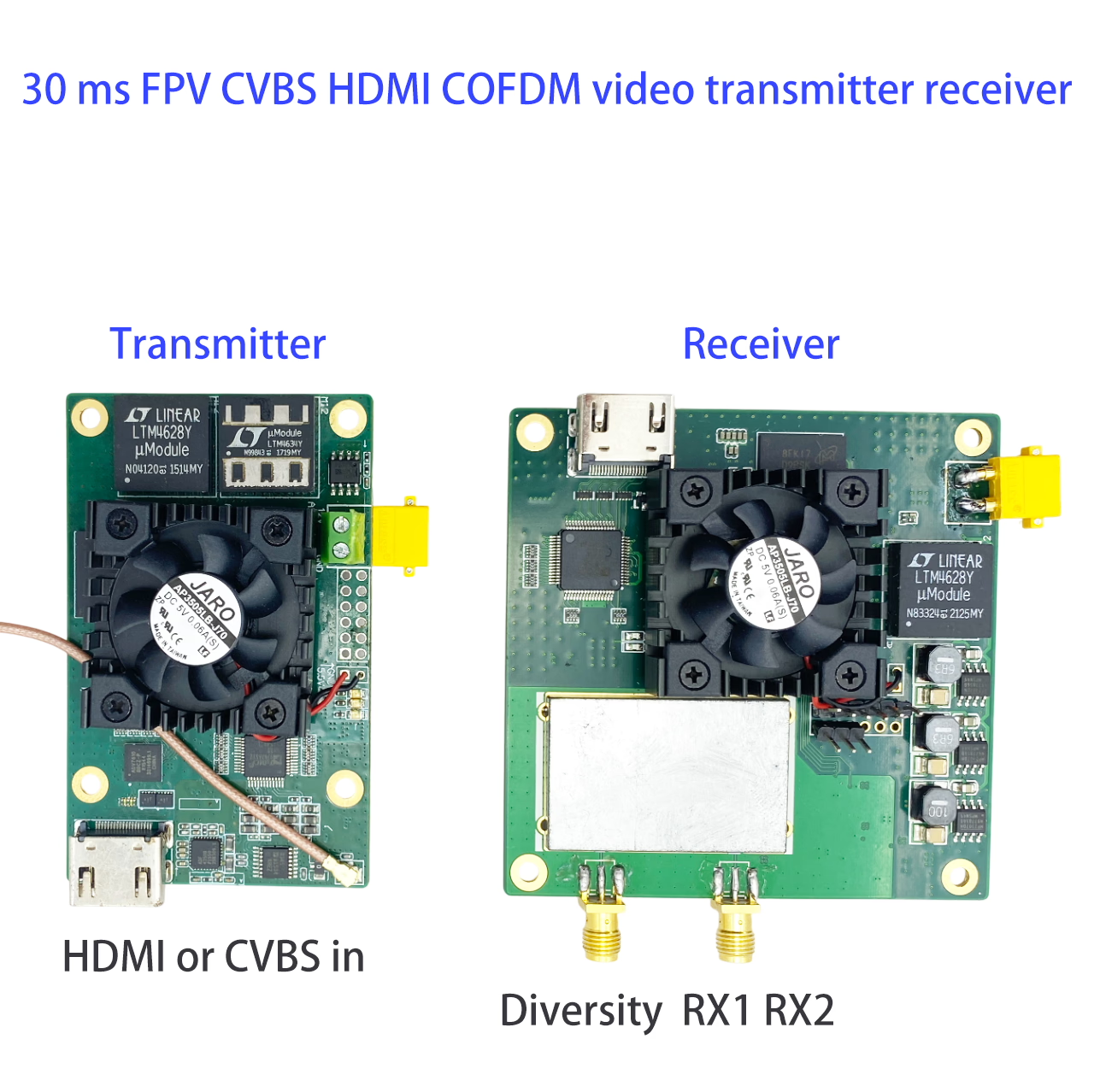
Table of Contents
Advantages
- Ultra-low latency of just 30 milliseconds from transmitter to receiver.
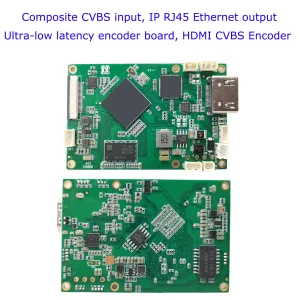
- Support HDMI or CVBS video input
- The receiver supports diverse dual-antenna inputs and is a true dual-antenna receiving tuner chip.
- AES128 Encryption and Description
- On-board cooling fan
- FPGA highly integrated chip, customizable development
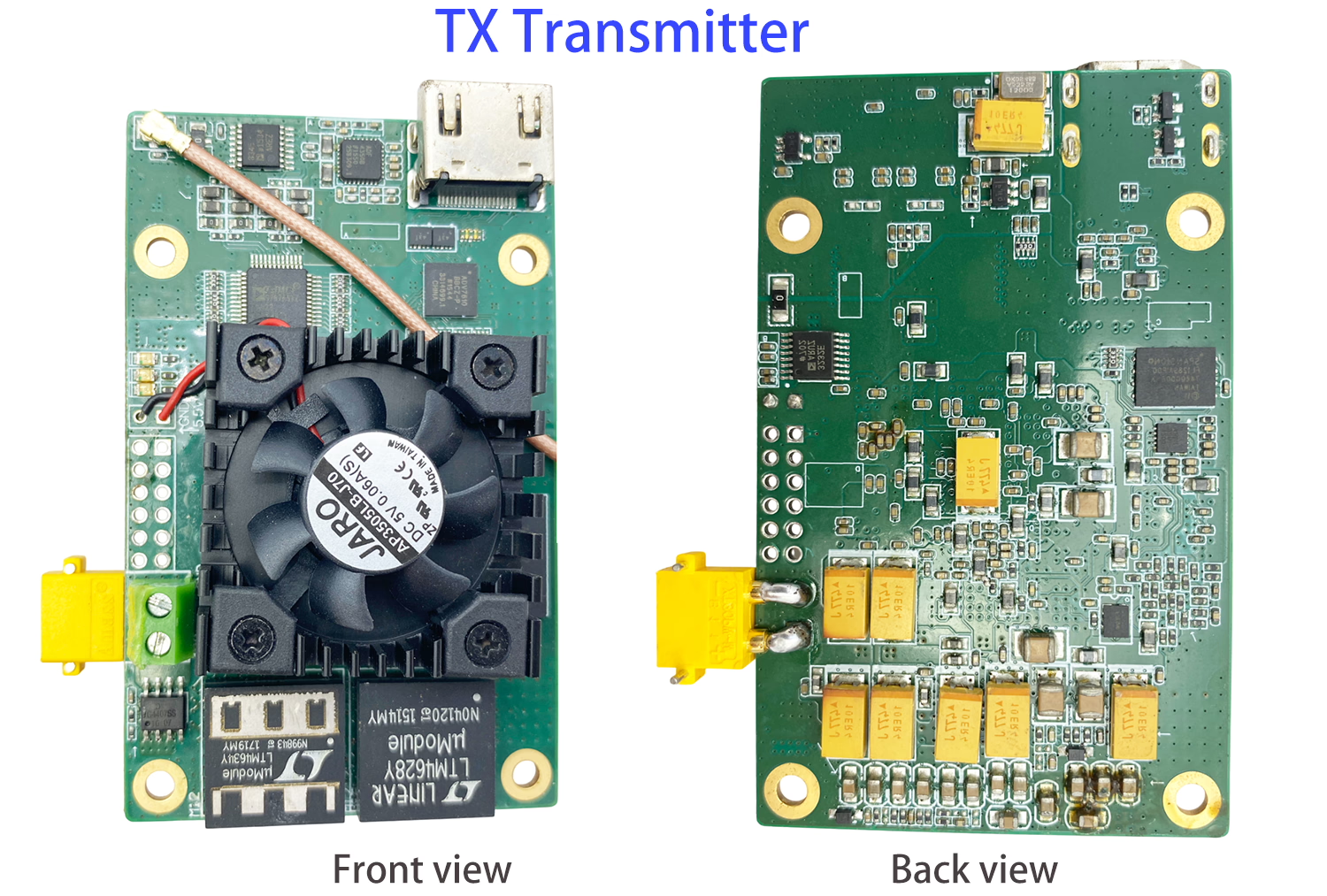
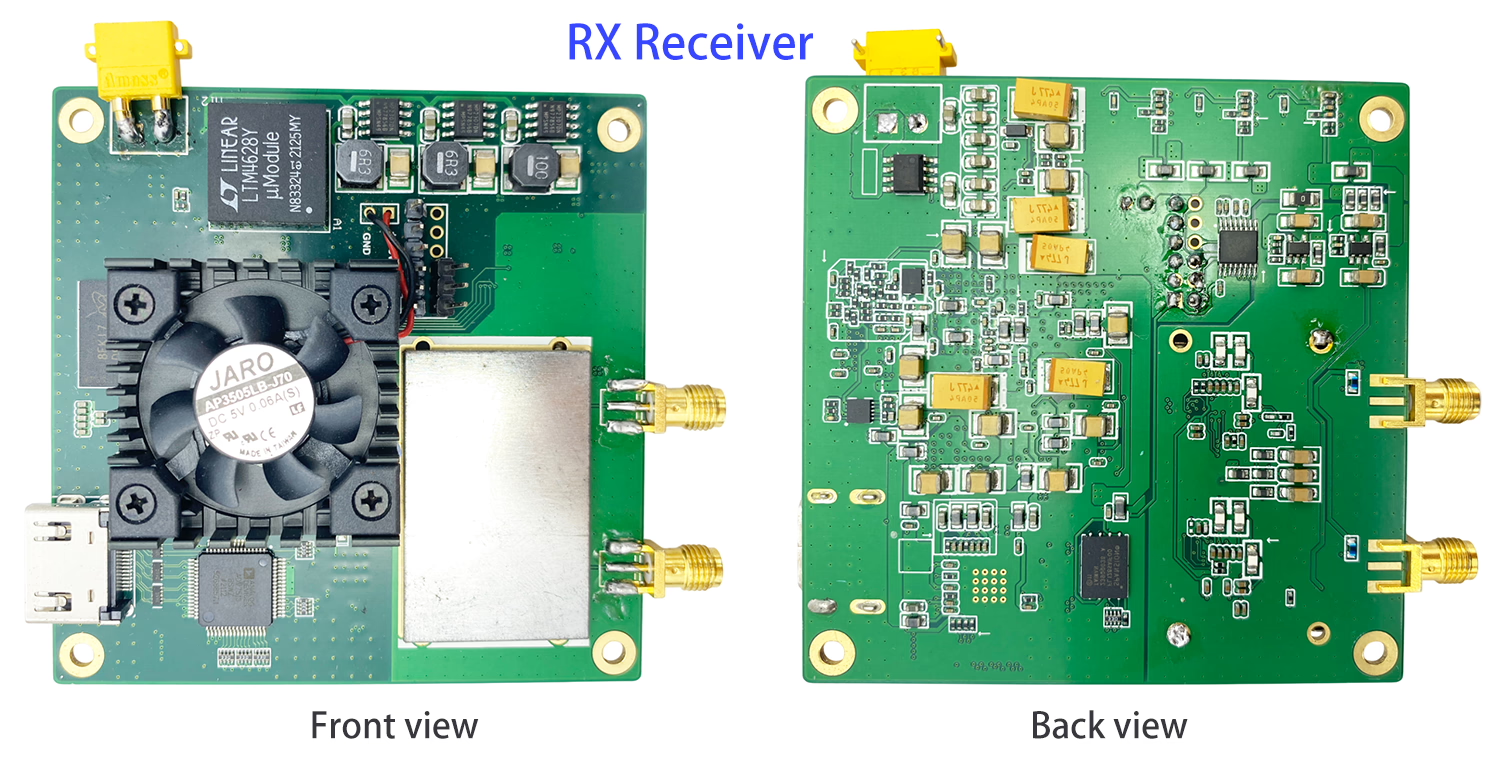
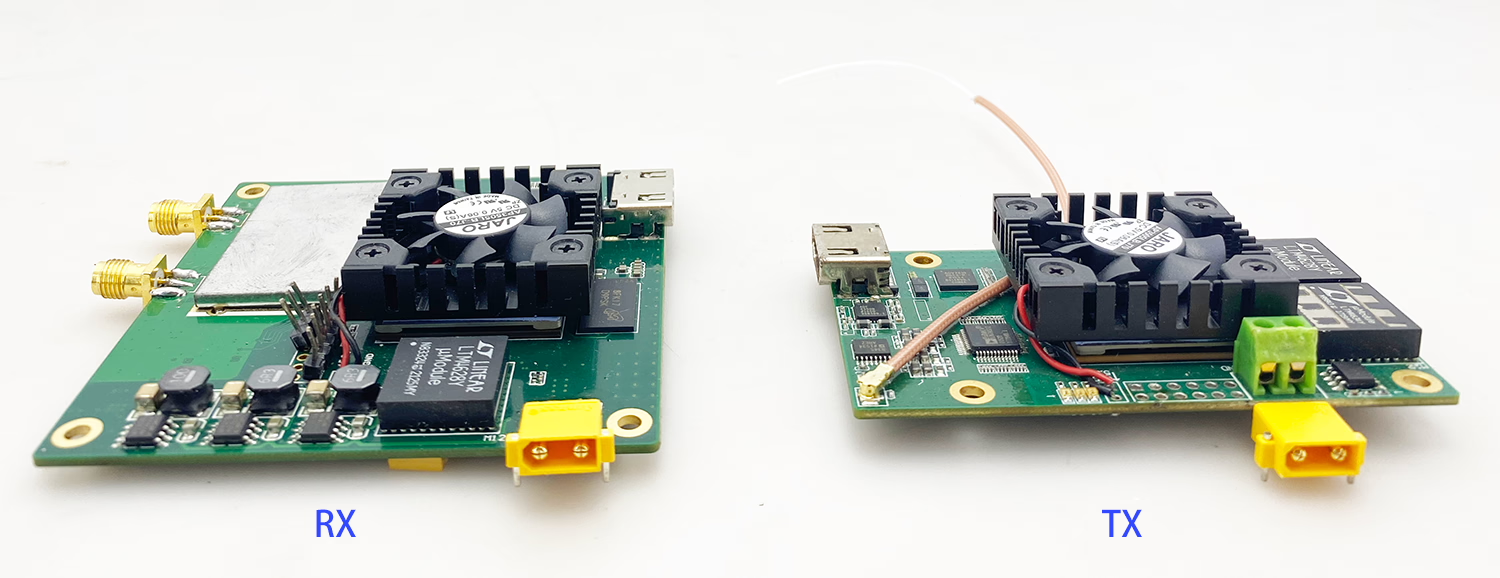
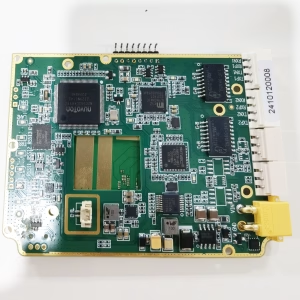
Front Back Board View
FAQ
Q1: We require a low-latency (under 100ms) wireless video transmission system for ground vehicles, supporting both PAL and NTSC CVBS formats. The frequency should be 1.2 GHz, selectable within the 1.1 GHz to 1.4 GHz range.
A1: Tests show the FPV 1729 HDMI latency to be 30 milliseconds.
The transmitter is customizable and supports frequencies from 170 MHz to 3000 MHz. Because the receiver supports 170-860 MHz, we can plus a frequency down-converter. For example, a down converter that handles frequencies from 1200 MHz to 600 MHz.
Q2: Is the temperature of a one-watt transmitter very high?
A2: What type of enclosure did you use for the transmitter? Does it have cooling fans and heat vents? The high temperature is due to the FPGA main CPU chipset and the internal power amplifier.
Q3: Can the transmitter include channel select buttons, similar on the receiver?
A4: The transmitter includes a detachable tool for adjusting parameters like frequency and bandwidth.

Because the transmission frequency is customized, for example, we choose the center frequency of 1130Mhz. This tool is for professional users. If ordinary users accidentally modify the frequency, resulting in transmission signal failure, and they don’t know how to adjust it back, it will cause more trouble for your after-sales service. Modifying any of these parameters may cause the transmission signal to be unstable or not work.
Ultra-low latency is crucial for wireless image and video transmission systems in drones for several key reasons:
-
Real-time Control and Monitoring: Drones require real-time visual feedback to ensure safe and precise control. High latency can make it difficult for operators to accurately judge the drone’s position and status, affecting flight stability and safety.
-
FPV Flight Experience: In First-Person View (FPV) flying, low latency is essential because operators need to see the drone’s perspective in real-time to react quickly and control precisely.
-
Application Requirements: In many professional applications, such as search and rescue, surveillance, and military operations, drones need to provide real-time video information for timely decision-making. High latency can compromise the timeliness and accuracy of these decisions.
-
Stability and Reliability: Low latency helps improve the stability and reliability of drones by allowing operators to better respond to environmental changes and unexpected situations.
Overall, ultra-low latency is a critical factor in drone wireless image transmission systems, directly impacting operational safety, real-time control capabilities, and application efficiency.
Considerations for selecting ultra-low latency wireless video transmitters and receivers:
- Latency: Ensure that the system has a latency as low as tens of milliseconds, suitable for real-time feedback and control.
- Anti-interference capability: The anti-interference characteristics of the COFDM system are essential for maintaining stable video transmission in complex environments.
- Transmission distance and bandwidth: According to the usage scenario, select the appropriate transmission distance and bandwidth to meet the requirements of image quality and transmission distance.
- System stability: The stability of the system is particularly important when used on dynamic platforms such as drones.




David –
With super low latency of just 30 milliseconds, the delay is virtually imperceptible, creating an incredibly responsive experience. The crisp 1080p HDMI feeds with zero lag make it an ideal choice for FPV drone racing. Due to COFDM’s effective anti-interference capabilities, the signal remained exceptionally stable and robust, even within densely populated radio frequency environments. This is a truly revolutionary product that is going to change the game for competitive pilots everywhere.