

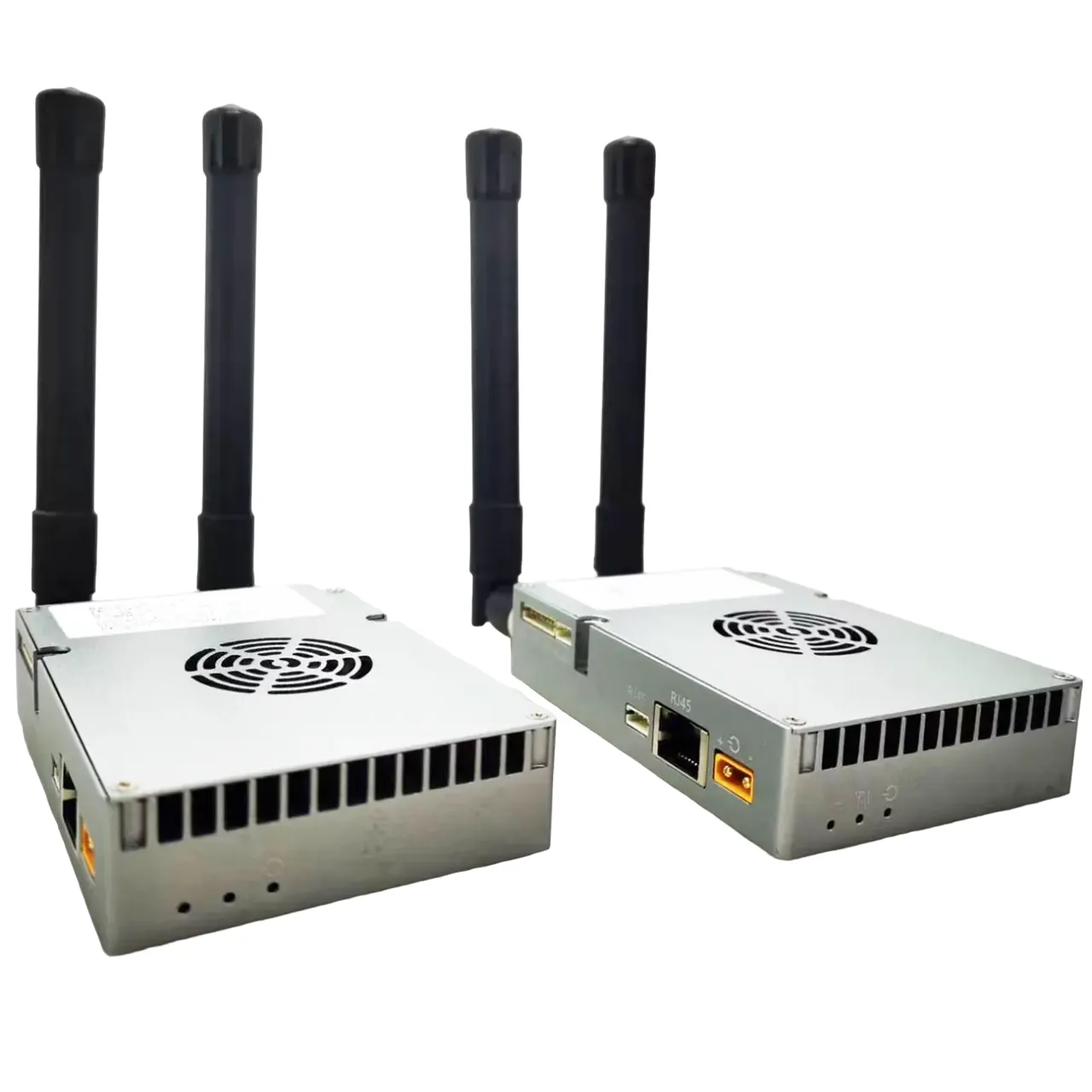
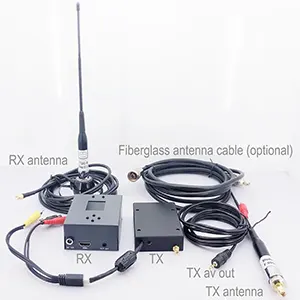



USB UVC 攝影機視訊輸入到乙太網路 IP 視訊串流輸出
目錄
編碼器模組板
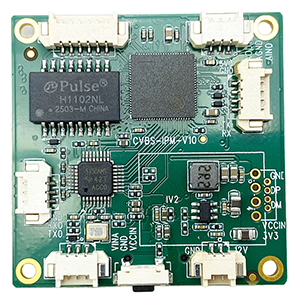
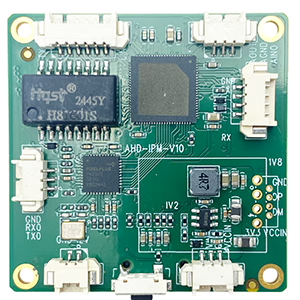
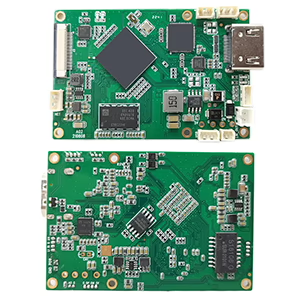
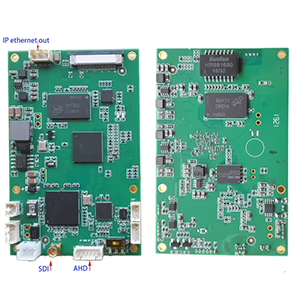
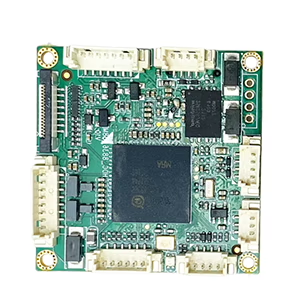
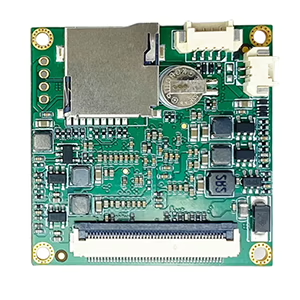
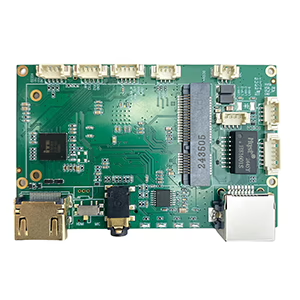
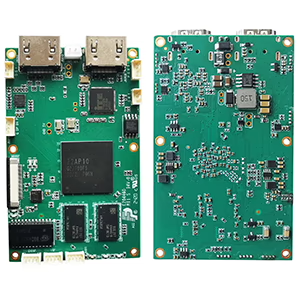
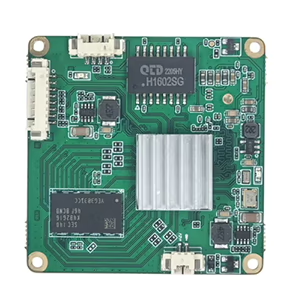
Decoder Modules Boards
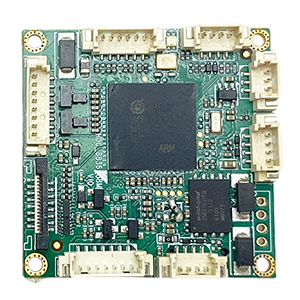
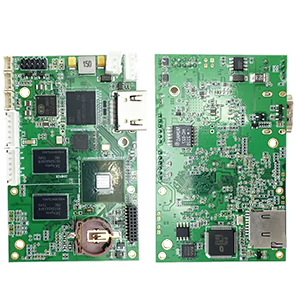
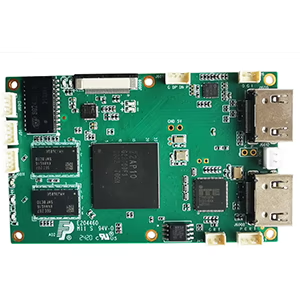
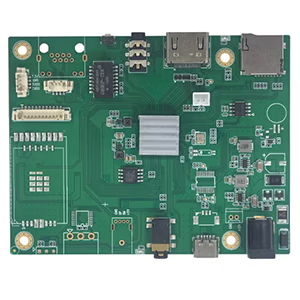
可客製化
新編碼器產品
| 沒有. | 產品名稱 | Configuration | 主要特點 | 地位 |
|---|---|---|---|---|
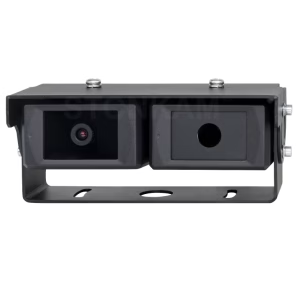
| 1 | 雙聲道 USB UVC 可見光視訊編碼器 | 2× USB 輸入 | Supports dual USB camera video encoding, and RTSP streaming; local CVBS/HDMI output; 可切換顯示模式 | 量產 |
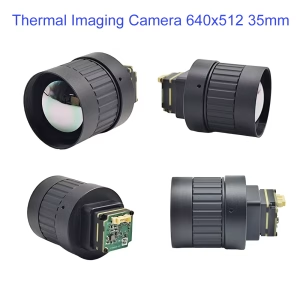
| 2 | 雙通道編碼器 (1× USB Visible Light + 1× USB Thermal Imaging camera) | 2× USB 輸入 | Supports dual USB camera (可見的 + thermal) 捕獲, encoding, and RTSP streaming; local CVBS/HDMI output; 可切換顯示模式 | 量產 |
| 3 | RTSP 解碼器 HDMI/CVBS 顯示模組 | HDMI + CVBS output | 最高支援4×1080P@30fps RTSP碼流解碼; 支援視訊串流協議轉發; HDMI/CVBS輸出顯示 | Sample Available |
| 4 | RTSP 解碼器 HDMI/CVBS 顯示模組 4.3"/5" LCD | HDMI output + 液晶屏 | 最高支援4×1080P@30fps RTSP碼流解碼; 協議轉發; HDMI/CVBS輸出顯示 | Debugging |
| 5 | 雙通道編碼器 (1× USB Visible Light + 1× CVBS 模擬) | 1× CVBS + 1× USB UVC input | 雙視頻 (USB + CVBS), 編碼和 RTSP 串流媒體; local CVBS/HDMI output; 可切換顯示模式 | Debugging |
| 6 | 雙通道編碼器 (1× USB UVC + 1× AHD 模擬) | 1× AHD + 1× USB UVC input | 雙視訊擷取 (USB + AHD), 編碼和 RTSP 串流媒體; local CVBS/HDMI output; 可切換顯示模式 | Debugging |
| 7 | 雙通道編碼器 (1× CVBS + 1× AHD Analog Video) | CVBS + AHD 2 video input | 雙類比視訊擷取, 編碼和 RTSP 串流媒體; local CVBS/HDMI output; 可切換顯示模式 | Debugging |
| 8 | 雙通道編碼器 (1× CMOS 相機 + 1× USB Thermal Imaging camera) | 1× USB 介面 | 支援CMOS + USB thermal camera capture, 編碼和 RTSP 串流媒體; local CVBS/HDMI output; 可切換顯示模式 | 量產 |
對於我們產品中未列出的客製化視訊輸入/輸出轉換解決方案, please contact us for OEM/ODM support. 我們可以根據您的要求開發客製化產品.
特徵
| CPU | CV1825 single-core ARM A53 1.2G |
| TPU | 0.5T computing power (INT8)
Supports mainstream neural network architectures: 咖啡廳, 火炬, TensorFlow (Lite), ONNX and MXNet, enabling pedestrian detection, face detection, 人臉辨識, liveness detection (face anti-spoofing) and other video structured applications |
| Built-in DRAM | DDR3 16bitx1, maximum speed up to 1866Mbps, capacity 2Gbit (256MB) |
| FLASH | SPI 128MB flash |
| TF卡 | 支援 |
| 網路連接埠 | 100中號 |
| USB | 1 |
| 電源輸入 | 6-24V DC |
常問問題
Does it support CVBS PAL AV camera video input?
You need to add a CVBS to USB converter board to get IP ethernet video stream on our board.
Further Information
Strengths That Support the Use Case
- USB連接埠: Allows connection to a UVC-compliant camera for video input.
- TPU (0.5 TOPS INT8): Suitable for lightweight AI tasks like pedestrian detection, 人臉辨識, and anti-spoofing.
- Neural Network Compatibility: Supports Caffe, PyTorch, TensorFlow Lite, 奧恩克斯, and MXNet—ideal for deploying pre-trained models.
- 乙太網路埠 (100中號): Enables basic IP video streaming over LAN.
- Flexible Power Input (6–24V DC): Good for embedded or mobile applications.
Limitations to Consider
- CPU Performance: Single-core ARM A53 @1.2GHz may struggle with real-time video encoding (例如, H.264/H.265) if no hardware encoder is present.
- Memory Constraints: 256MB DDR3 is minimal for video buffering, AI inference, and streaming simultaneously.
- No Mention of Hardware Video Encoder (VPU): If absent, software encoding may be too slow for smooth streaming.
- Only One USB Port: Limits peripheral expansion—if used for camera input, no room for other USB devices.
- Unclear Software Stack: You’ll need to verify whether the board supports GStreamer, FFmpeg, or RTSP/RTMP protocols.
Implementation Checklist
| 要求 | 地位 / Action Needed |
|---|---|
| UVC camera input via USB | 支援 |
| AI-based video analysis | TPU-enabled |
| Real-time video encoding | Confirm hardware/software support |
| IP stream output (RTSP/RTMP) | Check protocol stack availability |
| Lightweight OS with media tools | Confirm Linux distro and toolchain |
Deployment Suggestion
If your goal is to stream video from a USB camera over Ethernet:
- Verify video encoding capability—either hardware or optimized software.
- Install a lightweight media framework like GStreamer or FFmpeg.
- Use TensorFlow Lite or ONNX models for AI inference on the TPU.
- Configure RTSP/RTMP streaming using available libraries or custom scripts.





iVcan.com –
I tested this board for converting USB UVC camera input into Ethernet IP video streams, and it performs impressively for lightweight AI video tasks. 內建的 0.5 TOPS TPU efficiently handles pedestrian detection, 人臉辨識, and anti-spoofing, while the single-core ARM A53 CPU and 256MB DDR3 memory manage video processing adequately. Integration with mainstream neural networks like TensorFlow Lite, PyTorch, 咖啡廳, and ONNX is seamless. The 100M Ethernet port allows reliable IP streaming, and flexible 6–24V power input makes deployment easy in embedded or mobile setups. While heavy real-time encoding may require optimization, overall it is a compact, versatile solution for AI-enabled IP video applications.