





为什么 1681 演出 -20 调试模式下的 dBm,即使设置为 5 分贝
目录
Customer feedback issues
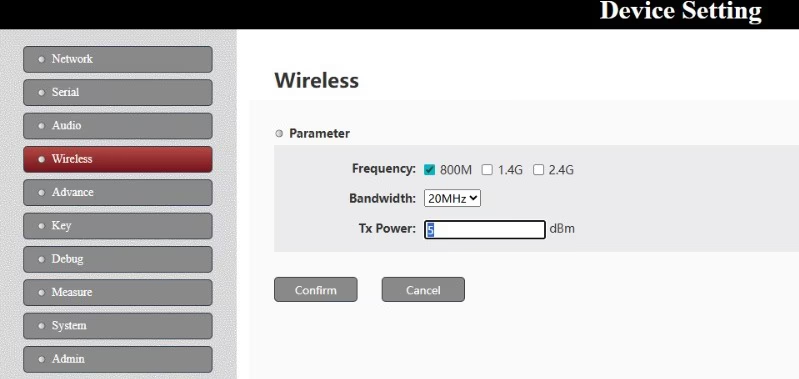
When operating the 1681 wireless transmission module, some users may encounter a situation where the transmit power is configured as 5 分贝 in the web interface, yet the Debug page displays a value around -20 分贝.
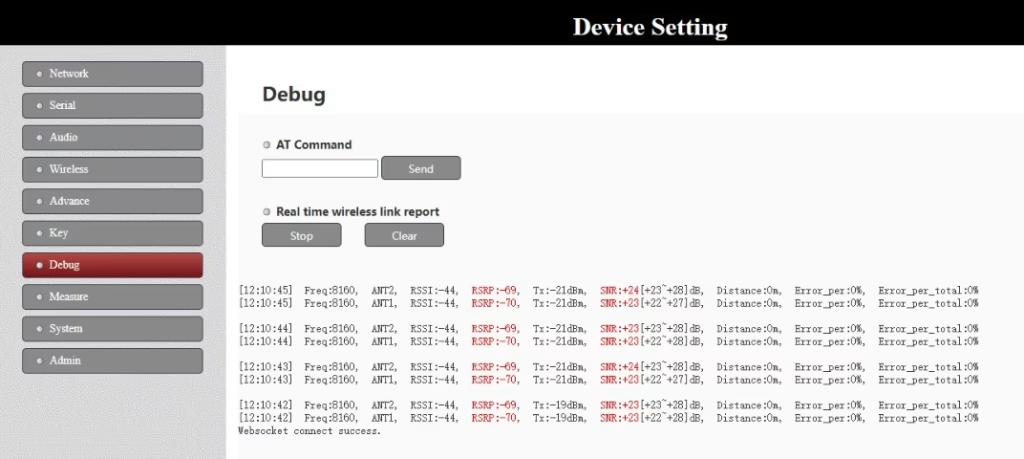
This behavior is expected and is directly related to how the 1681 manages transmit power under real operating conditions.
1681 Operating as an Access Node
In this setup, 这 1681 is working as an 接入节点 at the air unit. (it also can set a central node at ground unit).
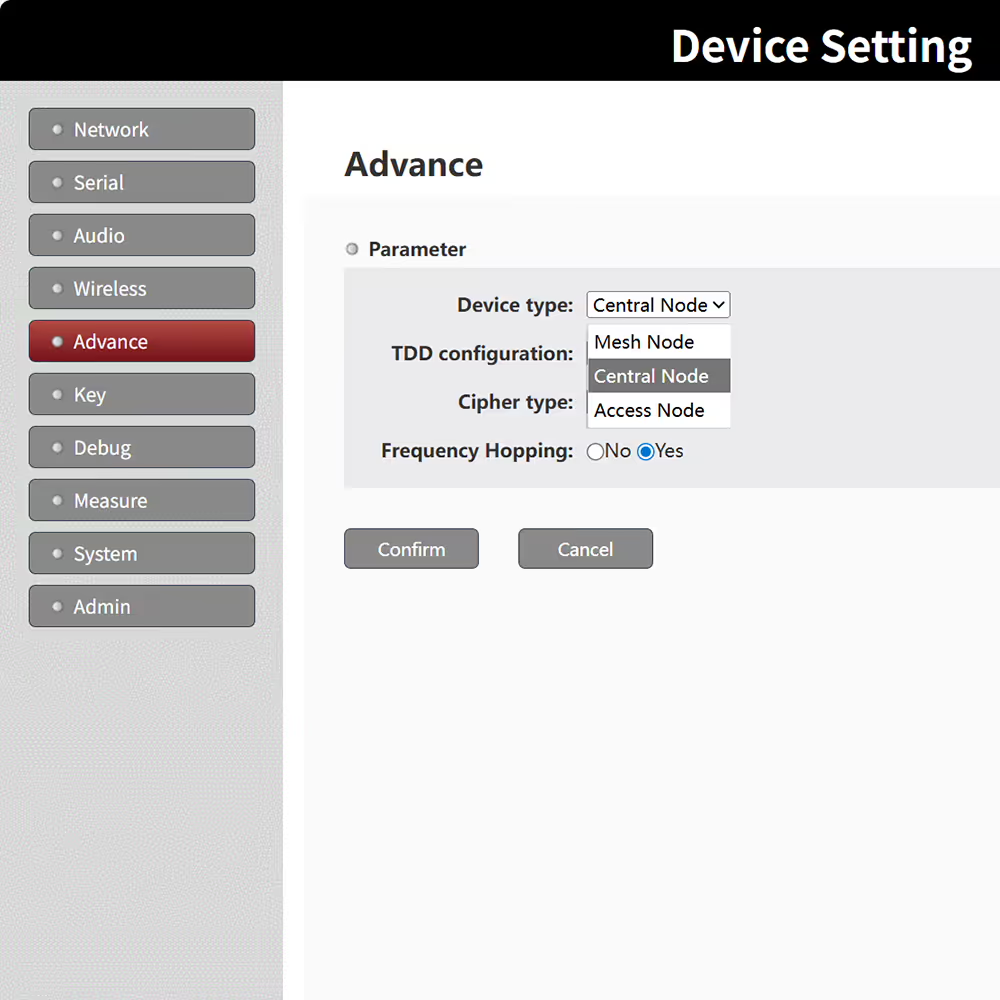
For access nodes, the transmit output power is adaptive rather than fixed. The system dynamically adjusts the output power based on distance and link quality.
How Adaptive Transmit Power Works
该 1681 uses adaptive power control to optimize wireless performance and system stability:
- Short distance / strong link
When the receiver is close and the signal quality is high, 这 1681 将要 automatically reduce its transmit power.
因此, the real-time value shown in the Debug interface may be as low as -20 分贝. - 长途 / weaker link
As the distance increases or the wireless link becomes weaker, the system will gradually increase the transmit power to maintain a reliable connection.
This adaptive mechanism helps reduce unnecessary RF interference, lowers noise, and improves overall network efficiency.
Web Configuration vs. Actual Output Power
It is important to distinguish between configuration settings and real-time measurements:
- Transmit power setting on the web page (例如. 5 分贝)
This value defines the maximum output power limit allowed by the system. - Transmit power shown in Debug mode
This reflects the 实际的, real-time transmit output power, which varies automatically according to link conditions.
Therefore, setting the transmit power to 5 dBm does 不是 mean the 1681 will always transmit at 5 分贝.
It only sets the upper boundary that the adaptive power control can reach when higher power is required.
You can also verify this behavior through practical testing.
If you move the devices several offices apart, or perform a corridor / cross-floor (run-through-building) test, you will observe that the transmit output power increases automatically.
为了 bi-directional UAV communication modules, when operating at longer distances or in environments with obstacles such as walls, floors, or buildings, the link quality degrades.
在这些场景中, the system will automatically raise the transmit power to compensate for the weaker signal and maintain a stable connection.
This dynamic power adjustment is specifically designed to support poor signal conditions, NLOS environments, 和 long-range drone applications, ensuring reliable communication without requiring manual power changes.
结论
If the Debug interface of your 1681 模块 shows approximately -20 分贝 while the transmit power is set to 5 分贝, this does not indicate a malfunction.
- 该 1681 access node uses adaptive transmit power control
- Output power is reduced at short distances
- 发射功率 increases automatically as distance grows
- The web setting acts as a maximum limit, not a constant output value
This design ensures efficient, 稳定的, and interference-aware wireless communication.

问一个问题
感谢您的回复。 ✨