






Índice
EARFCN

EARFCN significa Número absoluto do canal de radiofrequência E-UTRA. É um identificador padronizado usado em LTE (Evolução a longo prazo) e LTE-Avançado redes celulares para especificar exclusivamente a frequência central de um canal de rádio. Em vez de lidar com frequências brutas (por exemplo., 2140 MHz), engenheiros e equipamentos de rede usam valores EARFCN para simplicidade e consistência.
EARFCN fornece uma maneira consistente de referenciar frequências portadoras LTE globalmente. FDD (Divisão de frequência duplex): EARFCN separado para UL e DL. TDD (Divisão de tempo duplex): EARFCN único (Frequência de compartilhamento UL/DL).
RSRP
RSRP (Potência recebida do sinal de referência) é uma medida crítica em LTE (Evolução a longo prazo) e 5G-NR (Nova Rádio) redes que quantificam o sinal de força de uma torre de celular (eNodeB/gNodeB) no seu dispositivo (UE). É essencial para o desempenho da rede, decisões de transferência, e experiência do usuário.
Medidas RSRP: A potência média (dentro dBm) recebido de um único sinal de referência específico da célula (CRS) em uma largura de banda específica (normalmente um bloco de recursos ≈ 180 kHz). Focos só em sinais de referência - não em todo o ruído ou interferência do canal.
Valores típicos de RSRP:
| RSRP (dBm) | Qualidade do sinal |
|---|---|
| > -80 dBm | Excelente (Forte) |
| -80 para -90 dBm | Boa |
| -90 para -100 dBm | Justo (utilizável) |
| < -100 dBm | Pobre (fraco/instável) |
| < -120 dBm | Sem sinal |
SNR
SNR (Relação sinal / ruído) mede a força de um sinal desejado em relação ao ruído de fundo. Ele quantifica quão claramente um sinal pode ser distinguido de uma interferência em sistemas de comunicação (Wi-Fi, celular, auditivo, etc.). O SNR é fundamental para o desempenho – um SNR mais alto significa uma transmissão de dados mais clara, menos erros, e velocidades mais rápidas.
| Faixa SNR | Impacto no desempenho |
|---|---|
| > 30 dB | Transmissão 4K impecável, jogos de baixa latência. |
| 20–30dB | Vídeo HD suave, navegação rápida. |
| 10–20dB | Navegação básica na web; buffer ocasional. |
| 0–10dB | Conectividade instável; quedas frequentes. |
| < 0 dB | Conexão perdida (ruído sobrecarrega o sinal). |
SNR versus. Métricas Relacionadas:
| Métrica | Foco | Comparação SNR |
|---|---|---|
| RSRP | Força do sinal bruto (LTE/5G). | SNR depende do RSRP – mas subtrai o ruído. |
| RSSI | Potência total recebida (sinal + barulho). | SNR = (RSSI – Barulho) / Barulho. |
| Sinr | Sinal versus. barulho + interferência (mais preciso). | Frequentemente usado de forma intercambiável com SNR. |
QoS

QoS (Qualidade de serviço) é um conjunto de tecnologias e políticas usadas em redes para priorizar o tráfego, gerenciar largura de banda, e garantir um desempenho confiável para aplicações específicas, Comercial, ou serviços. É fundamental para manter experiências de usuário consistentes, especialmente em redes com recursos limitados (por exemplo., celular, empresa, ou redes IoT).
Principais objetivos de QoS:
- Priorização: Trate o tráfego de alta importância (por exemplo., chamadas de vídeo, serviços de emergência) como “VIP” sobre tráfego de baixa prioridade (por exemplo., downloads de arquivos).
- Alocação de recursos: Reserve largura de banda para tarefas críticas.
- Minimize a latência/jitter: Mantenha os atrasos baixos para aplicativos em tempo real (VoIP, jogos).
- Reduza a perda de pacotes: Garanta que os dados não sejam descartados durante o congestionamento.
RSSI
RSSI (Indicador de Intensidade do Sinal Recebido) é uma medida do potência total recebida (sinal + barulho + interferência) em um sistema de comunicação sem fio. É uma métrica fundamental usada em Wi-Fi, celular (LTE/5G), Bluetooth, e redes IoT para avaliar a força bruta do sinal - mas não distingue entre sinais úteis e ruído.
Tipicamente valores negativos (já que dBm é referenciado a 1 miliwatt):
- -30 dBm: Extremamente forte (perto do transmissor).
- -70 dBm: Moderado (conectividade confiável).
- <-90 dBm: Fraco (instável ou inutilizável).
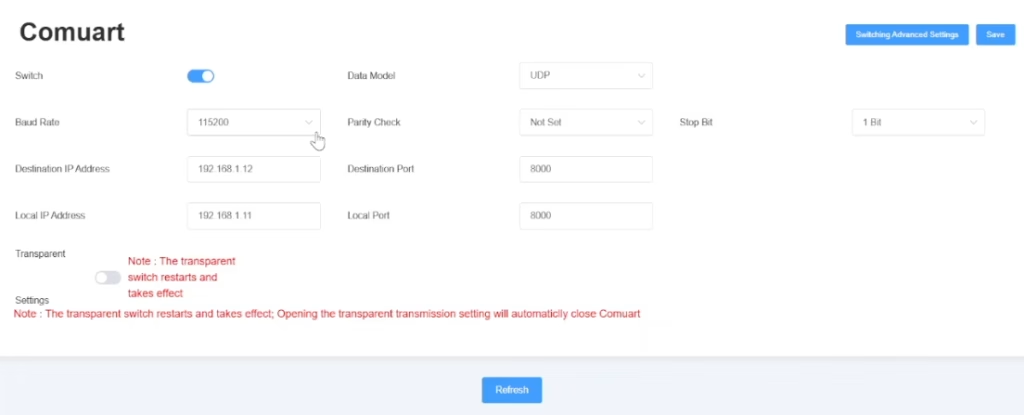
Comuart
COMUART refere-se a um UART (Receptor/transmissor assíncrono universal) interface usada para comunicação serial, normalmente encontrado em sistemas embarcados, hardware de rede, ou dispositivos industriais. o “COM” prefixo muitas vezes denota seu papel em portas de comunicação (por exemplo., RS-232, Série TTL).
AT Depuração
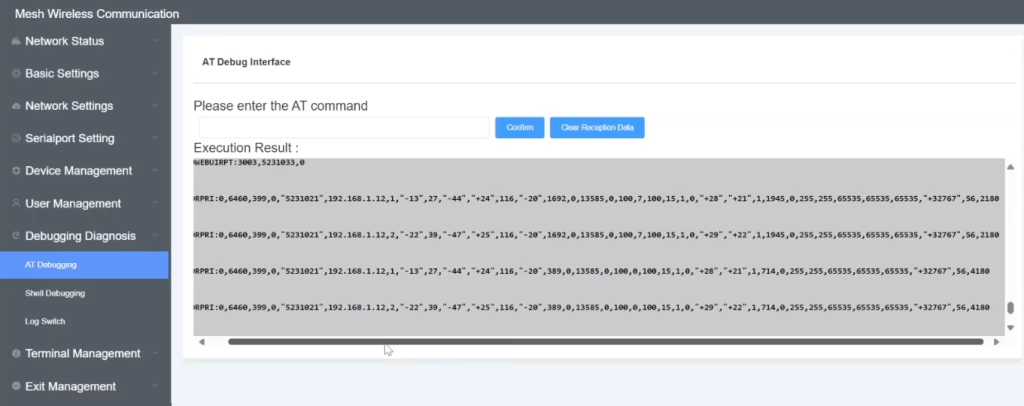
Manual de comandos do Mesh Radio AT
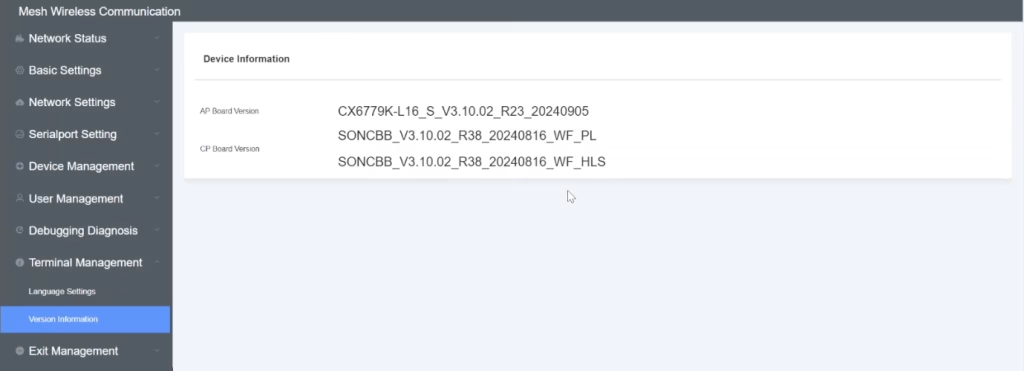
Versão CX6779K
Faça uma pergunta
Sua mensagem foi enviada