





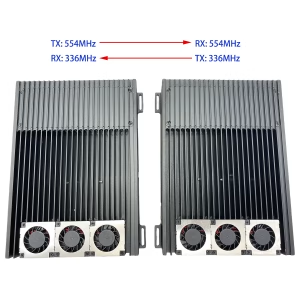
FDD, Uplink and Downlink use two different frequencies.


Transmissão de vídeo sem fio
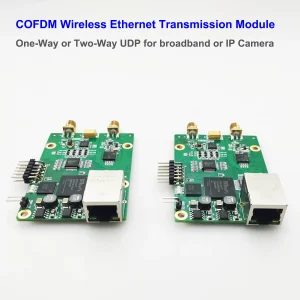
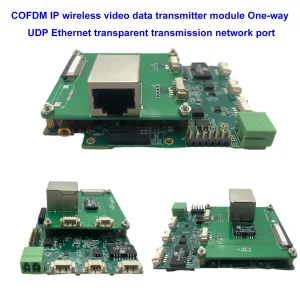
300-500Transceptor Mhz COFDM IP RJ45 com antena de filtro PA de 10W
Transmissão do Robô

Transmissão de vídeo sem fio

Cvbs hdmi para codificador IP
FDD significa Duplex por Divisão de Frequência, and it refers to a method of communication used in wireless systems, incluindo wireless video data transceivers, to allow simultaneous two-way communication over different frequencies.
How FDD Works in Wireless Video Transceivers
Em FDD, o transmitter and receiver operate on separate frequencies, allowing for simultaneous transmission and reception of data. This is particularly useful for systems like wireless video data transceivers that require constant, real-time data flow, such as in FPV (Visão em primeira pessoa) sistemas, transmissão ao vivo, or professional video transmission.
-
Frequência de transmissão (Tx): The signal is sent from the device to the receiver (por exemplo, the video feed from a drone).
-
Frequência de recebimento (Rx): The signal is sent from the receiver back to the transmitter (por exemplo, dados de telemetria, comandos de controle, or feedback).
By using different frequencies for transmit and receive, FDD allows for:
-
Simultaneous transmission and reception: Video data can be sent and received at the same time, sem interferência.
-
Clearer, more stable communication: With separate channels for each direction, FDD minimizes the risk of signal collisions or delays.
-
Higher bandwidth: Because the two channels are separate, there’s more room for data transfer, allowing for high-quality video transmission with less latency.
Benefits of FDD in Wireless Video Transceivers
-
low Latency: FDD ensures real-time, transmissão de vídeo de baixa latência, essential for applications like FPV drone flying or live event broadcasting.
-
Confiabilidade: With separate channels for sending and receiving data, the system can handle interference better and maintain a stable connection.
-
Improved Performance: It supports higher data rates and allows for continuous feedback, ensuring smooth operation even with high-quality video streams.
FDD vs. TDD (Duplex por Divisão de Tempo)
-
FDD: Uses two separate frequency bands for transmitting and receiving signals simultaneously. It’s ideal for high-speed and continuous communication, making it popular in wireless video systems.
-
TDD: Uses the same frequency band for both transmission and reception but switches between them in time slots. It is more efficient for systems with asymmetric traffic but can have higher latency compared to FDD.
Em wireless video data transceivers, FDD is commonly used to ensure real-time transmission e reliable communication, making it a key feature for professionals and enthusiasts requiring high-quality, uninterrupted video streams.
Transmissão de vídeo sem fio
300-500Transceptor Mhz COFDM IP RJ45 com antena de filtro PA de 10W
Transmissão do Robô
Transmissão de vídeo sem fio
Cvbs hdmi para codificador IP
VTX module duplex