






Obsah
EARFCN

EARFCN znamená E-UTRA Absolute Radio Frequency Channel Number. It’s a standardized identifier used in LTE (Long-Term Evolution) a LTE-Advanced cellular networks to uniquely specify the center frequency of a radio channel. Instead of dealing with raw frequencies (NAPŘ., 2140 MHz), network engineers and equipment use EARFCN values for simplicity and consistency.
EARFCN provides a consistent way to reference LTE carrier frequencies globally. FDD (Frekvenční divize duplex): Separate EARFCN for UL and DL. TDD (Time Division Duplex): Single EARFCN (UL/DL share frequency).
RSRP
RSRP (Reference Signal Received Power) is a critical measurement in LTE (Long-Term Evolution) a 5G-NR (New Radio) networks that quantifies the síla signálu from a cell tower (eNodeB/gNodeB) at your device (UE). It’s essential for network performance, handover decisions, a uživatelskou zkušenost.
RSRP measures: The average power (v dBm) received from a single cell-specific reference signal (CRS) over a specific bandwidth (typically one resource block ≈ 180 kHz). Focuses pouze on reference signals—not the entire channel noise or interference.
Typical RSRP Values:
| RSRP (dBm) | Kvalita signálu |
|---|---|
| > -80 dBm | Vynikající (silný) |
| -80 na -90 dBm | Dobrý |
| -90 na -100 dBm | Fair (usable) |
| < -100 dBm | Chudý (weak/unstable) |
| < -120 dBm | Bez signálu |
SNR
SNR (Poměr signál-šum) measures the strength of a desired signal relative to background noise. It quantifies how clearly a signal can be distinguished from interference in communication systems (Wi-Fi, buněčný, Zvuk, atd.). SNR is critical for performance—higher SNR means clearer data transmission, fewer errors, and faster speeds.
| Rozsah SNR | Performance Impact |
|---|---|
| > 30 dB | Flawless 4K streaming, low-latency gaming. |
| 20-30 dB | Smooth HD video, fast browsing. |
| 10–20 dB | Basic web browsing; occasional buffering. |
| 0-10 dB | Unstable connectivity; frequent drops. |
| < 0 dB | Connection lost (noise overwhelms signal). |
SNR vs. Related Metrics:
| Metrický | Soustředit se | SNR Comparison |
|---|---|---|
| RSRP | Raw signal strength (LTE/5G). | SNR depends on RSRP—but subtracts noise. |
| RSSI | Total received power (signál + hluk). | SNR = (RSSI – Hluk) / Hluk. |
| Sinr | Signal vs. hluk + rušení (more precise). | Often used interchangeably with SNR. |
QOS

QoS (Kvalita služeb) is a set of technologies and policies used in networking to prioritize traffic, manage bandwidth, a ensure reliable performance for specific applications, uživatelů, or services. It’s critical for maintaining consistent user experiences, especially in networks with limited resources (NAPŘ., buněčný, enterprise, or IoT networks).
Key Goals of QoS:
- Prioritizace: Treat high-importance traffic (NAPŘ., videohovory, pohotovostní služby) jako “VIP” over low-priority traffic (NAPŘ., file downloads).
- Resource Allocation: Reserve bandwidth for critical tasks.
- Minimize Latency/Jitter: Keep delays low for real-time apps (VoIP, hraní her).
- Reduce Packet Loss: Ensure data isn’t dropped during congestion.
RSSI
RSSI (Indikátor síly přijatého signálu) is a measurement of the total received power (signál + hluk + rušení) in a wireless communication system. It’s a fundamental metric used across Wi-Fi, buněčný (LTE/5G), Bluetooth, and IoT networks to gauge raw signal strength—but it does not distinguish between useful signals and noise.
Typicky negative values (since dBm is referenced to 1 miliwatt):
- -30 dBm: Extremely strong (near transmitter).
- -70 dBm: Mírný (reliable connectivity).
- <-90 dBm: Slabý (unstable or unusable).
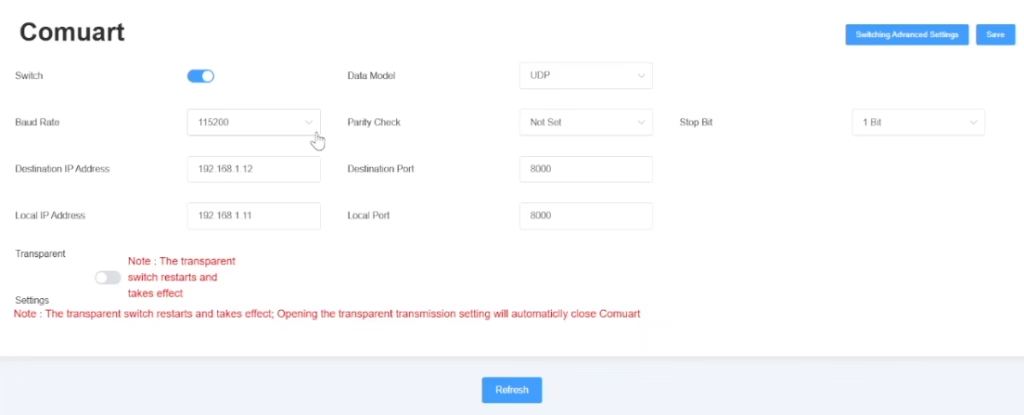
Comuart
COMUART odkazuje na a UART (Univerzální asynchronní přijímač/vysílač) interface used for sériová komunikace, typically found in embedded systems, networking hardware, or industrial devices. The “Com” prefix often denotes its role in communication ports (NAPŘ., RS-232, TTL seriál).
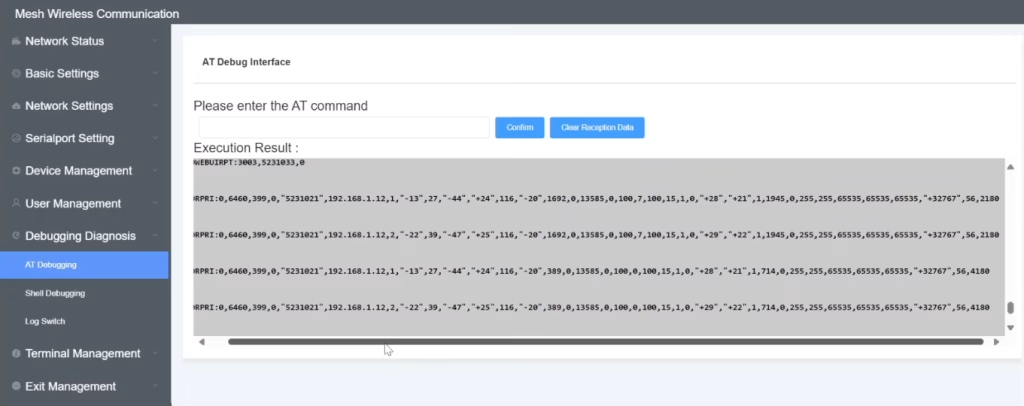
AT Debugging
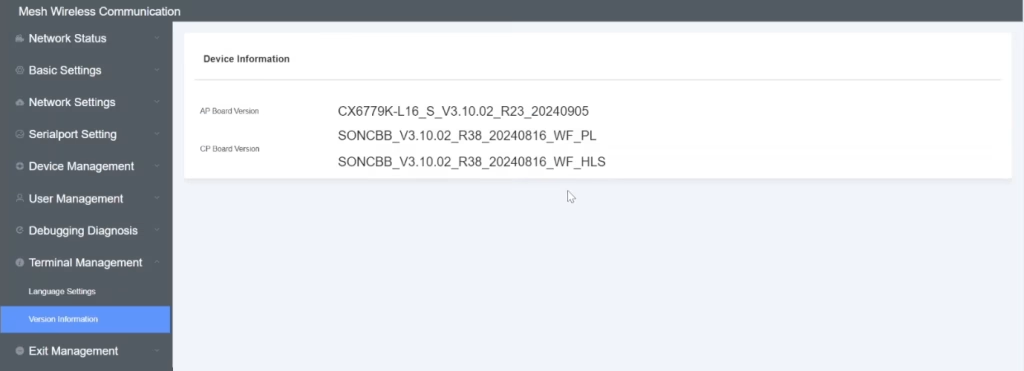
CX6779K Version
Položit otázku
Děkujeme za Vaši odpověď. ✨