

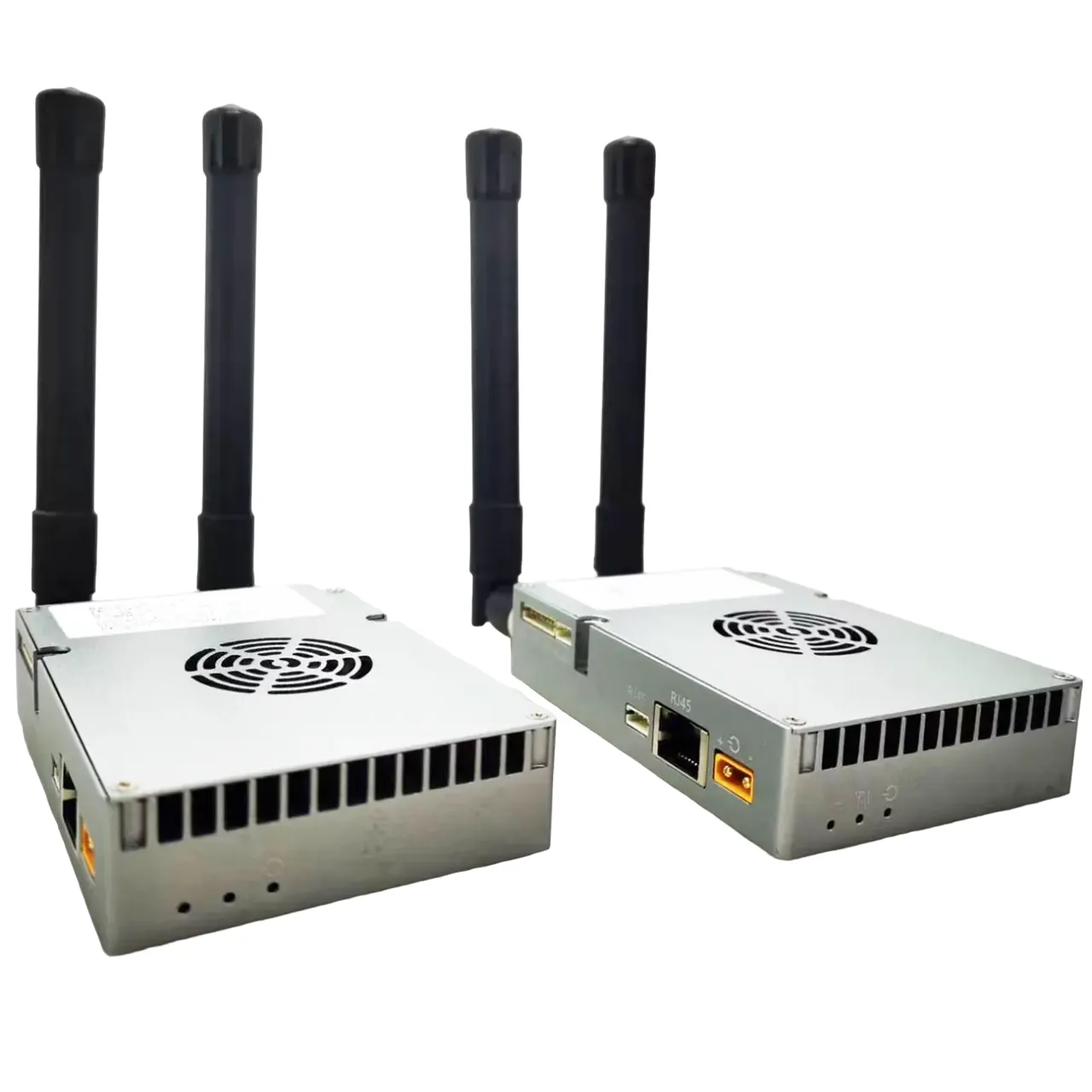
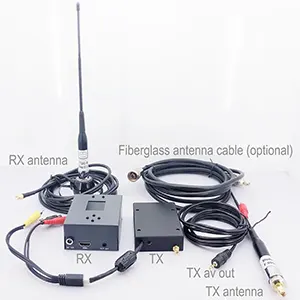


大エリアモバイルビデオ配信システムの設計 (COFDM vs MANET)
目次
要件の概要
Recently we received a customer request for a large-scale outdoor wireless video distribution system. The requirement focuses on transmitting video from multiple static cameras to moving vehicles over a wide geographic area.
Below is the customer’s original requirement description:
カメラの数: 複数の静的 IP カメラ (1080p)
伝送方式: 複数のカメラ送信機が複数の移動車両にビデオをブロードキャストする
カバーエリア: 約. 25 km× 15 キロ
優先テクノロジー:
- COFDM ブロードキャスト システムまたは
- マネ / メッシュ無線システム (IPベース)
入出力インターフェース: Ethernet (IPビデオ)
環境: アウトドア, 見通し内とモバイルでの使用
アンテナの種類: ベンダーが推奨するオムニ/セクター
電力要件: DC入力 (12–24V)
This article analyzes the technical implications of this requirement, possible architectures, and the advantages of the two technologies mentioned by the customer: COFDM broadcast そして MANET mesh networking.
Understanding the Core Requirement
At its core, the customer wants to build a large-area mobile video broadcast network.
The system must distribute real-time video streams from multiple fixed cameras に 複数の移動車両 operating in the field.
The main characteristics of this project are:
| パラメータ | 説明 |
|---|---|
| Camera Sources | Multiple 1080p IP cameras |
| Receivers | Multiple moving vehicles |
| Transmission Model | One-to-many broadcast |
| カバーエリア | 25 km× 15 キロ |
| 環境 | アウトドア, line-of-sight with mobility |
| ビデオインターフェース | Ethernet / IPビデオ |
| 力 | 12–24V DC |
Typical real-world applications for such systems include:
- Public safety monitoring
- Emergency response coordination
- Large event security
- 国境監視
- Tactical or military video distribution
Possible System Architecture
A typical system topology may look like this:
IP Cameras
     │
     │ Ethernet
     ▼
Video Encoder / Aggregation Node
     │
     │ Wireless Transmission
     ▼
Wireless Base Station
     │
     ├── Vehicle 1
     ├── Vehicle 2
     ├── Vehicle 3
     └── Vehicle N
In this architecture:
- Cameras generate IP video streams.
- A central node aggregates the streams.
- A wireless transmission system distributes the video.
- Moving vehicles receive the feeds in real time.
Video Bandwidth Considerations
The bandwidth requirement depends on the video codec.
Typical 1080p encoding rates:
| コーデック | Typical Bitrate |
|---|---|
| H.264 | 4–8 Mbps |
| H.265 | 2–4 Mbps |
If the system uses five cameras, the required throughput could be approximately:
5 × 4 Mbps ≈ 20 Mbps
Considering overhead and reliability, the wireless system should ideally support:
30–50 Mbps total throughput.
Coverage Requirements
The requested coverage area is:
25 km × 15 km
This corresponds to roughly:
375 km²
Achieving this coverage depends on several factors:
- terrain conditions
- アンテナの高さ
- 送信電力
- 周波数帯域
- 見通しの条件
In most practical deployments, this area would require:
- one high tower with sector antennas, または
- multiple distributed base stations
Technology Option 1: COFDM ブロードキャスト システム
COFDM (コード化された直交周波数分割多重化) is widely used in professional wireless video systems.
利点
- Excellent resistance to multipath interference
- のために設計されています high-quality video transmission
- Very 低遅延
- Naturally supports one-to-many broadcast
- Highly stable for mobile receivers
制限事項
- 通常 not a full IP network
- Limited scalability
- Less flexibility for data services
Typical architecture:
Camera → Encoder → COFDM Transmitter

Vehicles with COFDM Receivers
COFDM systems are commonly used in:
- 法執行機関
- UAV video downlinks
- military surveillance
- broadcast television links



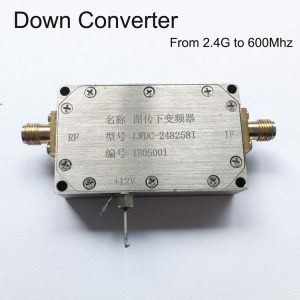
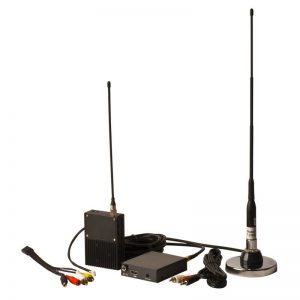
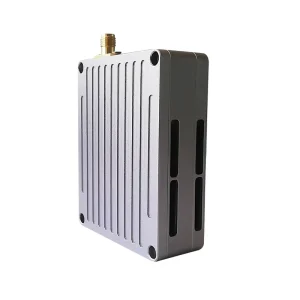
BDC ブロック ダウン コンバーター
ワイヤレスビデオ伝送 RF 周波数デジタルダウンコンバータ COFDM 転送周波数 2.4G ~ 600Mhz 低 BDC
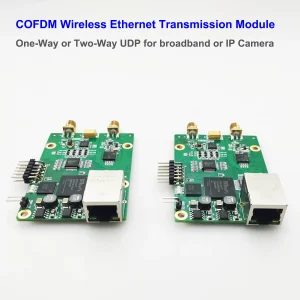
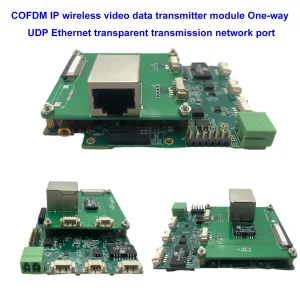
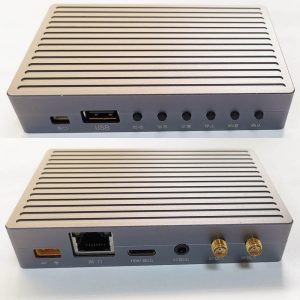
Technology Option 2: マネ / Mesh Radio
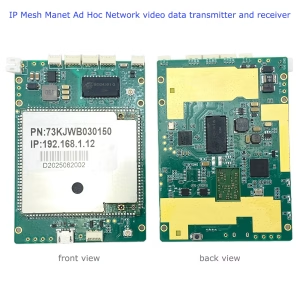
マネ (モバイル アドホック ネットワーク) systems create a self-forming wireless IP network.
Each node can act as both a router and a receiver.
利点
- Native IP networking
- サポート ビデオ, データ, and command traffic
- Highly scalable
- Vehicles can communicate with each other
制限事項
- Higher system complexity
- Shared bandwidth between nodes
- Potentially higher latency
Typical architecture:
Camera Node
     │
Mesh Network
     │
Vehicle Nodes
Nodes can relay traffic dynamically:
Vehicle ↔ Vehicle ↔ Base Station
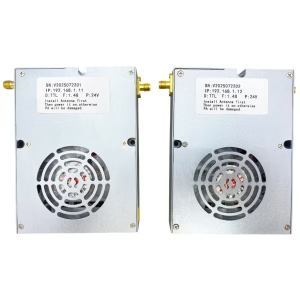

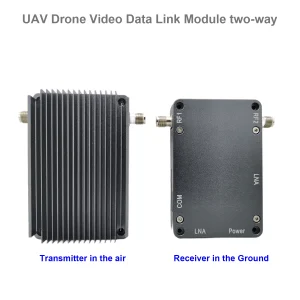
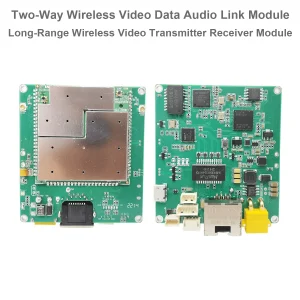
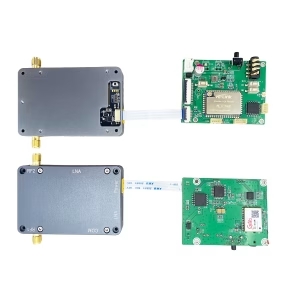
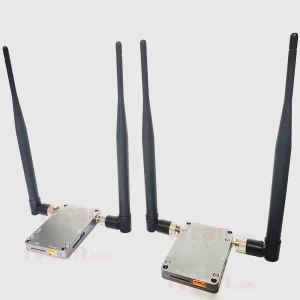

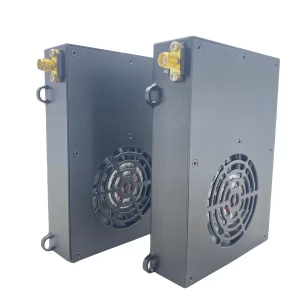
ワイヤレスビデオ伝送


ワイヤレスビデオ伝送
COFDM vs MANET Comparison
| 特徴 | COFDM | MANET Mesh |
|---|---|---|
| Network Model | 放送 | IP Network |
| レイテンシ | 非常に低い | 中くらい |
| One-to-Many | Native | Requires multicast |
| Mobility Support | 素晴らしい | 素晴らしい |
| スケーラビリティ | 限定 | 高い |
| システムの複雑さ | より低い | より高い |
一般的に:
- COFDM is ideal for pure video broadcasting
- MANET is better when full IP networking is required
Key Technical Challenges
1 Large-Area Coverage
Covering 25 km requires:
- high transmission power
- elevated antennas
- optimized frequency planning
A practical approach is using:
Central tower + sector antennas
2 Video Stream Aggregation
Multiple camera feeds must be combined using:
- ある ビデオエンコーダ
- ある network video gateway
- または streaming server
3 Mobile Reception
Vehicle-mounted systems typically require:
- high-sensitivity receivers
- omni-directional antennas
- vibration-resistant hardware
4 Spectrum and Frequency
The system must operate within a suitable RF band. Possible options include:
- 1.4 GHz
- 2.3 GHz
- 2.4 GHz
- 4.9 GHz (公安)
Frequency licensing may also be required depending on the region.
Recommended System Architecture
A practical deployment could follow this structure:
IP Cameras
     │
     ▼
Video Aggregation Server
     │
     ▼
Wireless Base Station
     │
     ▼
Vehicle Radio Nodes
     │
     ▼
Vehicle Displays / Command Systems
Questions That Must Be Clarified
Before designing the final system, several key questions should be answered:
1. How many cameras will be deployed?
2. Will all cameras transmit simultaneously?
3. How many vehicles will receive the video feeds?
4. What is the maximum acceptable latency?
5. Do vehicles need to communicate with each other?
6. What is the terrain type?
- flat
- 都会的な
- 山岳地帯
These answers significantly affect the network design.
結論
This requirement represents a large-scale mobile video distribution system operating over a wide outdoor area.
The key technical challenges include:
- wide-area wireless coverage
- reliable mobile reception
- multi-stream video transmission
- efficient one-to-many distribution
Two viable solutions exist:
COFDM Broadcast Systems
または
MANET Mesh Radio Networks
The optimal choice depends on whether the system prioritizes:
- pure video broadcasting, または
- full IP network functionality.
With the right architecture and planning, such systems can provide powerful situational awareness for security, 緊急対応, and large-scale monitoring operations.
質問する
ご回答をありがとうございました。 ✨