






目次
Do you have any suggestions for installing a COFDM Wireless Video transmitter to get the best performance?
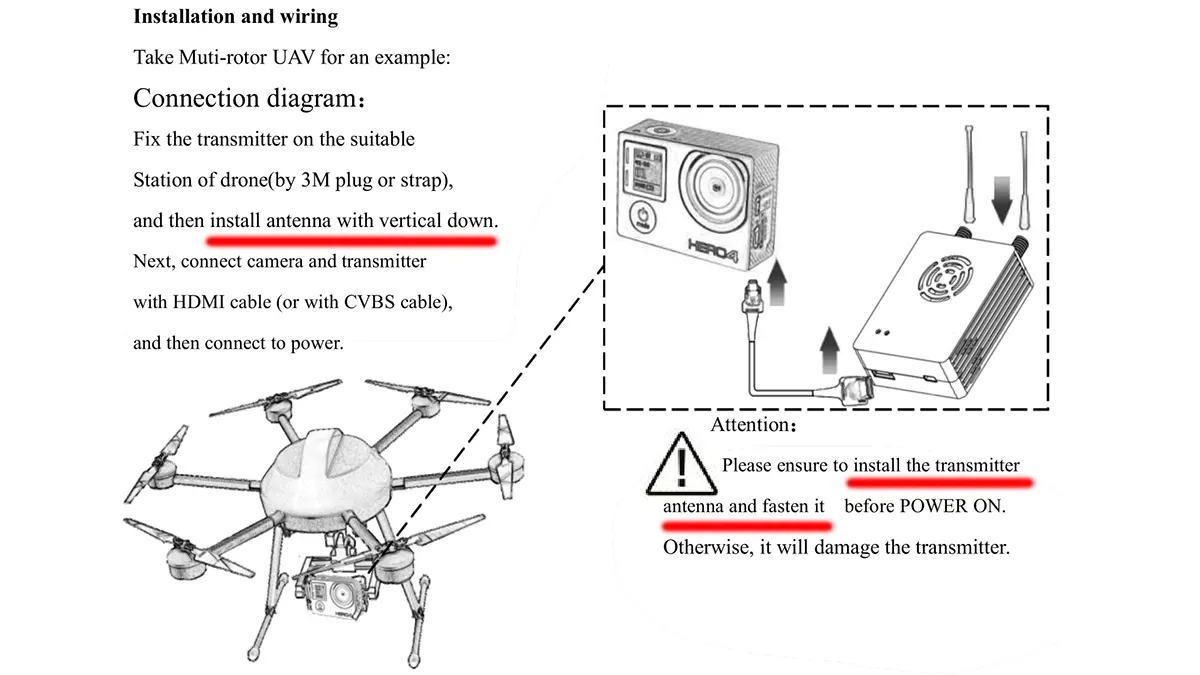
Installation Warning
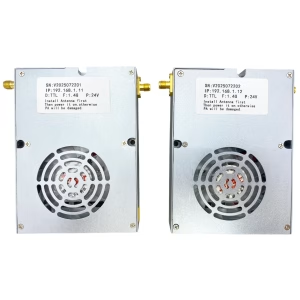
1. Before Power On, the user should install the antenna and make sure that the interface is tightened. さもないと, it will damage the circuit.
2. Please make sure the transmitter and receiver supply the voltage within the prescribed voltage range. さもないと, it will damage the circuit.
3. Be able to keep the antenna of the transmitter down vertically and without any obstacles to prevent shortening communication distance because of blocking.
4. The antenna of the receiver should be able to keep away from large metal parts.
5. Please be sure to use the right type of antenna, the antenna frequency should be suitable for the transmitter frequency.
6. 電磁干渉を最小限に抑えるために、電子機器間の適切な距離を保つように注意してください。.
使用上の警告
1. すべての接続ワイヤーが正しく締め付けられ、接続されていることを確認してください。.
2. 異物の侵入はありません (e.g. 液体, 砂, 等)
3. 送信機には約 15 電源オンまでの秒数, その後, 送信できる
4. 同じ周波数または高RF電力の無線送信機器との環境に干渉がないことを確認してください。, さもないと, 受信機がビデオを正常に受信できない可能性があります.
5. 受信機の信号が悪い場合, 受信アンテナの方向を変えてみてください.
6. HDMIケーブルを使用する場合, LCDディスプレイ, およびその他の付属品, 可能な限り電磁波シールド性能の高い製品を選択してください.
-
 最高の FPV ビデオトランスミッターモジュール 170-860Mhz ワイヤレス RF オーディオビデオトランスミッター FPV カメラ 3W PA 50km
 -
 ドローンスウォームメッシュネットワーク100km 60Mbpsラジオリンク4ノード2x周波数ホッピング2x 5ワットパワーアンプ
 -
 IPメッシュ100Mbpsワイヤレスビデオデータトランシーバー2x5W PA 16 ホップ
 -
 長距離ビデオデータ用のドローンリンク 無線テレメトリー UAV と地上管制局間の無線伝送
 -
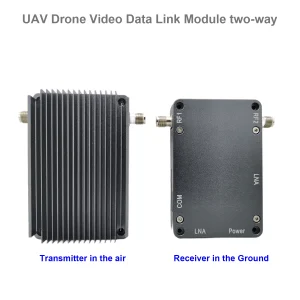 UAV ドローン ビデオ データ リンク モジュール ワイヤレス ビデオ トランスミッターおよびカメラ用レシーバー 長距離 TDD トランシーバー 双方向 vcan1401
 -
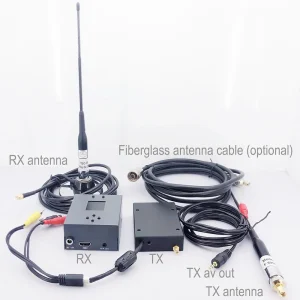 COFDM ビデオ送受信機 AV 入力 HDMI 出力 FPV, ワイヤレス 10km-15km-30km 長距離 安くて長い COFDM-912T
 -
 1740-1840MHZ 2WPA 30km長距離ドローンビデオトランスミッターとSBUS TTLを使用したレシーバー
 -
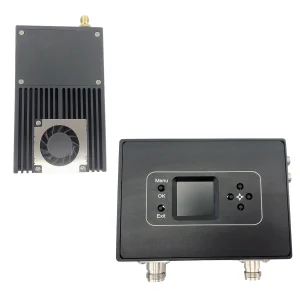 30Km 長距離 COFDM HDMI ワイヤレス ビデオ トランスミッター レシーバー フル セット オーディオ ビデオ TX RX UAV ドローン 1080P 908T用
 -
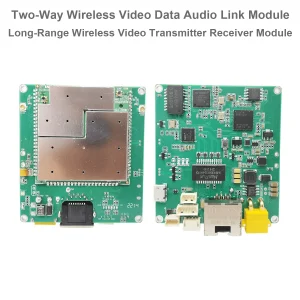 双方向 UAV ワイヤレス ビデオ データ RC コントロール リンク モジュール 長距離双方向トランシーバー 送受信機 Vcan1681
Proper installation of a COFDMワイヤレスビデオトランスミッター is crucial for achieving optimal performance, maintaining reliable signal transmission, and preventing equipment damage. Whether used for UAVs, ドローン, or other professional video transmission applications, following best practices ensures consistent video quality, extended transmission range, and long-term device reliability. Below are comprehensive suggestions for installation and usage, including warnings and practical tips.
Installation Recommendations
- Antenna Installation Before Power-On:
Always install the antenna on the transmitter before powering on the device. Ensure that the antenna interface is tightly secured. Failing to attach the antenna prior to powering on may result in severe damage to the transmitter circuit due to reflected RF power. The type of antenna must match the frequency range of the transmitter, as using an incorrect antenna can reduce efficiency, shorten transmission range, or even damage the device. - Power Supply Precautions:
Ensure that the transmitter and receiver are supplied with the correct voltage within the specified range. Overvoltage or undervoltage conditions can damage internal circuits and compromise system performance. Use regulated DC power supplies or UAV-compatible battery sources to avoid voltage fluctuations. - Transmitter Antenna Orientation:
For best signal propagation, position the transmitter antenna vertically and keep it free from obstructions such as walls, metallic structures, or dense materials. Obstructions in front of the antenna can significantly reduce communication distance and degrade video quality. 理想的には, the antenna should be mounted as high as possible relative to the surrounding environment to maximize line-of-sight coverage. - Receiver Antenna Placement:
Keep the receiver antenna away from large metal objects or electromagnetic interference sources. Metal surfaces near the antenna can reflect or absorb the RF signal, causing signal attenuation or multipath interference. Ensure that the receiver antenna is also oriented vertically for optimal reception. - Antenna Selection:
Always use antennas designed specifically for the transmitter frequency band. Using an incompatible antenna will reduce system efficiency and transmission range. High-gain antennas can extend the communication distance but may reduce coverage in certain directions, so choose antenna types according to your specific operational environment. - Electromagnetic Interference Minimization:
Maintain adequate separation between the transmitter, 受信機, and other electronic equipment. Keep the transmitter away from motors, power converters, GPS modules, and high-frequency electronics to reduce electromagnetic interference (エミ). Proper shielding and cable routing can further minimize EMI and improve signal stability.
Usage Warnings and Operational Tips
- Secure Connections:
Make sure all connecting wires, including power and video cables, are properly fastened and inserted. Loose connections can cause intermittent signal loss, video flickering, or system malfunctions. Regularly check connectors for wear and corrosion. - Prevent Foreign Objects:
Ensure that no foreign substances, such as liquids, ほこり, or sand, enter the transmitter or receiver enclosure. Exposure to moisture or debris may cause short circuits, corrosion, or permanent damage to electronic components. Consider using protective enclosures or covers in harsh environments. - Power-On Timing:
After powering on the transmitter, allow approximately 15 秒 for the system to initialize and stabilize before attempting video transmission. This startup period allows the COFDM encoder and RF circuits to lock frequency, synchronize with the receiver, and achieve optimal performance. - Avoid Frequency Interference:
Ensure that the operational environment is free from other high-power RF sources operating at the same frequency. Interference from other wireless systems may cause video dropouts, signal distortion, or reduced range. If multiple transmitters are used, maintain frequency separation to prevent cross-talk. - Signal Optimization:
If the receiver signal is weak or unstable, adjust the antenna orientation or reposition the receiver. Small changes in antenna angle or location can significantly improve signal quality and video reception. Line-of-sight between transmitter and receiver is ideal, but if obstacles exist, repositioning antennas can help reduce signal degradation. - Cable and Accessory Considerations:
When using HDMI cables, LCD displays, or other auxiliary equipment, select products with good electromagnetic shielding. Poorly shielded cables or accessories can introduce noise, degrade video quality, or reduce effective transmission distance. Keeping signal paths short and organized also minimizes interference. - 環境要因:
COFDM transmitters perform best under line-of-sight conditions. Avoid mounting the transmitter near reflective surfaces or inside metallic enclosures that may interfere with RF propagation. 温度, 湿度, and vibration can also affect transmitter performance, so ensure that the installation location is stable and within the operational specifications of the device.
Additional Practical Tips
- Label all cables and antennas for easier troubleshooting and maintenance.
- For mobile applications, ensure that antennas are mounted securely to prevent movement during operation.
- Test the system in the actual operational environment before full deployment to confirm range, ビデオ品質, and interference conditions.
- Periodically inspect connectors, アンテナ, and cables to maintain optimal performance and prevent failures.
- For UAV or drone applications, consider using gimbals or vibration isolation mounts for antennas and transmitters to further reduce interference and signal degradation caused by movement.
By following these detailed installation and usage suggestions, operators can ensure that their COFDM wireless video transmitter system performs reliably, provides maximum transmission range, and delivers high-quality video without interruptions. Proper care and attention to installation details are essential for achieving the full capabilities of professional long-distance wireless video transmission systems.
質問する
ご回答をありがとうございました。 ✨