





Complete Explanation of COFDM Video Transmitter Parameters
فهرست مطالب
Understanding FREQ, BW, FEC, GI, نقشه, توجه کنید, UART, EVNE, and Channel Lock
When customers receive a COFDM video transmitter, they often notice a set of technical parameters displayed on the screen or OSD (نمایش روی صفحه). A typical example might look like this:
FREQ: 830MHz
BW: 2MHz
FEC: 2/3
GI: 1/32
MAP: QPSK
ATTEN: 0dB
UART: 19200
EVNE
Channel Lock
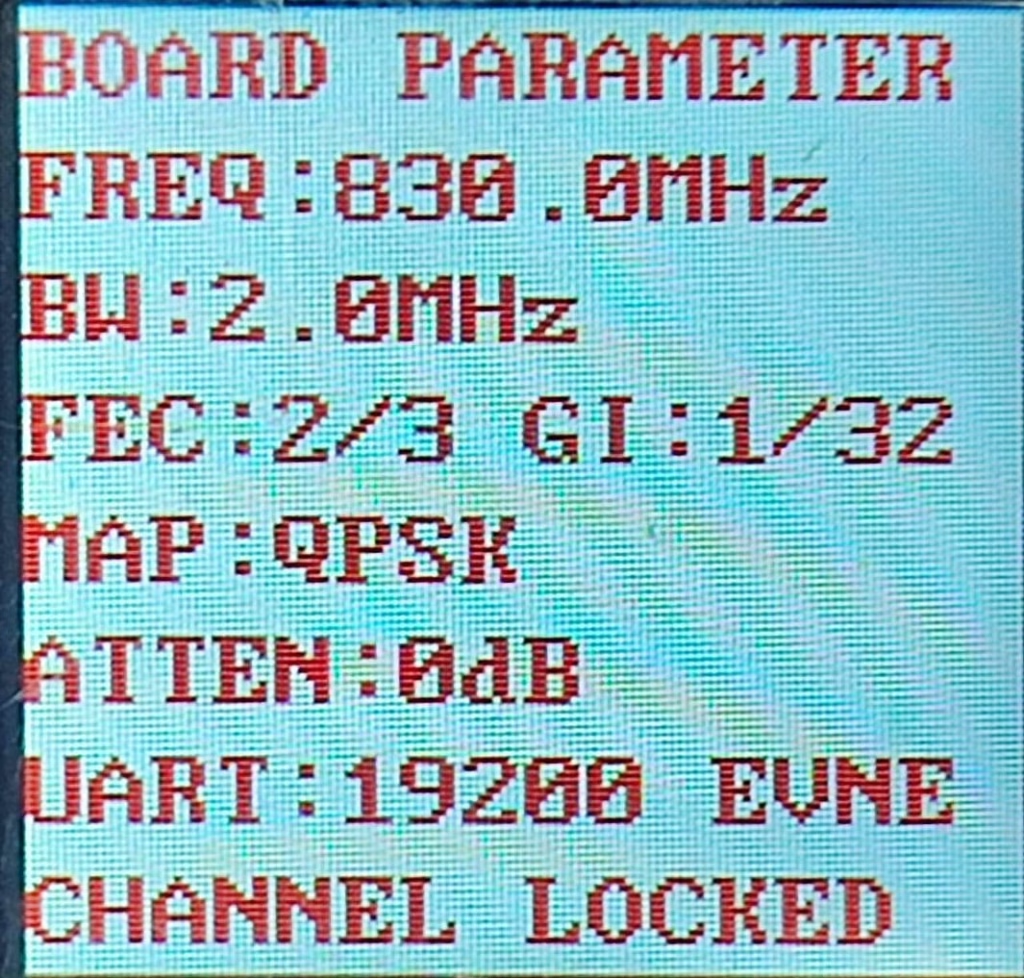
For many users, especially those who are not radio engineers, these values look confusing. However, each of them plays a crucial role in how the COFDM transmitter sends stable, low-latency video over long distances.
This article explains all these parameters in detail, what they stand for, and how to adjust them correctly for your application — whether you are using COFDM transmitters for drones, وسایل نقلیه, or tactical video systems.
FREQ — Frequency
Full Name: فرکانس عملیاتی
مثال: FREQ: 830MHz
This shows the RF center frequency used by the transmitter. It defines where in the radio spectrum the video signal is transmitted.
چگونه کار می کند:
The transmitter modulates the digital video signal into an RF carrier. The receiver must tune to the exact same frequency to demodulate and decode the video.
Typical frequency ranges:
- 300–900 MHz for long-range, نفوذ بهتر از موانع.
- 1.2 GHz, 2.4 GHz, یا 5.8 GHz for short-distance, higher data rate transmission.
Impact:
- Lower frequency (به عنوان مثال, 700-900 مگاهرتز): Better penetration and longer range, ideal for drones or mobile units in urban areas.
- Higher frequency (به عنوان مثال, 5.8 GHz): Higher throughput, but shorter range and more easily blocked by buildings.
Practical Tip:
Always make sure the transmitter and receiver use exactly the same frequency. Even a 1 MHz difference will cause the receiver to lose lock.
BW — Bandwidth
Full Name: پهنای باند کانال
مثال: BW: 2MHz
Bandwidth defines how wide the transmitted signal is on the frequency spectrum. It determines how much data (ویدئو + کنترل کنید) can be transmitted at once.
Common values: 1 مگاهرتز, 2 مگاهرتز, 4 مگاهرتز, 8 مگاهرتز.
Explanation:
- آ wider bandwidth allows more data throughput, enabling higher-resolution or higher-frame-rate video.
- آ narrower bandwidth uses less spectrum and provides longer range and stronger penetration, but at the cost of data speed.
Example comparison:
| Bandwidth | نرخ داده | محدوده | Suitable For |
|---|---|---|---|
| 1 مگاهرتز | کم | طولانی ترین | Low bitrate or SD video |
| 2 مگاهرتز | متوسط | طولانی | HD video over long distance |
| 4 مگاهرتز | بالا | متوسط | High-quality HD or low-latency video |
| 8 مگاهرتز | Very High | کوتاه | Close-range or line-of-sight applications |
Practical Tip:
For drone or tactical applications, 2 مگاهرتز is often the best balance between range and quality.
FEC — Forward Error Correction
Full Name: تصحیح خطای فوروارد
مثال: FEC: 2/3
FEC adds redundant information to the transmitted signal so that the receiver can detect and correct errors caused by noise, دخالت, or weak signal conditions.
Typical ratios: 1/2, 2/3, 3/4, 5/6.
تفسیر:
- 1/2 → Strong error protection (half of the data is error correction).
- 5/6 → Weaker error protection but higher throughput.
Effect on performance:
- Lower FEC ratio = more reliable link, less data rate.
- Higher FEC ratio = faster data rate, needs strong signal.
مثال:
For long-distance drone transmission, FEC = 1/2 یا 2/3 is ideal.
For short-range, high-quality streaming, you can use 3/4 یا 5/6.
Practical Tip:
If your video occasionally freezes or breaks under weak signal, try lowering FEC to 1/2.
GI — Guard Interval
Full Name: گارد فاصله
مثال: GI: 1/32
A guard interval is a short pause inserted between COFDM symbols to prevent inter-symbol interference caused by reflections or multipath signals.
Why it matters:
In real-world environments, radio signals bounce off walls, وسایل نقلیه, or the ground, creating multiple delayed copies of the same signal. Without a guard interval, these reflections would overlap and corrupt the next symbol.
Typical values: 1/4, 1/8, 1/16, 1/32.
Effect:
- Longer GI (به عنوان مثال, 1/4): Better resistance to echoes, ideal for urban or complex terrain, but slightly reduces data rate.
- Shorter GI (به عنوان مثال, 1/32): Higher speed, suitable for open field or direct line-of-sight links.
مثال:
If you’re transmitting through buildings or around corners, set GI to 1/8 یا 1/16.
If it’s a clear open field, 1/32 works fine.
MAP — Mapping (نوع مدولاسیون)
Full Name: Constellation Mapping یا نوع مدولاسیون
مثال: MAP: QPSK
MAP defines how binary data (0s and 1s) are mapped onto the carrier wave — essentially, which modulation scheme is used.
Common modulation types:
- QPSK (Quadrature Phase Shift Keying): Transmits 2 bits per symbol; very stable, suitable for weak signals and long range.
- 16QAM: Transmits 4 bits per symbol; higher throughput, but needs strong signal.
- 64QAM: Transmits 6 bits per symbol; maximum data rate but most sensitive to noise.
Effect:
| تلفیق | Bits/Symbol | نرخ داده | Signal Tolerance |
|---|---|---|---|
| QPSK | 2 | کم | عالی |
| 16QAM | 4 | متوسط | متوسط |
| 64QAM | 6 | بالا | کم |
Practical Tip:
For long-range, موبایل, or drone systems, QPSK is the best option.
If your system is fixed and the signal is strong, 16QAM can improve throughput.
ATTEN — Attenuation
Full Name: Transmit Power Attenuation
مثال: ATTEN: 0dB
This parameter adjusts the output RF power از فرستنده.
Attenuation simply means how much the signal is reduced before transmission.
چگونه کار می کند:
- 0 دسی بل = full output power (no reduction).
- Higher dB value = signal power reduced by that amount.
Effect:
- Lower attenuation (به عنوان مثال, 0 دسی بل): maximum power, longest range.
- Higher attenuation (به عنوان مثال, 10 دسی بل): reduced power, useful for short-range testing or avoiding interference.
مثال:
When testing indoors, set ATTEN to 10–20 dB to prevent saturating the receiver.
For actual flight or field use, استفاده کنید 0 دسی بل to maximize range.
UART — Universal Asynchronous Receiver/Transmitter
مثال: UART: 19200
UART refers to the serial communication interface used to configure or control the COFDM module through a data cable or host controller.
19200 represents the نرخ باد — the communication speed between the transmitter and the controlling device.
Common baud rates: 9600, 19200, 38400, 115200.
هدف:
- Parameter configuration (فرکانس, قدرت, پهنای باند, و غیره)
- Firmware upgrades
- Status feedback (قدرت سیگنال, دما, و غیره)
Practical Tip:
When connecting to a PC or microcontroller, ensure both ends use the same baud rate and parity settings (see “EVNE” below).
EVNE — Even Parity
مثال: EVNE یا EVEN
This refers to the parity bit used in UART communication. It’s a simple form of error detection that ensures data integrity.
Options:
- EVEN (EVNE): حتی برابری
- ODD: Odd parity
- هیچ کدام: No parity bit
تابع:
Parity bits help detect transmission errors during serial communication.
If the parity doesn’t match between the transmitter and the connected device, data may appear as random symbols.
Practical Tip:
Set the same parity (EVEN/ODD/NONE) on both devices to ensure stable communication.
Channel Lock
Display Example: “Channel Lock” or “Lock OK”
This message indicates that the receiver has successfully locked onto the transmitter’s COFDM signal — meaning all parameters (فرکانس, پهنای باند, FEC, GI, and modulation) match correctly.
If it shows “Unlocked” or “No Lock”:
- Check that both devices have the same فرکانس, پهنای باند, FEC, GI, و مدولاسیون.
- Verify antennas are properly connected.
- Ensure signal strength is above the threshold.
Once “Channel Lock” appears, the receiver can decode the video and output stable image.
Summary Table
| پارامتر | Full Name | مثال | تابع | Key Effect |
|---|---|---|---|---|
| FREQ | فرکانس | 830 مگاهرتز | Sets RF operating frequency | Must match TX/RX |
| BW | Bandwidth | 2 مگاهرتز | Defines channel width | Affects data rate & محدوده |
| FEC | تصحیح خطای فوروارد | 2/3 | Adds redundancy for reliability | Balances speed & ثبات |
| GI | گارد فاصله | 1/32 | Reduces multipath interference | Shorter GI = higher speed |
| نقشه | نقشه برداری مدولاسیون | QPSK | Sets modulation scheme | Impacts throughput & signal robustness |
| توجه کنید | تضعیف | 0 دسی بل | Adjusts transmit power | Higher ATTEN = lower power |
| UART | Serial Interface | 19200 | Communication port | Used for control & راه اندازی |
| EVNE | Even Parity | EVEN | UART parity setting | Prevents serial errors |
| Channel Lock | - | Locked/Unlocked | RF synchronization status | Must lock before video output |
سوالات متداول (پرسش و پاسخ)
Q1. Why do my transmitter and receiver show different FEC or GI values?
They must be identical; otherwise, the receiver cannot demodulate the signal. Always confirm FEC, GI, پهنای باند, and modulation match on both ends.
Q2. How can I get longer transmission range?
استفاده کنید lower frequency, narrower bandwidth (به عنوان مثال, 2 مگاهرتز), QPSK modulation, FEC = 1/2 یا 2/3, و GI = 1/8 یا 1/16. Keep ATTEN = 0 dB for full power.
Q3. My screen shows “No Lock” — what should I do?
Check that TX and RX frequencies match, antennas are firmly connected, and power is sufficient. Also make sure both units use the same bandwidth and modulation.
Q4. Can I increase bandwidth to get better video quality?
بله, but this will shorten the range and require higher signal strength. For long-distance, narrow bandwidth is more reliable.
Q5. What’s the best setting for drone COFDM transmission?
For long-range flight:
Bandwidth: 2 مگاهرتز
تلفیق: QPSK
FEC: 2/3
GI: 1/16
توجه کنید: 0 دسی بل
This ensures excellent stability with ultra-low latency.
Q6. What does UART 19200 EVNE mean?
It means the transmitter communicates at 19200 نرخ باد, با استفاده از حتی برابری for error detection. You must set the same values in your serial control software.
Q7. Is higher modulation always better?
نه لزوما. 16QAM or 64QAM give higher speed, but they require strong, clean signals. In weak signal environments, QPSK performs far better.
نتیجه گیری
Understanding these COFDM parameters is essential for getting the best performance from your wireless video system.
Each setting—FREQ, BW, FEC, GI, نقشه, توجه کنید, UART, EVNE—affects how your transmitter balances between محدوده, ثبات, and video quality.
For most long-range drone and tactical video applications, the following configuration is recommended:
- FREQ: within 700–900 MHz
- BW: 2 مگاهرتز
- FEC: 2/3
- GI: 1/16
- نقشه: QPSK
- توجه کنید: 0 دسی بل
With correct configuration and antenna alignment, COFDM technology can provide robust, تاخیر کم, non-line-of-sight video transmission in challenging environments.

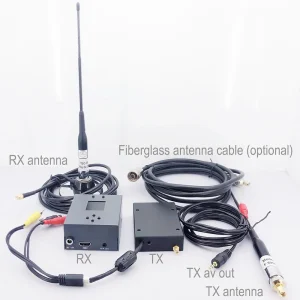
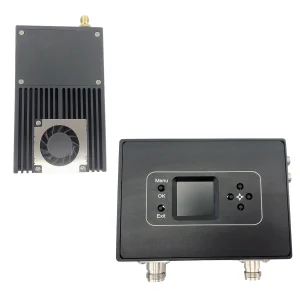

COFDM
فرستنده و گیرنده ویدیوی بی سیم برای دوربین, HDMI HD H265 264 رمزگذار 1W/2.5W PA 1080P60 Vcan1726


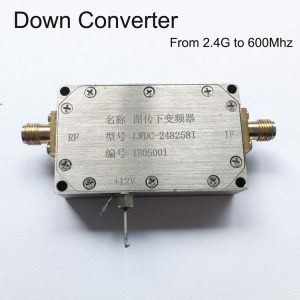
مبدل BDC Block Down
انتقال تصویر بی سیم فرکانس RF مبدل پایین دیجیتال COFDM فرکانس انتقال 2.4G به 600Mhz BDC کم
فرستنده های ویدیوئی
گیرنده ویدیوی بی سیم COFDM خروجی HDMI cvbs ماژول مینی مدولاتور RX fpv uav راه دور
فرستنده های ویدیوئی
سوال بپرسید
از پاسخ شما سپاسگزاریم. ✨