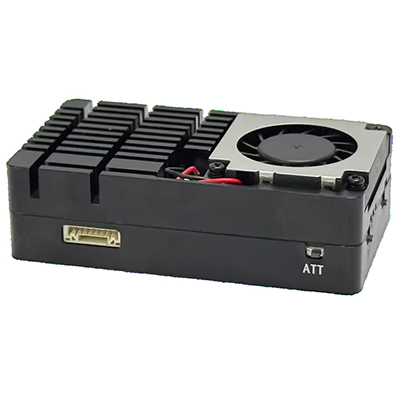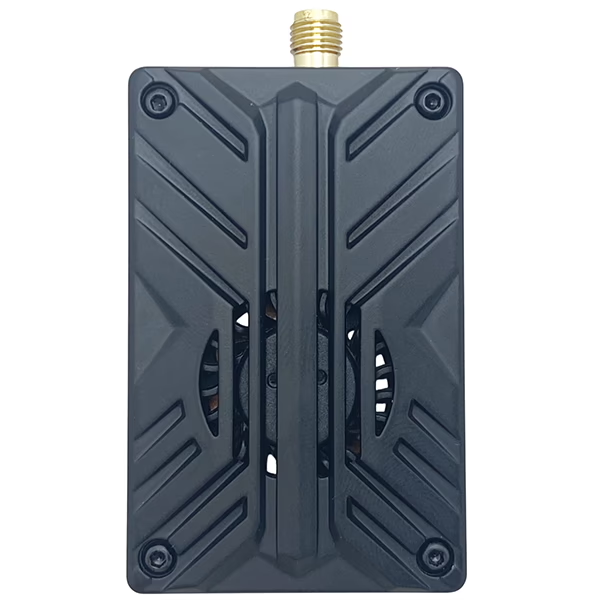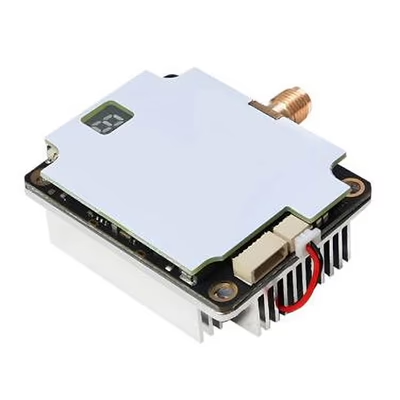






FPV camera
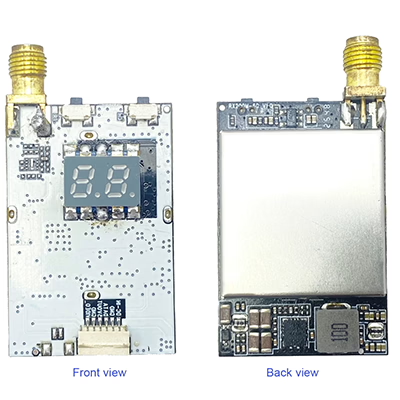
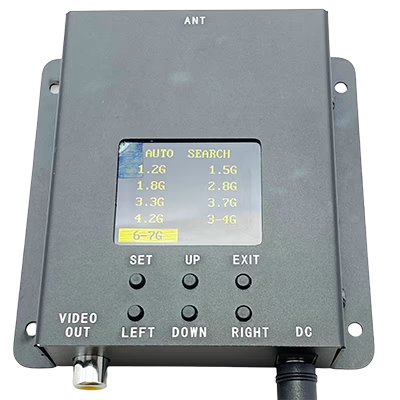
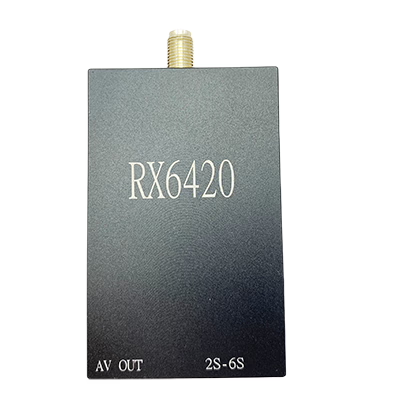
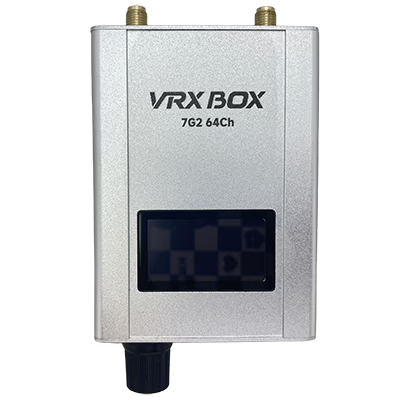
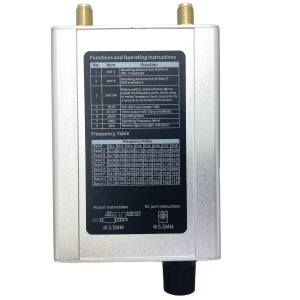
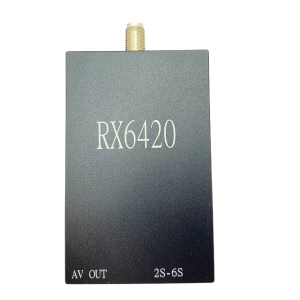
گیرنده FPV باند پهن 0.2-7.5GHz با کنترل فرکانس UART 200-7500MHz فرکانس قابل برنامه ریزی کاربر
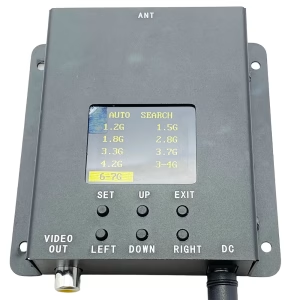
FPV camera
500MHz-8000MHz 8G Ultra-Wideband FPV Video Receiver 1.2G 1.5G 1.8G 2.8G 3.3G 3.7G 4.2G 3-4G 6-7G

FPV camera
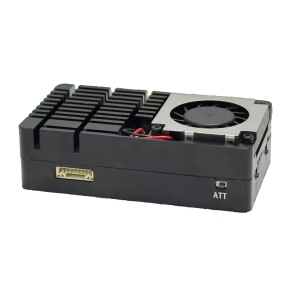
6110مگاهرتز-7210 مگاهرتز 6-7 گیگاهرتز FPV VTX 3 تقویت کننده توان وات یا فرستنده 5WPA 6.1-7.2GHz
FPV camera
Why 6.1–7.2 GHz FPV VTX/VRX Is the Next Big Step for High-Performance FPV
In the fast-evolving world of FPV (نمای اول شخص) سیستم ها, radio frequency technology plays a central role in determining range, نفوذ, تاخیر, resistance to interference, و قابلیت اطمینان کلی. در حالی که 2.4 گیگاهرتز و 5.8 GHz have dominated the hobbyist and commercial markets for years, a new band – 6.1–7.2 GHz – is emerging as a serious contender for high-performance applications.
This article explores who the potential customers are, the key limitations and pain points of 2.4 گیگاهرتز و 5.8 GHz links, and why 6.1–7.2 GHz FPV VTX/VRX systems can solve those problems and enable new use cases.
Potential Customers for 6.1–7.2 GHz FPV VTX/VRX
1) Professional Drone Operators & Enterprise Users
These include UAV service providers in:
-
Public safety (پلیس, آتش, واکنش اضطراری)
-
Inspection and surveying (زیرساخت, powerlines, خطوط لوله)
-
Agriculture and environmental monitoring
-
Construction site monitoring
-
Media and cinematography
Why they care:
These customers demand reliable, long-range video with minimal latency and high resistance to interference. Traditional FPV bands often fall short in congested RF environments.
2) Industrial Automation and Robotics
-
Autonomous ground robots
-
Industrial inspection robots
-
Telepresence rovers
Why they care:
Industrial environments are RF-noisy, with metal structures causing multipath and signal reflection. Video links need robust penetration and resilience.
3) نظامی, دفاع & Government Agencies
-
شناسایی تاکتیکی
-
نظارت بر مرزها
-
Secure communication
Why they care:
امنیت, برد بلندتر, and operation in high-interference or spectrum-crowded environments are mission-critical.
4) FPV Racing Teams & High-Performance Pilots
-
Competitive drone racing
-
Freestyle pilots wanting longer sight lines
Why they care:
Despite being hobbyists, advanced pilots push equipment limits. The demand for clearer video, تأخیر کمتر, and minimal dropout is real performance fuel.
Pain Points with Traditional FPV Bands
📌 2.4 GHz – Great for Control, Problematic for Video
Although 2.4 GHz is widely used for RF control links (به عنوان مثال, radio control of drones), آن است not ideal for high-bandwidth video:
-
Crowded spectrum: وای فای, بلوتوث, and other devices operate here.
-
Lower bandwidth for video: Not suited for high-resolution, low-latency streaming.
-
Penetration vs. interference trade-off: Better penetration but more competing signals.
Real pain for users:
-
Video dropouts near WiFi routers or urban environments
-
Inconsistent video quality in populated areas
📌 5.8 GHz – Mainstream FPV Band With Growing Limitations
5.8 GHz is currently the de facto standard for analog and digital FPV video systems. با این حال:
-
High RF congestion: Crowd interference at events, airshows, races.
-
Limited range and obstacles: Higher frequency struggles with building/tree penetration.
-
Regulatory restrictions in some regions
User experiences include:
-
Ghosting, برف, breakup under moderate interference
-
Less reliable in long-range or industrial environments
-
Multiple pilots in proximity cause mutual interference
خلاصه: Why Traditional Bands Are Hitting Their Limits
| Challenge | 2.4 گیگاهرتز | 5.8 گیگاهرتز |
|---|---|---|
| RF congestion | بالا | Very High |
| Penetration/obstacles | Better | متوسط |
| محدوده | محدود | Moderate to Good |
| پهنای باند | کم (ویدئو) | متوسط |
| مقیاس پذیری (بسیاری از کاربران) | بیچاره | بیچاره |
The bottom line: As demand for HD/low-latency video growths, so do the limitations of 2.4 گیگاهرتز و 5.8 سیستم های گیگاهرتز.
Why 6.1–7.2 GHz FPV VTX/VRX Is a Better Choice
✓ Expanded Bandwidth = Higher Data Throughput
6.1–7.2 GHz offers a relatively uncluttered band with more contiguous spectrum برای:
-
ویدیو HD (1080p and above)
-
Low-latency digital links
-
Wider channels without overlapping interference
This enables users to stream cleaner, sharper, and more reliable video.
✓ Better Resistance to Interference
Because this band is less used globally for consumer WiFi and control protocols, there is:
-
Lower RF noise floor
-
Less co-channel interference
-
Better multi-pilot coexistence
➡ This matters in: events, industrial deployments, محیط های شهری.
✓ Improved Range and Penetration vs. 5.8 گیگاهرتز
Physics tells us that slightly lower wavelengths:
-
Pass through obstacles more efficiently
-
Maintain signal strength over longer distances
While higher than 2.4 گیگاهرتز, 6–7 GHz strikes a practical balance:
-
Reduced noise impact vs. 5.8 گیگاهرتز
-
Higher throughput than 2.4 گیگاهرتز
✓ مقیاس پذیری & Spectrum Hygiene
With more available channels and less use by consumer devices:
-
Multiple drones can fly in the same area without interference
-
Enterprise deployments can manage spectrum cleaner
This is critical for:
-
Fleet operations
-
Coordinated inspections
-
Multi-pilot airspace usage
✓ Future-Proofing for Digital FPV
As digital FPV (به عنوان مثال, H.264/H.265, low-latency codecs) becomes standard:
-
More spectrum means better video quality
-
Lower compression artifacts
-
Less latency
This aligns with industry demand for real-time HD video feeds.
Real-World Application Scenarios
| برنامه | Pain With 2.4/5.8 | Benefit Using 6.1–7.2 |
|---|---|---|
| Public Safety UAV | Dropouts near structures | Reliable long-range video feed |
| بازرسی صنعتی | Signal noise around metal | Cleaner signal, fewer retries |
| Multi-Pilot Events | RF congestion chaos | Clearer channels, less collision |
| Autonomous Robots | Obstacle blockage | Better penetration & استحکام |
| Defense Recon | Vulnerable to jamming | Less predictable spectrum |
نتیجه گیری: The Case for 6.1–7.2 GHz FPV
In a world where:
-
FPV systems need higher resolution
-
Missions require scalable, robust connectivity
-
RF environments are increasingly crowded
6.1–7.2 GHz FPV VTX/VRX provides the performance edge that legacy bands struggle to deliver.
For professionals, enterprise users, and advanced hobbyists alike, this frequency range offers:
✔ Increased spectrum availability
✔ Lower interference
✔ Improved video quality & قابلیت اطمینان
✔ Better range and penetration balance
It’s not just a new frequency band — it’s a strategic upgrade for the next generation of FPV use cases.