




Web Device Management UI for long-range wireless video data link transmitter and receiver
Users can view the current parameter configuration through the Web devices management UI and modify it according to the needs of the application, the user can access the device through the Network Port Browser, and the default IP address of the Sky end is 192.168.1 12, the default address of the ground end is 192.168.1 11.

Ghi chú: To change any configuration parameters via the web UI, users need to reboot the hardware system for the changed configuration to take effect.
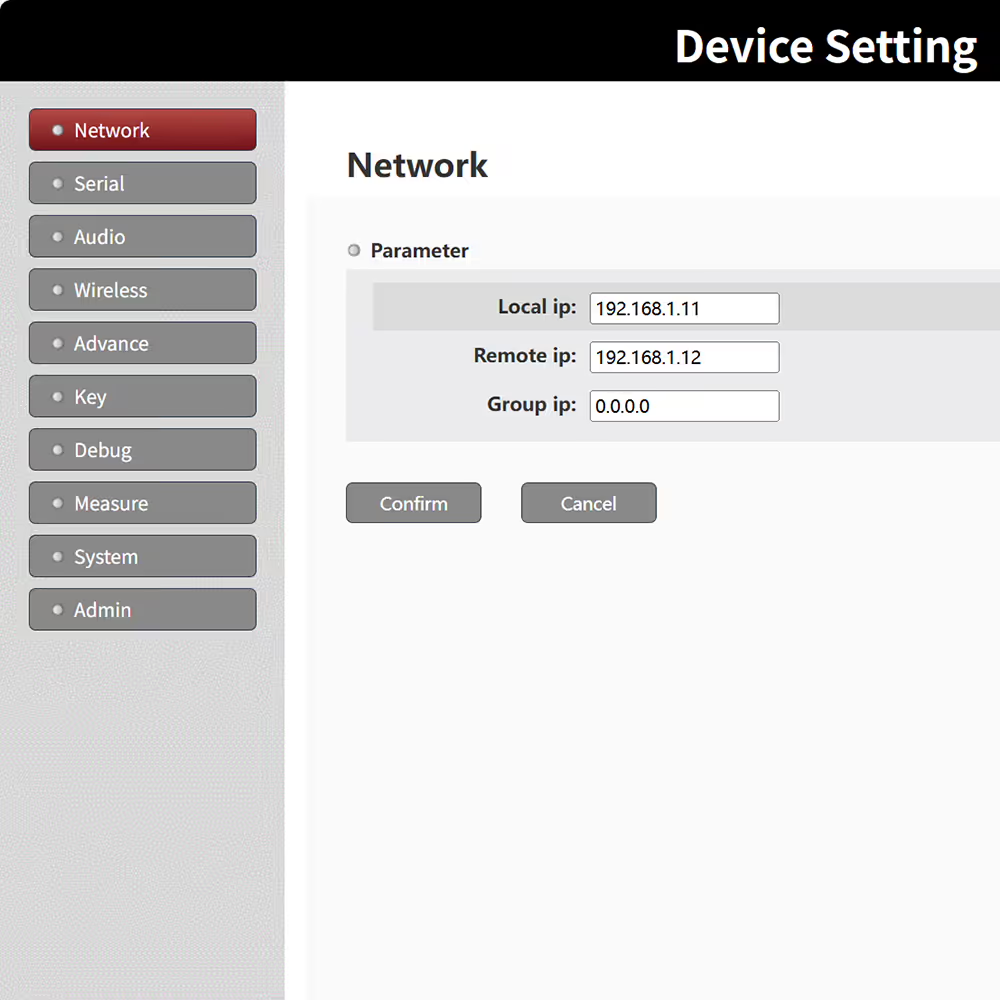
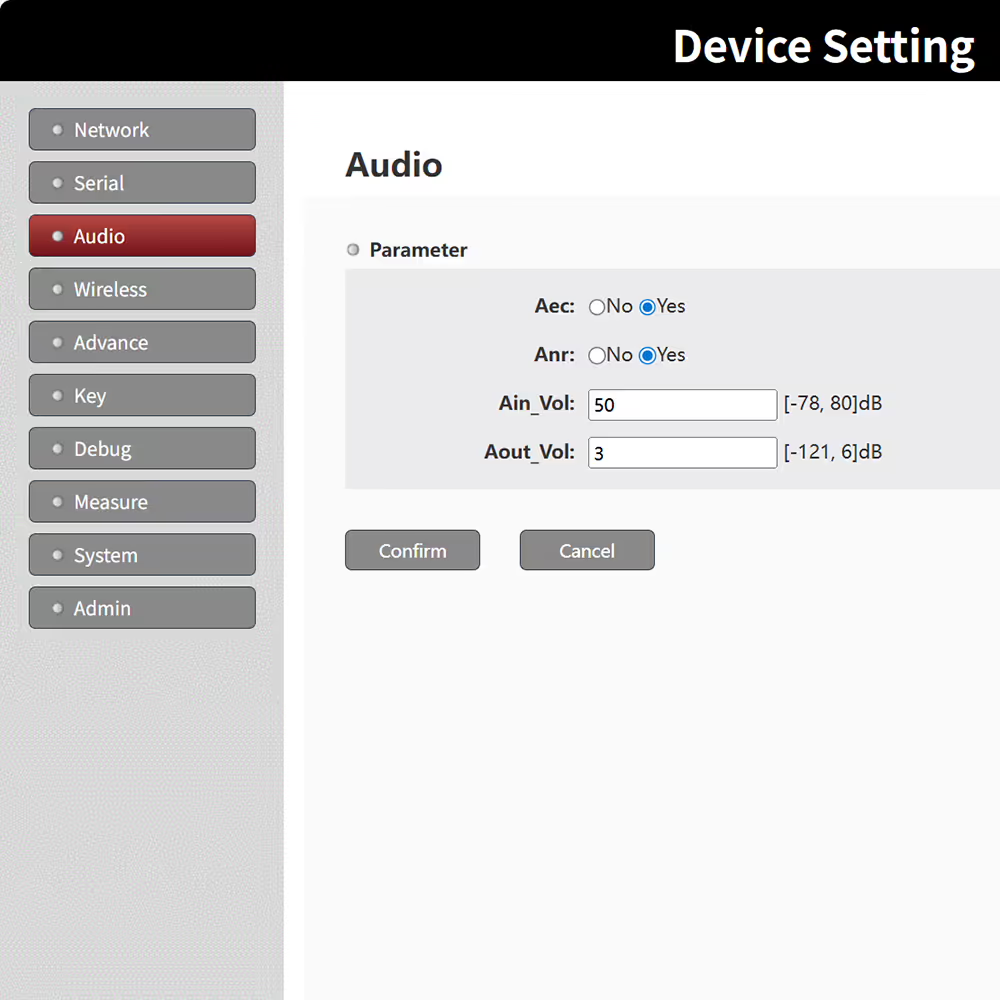


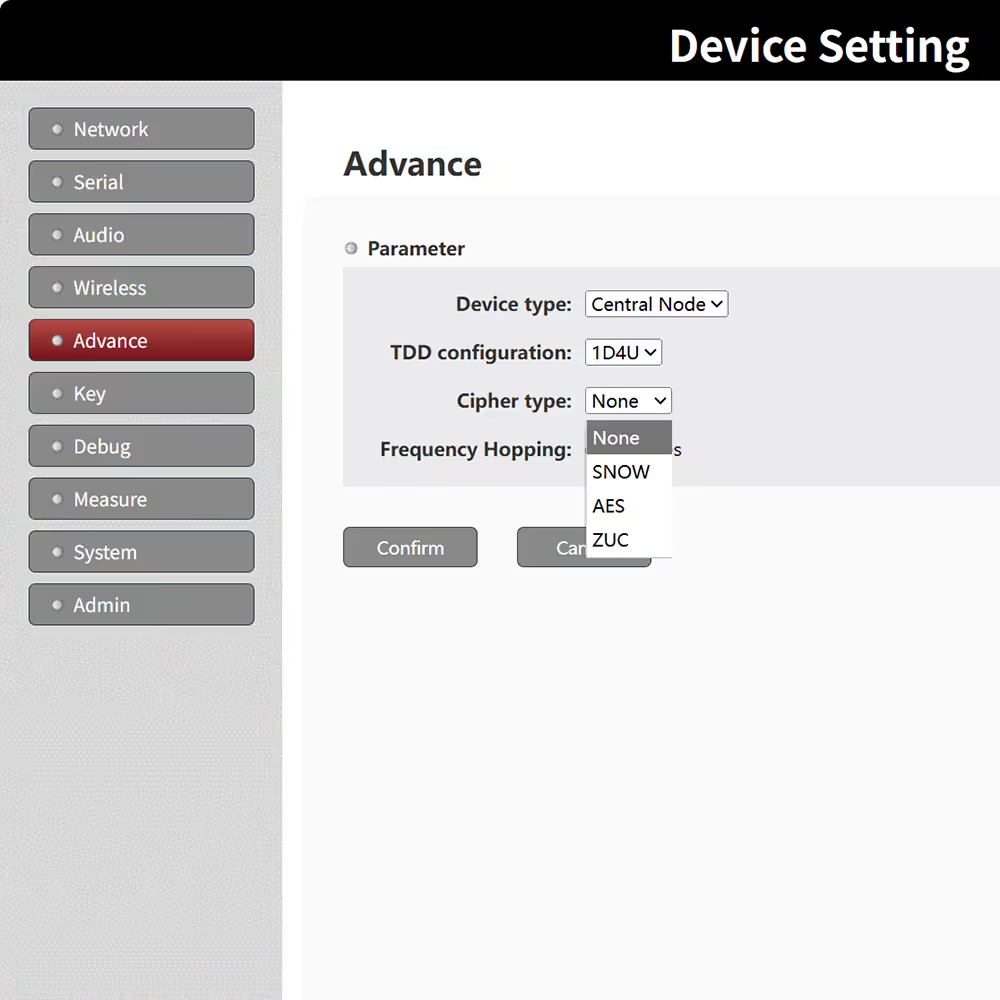

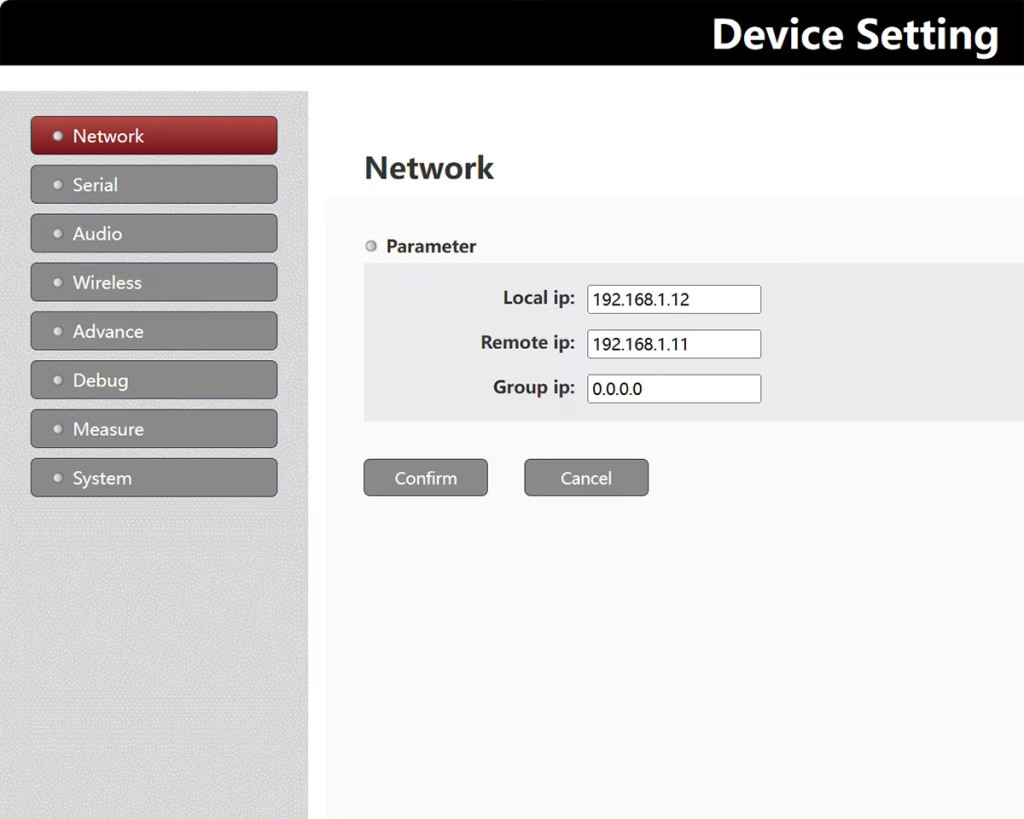
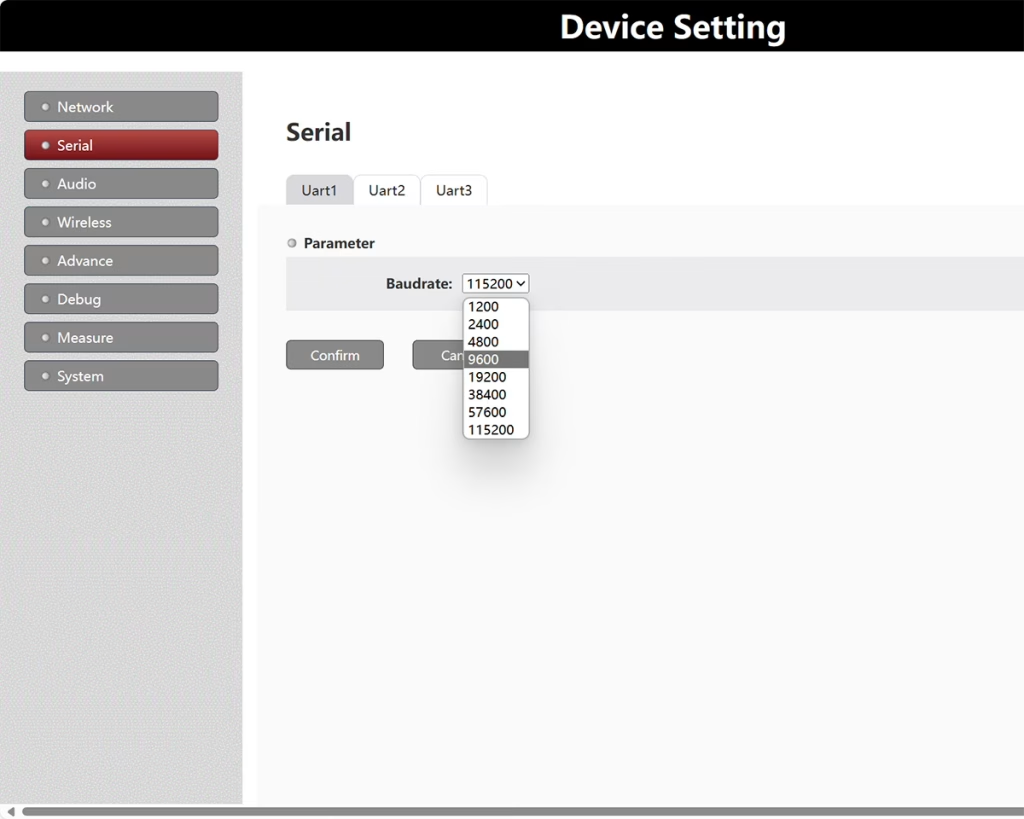
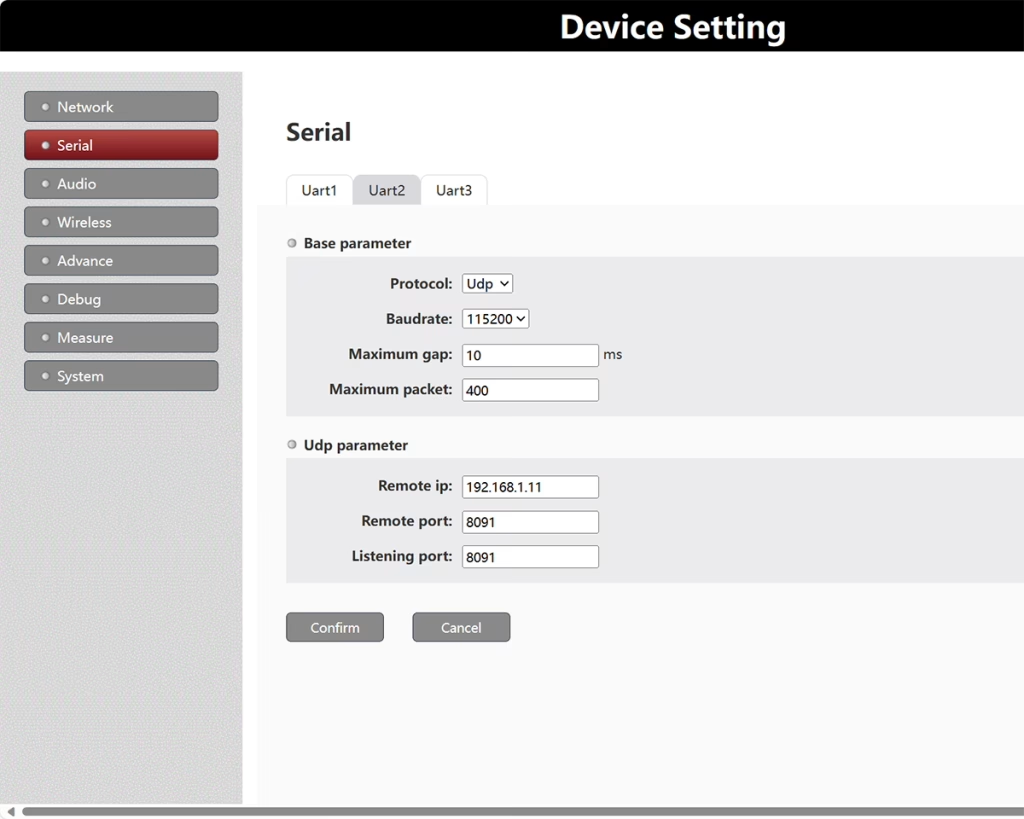
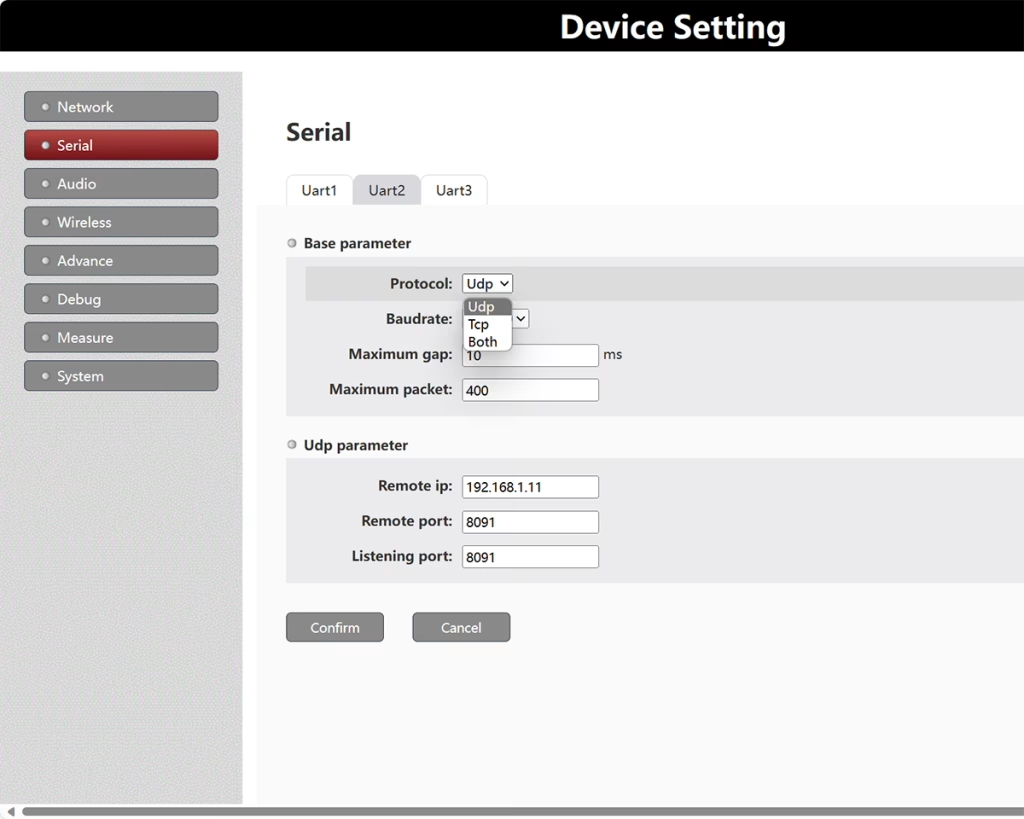
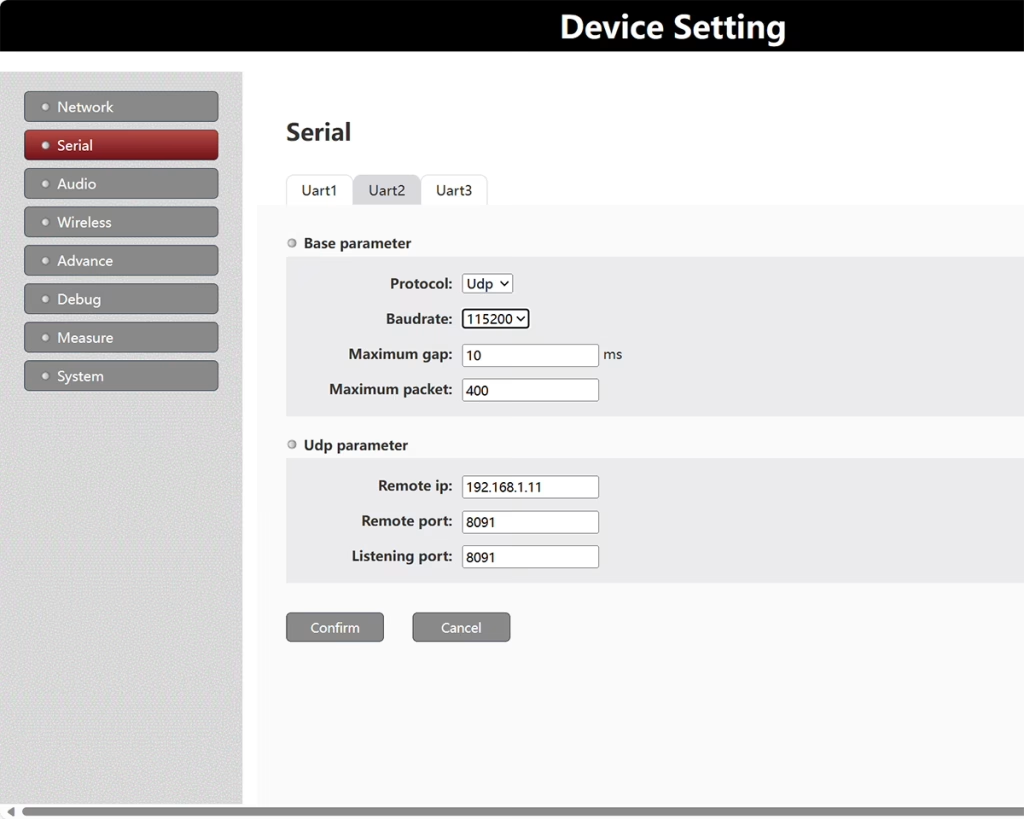


IP cục bộ: Nearby your computer, almost is the wireless video data receiver’s IP address;
IP từ xa: Nearby the camera, almost the wireless video data transmitter’s IP address.
Group IP: If you do not want to use broadcast mode, you can use multicast mode, the above Remote IP is changed to the multicast address, and all devices participating in multicast reception need to configure the same multicast address.
192.168.1.255 represents broadcast mode transmission
192.168.1.x represents point-to-point transmission
Ghi chú: DLB only supports multicast addresses in the 224.0.0.0~224.0.0.255 segments, considering that some addresses are reserved, it is recommended to use addresses above 224.0.0.23.
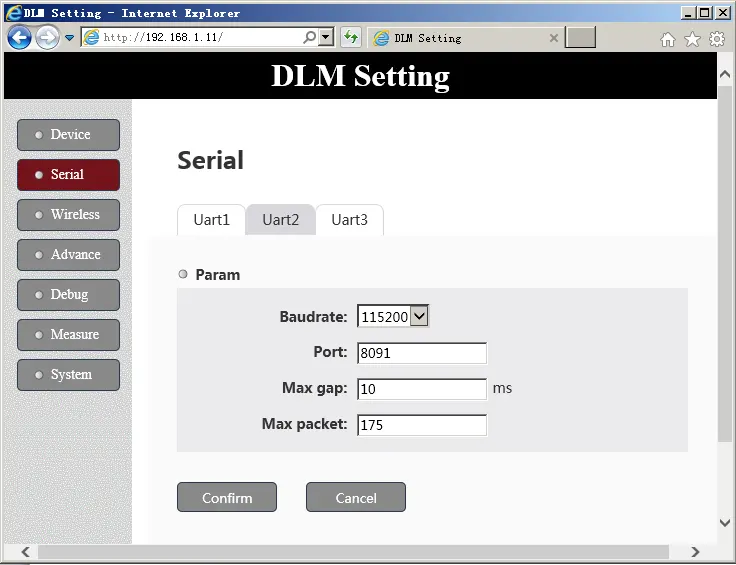
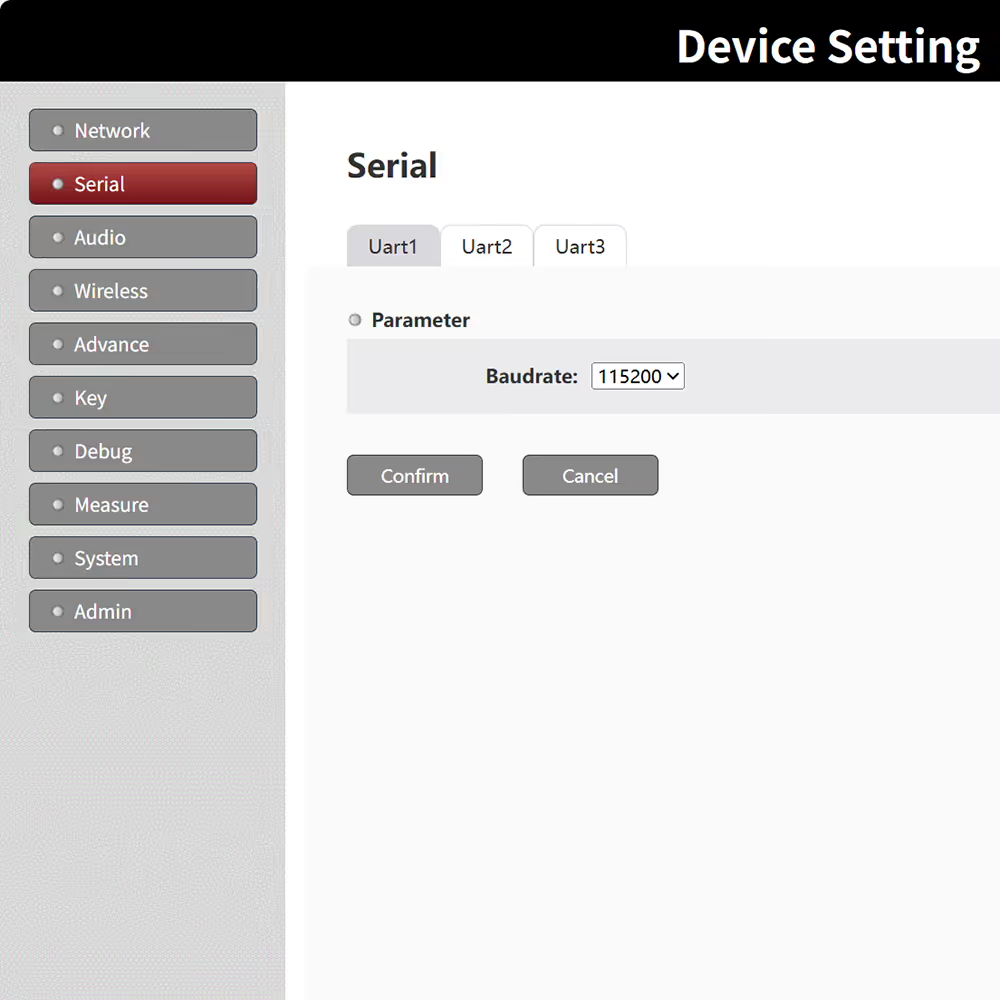
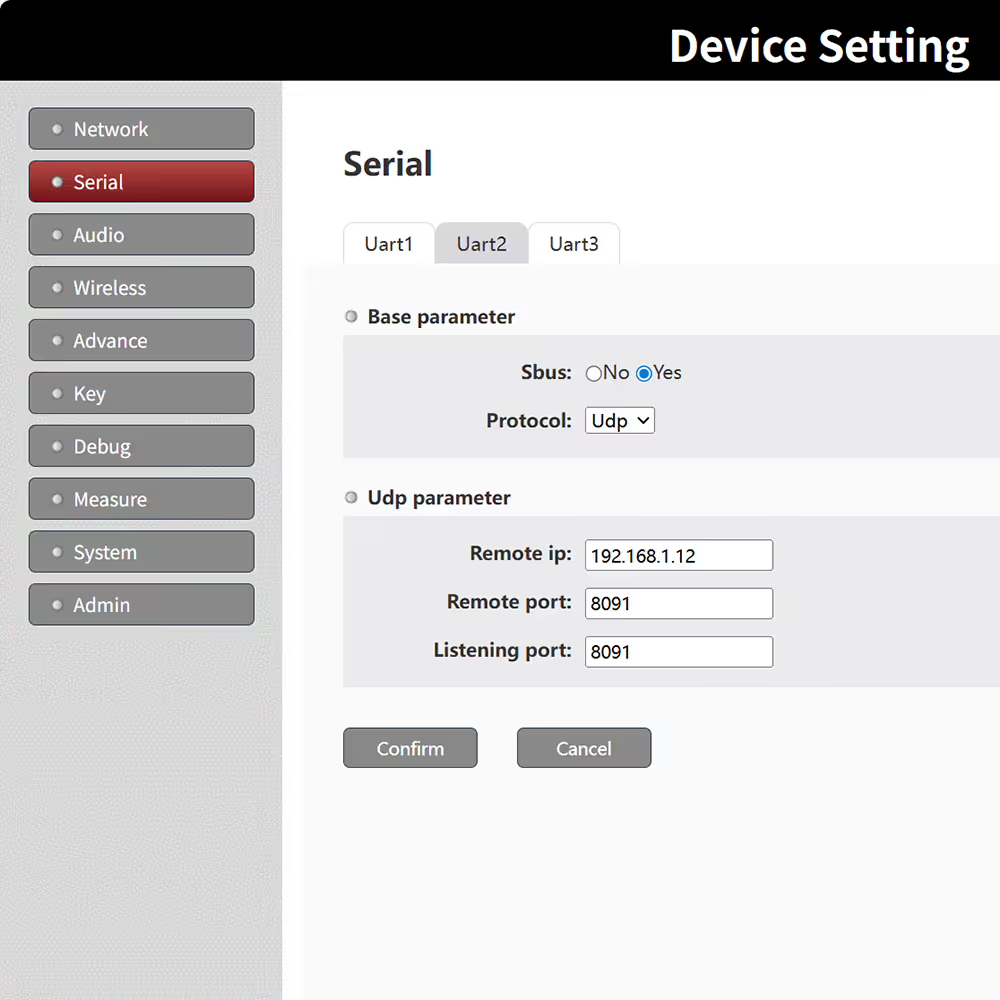
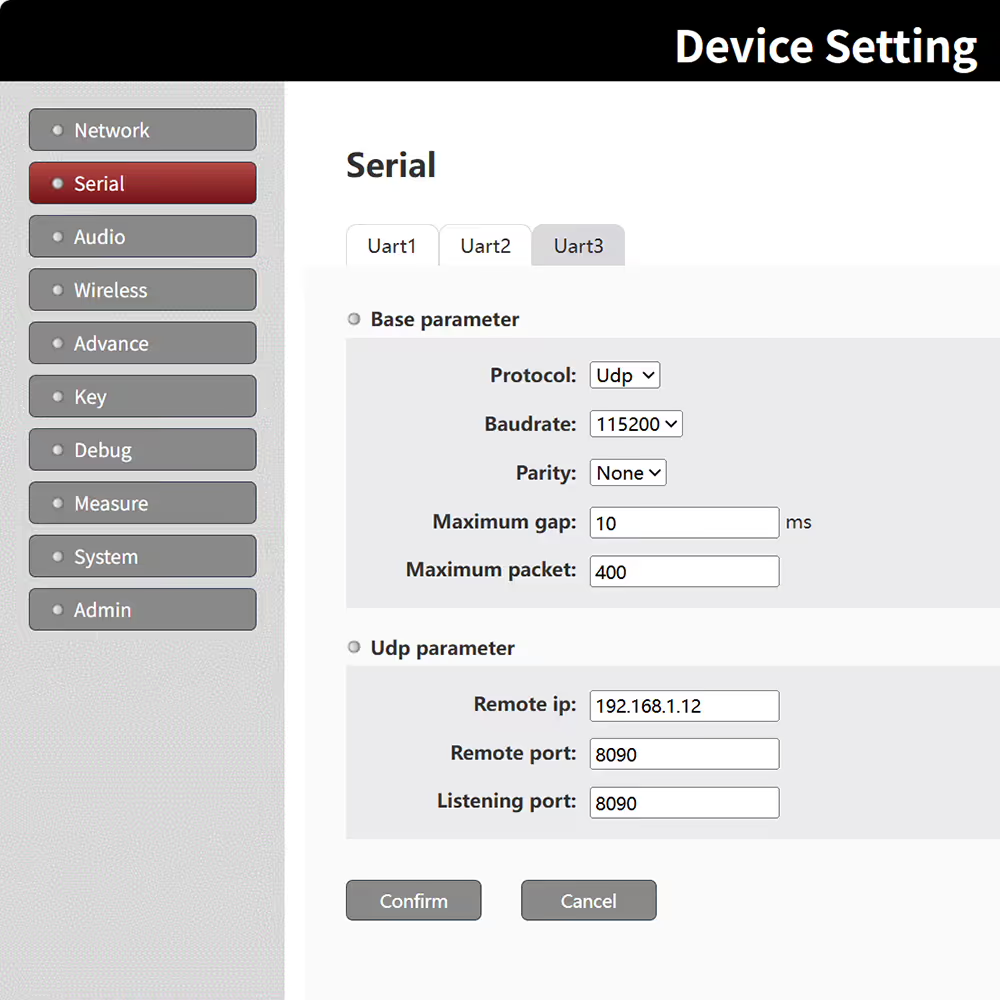
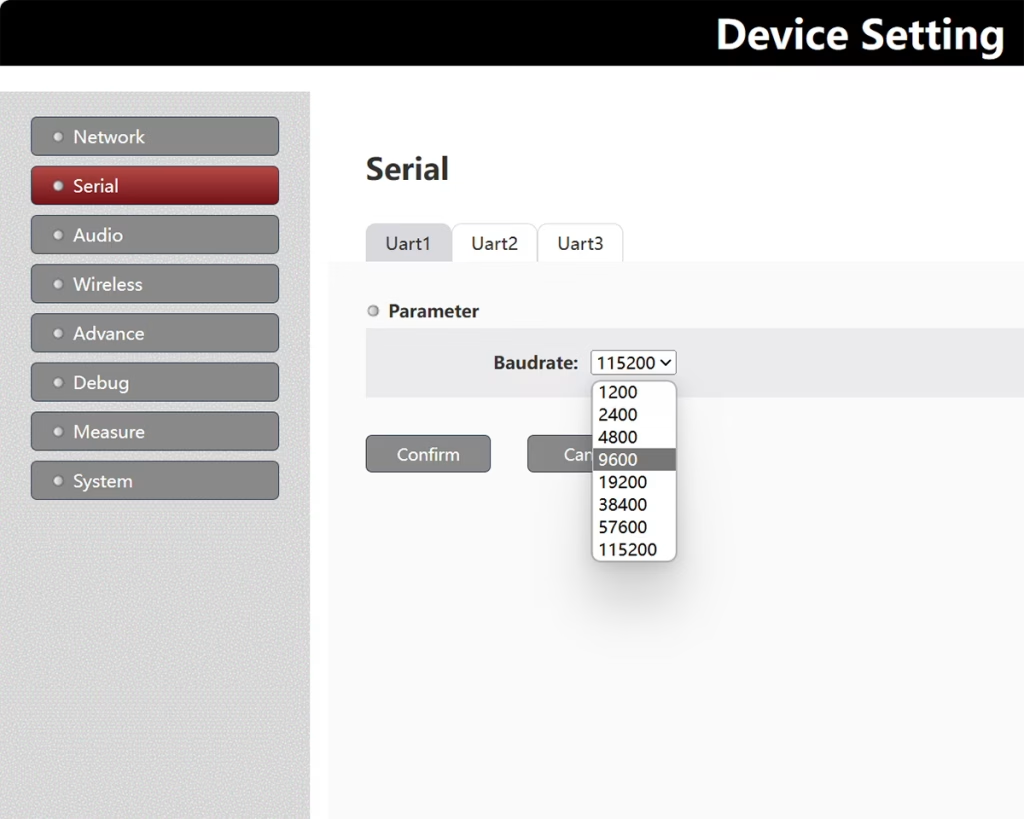
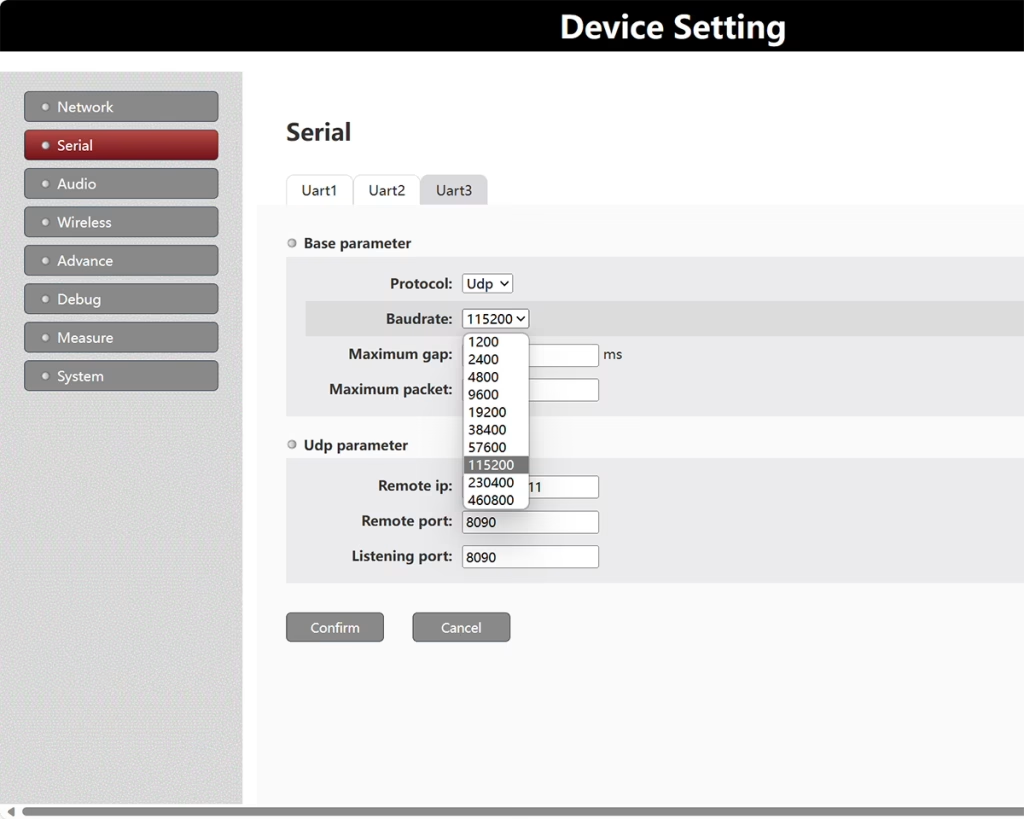
Uart1/Uart2/Uart3 correspond to D1/D2/D3 interfaces
Baudrate: Sets the baud rate of the corresponding data serial port on the local and remote devices.
Remote Port: UDP transmits the send port (different UARTS have to be configured with different port numbers. )
Listening Port: UDP transmits the receive port (different UARTS have to be configured with different port numbers).
Maximum gap(bệnh đa xơ cứng): Set the maximum transmission interval of the corresponding serial port data (used to capture the end of the serial port data frame, it is recommended to configure it to be smaller than the actual transmission).
Maximum packet: Set the maximum sending frame size of the corresponding serial port data (the one that needs to be configured is larger than the actual transmission). ghi chú: When using UDP broadcast mode transmission, ensure that the values of the Remote Port and Listening Port are different.
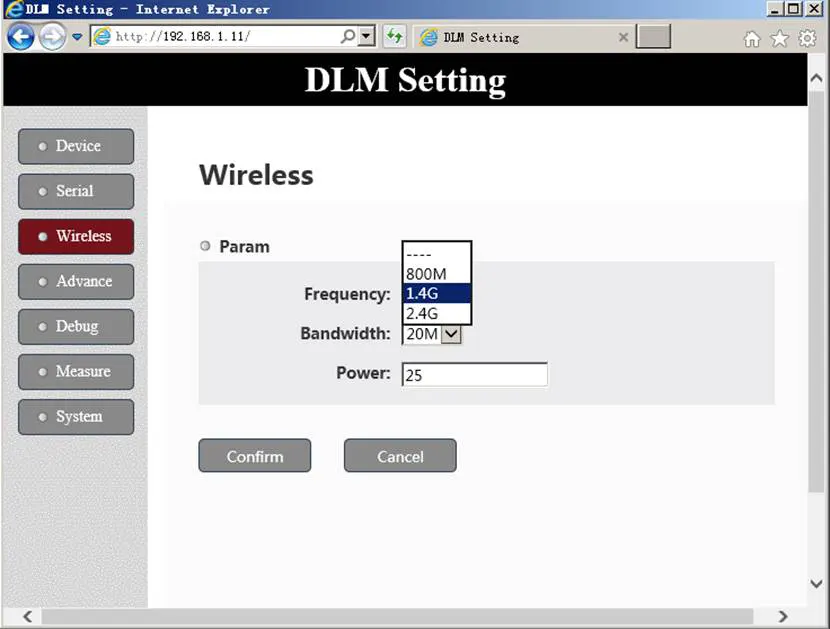
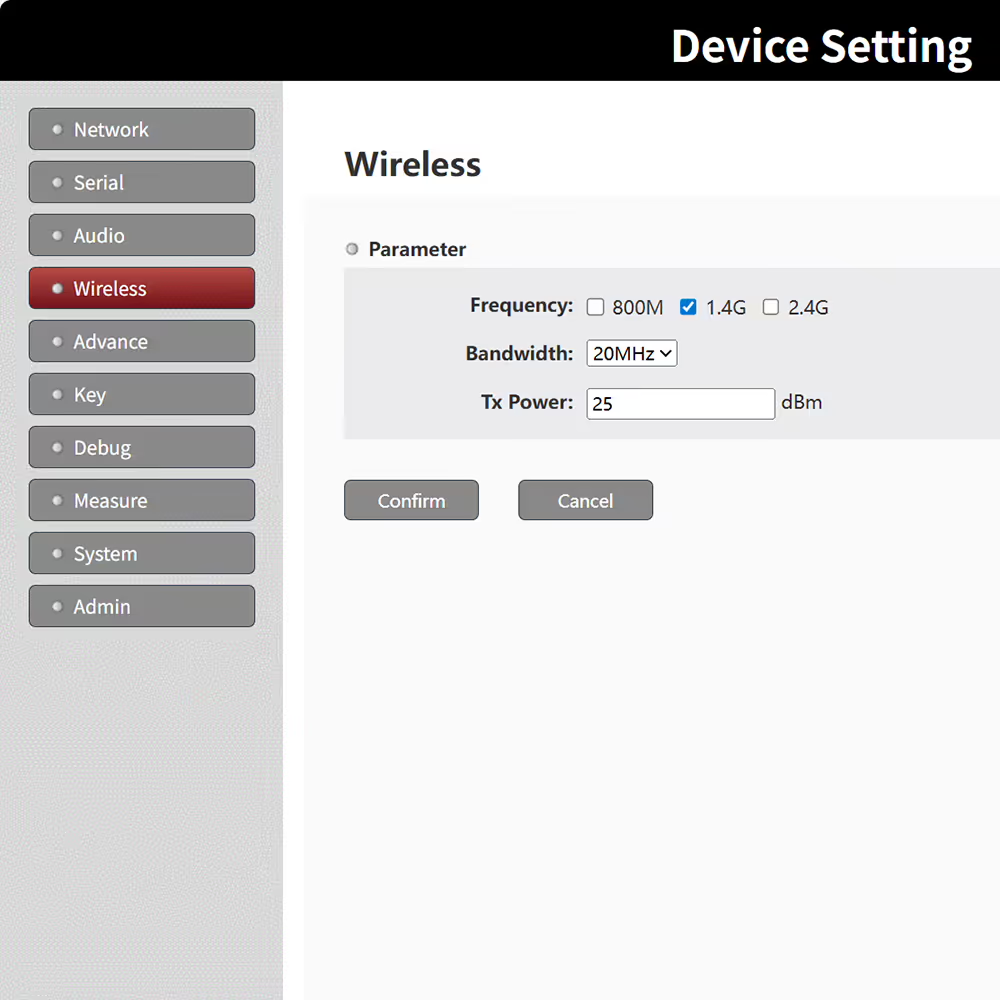
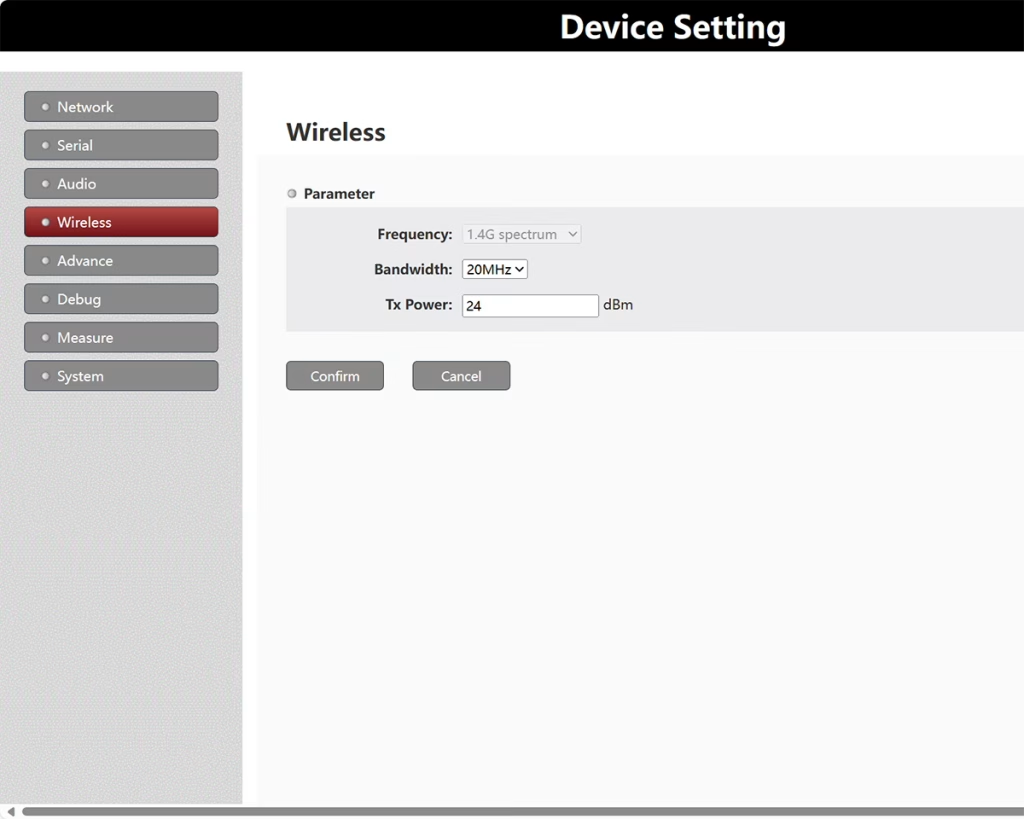
Tần số: Wireless band (800M/1.4G/2.4G).
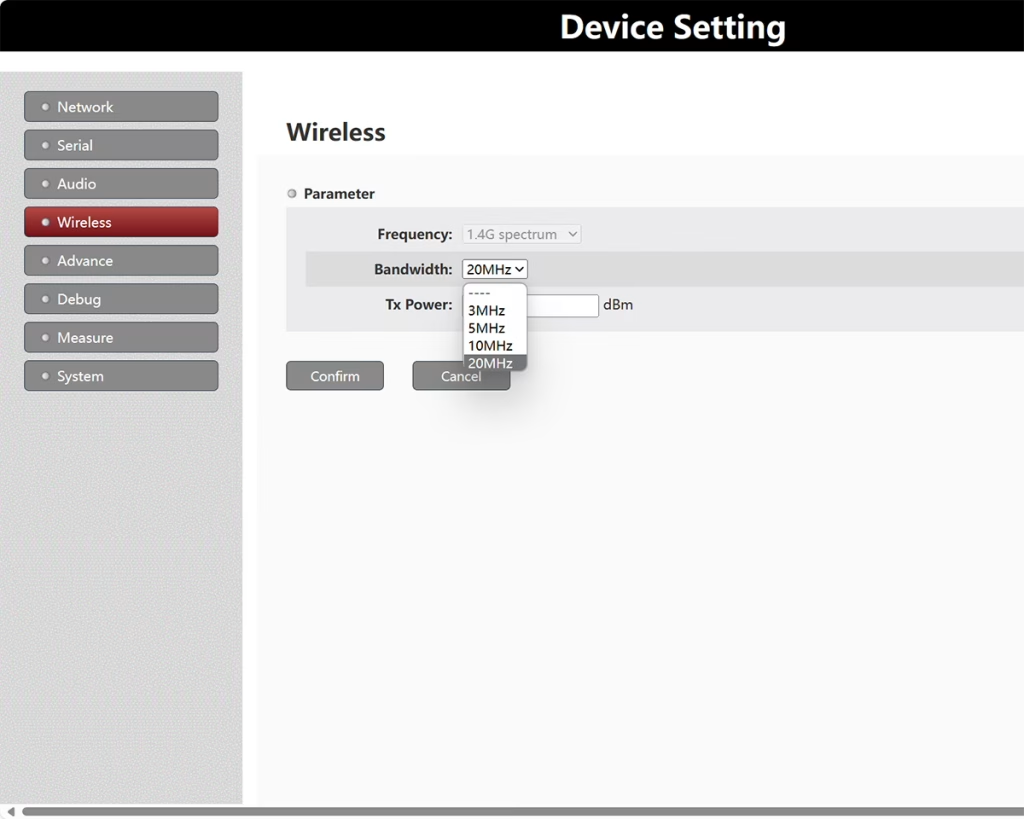
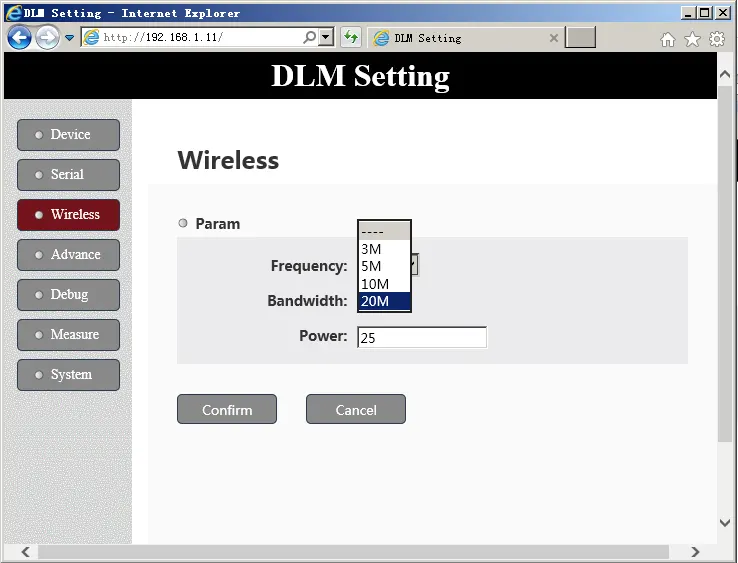
băng thông: Băng thông không dây (3M/5M/10M/20M).
Quyền lực: (without PA) công suất đầu ra (dBm).
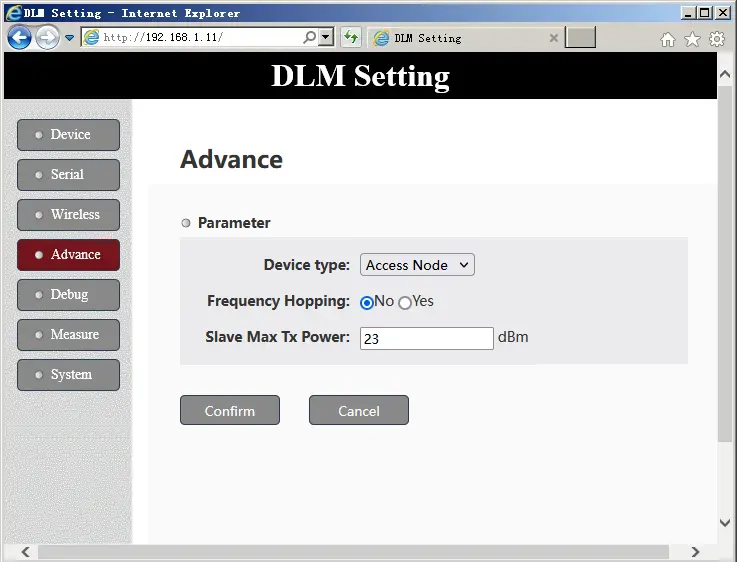
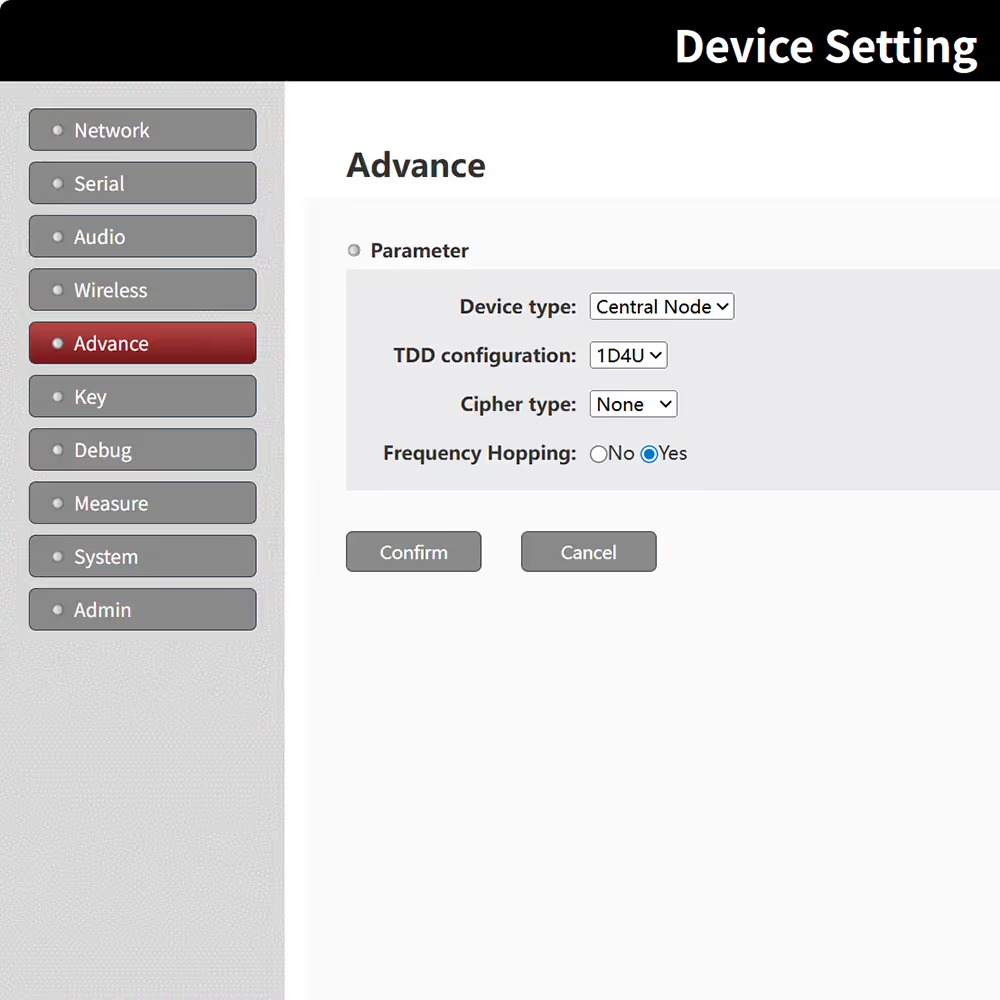
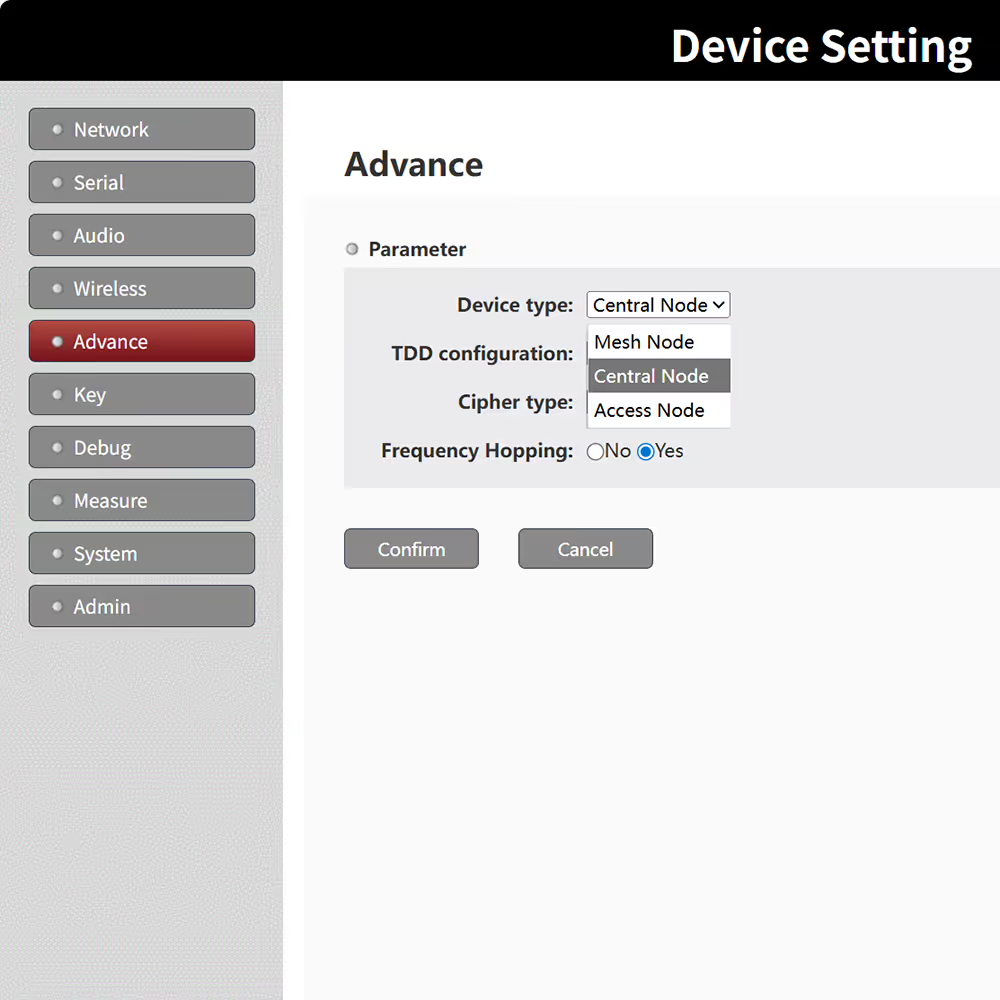
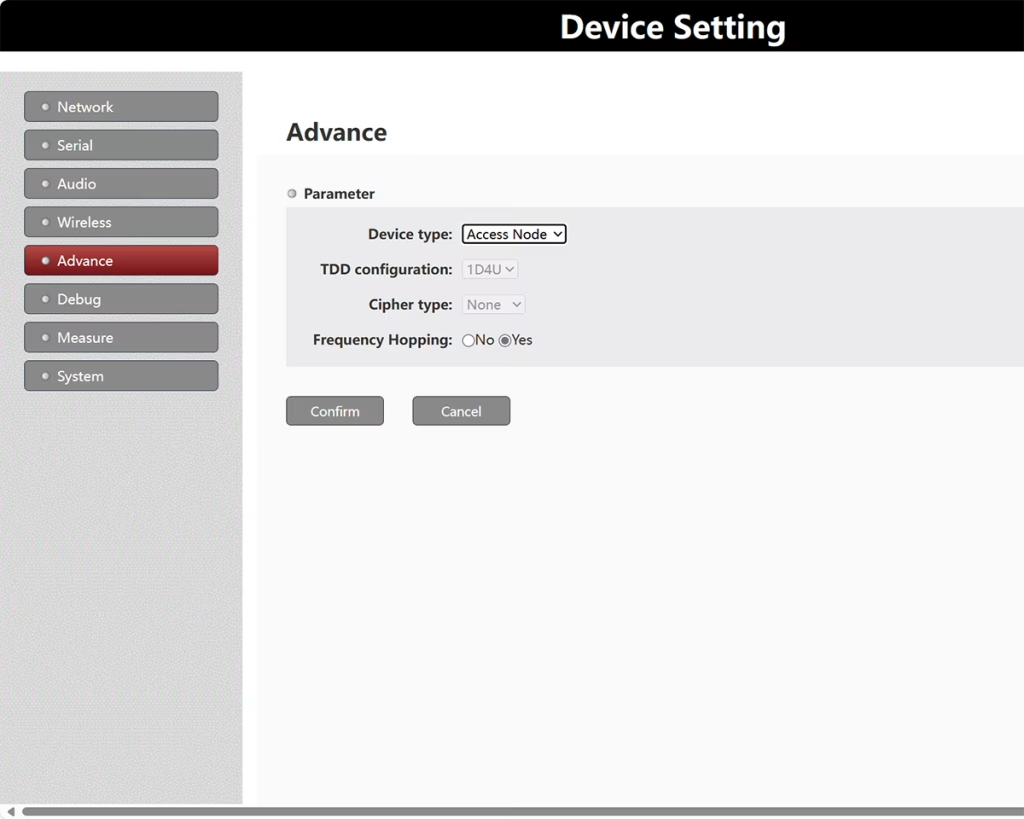
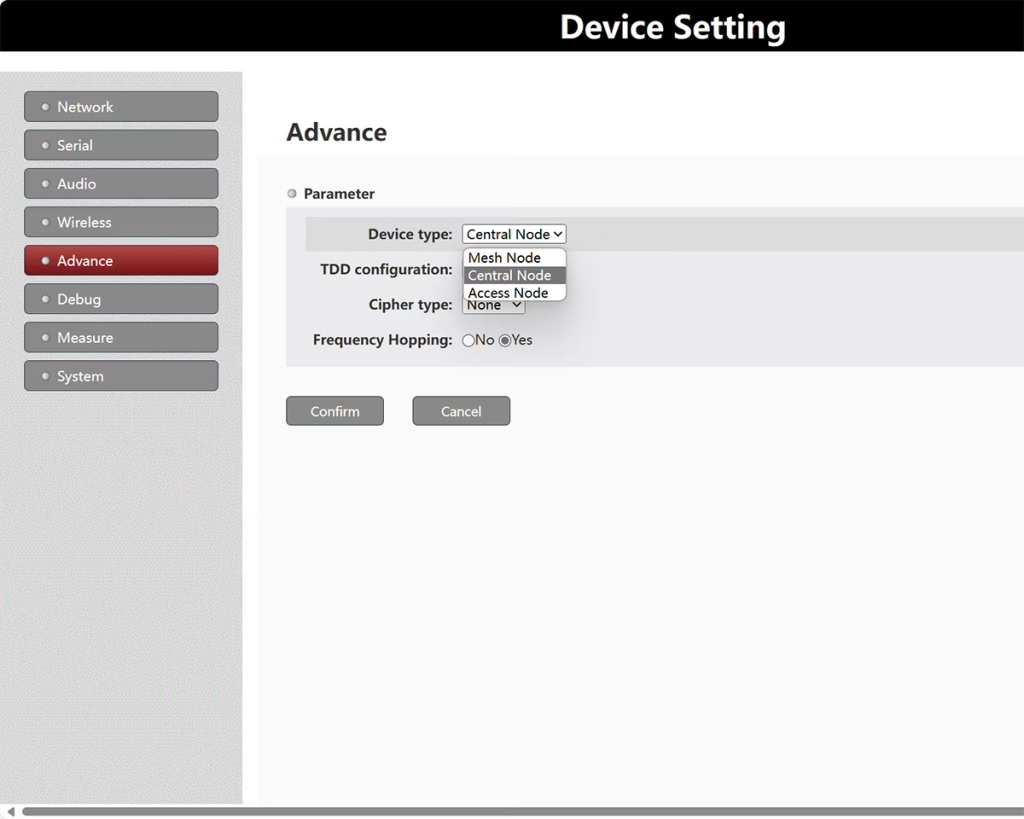
Loại thiết bị: Central Node or Access Node.
Frequency Hopping: Automatic frequency hopping switch.
SMTP( Sức mạnh Tx tối đa của nô lệ): Access node maximum transmits power (dBm).
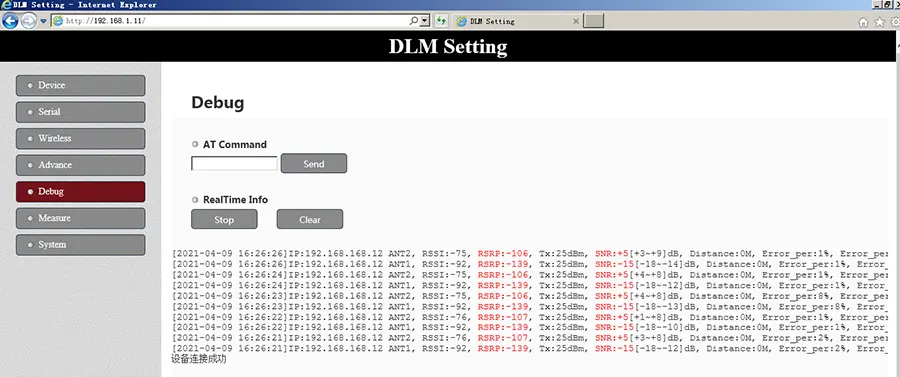
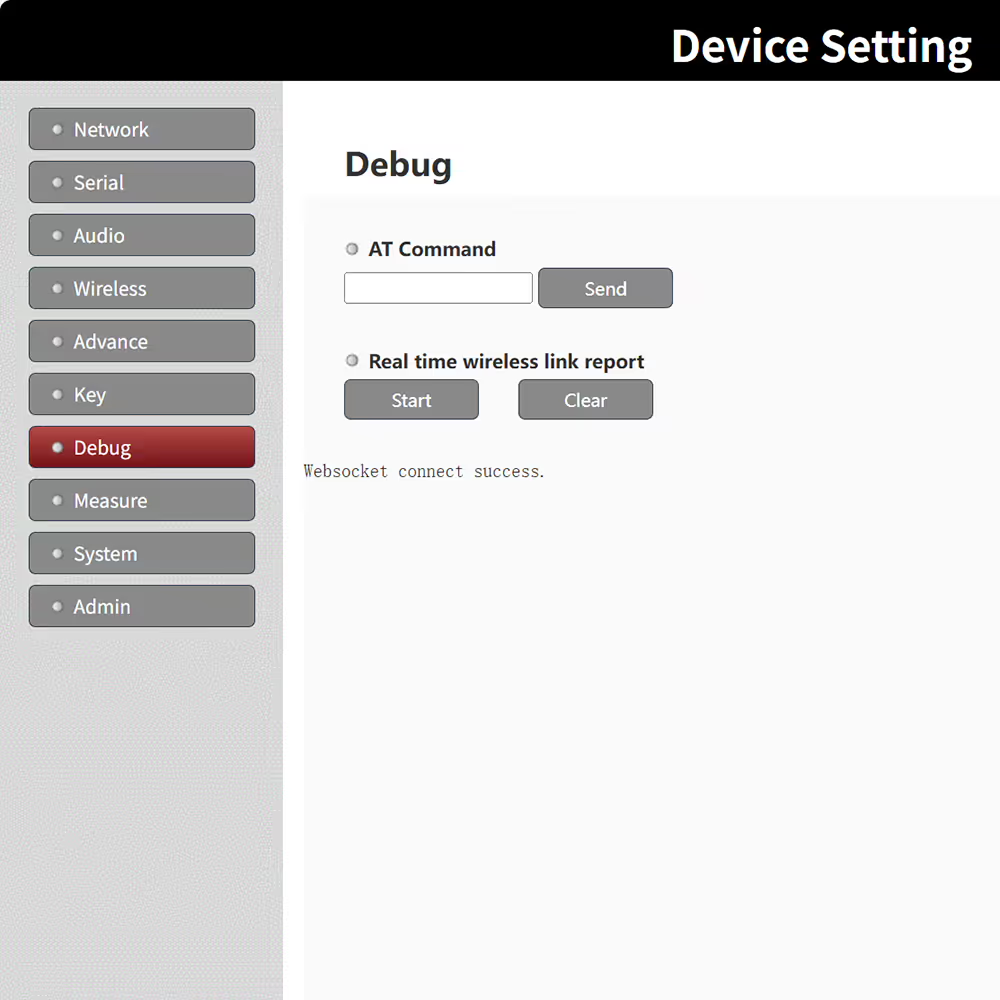
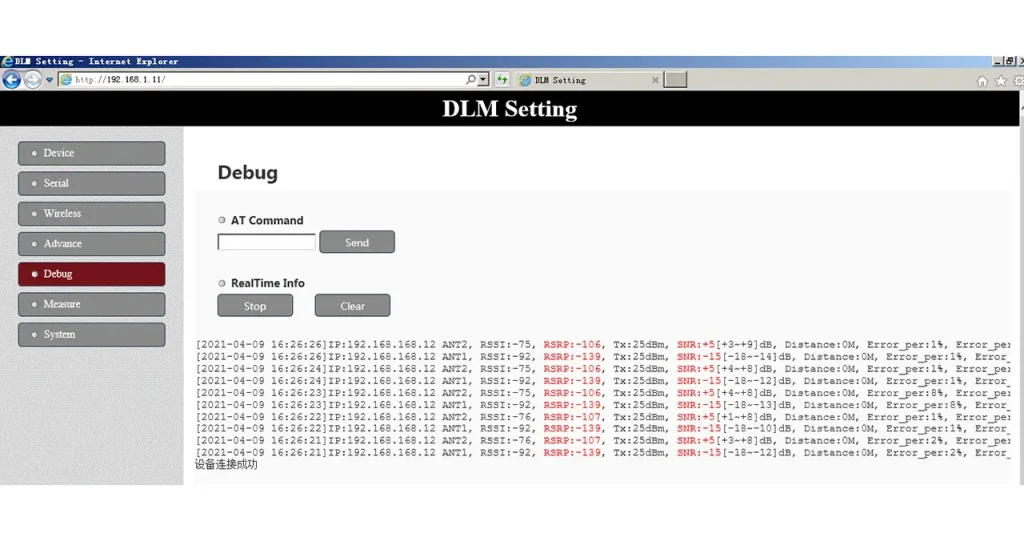
The Debug page is used to manually send AT commands or view real-time wireless feedback data.
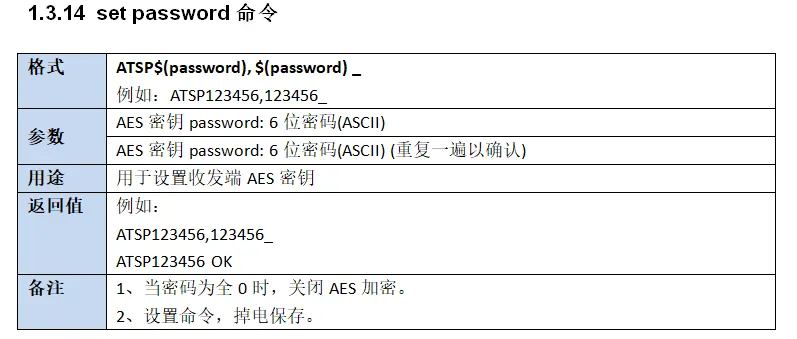
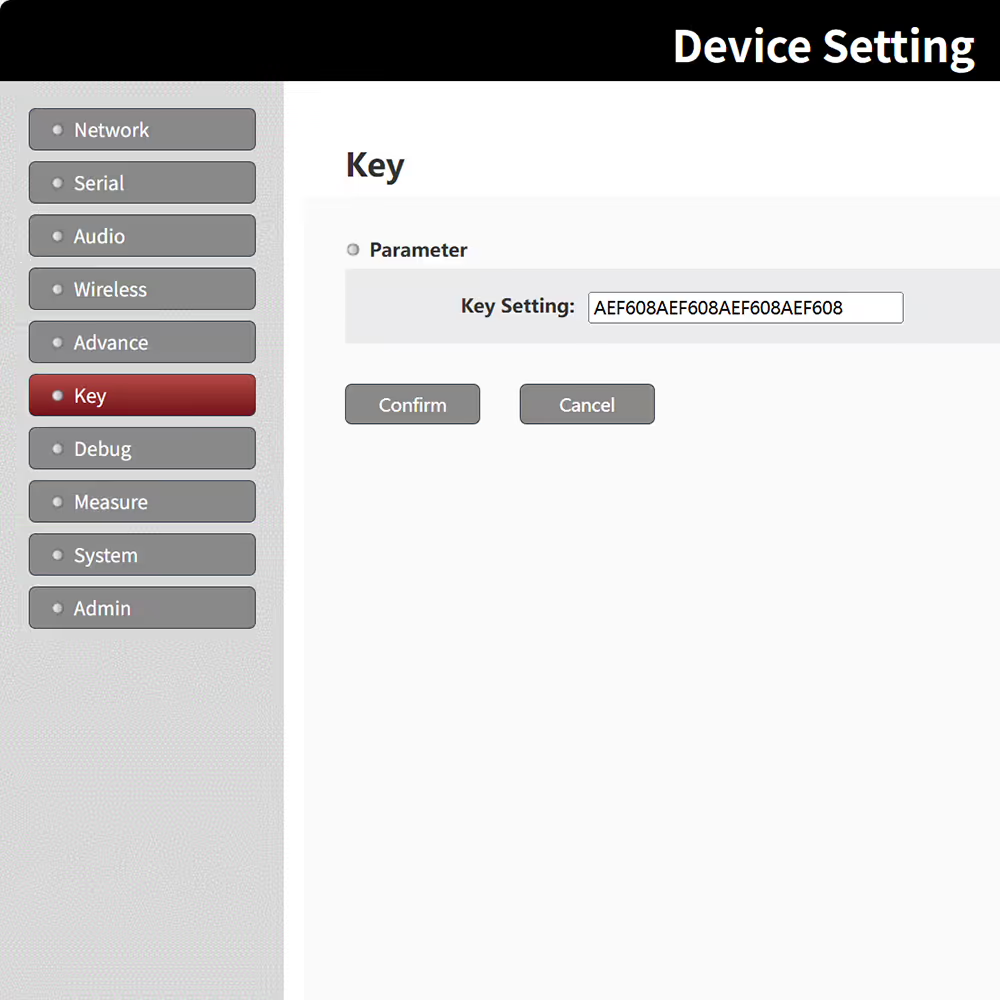
Set Password command
| Định dạng | ATSP$(mật khẩu),$(mật khẩu) For example ATSP123456,123456 |
| Thông số | AES key password: 6-bit password (ASCII) AES key password: 6-bit password (ASCII) (repeat to confirm) |
| Mục đích | Used to set the AES key of the transceiver |
| Giá trị trả về | For example ATSP123456,123456_ ATSP123456 OK |
| Bình luận | 1. When the password is all 0, turn off AES encryption. 2. Set command, save when power off |
Once you’re on the Debug page, the browser shakes the WebSocket handshake with the devices, and after the handshake passed, the browser prints “WebSocket connect success.” “Indicates that the handshake was successful; otherwise it displays “WebSocket connect failed, please refresh the web page and try again!” tại thời điểm này, you need to re-enter the Debug page to shake hands again, until the prompt handshake is successful, and then you can perform follow-up operations.
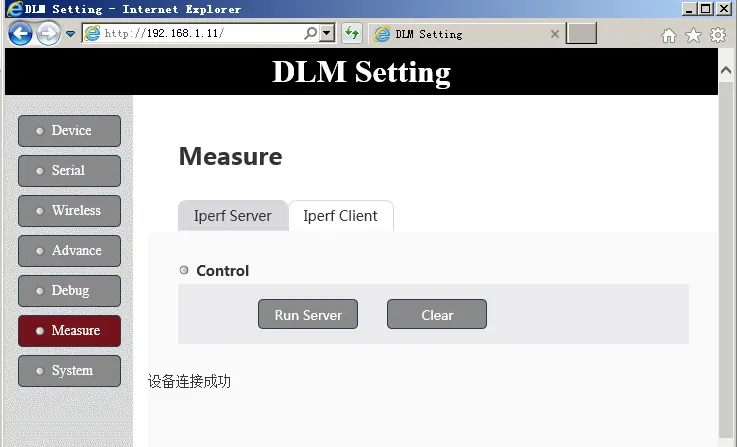
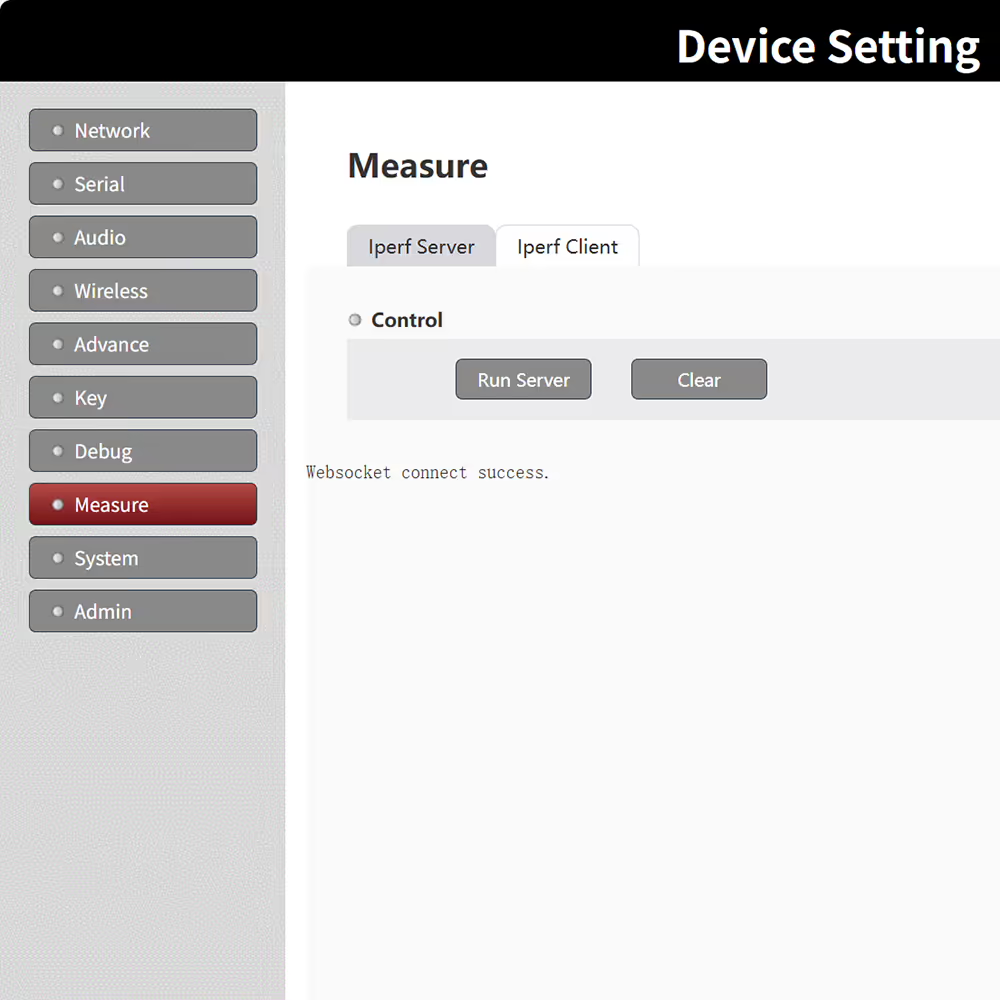
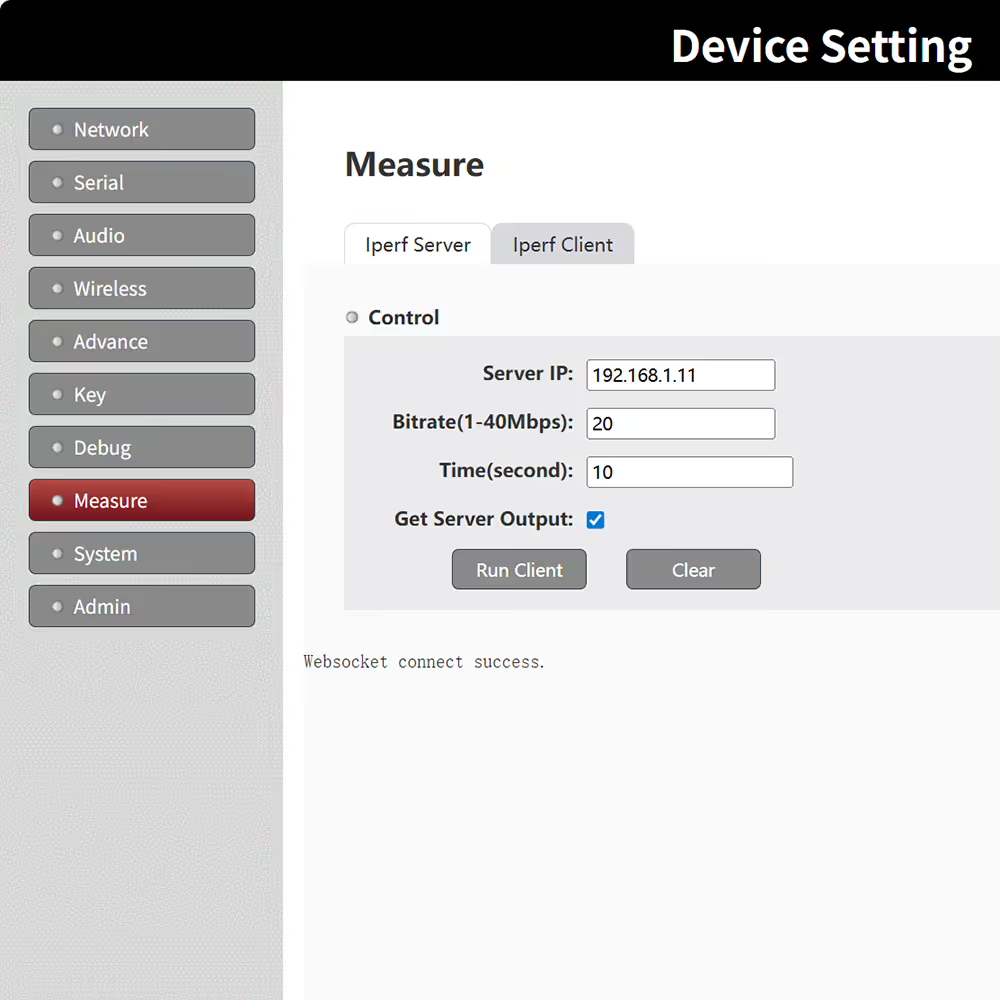
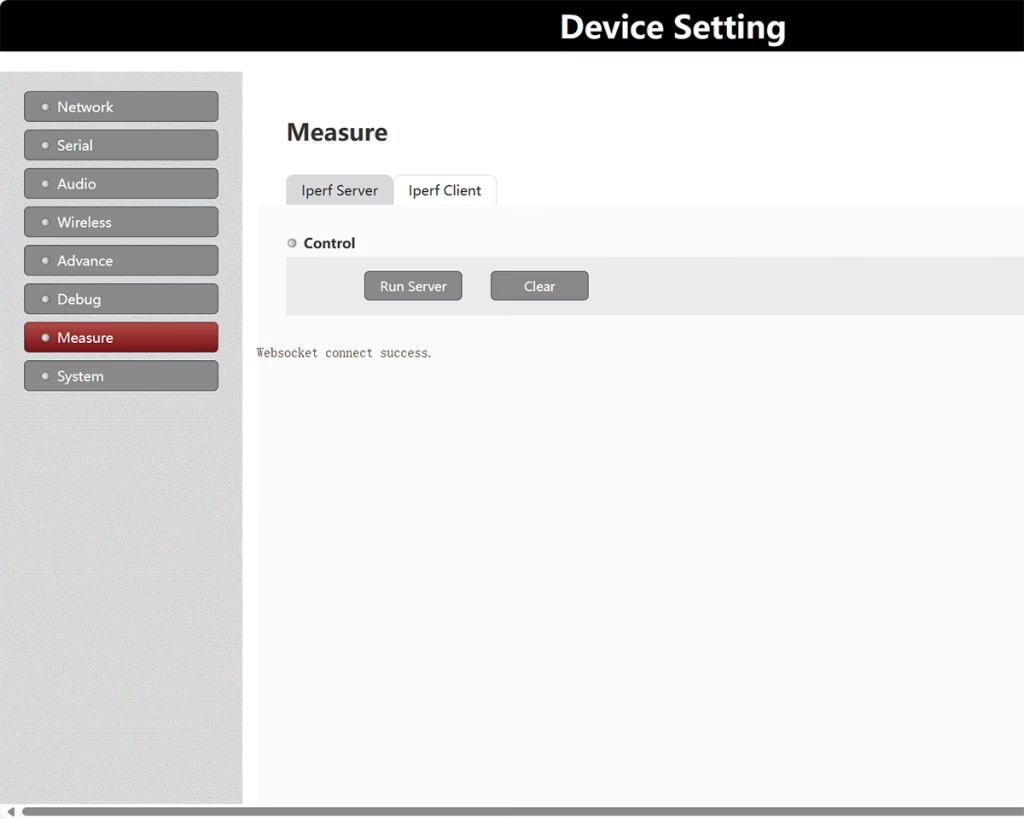
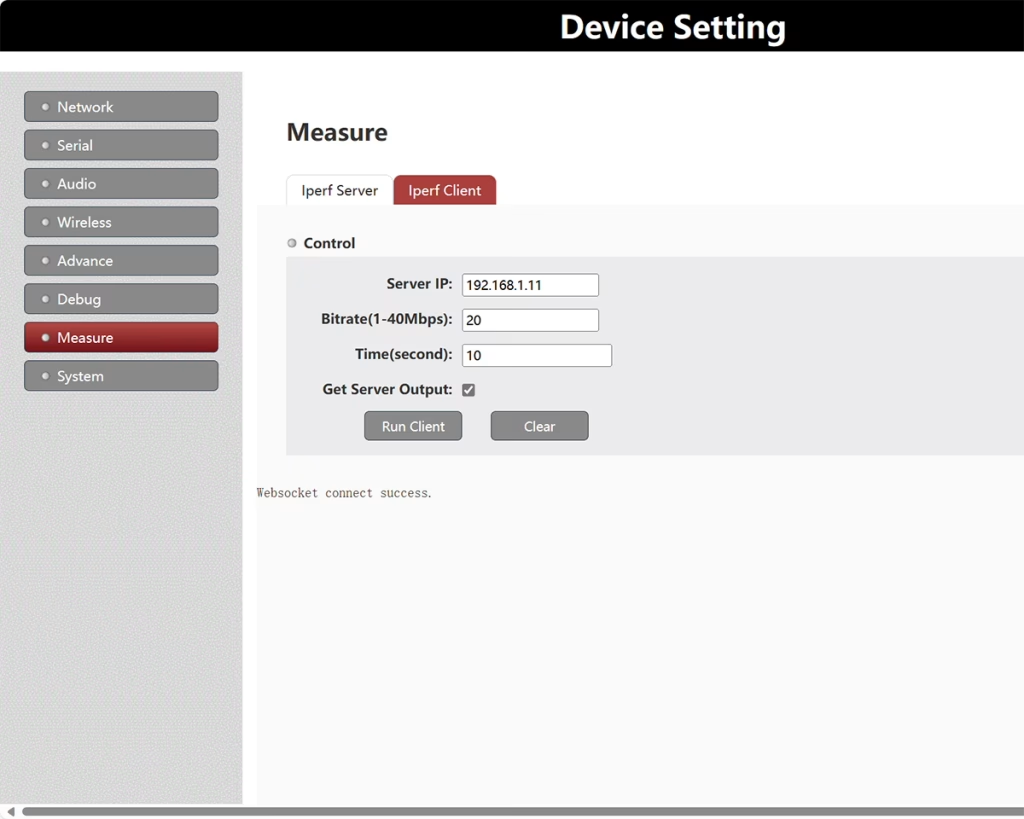
Measure pages are used to call built-in iperf3 programs for testing (UDP mode).
Once you’re on the measure page, the browser will shake hands with the devices by WebSocket, and after the handshake passed, the browser prints “WebSocket connect success.” “Indicates that the handshake was successful; otherwise it displays “WebSocket connect failed, please refresh the web page and try again!” tại thời điểm này, you need to re-enter the Measure page to shake hands again and know that the handshake is successful before you can perform follow-up operations.
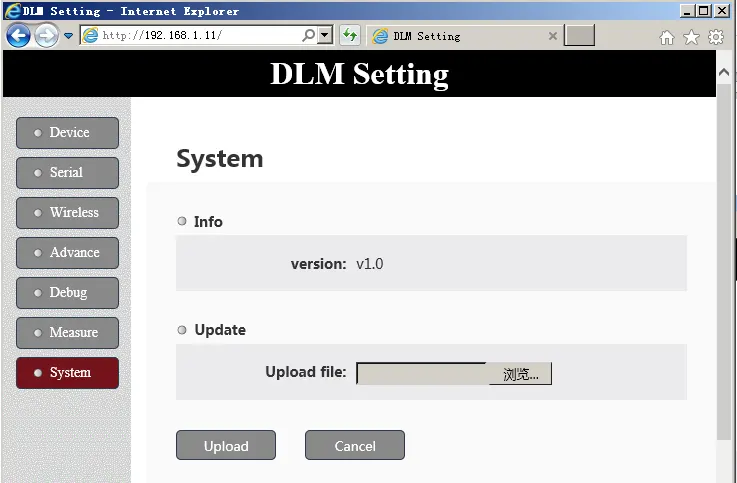
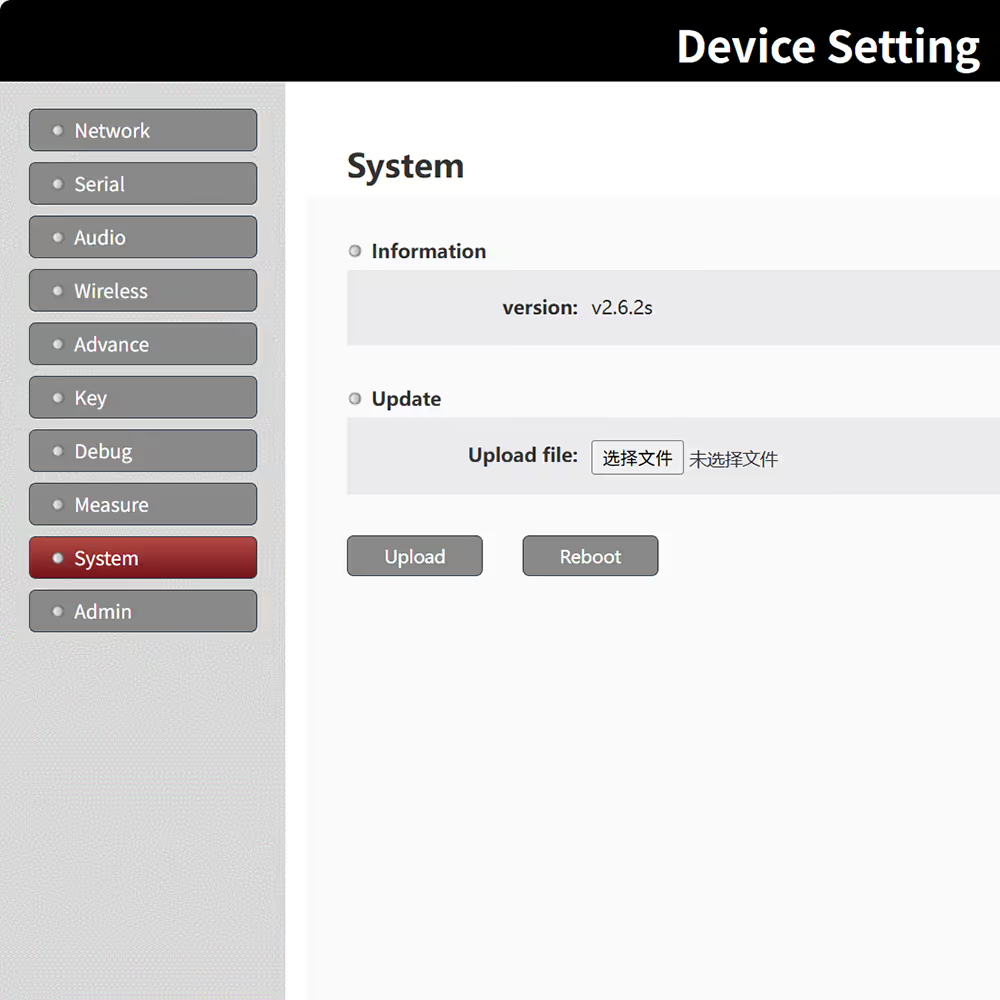
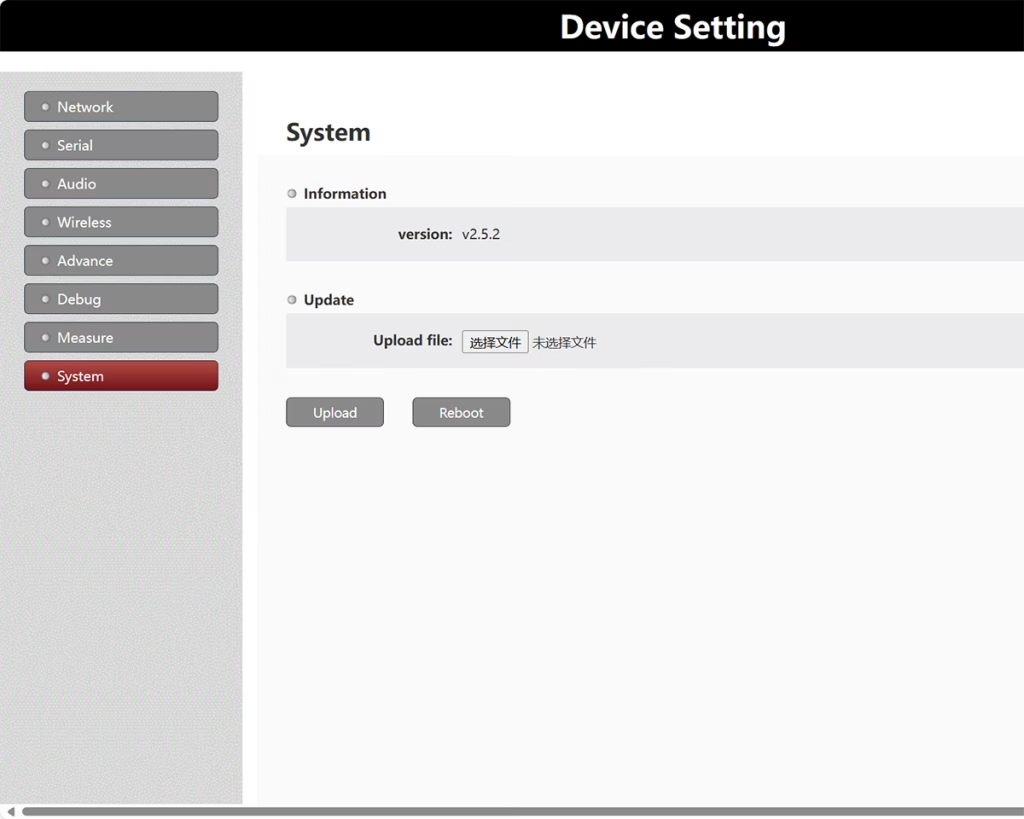
This menu is used to view the device’s system software firmware version and to update the software firmware via the Web UI.
If you have any questions about the operation of Web Device Management UI, xin vui lòng liên hệ với chúng tôi.


-
 Mạng lưới lưới máy bay không người lái
 -
Mô-đun phát video FPV Bộ phát video âm thanh RF không dây 170-860 MHz cho máy ảnh FPV 3W PA 50km
-
IP lưới 100mbps Transcever dữ liệu video không dây 2x5w PA 16 nhảy lò cò
-
Liên kết Drone để truyền dữ liệu từ xa vô tuyến dữ liệu video tầm xa giữa UAV và Trạm điều khiển mặt đất
-
UAV máy bay không người lái video liên kết dữ liệu mô-đun máy phát và thu video không dây cho máy ảnh tầm xa TDD thu phát hai chiều vcan1401
-
Bộ thu-phát video COFDM AV trong HDMI ra FPV, Tầm xa không dây 10km-15km-30km rẻ hơn và dài hơn COFDM-912T
-
1740-1840MHZ 2WPA Máy bay máy bay và máy thu video dài 30km với SBUS TTL
-
30Km đường dài COFDM Bộ thu phát video không dây HDMI trọn bộ Video âm thanh TX RX cho UAV Drone 1080P 908T
-
Hai chiều Dữ Liệu Video Không Dây UAV RC Liên Kết Điều Khiển mô-đun tầm xa hai chiều thu phát Bộ Phát-Thu Vcan1681
-
Máy phát và máy thu dữ liệu video không dây tầm xa cho robot UAV của máy bay không người lái
-
Bộ truyền và nhận video không dây cho máy ảnh, HDMI HD H265 264 bộ mã hóa 1W/2.5W PA 1080P60 Vcan1726
-
22km 55km 80km 100km 150km 150km Transment Transciver Transceiver Transceiver Transceiver PA 2W 5W 10W
-
Máy bay không người lái Dữ liệu từ xa Transforter-Receiver Liên kết Radio Liên kết Radio Bộ thu phát TDD
-
10W PA 150KM trên không liên kết dữ liệu video tầm xa UAV truyền dẫn không dây thu phát băng thông rộng chiến thuật cầm tay
-
30-Máy phát video không dây Drone UAV HDMI mili giây Hệ thống truyền dẫn không dây có độ trễ cực thấp Vcan1729
-
Bộ thu phát MANET của IP Lưới với bảng Audio-IP hai chiều cho máy bay không người lái robot UAV
-
150Tần số KM 100MPBS nhảy ở 2Bands Liên kết vô tuyến Tốc độ truyền cao và chống can thiệp
-
Máy bay không người lái lưới liên kết dữ liệu video không dây 150-200 km tầm xa thu phát mạng ad hoc không trung tâm







Mục lục
Web Device Management UI for Long-Range Wireless Video Data Link Transmitter and Receiver
các Web Device Management UI provides a comprehensive interface for configuring, giám sát, and managing long-range wireless video data link transmitters and receivers. This user-friendly interface allows operators to access the system through a web browser over the network, enabling real-time monitoring and remote configuration of all connected devices. Users can view current parameter settings, modify configurations according to the application requirements, and optimize the performance of wireless video transmission systems for UAVs, tại UGV, USVs, and other long-distance monitoring setups.
Theo mặc định, cái Sky (máy phát) kết thúc has an IP address of 192.168.1.12, và Đất (người nhận) kết thúc has an IP address of 192.168.1.11. Users can connect to these IP addresses using any standard web browser. It is important to note that after changing any configuration parameters via the Web UI, Một system reboot is required for the changes to take effect.
Key Configuration Functions
- IP Address and Networking Configuration – Users can set static IP addresses, assign gateway and subnet masks, and configure network roles for both transmitters and receivers. Each unit can be set as a nút trung tâm hoặc là nút truy cập, supporting flexible deployment in point-to-point, điểm-đa điểm, or full mesh topologies.
- Serial Port Management (UART1, UART2, UART3) – The UI allows configuring all connected serial ports. This includes setting the tốc độ baud, transmission mode (UDP/TCP), remote port, listening port, maximum gap time, và maximum packet size. Proper configuration ensures seamless integration with telemetry systems, PTZ camera controls, or other sensor devices.
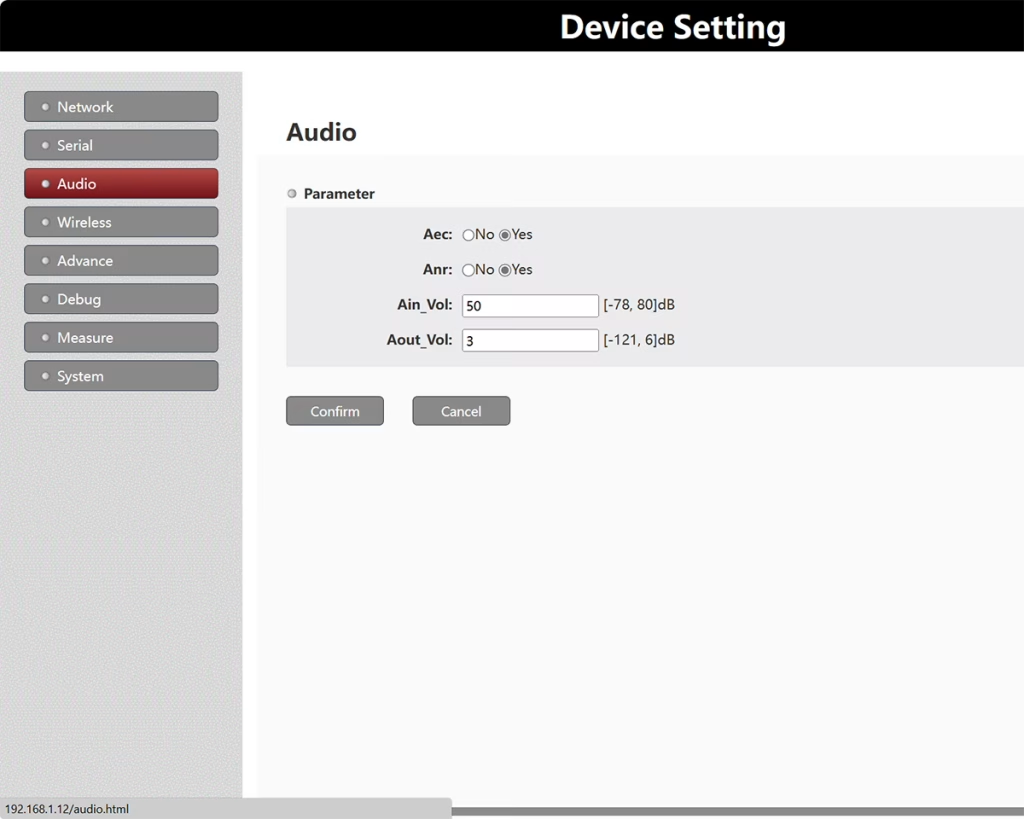
- Audio and Video Parameter Configuration – Users can adjust audio sampling, encoding parameters, and video transmission quality settings. This ensures that both audio and video signals are transmitted with high fidelity over long distances while maintaining low latency.
- Frequency and Bandwidth Settings – The Web UI provides full control over the operating frequency band (ví dụ., 800 MHz, 1.4 GHz, 2.4 GHz) and bandwidth selection (3 MHz, 5 MHz, 10 MHz, 20 MHz). Operators can select appropriate frequency channels to avoid interference in busy RF environments. Frequency hopping (Mô hình này được thiết kế để truyền dữ liệu và video không dây với liên kết dữ liệu không dây hai chiều) can also be enabled for improved resilience against interference.
- Bandwidth Allocation for Uplink and Downlink – In bidirectional systems, bandwidth can be allocated independently for uplink (receiver to transmitter) và đường xuống (transmitter to receiver). This allows users to optimize the system for video-heavy downlink or control-data-heavy uplink as required.
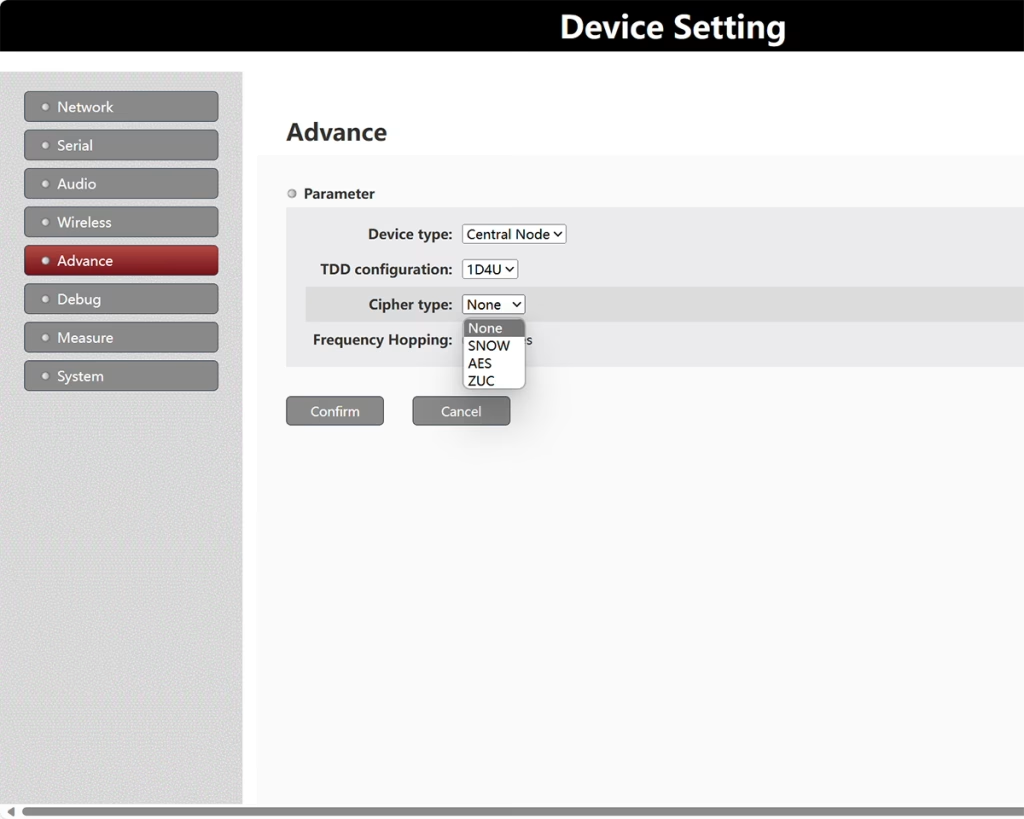
- Mã hóa và bảo mật – The Web UI supports multiple encryption methods, bao gồm TUYẾT, AES, and ZUC. Users can configure AES-256 encryption by setting a six-character ASCII password using the ATSP command, ensuring secure data transmission. Setting the password to all zeros disables encryption. Once configured, the encryption key is stored and remains active even after a system power cycle.
- Debug Page – The debug interface allows operators to manually send Lệnh AT to the device for advanced configuration and troubleshooting. The WebSocket handshake must be completed successfully before executing commands. When the handshake is successful, the browser displays “WebSocket connect success,” confirming proper communication with the device.
- Performance Testing with Iperf3 – The Measure page integrates the built-in Iperf3 tool to test network throughput in real-time. Users can test UDP or TCP data rates between the transmitter and receiver to ensure optimal system performance. Successful WebSocket handshake verification is required before running performance tests.
- System Management and Firmware Upgrade – The Web UI provides tools to view the current phiên bản phần mềm and update the system software directly from the browser. Users can also set or modify the management page password to secure access.
- Multicast and Broadcast Configuration – For group video transmission, hệ thống hỗ trợ multicast mode, where a single transmitter sends video to multiple receivers using a shared multicast IP address. Broadcast mode uses 192.168.1.255, while point-to-point communication uses 192.168.1.x addresses. Multicast addresses should be selected within the 224.0.0.0–224.0.0.255 range, preferably above 224.0.0.23 to avoid reserved addresses.
- Local vs Remote IP – The IP cục bộ typically refers to the receiver’s network address near the operator, trong khi IP từ xa corresponds to the transmitter near the camera. Correct configuration ensures proper routing of video and control data over the network.
Advanced Functions and Notes
- All parameter changes require a system reboot to take effect.
- The UI allows fine-tuning of maximum packet size and transmission interval to optimize data integrity and latency.
- Multiple UART interfaces allow integration with telemetry systems, RC control, and sensor networks.
- The UI supports both AES-256 encryption and user-defined passwords for secure wireless links.
- Built-in diagnostic tools, including real-time signal strength monitoring and handshake status verification, simplify troubleshooting.
- Firmware upgrades can be performed remotely via the browser without physical access to the device.
các Web Device Management UI provides a centralized and efficient way to manage long-range wireless video data links. Dù được triển khai trên UAV, tại UGV, USVs, or stationary monitoring systems, this interface gives operators full control over network parameters, bảo vệ, serial port configurations, video/audio settings, and system performance. By enabling remote access, performance testing, and firmware management, the Web UI significantly reduces setup time, improves system reliability, and allows operators to adapt quickly to changing field conditions.
Tóm lại, cái Web Device Management UI is an essential tool for professionals working with long-range wireless video transmission systems, offering advanced management capabilities, secure configuration options, and intuitive monitoring to maximize the performance of COFDM or OFDM-based wireless networks.
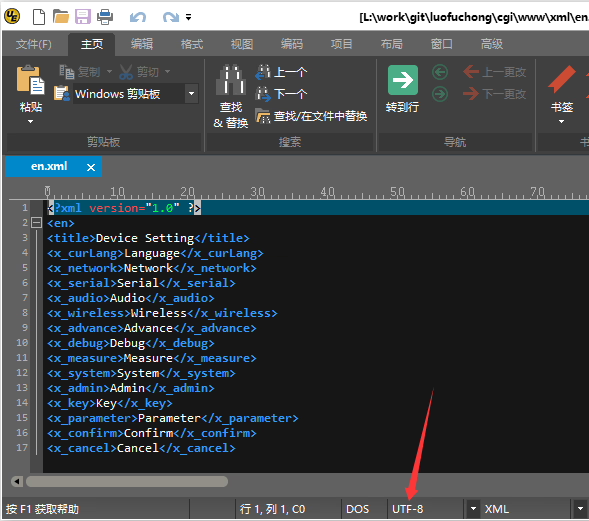
Q: Can I translate the device’s web interface into my local language and add custom logos? Is there an API for editing modules ourselves?
Một: Vâng, it is possible to customize your device’s web interface. We provide the language files and the original English source text. You can translate the interface into Russian and supply your custom logo images. Our software engineers will then create an updated version of the firmware/software with your changes.
Quan trọng: Please ensure that all menu language files are edited in UTF-8 encoding to prevent display issues or garbled text. Hiện nay, we do not provide a public API for direct edits, but this method allows full customization of your device’s web interface.
Đặt một câu hỏi
Tin nhắn của bạn đã được gửi