






Đây là mô hình độ trễ cực thấp mới nhất của chúng tôi. Độ trễ từ đầu đến cuối có thể đạt được 30 mili giây. It is specially designed for drones that require low latency.
Drone Transmitter Receiver Weight
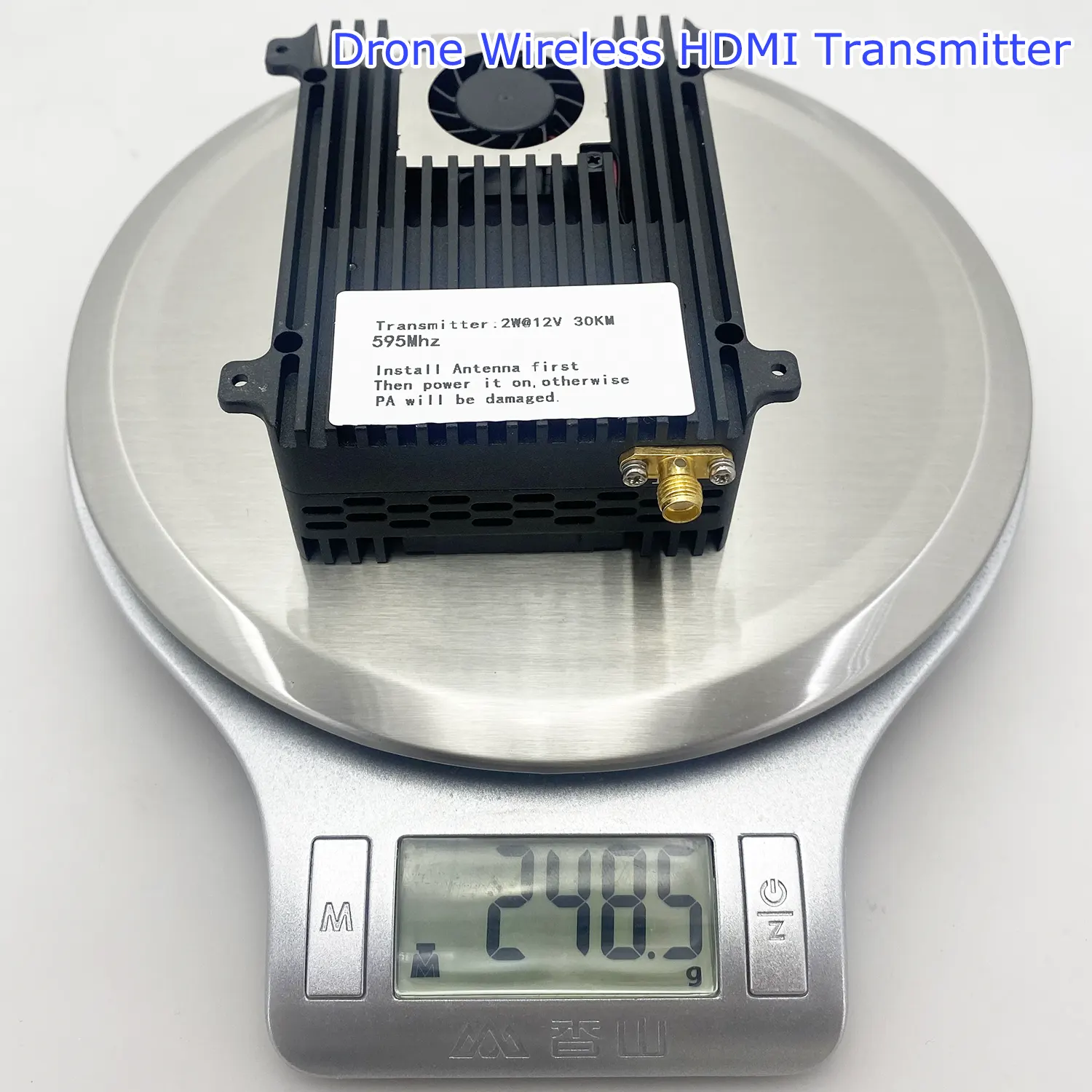
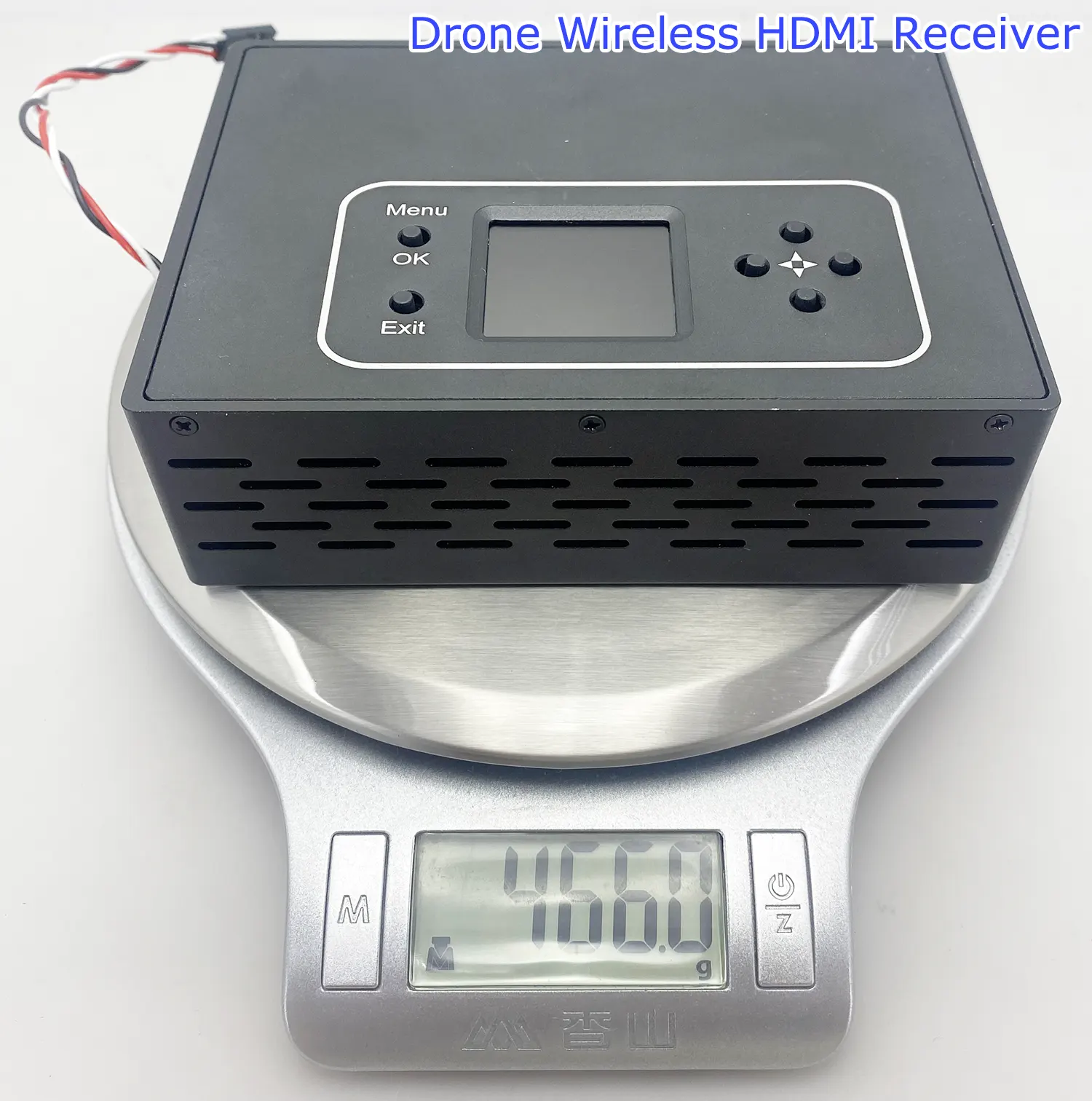
Drone Transmitter Dimension
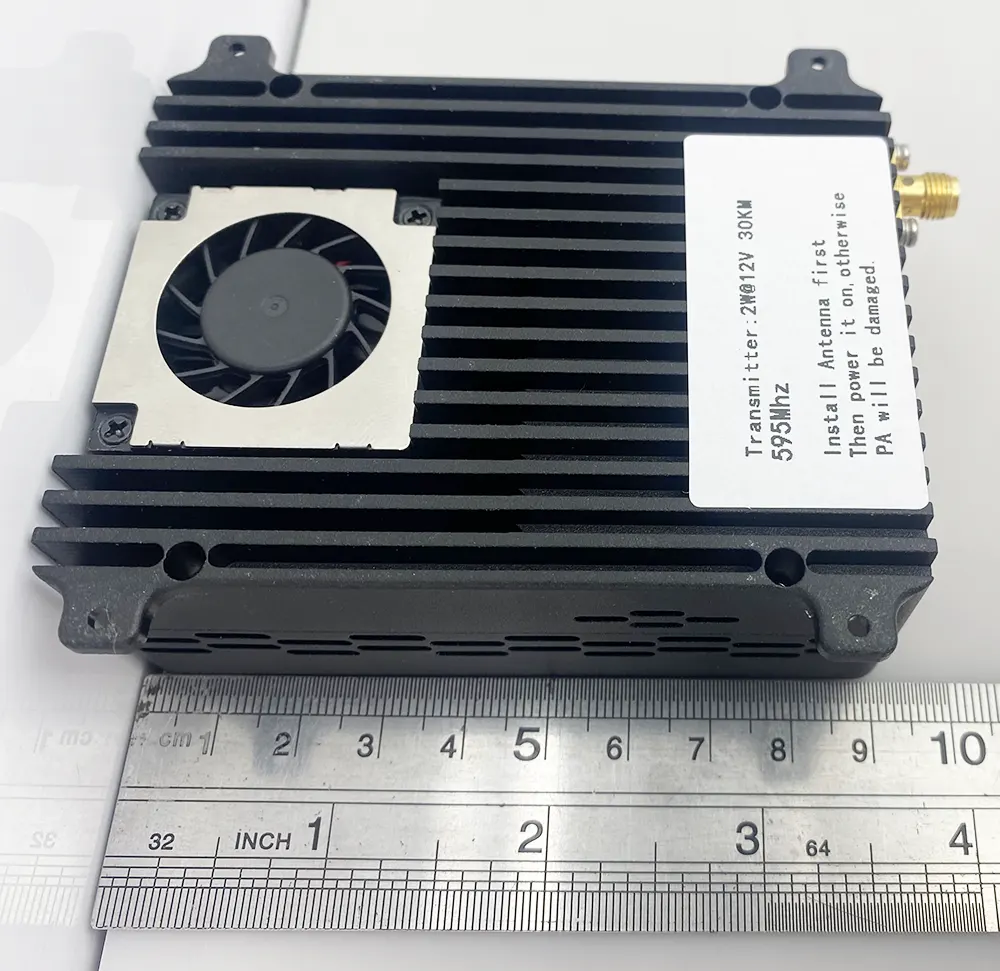
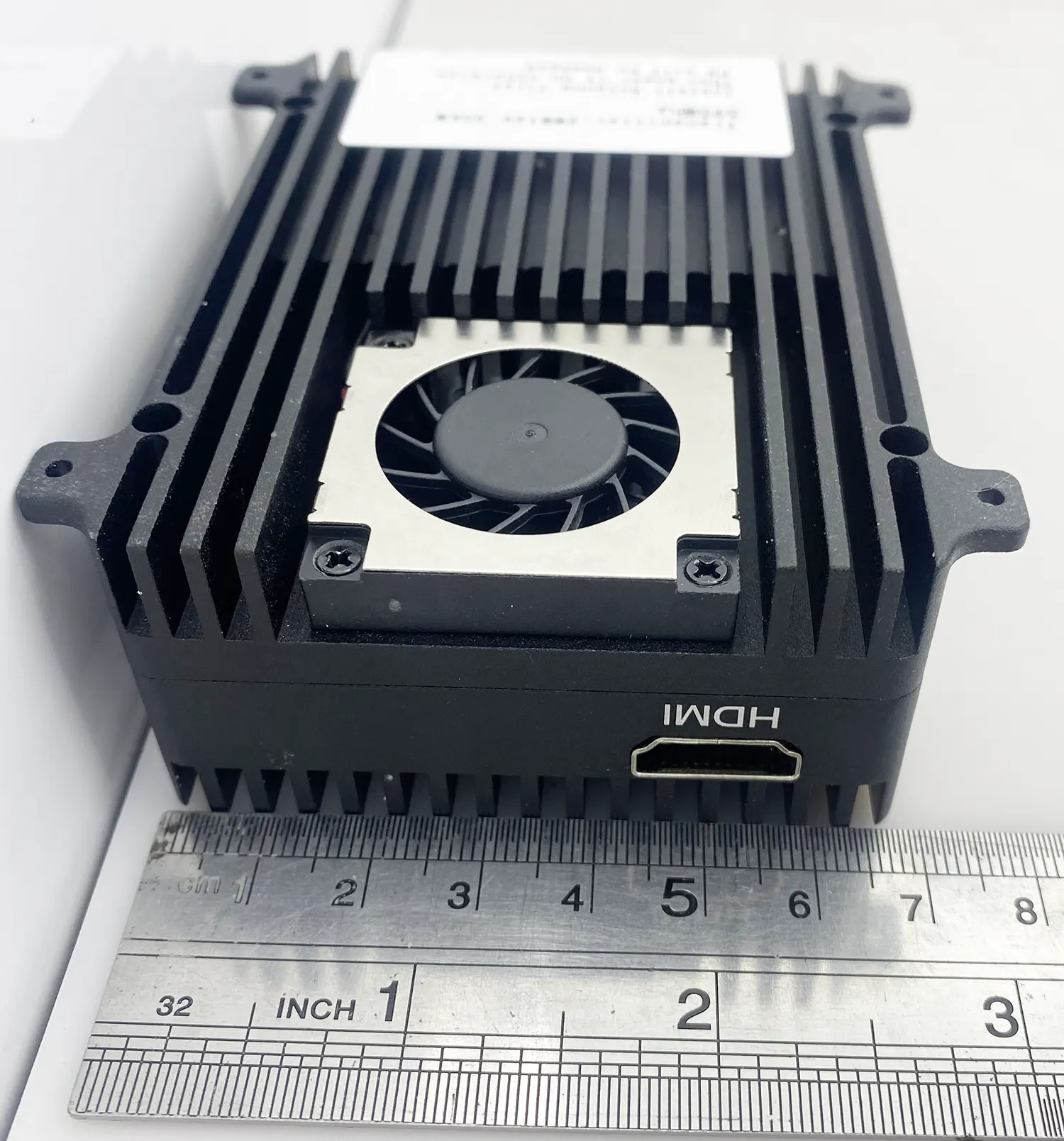
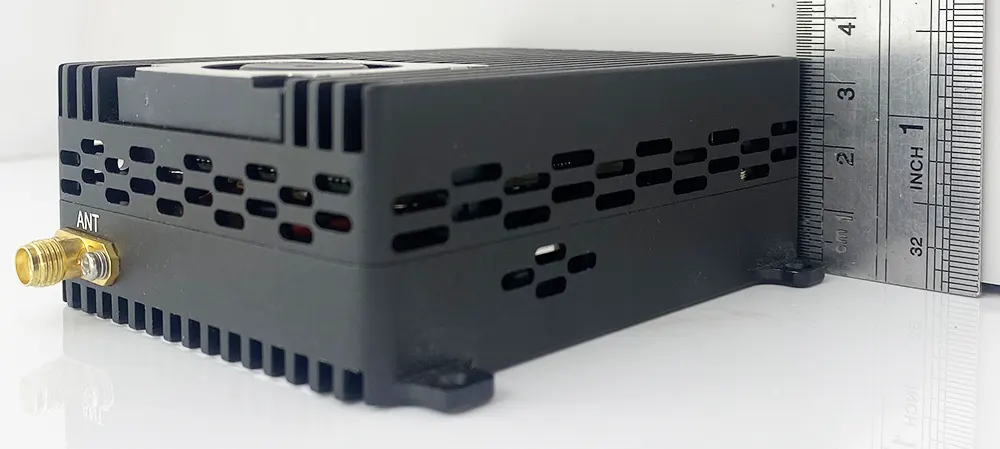
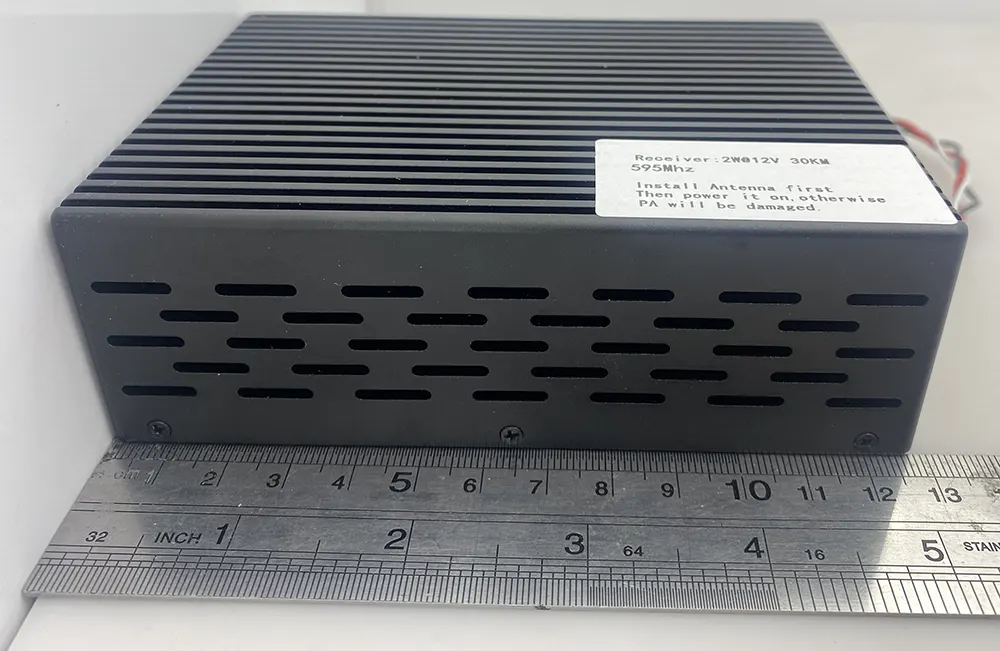
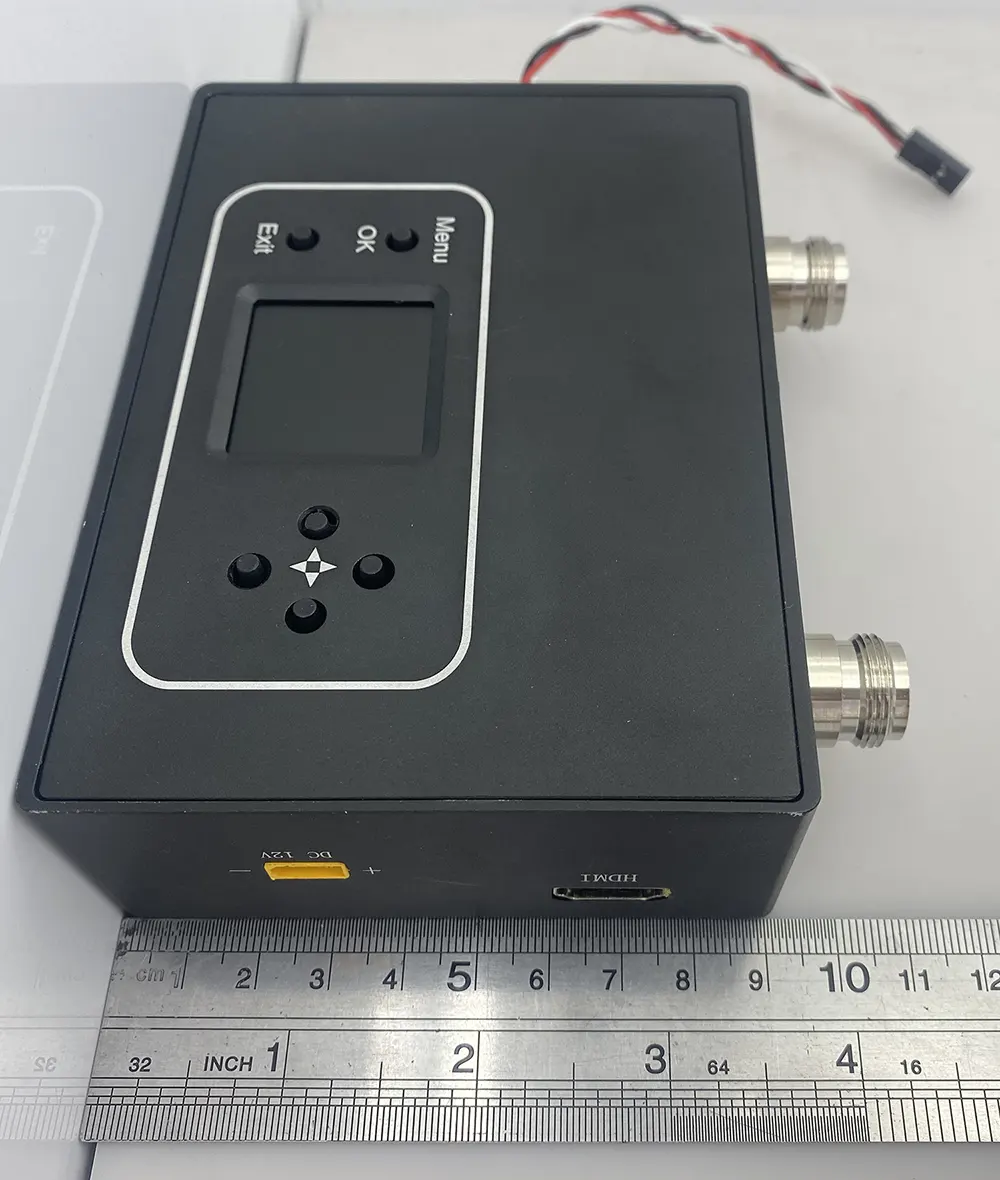
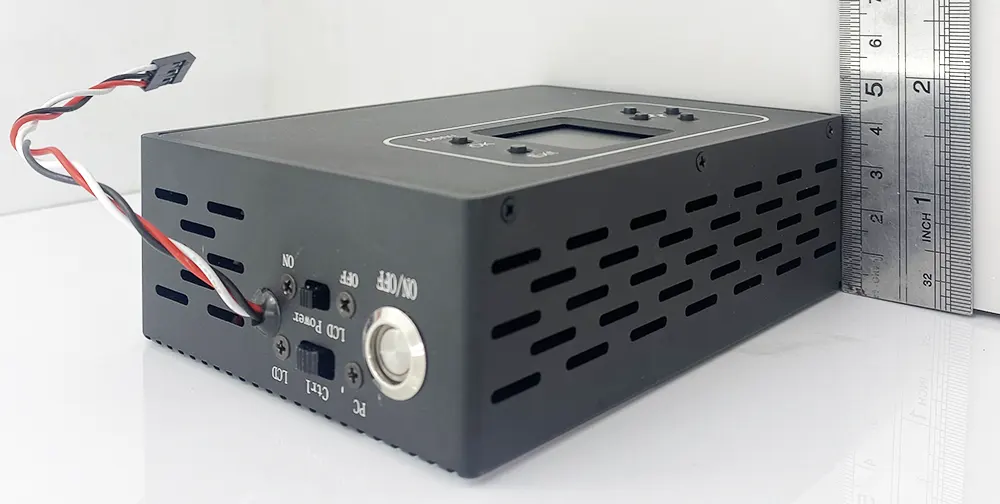
Drone Receiver Dimension
UAV
tiếng kêu vo vo, also named UAV is the abbreviation of unmanned aerial vehicle.
It is an unmanned aerial vehicle controlled by radio remote control equipment and its own program control device.
From a technical perspective, it can be divided into unmanned as the below, There are many application scenarios for drones.
- máy bay cánh cố định
- Unmanned vertical take-off and landing aircraft
- Unmanned airships
- Unmanned helicopters
- Unmanned multi-rotor aircraft
- Unmanned paragliders
We commonly see civilian aerial photography, line patrol, plant protection, Trinh sát quân sự, tiếp sức, strike, police patrol, giám sát, vv. With the rapid development of civilian drone technology, more and more companies are investing in drone project development
The UAV system is mainly divided into three parts: trạm mặt đất, Kiểm soát chuyến bay, and wireless communication link. Let’s take a look at the UAV wireless communication link system.
The link system is an important part of the UAV system. Its main task is to establish an air-ground two-way data transmission channel to complete the long-distance remote control, telemetry and mission information transmission of the UAV from the ground control station. Remote control enables remote operation of drones and mission equipment, and telemetry enables monitoring of the status of drones.
Mission information transmission transmits video, images and other information acquired by airborne mission sensors to the measurement and control station through the downlink wireless channel. It is the key to the UAV completing its mission. Chất lượng liên quan trực tiếp đến khả năng phát hiện và xác định mục tiêu.
- Quy định của Trung Quốc về băng tần sử dụng cho máy bay không người lái
Liên kết liên lạc UAV yêu cầu sử dụng tài nguyên vô tuyến. Hiện tại, Phổ tần được sử dụng bởi UAV trên thế giới chủ yếu tập trung ở UHF, L, và dải C, và các dải tần khác cũng nằm rải rác. Hiện tại, Cục Quản lý vô tuyến Bộ Công nghiệp và Công nghệ thông tin nước ta bước đầu đã xây dựng “Các vấn đề về tần suất sử dụng cho hệ thống máy bay không người lái” và có kế hoạch sử dụng tần số 840,5-845 MHz, 1430-1444Dải tần MHz và 2408-2440 MHz cho hệ thống máy bay không người lái. Nó quy định rằng dải tần 1.840,5 ~ 845Mhz có thể được sử dụng cho liên kết điều khiển từ xa đường lên của hệ thống UAV. Trong số đó, 841~845 MHz cũng có thể được sử dụng cho liên kết truyền thông tin đo từ xa đường lên và điều khiển từ xa đường xuống của hệ thống UAV theo cách phân chia thời gian. 2. Dải tần 1430 ~ 1446 MHz có thể được sử dụng cho các liên kết truyền thông tin và đo từ xa đường xuống của hệ thống UAV. Trong số đó, Cần ưu tiên dải tần 1430 ~ 1434 MHz để đảm bảo sử dụng truyền video UAV và máy bay trực thăng của cảnh sát. Nếu cần, 1434~1442 MHz cũng có thể được sử dụng để truyền video trực thăng của cảnh sát. truyền tải. Khi máy bay không người lái được triển khai ở khu vực thành thị, nên sử dụng dải tần dưới 1442 MHz. 3. Dải tần 2408 ~ 1440 MHz có thể được sử dụng cho đường xuống của hệ thống máy bay không người lái. Đài phát thanh không được ảnh hưởng đến các dịch vụ vô tuyến hợp pháp khác khi hoạt động, nó cũng không thể tìm cách bảo vệ chống nhiễu sóng vô tuyến.
- Thành phần hệ thống liên kết UAV
The airborne part of the UAV link includes the airborne data terminal (ADT) và anten. The airborne data terminal includes an RF receiver, a transmitter, and a modem for connecting the receiver and transmitter to the rest of the system. Some airborne data terminals also provide processing for compressed data in order to meet the bandwidth limitations of the downlink. thiết bị. The antenna uses an omnidirectional antenna, and sometimes it is also required to use a directional antenna with gain.
The ground portion of the link is also called the Ground Data Terminal (GDT). The terminal includes one or more antennas, RF receivers and transmitters, and modems. If the sensor data is compressed before transmission, the ground data terminal also needs to use a processor to reconstruct the data. The ground data terminal can be divided into several parts, generally including a local data connection connecting the ground antenna and the ground control station, as well as several processors and interfaces in the ground control station.
For long-endurance UAVs, relaying is a commonly used method in order to overcome the influence of terrain obstruction, độ cong của trái đất, atmospheric absorption and other factors, and to extend the link range. When relay communication is used, the relay platform and corresponding forwarding equipment are also one of the components of the UAV link system. The operating distance between the drone and the ground station is determined by the radio range.
- UAV link channel frequency band
During the transmission of UAV ground-to-air data, wireless signals will be affected by factors such as terrain, ground objects, and the atmosphere, causing reflection, scattering, and diffraction of radio waves, resulting in multipath propagation, and the channel will be interfered by various noises, causing Data transmission quality deteriorates.
In measurement and control communications, the impact of wireless transmission channels varies with different operating frequency bands. vì thế, it is first necessary to understand the main frequency bands used for UAV measurement and control. The optional carrier frequency range for UAV measurement and control links is very wide. The cost of low-band equipment is lower, and the number of channels it can accommodate and the data transmission rate are limited, while the cost of high-band equipment is higher, and it can accommodate a larger number of channels and a higher data transmission rate.
The main frequency band for UAV link applications is microwave (300MHz~3000GHz), because the microwave link has a higher available bandwidth and can transmit video images. The high-bandwidth and high-gain antenna it uses has good anti-interference performance. Different microwave bands are suitable for different link types.
Nói chung, VHF, UHF, L, and S bands are more suitable for low-cost short-range UAV line-of-sight links; X and Ku bands are suitable for medium-range and long-range UAV line-of-sight links and air relay links. Road; Ku and Ka bands are suitable for medium and long-range satellite relay links.
Đặt một câu hỏi
Tin nhắn của bạn đã được gửi