



Оглавление
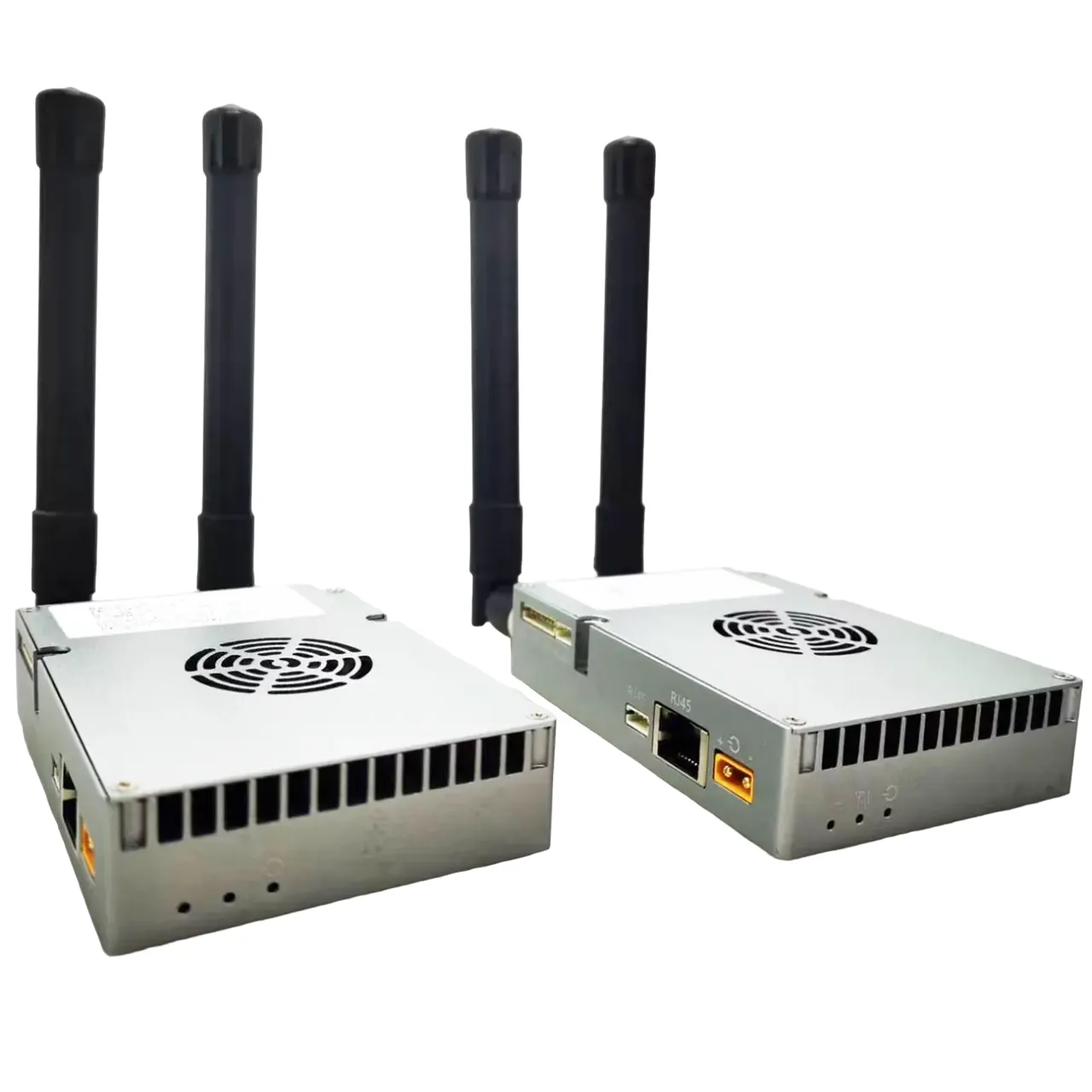
100km TDD bidirectional video data wireless transmission Appearance

История версий
| Дата | Версия | Описание модификации |
| 20231219 | Версия 1.0 | Начальная версия |
| 20240315 | V2.0 | Modify the weight dimensions, modify the total data in Table MCS & чувствительность |
| 20240405 | V3.0 | Add multiple sets of coexistence switches. Modify the serial-to-network configuration mode. Modify the ID number length and modify the English words of background noise detection. Added the frequency matching function |
Обзор
Vcan1933-8-Watt PA is a self-developed TDD bidirectional graph integrated wireless transmission device. The product has the functions of real-time interference detection, адаптивный выбор частоты, адаптивный поток, automatic retransmission, and automatic power control, что значительно улучшает возможности защиты от многолучевого распространения и помех, и имеет характеристики высокой надежности, хорошая стабильность, и низкая задержка.
Этот продукт подходит для пожаротушения., инспекция, мониторинг, и другие сценарии, and can transmit 100KM under good air-to-ground vision.
Product Characteristics
- Support long-distance transmission: 4M code flow can be transmitted up to 100km.
- Supports large bandwidth transmission: Up to 17Mbps@10MHz.
- Supports automatic repeater transmission: Supports automatic trunk addition.
- Supports multi-interface design: The device has two network ports and four serial ports, supporting RS232/TTL/RS422/SBUS.
- Supports automatic frequency selection: Automatic detection of interference signals, real time selection of the optimal frequency point.
- Supports automatic retransmission: Automatic retransmission of burst error data improves data reliability.
- Supports adaptive stream: The channel modulation mode is automatically adjusted according to the signal quality in real time.
- Supports automatic power control: Close range automatic adjustment of transmission power, reduce power consumption.
- Поддерживает автоматический выбор антенны: В зависимости от ситуации окклюзии, the optimal antenna transmission is selected in real time.
- Supports the coexistence of multiple set: Support up to 6 sets of equipment at the same time fixed frequency use.
- Supports the frequency matching function: Software can be used to configure the frequency and hardware key frequency.
Спецификация
| Системный параметр | Технический индекс |
| Equipment model | Вкан1933-8W |
| Рабочая частота | 1350~1470 МГц |
| Радиочастота | 2Т2Р |
| Мощность передачи | 39дБм (8-ватт ПА) |
| Расстояние передачи | 100км (Air-to-ground LOS) |
| Пропускная способность канала | 10МГц |
| режим модуляции | QPSK/16QAM |
| Получение чувствительности | See Table (МКС & чувствительность) |
| Скорость | 17Mbps@16QAM3/4 |
| Communication encryption | AES256 |
| Задержка передачи | ≤10ms |
| Радиочастотный интерфейс | СМА*2 |
| Equipment interface | XT30PW-М |
| Equipment interface | 100Mbps Ethernet*2 |
| TTL/RS232*2 | |
| RS422*1 | |
| SBUS/TTL*1 | |
| Overall power consumption | ≤48W@4Mbps(Air uint) |
| ≤12W@1Mbps(Ground uint) | |
| измерение(Д*Ш*В) | 163*77*25мм |
| вес | 340г |
| Рабочее напряжение | DC22~30V,Типичное значение: +24V@2A |
| Рабочая температура | -40~+75℃ |
| МКС & чувствительность (10МГц) | |||
| No. | МКС | Total uplink and downlink throughput (Mbps) | чувствительность (дБм) |
| 1 | QPSK1/3 | 4.0 | -99 |
| 2 | QPSK1/2 | 5.8 | -98 |
| 3 | QPSK2/3 | 7.1 | -97 |
| 4 | QPSK3/4 | 8.2 | -96 |
| 5 | 16QAM1/3 | 8.0 | -96 |
| 6 | 16QAM1/2 | 11.6 | -95 |
| 7 | 16QAM2/3 | 14.3 | -93 |
| 8 | 16QAM3/4 | 16.4 | -91 |
Пroduct dimension and weight
Dimension diagram

Dimension and weight
- измерение (Д*Ш*В): 163mm*77mm*25mm(including SMA 10mm)
- вес : 340г
Product interface definition
Interface diagram

The interface of the Vcan1933-8W device includes the XT30PW-M power interface and J30J-25pin data interface. The interface has RS232/TTL*2, RS422*1, SBUS/TTL*1 and 100 Mbit/s Ethernet*2.
Определение интерфейса
Интерфейс питания: XT30PW-М. Диапазон питания: DC22-30V Typical value:24V@2A
| Linear order. | Имя контакта | Определение интерфейса | Описание интерфейса | Signal direction |
| 1,2,3,4 | Земля | Земля | Земля | |
| 5 | 422А | Serial port 3 RS-422 | Receiving data RX+ | я |
| 6 | 422Б | Receiving data RX- | я | |
| 7 | 422Z | Transmitting data TX- | О | |
| 8 | 422Да | Transmitting data TX+ | О | |
| 9 | TXD_A | Serial port 1 RS232/TTL | Transmitting data TX | О |
| 10 | RXD_A | Receiving data RX | я | |
| 11 | TXD_B | Serial port 2 RS232/TTL | Transmitting data TX | О |
| 12 | RXD_B | Receiving data RX | я | |
| 13 | Земля | Последовательный порт 2 земля | О | |
| 14 | SBUS /TTL TX | Serial port 4 SBUS/TTL | SBUS/TTL sending | О |
| 15 | SBUS /TTL RX | SBUS/TTL receiving | я | |
| 16 | SBUS/TTL GND | SBUS/TTL ground | О | |
| 17 | ТХ1P+ | Сетевой порт 1 | Transmitting data TX+ | О |
| 18 | TX1M- | Transmitting data TX- | О | |
| 19 | RX1P+ | Receiving data RX+ | я | |
| 20 | RX1M- | Receiving data RX- | я | |
| 21 | Земля | Земля | Последовательный порт 1 земля | О |
| 22 | TX2P+ | Сетевой порт 2 | Transmitting data TX+ | О |
| 23 | TX2M- | Transmitting data TX- | О | |
| 24 | RX2P+ | Receiving data RX+ | я | |
| 25 | RX2M- | Receiving data RX- | я |
- Примечание 1: Signal direction I indicates radio input and direction O indicates radio output.
- Примечание 2: When using the serial port 1/2 of the device, please check whether it is TTL level or RS232 level.
яndicator Meaning

Индикатор питания PWR (зеленый)
Когда горит индикатор PWR, устройство включено.
SYNC(green)
Out of sync state, light flashing.
After synchronization, the light is steady on.
Network port light : ЛВС1, ЛВС2 (green)
The network port light blinks when data is being sent or
received.
Receiving signal energy light(РССИ 3 green lights)
The greater the number of energy lights, the greater the
signal reception strength.
| The RSSI light represents the strength of the received signal | |
| Number of RSSI energy lights on | Received energy dBm |
| 3 RSSI lights on | about -50dBm |
| 2 RSSI lights on | about -80dBm |
| 1 RSSI light on | about -95dBm |
| Тип модуля | Режим | Vcan1933-8W light status | |||
| PWR | SYNC | локальная сеть 1 LAN 2 | РССИ 123 | ||
| владелец | Un-sync | Включено | Flashing | Data sending and receiving, мигающий | Выключенный |
| владелец | Sync | Включено | Steady on | Data sending and receiving, мигающий | Proportional to the strength of the received signal |
| раб | Un-sync | Включено | Flashing | Data sending and receiving, мигающий | Идет поиск |
| раб | Sync | Включено | Steady on | Data sending and receiving, мигающий | Proportional to the strength of the received signal |
When the master and slave devices are not synchronized, the PWR indicator of the master and slave devices is steady on, the SYNC indicator is blinking, and the RSSI indicator of the master device is off. The RSSI of the slave device will always be in the search state. After the master/slave synchronization, the SYNC indicator of the master/slave is steady on. The master-slave RSSI lamp displays the received signal energy intensity. Когда сетевой порт отправляет или получает данные, the master and slave devices correspond to LAN1, and the LAN2 indicator blinks.
More information about the product
ТДД (Дуплекс с временным разделением) is a communication technique used in wireless systems where the uplink (transmitting data from the ground control station to the drone) и нисходящая линия связи (transmitting video and data from the UAV to the ground receiver or GCS) share the same frequency channel but operate in different time slots. This allows bidirectional communication without requiring separate frequency bands for each direction.
TDD Protocol Optimization
- Ensure proper time slot allocation between uplink (sending data) и нисходящая линия связи (receiving data) for efficient bidirectional communication.
- Adaptive TDD allows dynamic allocation based on data traffic needs.
- Useful in applications where uplink and downlink traffic are asymmetric (например, video streaming).
Comparison Between TDD and FDD
| Особенность | ТДД | ФЗД |
|---|---|---|
| Spectrum Usage | Single frequency band | Separate bands for uplink and downlink |
| Traffic Adaptability | Highly adaptable to asymmetric traffic | Fixed uplink/downlink ratio |
| Equipment Complexity | Lower cost and simpler hardware | Requires duplexers, increasing cost |
| Channel Reciprocity | да, supports advanced techniques like beamforming | Нет |
| Interference | Requires strict synchronization | Less prone to interference |
TDD is widely used in modern communication systems, including those requiring long-range bidirectional video transmission due to its efficiency and flexibility.
Power and Size Constraints:
- Lightweight hardware to minimize the impact on drone flight performance.
- Low-power consumption design to maximize drone battery life.
- Compact form factor to fit within the drone’s payload.
Антенная система:
- On Drone: Fiberglass omnidirectional or small directional patch antennas.
- Ground Station: High-gain parabolic, Yagi antennas or flat panel antennas with tracking systems for long-range communication.
Приложения
- Surveillance and Security: Real-time video streaming from drones for law enforcement or border control.
- Вещание: High-definition aerial footage for live events or media.
- Сельское хозяйство: Monitoring crops and livestock over vast areas.
- Реагирование на стихийные бедствия: Sending live video from disaster sites for better coordination.
В transmission range of an 8-watt power amplifier (Пенсильвания) depends on a variety of factors, включая:
- Частотный диапазон: Higher frequencies experience more signal loss over distance (higher free-space path loss).
- Усиление антенны: The type and gain of the antenna at both ends (передатчик и приемник) significantly impact the range.
- Условия окружающей среды: Factors like terrain, здания, погода (дождь, туман), и прямая видимость (LoS) can affect range.
- Modulation Scheme and Data Rate: More complex modulation schemes (например, QAM) and higher data rates may reduce effective range due to higher sensitivity to signal degradation.
- Чувствительность приемника: The ability of the receiver to detect a weak signal at a specific distance.
Задайте вопрос
Спасибо за ответ. ✨