


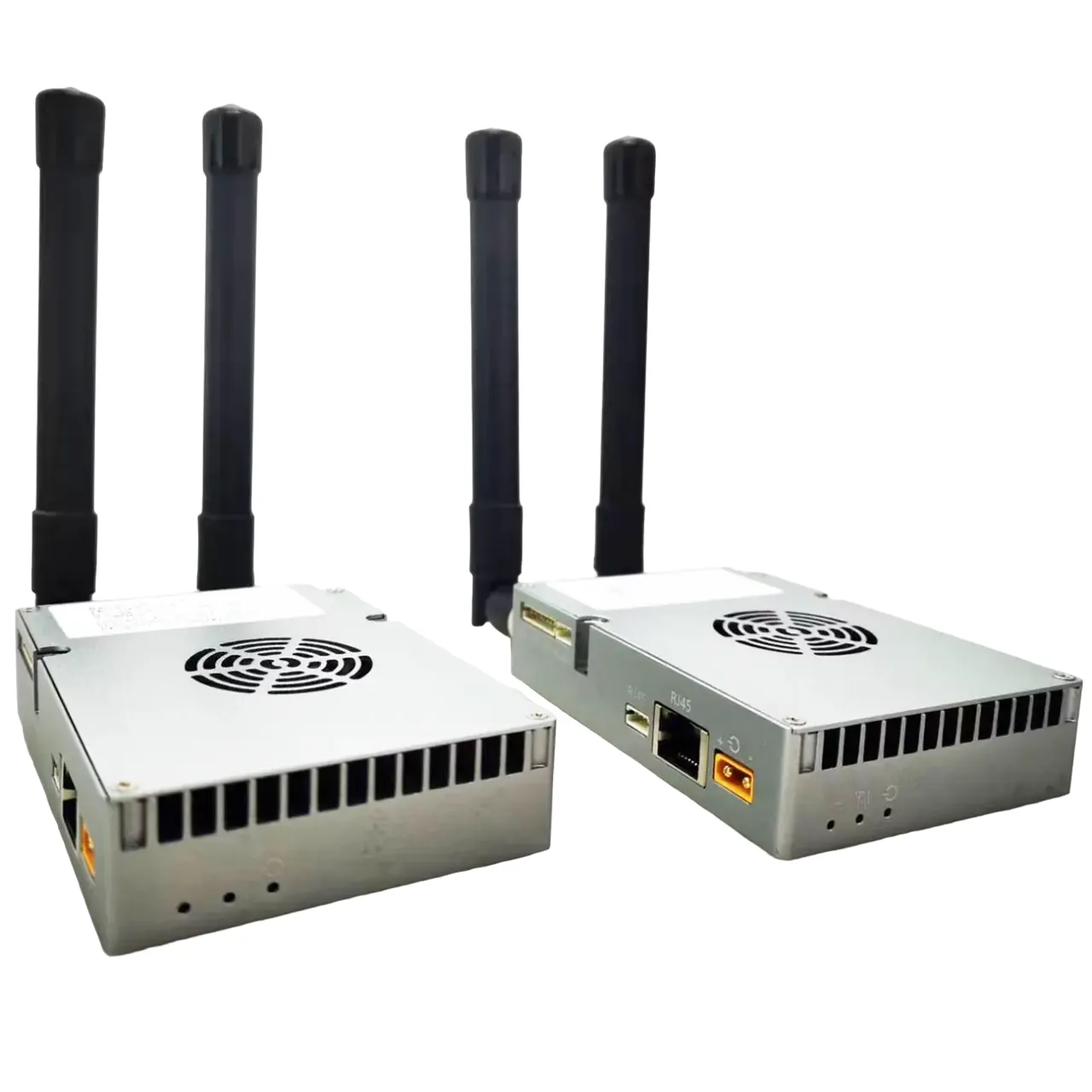


When selecting a wireless video and data transmission system for UAVs and drones, OFDM vs COFDM is one of the most searched and most misunderstood topics.
Many system integrators and drone developers ask:
“COFDM is known for strong NLOS performance — does that mean it is always better than OFDM for UAV data links?”
The short answer is NEIN.
This article explains the real technical differences between OFDM and COFDM, how they impact drone video transmission and telemetry, and how to choose the right technology for your UAV mission.
Inhaltsverzeichnis
What Is OFDM and COFDM in UAV Communication?
Erste, let’s clarify a critical point for search and engineering accuracy:
OFDM and COFDM are modulation technologies, not complete UAV communication systems.
They do not inherently define:
- One-way or two-way transmission
- Latenz
- Übertragungsentfernung
- Compatibility with Pixhawk or flight controllers
Those characteristics are determined by system architecture, especially:
- TDD (Zeitduplex)
- FDD (Frequency Division Duplex)
- HF-Leistung, Bandbreite, and protocol design
Why Is COFDM Often Considered One-Way?
COFDM is historically associated with:
- UAV video downlinks
- Broadcast and surveillance systems
- Harsh NLOS (Keine Sichtverbindung) Umgebungen
Most early COFDM systems focused on:
- High-quality downlink video
- Minimal or no uplink requirements
Infolge, many users searching for “COFDM vs OFDM UAV” assume COFDM is inherently one-way, even though bidirectional COFDM systems do exist.
Why OFDM + TDD Is Widely Used in Drone Data Links
Modern drones require more than just video transmission. A UAV data link must support:
- Bidirectional telemetry and control
- Low-latency feedback for flight stability
- Direct integration with Pixhawk / ArduPilot / PX4
- Kompakte Größe, low weight, und geringer Stromverbrauch
This is why OFDM combined with TDD is the dominant architecture for drone wireless data links.
Key advantages of OFDM + TDD for UAVs include:
- Effizient two-way communication on a single frequency
- Naturally synchronized uplink and downlink
- Lower end-to-end latency, ideal for real-time flight control
- Smaller, lighter, and more power-efficient airborne modules
Can COFDM Be Used for Bidirectional UAV Communication?
Yes — but with important trade-offs.
To enable stable bidirectional UAV communication, COFDM systems usually rely on:
- FDD architecture
- Additional RF chains and filtering
- More complex synchronization mechanisms
This typically results in:
- Larger and heavier hardware
- Higher power consumption
- Higher system cost
- Slightly increased latency
Für small and medium drones, these drawbacks often outweigh the benefits.
OFDM vs. COFDM: Practical Comparison for Drones
| Besonderheit | OFDM (Typical UAV Data Link) | COFDM |
|---|---|---|
| Bidirektionale Übertragung | Exzellent | Unterstützt |
| Duplex Method | TDD | FDD / TDD |
| Latenz | Low | Medium |
| Module Size & Gewicht | Small | Larger |
| Stromverbrauch | Low | Higher |
| Pixhawk Integration | Direct (UART / TTL / IP) | Often requires adapters |
| NLOS Performance | Mäßig | Stark |
| Typische Anwendung | UAV data link | Übertragen / severe NLOS |
When Should You Choose COFDM for UAVs?
COFDM is recommended when:
- The operating environment has severe NLOS conditions (Gebirge, urban canyons, Wälder)
- Diffraction and multipath resistance are the top priority
- Platform size and power constraints are relaxed
- Slightly higher latency is acceptable
Final Verdict: OFDM or COFDM for UAV Data Links?
COFDM is not a universal upgrade over OFDM.
For most drone and UAV applications, OFDM + TDD offers the best balance of:
- Bidirectional video and telemetry
- Low latency for flight control
- Compact size and low power consumption
- Simple integration with Pixhawk-based systems
COFDM remains an excellent choice for specific NLOS-focused UAV missions, but it is not automatically the better solution.
FAQ: OFDM vs COFDM for UAVs
Is COFDM better than OFDM for drones?
Not always. COFDM excels in severe NLOS environments, but OFDM is usually better for small UAVs requiring low latency and bidirectional communication.
Can COFDM support Pixhawk telemetry?
Ja, but many COFDM systems require RS232 or Ethernet interfaces, and additional converters may be needed for Pixhawk integration.
Why do most UAV data links use OFDM?
Because OFDM combined with TDD provides efficient two-way communication, geringere Latenz, kleinere Größe, and better power efficiency for airborne platforms.
Which is better for long-range UAV communication?
Range depends on many factors such as frequency band, Leistung, Antennen, and environment — not only whether the system uses OFDM or COFDM.



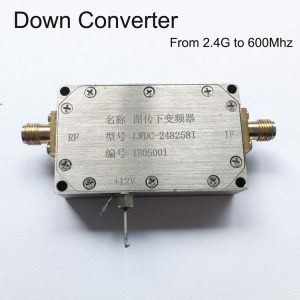
BDC-Block-Down-Konverter
Stelle eine Frage
Vielen Dank für deine Antwort. ✨